



|
home ao english musik literatur journalismus bilder sprachen mehr shop sitemap | |
im Widerstand 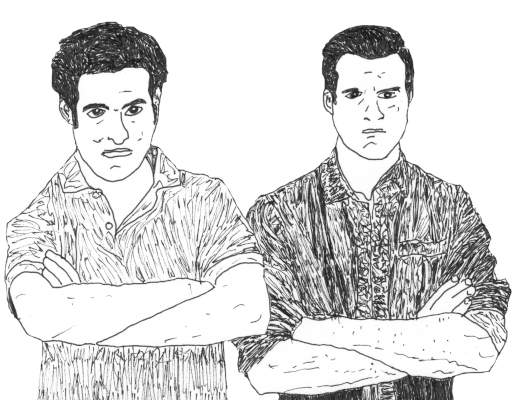 |
Resist (16) |
résistent (16) |
resistono (16) |
resisten (16) |
(Deutsch) Dies ist die linguistische Version der sechzehnten Staffel der Jungs. Die Texte sind dieselben wie auf der Hauptseite. |
(English) This is the linguistic version of the sixteenth season of the Boys. The texts are the same as on the main page. |
(Français) Voici la version linguistique de la seizième saison des Gars. Les textes sont les mêmes que sur la page principale. |
(Italiano) Questa è la versione linguistica della sedicesima stagione dei Ragazzi. I testi sono gli stessi della pagina principale. Colori: parole singole (verde) frasi nominali (azzurro) frasi verbali (ocra) modi di dire + collocazioni (rosso) parolacce + onomatopea + giochi di parole + citazioni (viola) |
(Español) Esta es la versión lingüística de la decimosexta temporada de los Chicos. Los textos son los mismos que en la página principal. |
(English) When Heinz unexpectedly comes home early, Helmut has a problem. He tries in vain to wriggle out of the situation, but he has a stroke of luck in misfortune, because Heinz remembers his core values and shows a disproportionate degree of tolerance. |
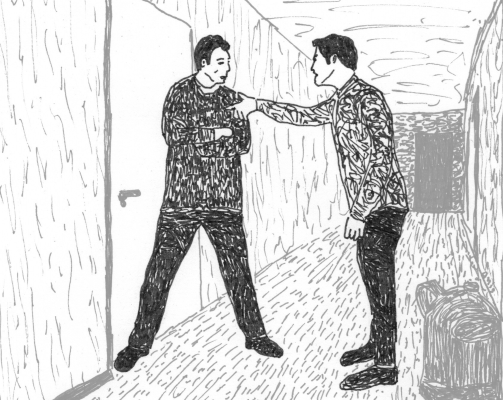 |
(Italiano) Quando Heinz torna a casa sorprendentemente presto, Helmut ha un problema. Cerca invano di cavarsela, ma ha fortuna nella sfortuna, perché Heinz si richiama ai suoi valori fondamentali e dimostra una tolleranza sproporzionata. |
(Deutsch) Als Heinz überraschend früh nach Hause kommt, hat Helmut ein Problem. Er versucht vergeblich, sich aus der Affäre zu ziehen, doch er hat Glück im Unglück, denn Heinz besinnt sich auf seine Grundwerte und lässt eine überproportionale Toleranz walten. Normal Version | ||
Tag 1 1 Heinz: Krrk raschel schlp |
Day 1 Heinz: Krrk rustle shlp |
Jour 1 Heinz : Krrk froisse chlp |
Giorno 1 Heinz: Krrk frusc shlp |
Día 1 Heinz: Krrk cruj shlp |
2 Heinz: Was ...? Du hast mein Zimmer verwüstet! |
Heinz: What…? You trashed my room! |
Heinz : Quoi… ? T'as saccagé ma chambre ! |
Heinz: Cosa…? Hai messo a soqquadro la mia stanza! |
Heinz: ¿Qué…? ¡Has destrozado mi habitación! |
3 Helmut: Nicht wieder mein Ohr! Komm, lass uns nachkucken, wie viele Views unser Indien-Tanzvideo inzwischen hat! Gestern waren es schon über 16.000. |
Helmut: Not my ear again! Come on, let's check how many views our India dance video has by now! Yesterday it was already over 16,000. |
Helmut : Pas encore mon oreille ! Allez, regardons combien de vues notre vidéo de danse indienne a entre-temps ! Hier, on en était déjà à plus de 16 000. |
Helmut: Non di nuovo il mio orecchio! Dai, andiamo a vedere quante visualizzazioni ha ormai il nostro video di danza indiana! Ieri erano già più di 16.000. |
Helmut: ¡Otra vez no mi oreja! ¡Venga, vamos a ver cuántas visualizaciones tiene ya nuestro video de baile de la India! Ayer ya superaba las 16 000. |
4 Heinz: Manchmal gelingt es dir ohne Schwierigkeiten. Erstaunlich. Hm. Also Mark, was schreibt er? Grüße ... bla ... ob wir uns noch erinnern ... blubb ... Teheran ... Kontaktdaten ... lieber das SocSpace-Video aus dem Netz nehmen ... sofort ... Azad Alizadeh. |
Heinz: Sometimes you manage it without any trouble. Amazing. Hm. So Mark, what does he write? Greetings… blah… whether we still remember… blubb… Tehran… contact details… better take the SocSpace video off the internet… immediately… Azad Alizadeh. |
Heinz : Parfois tu y arrives sans difficulté. Étonnant. Hm. Bon, Mark, qu'est-ce qu'il écrit ? Salutations… bla… si on se souvient encore… bloub… Téhéran… coordonnées… mieux vaut retirer la vidéo SocSpace du Net… immédiatement… Azad Alizadeh. |
Heinz: A volte ci riesci senza difficoltà. Sorprendente. Hm. Allora Mark, cosa scrive? Saluti… bla… se ci ricordiamo ancora… blub… Teheran… recapito… meglio togliere dalla rete il video SocSpace… subito… Azad Alizadeh. |
Heinz: A veces lo consigues sin dificultades. Sorprendente. Hm. Entonces, Mark, ¿qué escribe? Saludos… bla… si todavía nos acordamos… blub… Teherán… datos de contacto… mejor quitar de internet el video de SocSpace… inmediatamente… Azad Alizadeh. |
(English) The questions and answers Heinz found in India continue to occupy his thoughts back in Mainz. And since he’s had good results lately by turning to his old friend and roommate Helmut, he does so again. |
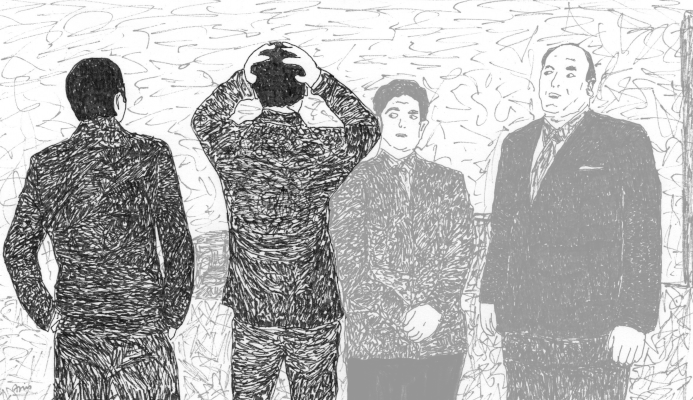 |
(Italiano) Le domande e le risposte che Heinz ha trovato in India continuano a tenerlo occupato a Magonza. E dato che ultimamente ha avuto buone esperienze rivolgendosi al suo vecchio amico e coinquilino Helmut, lo fa di nuovo. |
(Deutsch) Die Fragen und Antworten, die Heinz in Indien gefunden hat, beschäftigen ihn in Mainz weiter. Und da er in letzter Zeit gute Erfahrungen damit gemacht hat, sich an seinen alten Freund und Mitbewohner Helmut zu wenden, tut er es erneut. Normal Version | ||
Spreu und Weizen Tag 4 1 Heinz: Funktioniert eigentlich deine indische Weisheit noch? Die aus der letzten „Staffel”? |
Chaff and Wheat Day 4 Heinz: Does your Indian wisdom still work, by the way? The one from last "season"? |
Jour 4 Heinz : Au fait, ta sagesse indienne fonctionne encore ? Celle de la dernière « saison » ? |
Grano e pula Giorno 4 Heinz: A proposito, la tua saggezza indiana funziona ancora? Quella dell'ultima "stagione"? |
Grano y paja Día 4 Heinz: Por cierto, ¿tu sabiduría india sigue funcionando? ¿La de la última "temporada"? |
2 Helmut: Und dann? Weshalb ist er hier? |
Helmut: And then what? Why is he here? |
Helmut : Et après ? Pourquoi est-il ici ? |
Helmut: E poi? Perché è qui? |
Helmut: ¿Y luego qué? ¿Por qué está aquí? |
3 Heinz: Jetzt zieh die Socke wieder an! Wir sind hier nicht allein. (Wehleidiger Schisser.) |
Heinz: Now put your sock back on! We're not alone here. (Whiny scaredy-cat.) |
Heinz : Alors, remets ta chaussette ! On n'est pas seuls ici. (Trouillard geignard.) |
Heinz: Ora rimettiti il calzino! Non siamo soli. (Piagnucoloso fifone.) |
Heinz: ¡Ahora vuelve a ponerte el calcetín! No estamos solos. (Quejica llorón.) |
4 Heinz: Puh! Oh Mann, was war das denn? |
Heinz: Whew! Oh man, what was that? |
Heinz : Ouf ! Oh là là, c'était quoi, ça ? |
Heinz: Uff! Mamma mia, ma che è stato? |
Heinz: ¡Uf! Madre mía, ¿qué ha sido eso? |
(English) Fiona has been thinking about herself and what she still wants to achieve in life. There must be more than just work and the agency. So, for a change, she’s spending the weekend with Fanni in their shared urban garden. |
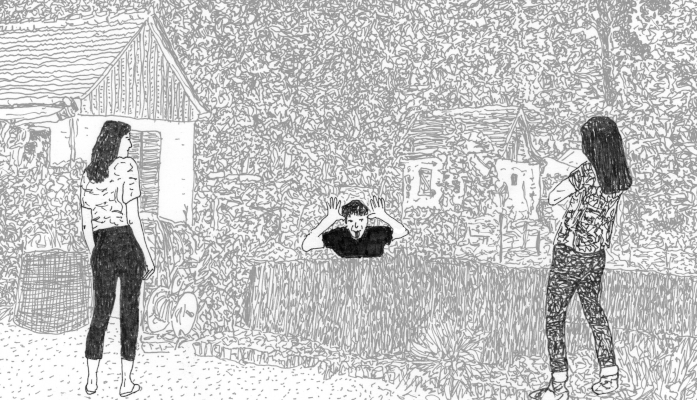 |
(Italiano) Fiona ha riflettuto su se stessa e su ciò che vuole ancora realizzare nella vita. Ci devono essere anche altre cose oltre al lavoro e all'agenzia. Per cambiare un po', trascorre quindi il fine settimana con Fanni nel loro giardino condiviso. |
(Deutsch) Fiona hat über sich nachgedacht und darüber, was sie im Leben erreichen will. Es muss auch noch andere Dinge geben als die Arbeit und die Agentur. Sie verbringt daher zur Abwechslung das Wochenende mit Fanni in ihrem gemeinsamen Schrebergarten. Normal Version | ||
Tag 4 1 Fanni: Ich bin beeindruckt. Du hast den Samstag und jetzt den Sonntag fast vollständig in unserem Schrebergarten verbracht, obwohl in der Agentur die Hütte brennt. |
Day 4 Fanni: I'm impressed. You spent almost all of Saturday and now Sunday in our allotment garden, even though the agency is on fire. |
Jour 4 Fanni : Je suis impressionnée. Tu as passé presque entièrement le samedi et maintenant le dimanche dans notre jardin ouvrier, alors que c'est la pagaille à l'agence. |
Giorno 4 Fanni: Sono impressionata. Hai passato quasi tutto il sabato e adesso anche la domenica nel nostro orto, anche se in agenzia c'è il caos totale. |
Día 4 Fanni: Estoy impresionada. Has pasado casi todo el sábado y ahora también el domingo en nuestro huerto, aunque en la agencia está todo ardiendo. |
2 Fanni: Willst du, dass ich es probelese? Mach ich gerne. Wie viele Seiten hast du denn schon geschrieben? |
Fanni: Do you want me to read it? I'd be happy to. How many pages have you written so far? |
Fanni : Tu veux que je le lise en avant-première ? Je le ferai avec plaisir. Combien de pages as-tu déjà écrites ? |
Fanni: Vuoi che lo legga in anteprima? Lo faccio volentieri. Quante pagine hai scritto finora? |
Fanni: ¿Quieres que la lea antes? Lo haré encantada. ¿Cuántas páginas has escrito ya? |
3 Fanni: (Kuck mal da im Rhabarber! Da hockt der kleine Teufel und versteckt sich.) |
Fanni: (Look over there in the rhubarb! The little devil is crouching there, hiding.) |
Fanni : (Regarde là-bas dans la rhubarbe ! Le petit diable est accroupi là et se cache.) |
Fanni: (Guarda là nella rabarbaro! Il piccolo diavolo è lì nascosto accovacciato.) |
Fanni: (¡Mira ahí en el ruibarbo! El pequeño diablo está escondido agachado.) |
4 Fiona: Nein, ich will jetzt keinen Rhabarber, Kleiner, danke. Ja, ich weiß, dass der schön sauer ist. Wie heißt du denn? Und in welche Klasse gehst du, Franz? In die dritte, aha. Hast du ein Handy, mit dem wir deine Mama anrufen können? Nicht, hm. |
Fiona: No, I don't want rhubarb right now, little man, thanks. Yes, I know it's nice and sour. What's your name? And what grade are you in, Franz? Third grade, I see. Do you have a cell phone so we can call your mom? You don't, hmm. |
Fiona : Non, je ne veux pas de rhubarbe maintenant, petit, merci. Oui, je sais qu'elle est bien acidulée. Comment tu t'appelles ? Et tu es dans quelle classe, Franz ? En troisième, ah bon. Tu as un portable pour qu'on puisse appeler ta maman ? Non, hm. |
Fiona: No, non voglio rabarbaro adesso, piccolo, grazie. Sì, lo so che è bello aspro. Come ti chiami? E in che classe sei, Franz? Terza, ah. Hai un cellulare per chiamare tua madre? No, mh. |
Fiona: No quiero ruibarbo ahora, pequeño, gracias. Sí, ya sé que es bien ácido. ¿Cómo te llamas? ¿Y en qué clase estás, Franz? Tercero, aja. ¿Tienes móvil para llamar a tu madre? No, hmm. |
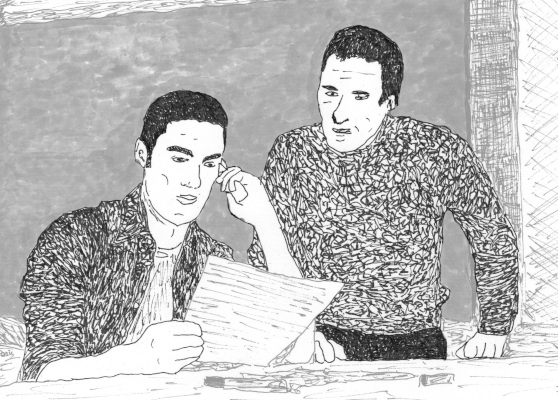
(English) Helmut originally wanted to visit his girlfriend and child in Wiesbaden, but he changes his mind and returns to the house. Heinz thinks this is a good decision and shows him what he has worked out in the meantime to meet the challenges of the times. |
 |
(Italiano) Inizialmente Helmut voleva andare a trovare la donna e la bambina a Wiesbaden, ma poi cambia idea e torna a casa. Heinz pensa che sia una buona decisione e gli mostra ciò che ha elaborato nel frattempo per affrontare le sfide del momento. |
(Deutsch) Eigentlich will Helmut Frau und Kind in Wiesbaden besuchen, aber er ändert seine Meinung und geht zurück ins Haus. Heinz hält das für eine gute Entscheidung und zeigt ihm, was er inzwischen ausgearbeitet hat, um den Herausforderungen der Zeit zu begegnen. Normal Version | ||
Tag 6 1 Helmut: Krrk raschel schlp |
Day 6 Helmut: Krrk rustle shlp |
Jour 6 Helmut : Krrk froisse chlp |
Giorno 6 Helmut: Krrk frusc shlp |
Día 6 Helmut: Krrk cruj shlp |
2 Heinz: Mann, die bedrohen uns, Mann! Warte mal, du hast da was. Zupf zupf, ein Glassplitter oder so was. Wir müssen uns verteidigen, oder nicht? |
Heinz: Man, they're threatening us, man! Hold on, you've got something there. Pluck pluck, a shard of glass or something. We have to defend ourselves, don't we? |
Heinz : Mec, c'est eux qui nous menacent, mec ! Attends, tu as quelque chose là. Tire tire, un éclat de verre ou un truc comme ça. On doit se défendre, non ? |
Heinz: Amico, sono loro che minacciano noi, amico! Aspetta un attimo, hai qualcosa lì. Tir tir, una scheggia di vetro o qualcosa del genere. Dobbiamo difenderci, o no? |
Heinz: ¡Tío, son ellos los que nos amenazan a nosotros, tío! Espera un momento, tienes algo ahí. Tir tir, un trozo de cristal o algo así. Tenemos que defendernos, ¿no? |
3 Helmut: Und für wen? |
Helmut: And for whom? |
Helmut : Et pour qui ? |
Helmut: E per conto di chi? |
Helmut: ¿Y para quién? |
4 Heinz: Was soll das bedeuten? Bist du deshalb nicht zu ihr gefahren und stattdessen zurückgekommen? |
Heinz: What's that supposed to mean? Is that the reason why you didn't drive over to see her and came back instead? |
Heinz : Qu'est-ce que ça veut dire ? C'est pour ça que tu n'es pas allé la voir et que tu es revenu ? |
Heinz: Che cosa dovrebbe significare? È per questo che non sei andato da lei e sei tornato invece qui? |
Heinz: ¿Qué se supone que significa eso? ¿Es por eso que no fuiste a verla en coche y en vez de eso volviste? |
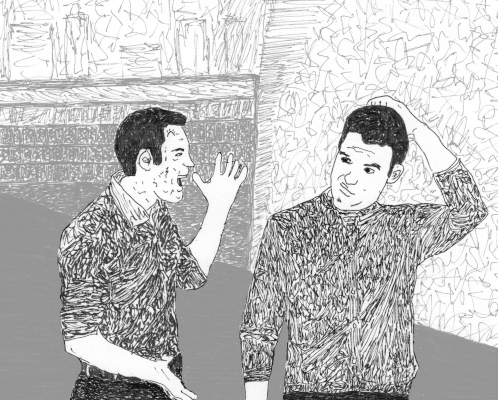
(English) The tension escalates three days later when Helmut returns home from Wiesbaden. Heinz is completely overwhelmed by the situation and can’t make a decision. Fortunately, and despite some adverse circumstances, Helmut keeps a cool head and does what needs to be done. |
 |
(Italiano) Le cose si complicano quando, tre giorni dopo, Helmut torna a casa da Wiesbaden. Heinz è completamente sopraffatto dalla situazione e non riesce a prendere una decisione. Per fortuna, nonostante alcune difficoltà, Helmut mantiene il sangue freddo e fa quello che va fatto. |
(Deutsch) Die Lage spitzt sich zu, als Helmut drei Tage später aus Wiesbaden nach Hause kommt. Heinz ist völlig überfordert mit der Situation und findet zu keiner Entscheidung. Zum Glück behält Helmut trotz einiger Widrigkeiten einen kühlen Kopf und tut, was zu tun ist. Normal Version | ||
Tag 9 1 Helmut: Krrk raschel schlp. Stöhn röchel |
Day 9 Heinz: Krrk rustle shlp. Groan wheeze |
Jour 9 Heinz : Krrk froisse chlp. Gémisse râle |
Giorno 9 Heinz: Krrk frusc shlp. Gemit rantol |
Día 9 Heinz: Krrk cruj shlp. Gemido jadeo |
2 Helmut: Meinst du den da oben, auf dem Spiegelschrank? |
Helmut: You mean the one up there on the mirror cabinet? |
Helmut : Tu veux dire celle là-haut, sur l'armoire à miroir ? |
Helmut: Intendi quella lassù, sull'armadietto a specchio? |
Helmut: ¿Te refieres a ese de ahí arriba, sobre el armario del espejo? |
3 Heinz: Seufz. Man fühlt sich so hilflos. Sie holen sich mit Gewalt, was sie wollen, und keiner macht was. Stell dir mal die Palästinenser unter Besatzung vor, die haben das jeden Tag. Wusstest du, dass der Staat im Moment mehr als 8000 Leute inhaftiert hat, ohne Verfahren? Das sind Geiseln. |
Heinz: Sigh. It makes you feel so helpless. They use violence to get whatever they want, and nobody does anything. Just imagine the Palestinians living under occupation, they go through this every day. Did you know the state is currently holding more than 8,000 people without trial? They're hostages. |
Heinz : Soupir. On se sent tellement sans défense. Ils obtiennent par la violence ce qu'ils veulent, et personne ne réagit. Imagine les Palestiniens sous occupation, ils vivent ça tous les jours. Tu savais que l'État détient actuellement plus de 8 000 personnes sans procès ? Ce sont des otages. |
Heinz: Sigh. Ci si sente così indifesi. Ottengono con la violenza quello che vogliono e nessuno fa nulla. Immagina i palestinesi sotto occupazione: loro vivono questo ogni giorno. Lo sapevi che lo Stato al momento tiene in carcere più di 8.000 persone senza processo? Sono ostaggi. |
Heinz: Suspiro. Uno se siente tan indefenso. Consiguen con violencia lo que quieren y nadie hace nada. Imagina a los palestinos bajo ocupación; ellos viven eso cada día. ¿Sabías que el Estado tiene ahora mismo a más de 8.000 personas encarceladas sin juicio? Son rehenes. |
4 Heinz: Hi! Das ist Gedankenübertragung. Im Ernst, gerade hab ich Helmut erzählt, dass ich mein Tablet brauche, das noch bei dir ist. |
Heinz: Hi! That's telepathy. Seriously, I was just telling Helmut that I need my tablet, which is still with you. |
Heinz : Salut ! C'est de la télépathie. Sérieusement, je venais justement de dire à Helmut que j'avais besoin de ma tablette, qui est encore chez toi. |
Heinz: Ciao! Questa è telepatia. Sul serio, proprio adesso stavo dicendo a Helmut che mi serve il tablet che è ancora da te. |
Heinz: ¡Hola! Esto es telepatía. En serio, justo estaba diciéndole a Helmut que necesito mi tablet, que sigue contigo. |
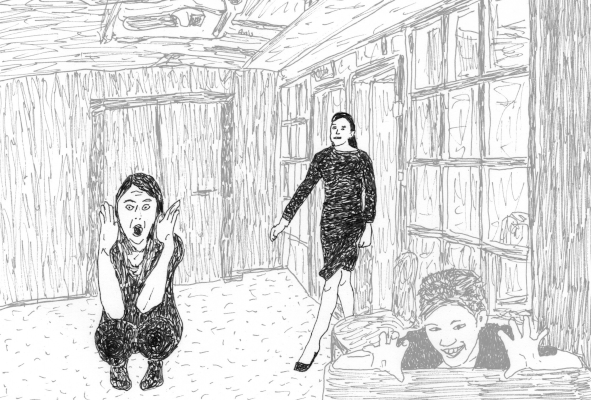
(English) The consequences of the encounter with little Franz become clear a few days later in the office, when Fanni is horrified to gradually learn that her friend and business partner has brought the wayward neighbor boy into her life and is planning things with him. |
 |
(Italiano) Le conseguenze dell’incontro con il piccolo Franz si vedono qualche giorno dopo in ufficio, quando Fanni scopre con orrore che la sua amica e socia sta integrando nella sua vita il ragazzino ribelle del vicinato e ha in mente dei progetti per lui. |
(Deutsch) Welche Folgen die Begegnung mit dem kleinen Franz hat, zeigt sich einige Tage später im Büro, als Fanni zu ihrem Entsetzen nach und nach erfährt, dass ihre Freundin und Geschäftspartnerin den missratenen Nachbarsjungen in ihr Leben integriert und einiges mit ihm vor hat. Normal Version | ||
Tag 9 1 Fanni: Er hat es schon wieder gemacht. |
Day 9 Fanni: He did it again. |
Jour 9 Fanni : Il l'a encore fait. |
Giorno 9 Fanni: L'ha fatto di nuovo. |
Día 9 Fanni: Lo ha vuelto a hacer. |
2 Fiona: Ist ja gut, ich erzähl dir alles. Franz' Mutter ... |
Fiona: All right, I'll tell you everything. Franz's mother... |
Fiona : D'accord, je vais tout te raconter. La mère de Franz... |
Fiona: Va bene, ti racconto tutto. La madre di Franz... |
Fiona: Está bien, te lo contaré todo. La madre de Franz... |
3 Fanni: Da! Hast du das gehört? Er hat „Verpiss dich! Ich hör Musik!” ins Handy gesagt. Da hat anscheinend einer bei dir angerufen und seinen Hörgenuss unterbrochen. |
Fanni: There! Did you hear that? He just said, "Fuck off! I'm listening to music!" into the phone. Apparently someone called you and interrupted his listening pleasure. |
Fanni : Là ! Tu as entendu ? Il vient de dire : « Va te faire foutre ! J'écoute de la musique ! » dans le téléphone. Apparemment, quelqu'un t'a appelée et a interrompu son plaisir musical. |
Fanni: Ecco! Hai sentito? Ha detto: "Vaffanculo! Sto ascoltando musica!" nel telefono. A quanto pare qualcuno ti ha chiamata e ha interrotto il suo piacere musicale. |
Fanni: ¡Ahí! ¿Lo has oído? Ha dicho: "¡Lárgate! ¡Estoy escuchando música!" al teléfono. Al parecer alguien te llamó e interrumpió su disfrute musical. |
4 Fanni: Franz! Solche Wörter sagen wir hier nicht! Ich glaub, das war wieder dieser Anrufer. |
Fanni: Franz! We don't use words like that here! I think that was that caller again. |
Fanni : Franz ! On ne dit pas des mots pareils ici ! Je crois que c'était encore cet appelant. |
Fanni: Franz! Qui non usiamo parole del genere! Credo che fosse di nuovo quel chiamante. |
Fanni: ¡Franz! ¡Aquí no decimos palabras así! Creo que era otra vez ese mismo llamante. |
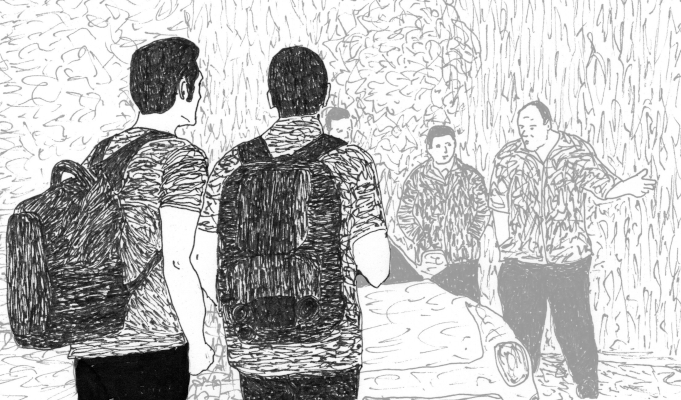
(English) The Boys set off into the unknown when Fiona pulls up in her car. Helmut takes charge in this situation with his down-to-earth attitude, but that’s not much of an advantage since he’s clueless and trembling with fear. If only someone could help! |
 |
(Italiano) I Ragazzi si avviano verso l’ignoto quando Fiona si presenta davanti alla porta con la sua auto. In questa situazione Helmut domina con il suo senso della realtà, ma non è un gran vantaggio, dato che è perplesso e trema di paura. Se solo qualcuno potesse dare una mano! |
(Deutsch) Die Jungs machen sich auf ins Ungewisse, als Fiona mit ihrem Auto vor der Tür steht. Helmut dominiert in dieser Situation mit seinem Realitätssinn, aber das ist kein großer Vorteil, da er ratlos ist und vor Angst schlottert. Wenn doch nur jemand helfen könnte! Normal Version | ||
Der Goldjunge Tag 9 1 Heinz: Alles klar, Fiona, wir kommen runter! Kannst du uns dann zum Bahnhof fahren? Was heißt „theoretisch ja”? Kannst du oder kannst du nicht? OK, bis gleich! |
The Golden Boy Day 9 Heinz: All right, Fiona, we're coming down! Can you drive us to the train station then? What do you mean, "theoretically yes"? Can you or can't you? OK, see you in a minute! |
Le Petit héros Jour 9 Heinz : D'accord, Fiona, on descend ! Tu peux nous conduire à la gare ensuite ? Comment ça, « théoriquement oui » ? Tu peux ou tu ne peux pas ? OK, à tout de suite ! |
Il Ragazzo d'oro Giorno 9 Heinz: Va bene, Fiona, stiamo scendendo! Puoi portarci alla stazione poi? Cosa vuol dire "in teoria sì"? Puoi o non puoi? OK, a tra poco! |
El Chico de oro Día 9 Heinz: Vale, Fiona, ¡ya bajamos! ¿Nos puedes llevar a la estación de tren entonces? ¿Qué significa "en teoría sí"? ¿Puedes o no puedes? ¡Vale, hasta ahora! |
2 Helmut: Ich hab genug von bösen Vorzeichen! Wahrscheinlich ist unsere Frist abgelaufen und Vito steht schon vor der Haustür! Ping |
Helmut: I've had enough of bad omens! Our deadline has probably run out and Vito is already standing at the front door! Ping |
Helmut : J'en ai assez des mauvais présages ! Notre délai est probablement écoulé et Vito est déjà devant la porte ! Ping |
Helmut: Ne ho abbastanza dei cattivi presagi! Probabilmente il nostro tempo è scaduto e Vito è già davanti alla porta! Ping |
Helmut: ¡Estoy harto de los malos presagios! Probablemente nuestro plazo ya se ha agotado y Vito está delante de la puerta. ¡Ping! |
3 Heinz: Kt. Komm, steig ein, wir ziehen den Jungen ins Auto, sobald er an der Tür vorbeikommt! |
Heinz: Kt. Come on, get in. We'll pull the kid into the car as soon as he runs past the door! |
Heinz : Kt. Allez, monte, on attirera le garçon dans la voiture dès qu'il passera devant la portière ! |
Heinz: Kt. Dai, sali, tiriamo il ragazzino in macchina non appena passa davanti alla portiera! |
Heinz: Kt. Vamos, sube. ¡Meteremos al niño en el coche en cuanto pase por la puerta! |
4 Heinz: Das musst du Helmut fragen, Fiona. Ich hab keine Ahnung, wohin der will. Und du? Geschäftsreise? Warum druckst du rum? Ein paar Wochen bei Fibi? Aber das ist doch großartig! Weiß das jemand? Fantastisch, erzähl keinem was davon! Nein nein, ich find das super. |
Heinz: You'll have to ask Helmut that, Fiona. I have no idea where he's going. And you? Business trip? Why are you beating around the bush? A few weeks with Feebee? But that's wonderful! Does anyone know? Fantastic, don't tell anyone about it! No, no, I think it's great. |
Heinz : Faut demander à Helmut, Fiona. Je n'ai aucune idée de l'endroit où il veut aller. Et toi ? Voyage d'affaires ? Pourquoi tu tournes autour du pot ? Quelques semaines chez Fibi ? Mais c'est formidable ! Quelqu'un est au courant ? Fantastique, n'en parle à personne ! Non non, je trouve ça génial. |
Heinz: Devi chiederlo a Helmut, Fiona. Non ho idea di dove voglia andare. E tu? Viaggio di lavoro? Perché sei così vaga? Qualche settimana da Fibi? Ma è fantastico! Qualcuno lo sa? Meraviglioso, non dirlo a nessuno! No no, mi sembra un'idea splendida. |
Heinz: Eso tienes que preguntárselo a Helmut, Fiona. No tengo ni idea de adónde quiere ir. ¿Y tú? ¿Viaje de negocios? ¿Por qué andas con rodeos? ¿Unas semanas con Fibi? ¡Pero eso es estupendo! ¿Lo sabe alguien? Fantástico, ¡no se lo cuentes a nadie! No, no, me parece genial. |
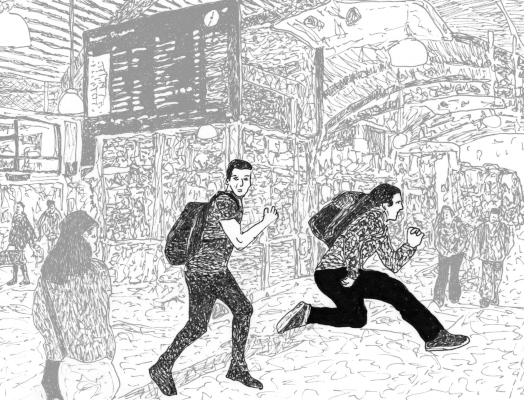
(English) After saying goodbye to Fiona and Franz, the Boys hop through various cities in the blink of an eye and eventually reach another continent. Along the way, they run into an acquaintance who seems considerably younger to them than she did the last time they met. |
 |
(Italiano) Dopo aver salutato Fiona e Franz, i Ragazzi sfrecciano in un batter d’occhio attraverso diverse città e alla fine raggiungono un altro continente. Mentre viaggiano incontrano una conoscente che a loro sembra notevolmente più giovane rispetto all’ultima volta. |
(Deutsch) Nachdem sie sich von Fiona und Franz verabschiedet haben, hüpfen die Jungs in Windeseile durch verschiedene Städte und erreichen am Ende einen anderen Kontinent. Zwischendurch begegnen sie einer Bekannten, die ihnen beträchtlich jünger vorkommt als beim Mal davor. Normal Version | ||
Tag 9 1 Heinz: Dann bis später! Ich kann im Moment noch nicht sagen, wann wir ... |
Day 9 Heinz: See you later, then! I can't say when we'll... |
Jour 9 Heinz : À plus tard alors! Je ne peux pas encore dire quand on... |
Giorno 9 Heinz: Allora a più tardi! Al momento non posso ancora dire quando noi... |
Día 9 Heinz: ¡Pues hasta luego! Ahora mismo todavía no puedo decir cuándo... |
2 Heinz: Hey, kuck mal da vorne unter dem Fenster! Das ist Hedus Graffiti-Haiku, das sie an dem Tag gesprüht hat, an dem ihr euch kennengelernt habt! Genau hier. Also hier in diesem Waggon. Wie lange ist das her? |
Heinz: Hey, look over there under the window! That's Hedu's graffiti haiku she sprayed on the day you two met! Right here. Well, in this railcar. How long ago was that? |
Heinz : Hé, regarde là-bas sous la fenêtre ! C'est le haïku-graffiti d'Hédou qu'elle a peint le jour où vous vous êtes rencontrés ! Juste ici. Enfin, dans cette voiture-ci. Ça remonte à combien de temps ? |
Heinz: Ehi, guarda laggiù sotto il finestrino! È l'haiku-graffito di Hedu che ha spruzzato il giorno in cui vi siete conosciuti! Proprio qui. Beh, in questo stesso vagone. Quanto tempo fa è stato? |
Heinz: ¡Oye, mira allí debajo de la ventana! ¡Es el haiku-grafiti de Hedu que pintó el día en que os conocisteis! Justo aquí. Bueno, en este mismo vagón. ¿Cuánto tiempo hace de eso? |
3 Helmut: Gebucht! |
Helmut: Booked! |
Helmut : Réservé ! |
Helmut: Prenotato! |
Helmut: ¡Reservado! |
4 Heinz: Hier ist die magische Wand. Wenn alles gutgeht, sind wir in ein paar Minuten in Ägypten. Da wird Vito uns bestimmt nicht vermuten, hihi. |
Heinz: Here's the magic wall. If all goes well, we'll be in Egypt in a few minutes. Vito definitely won't expect us there, hehe. |
Heinz : Voici le mur magique. Si tout se passe bien, on sera en Égypte dans quelques minutes. Vito ne nous y attendra certainement pas, hé hé. |
Heinz: Ecco il muro magico. Se tutto va bene, tra pochi minuti saremo in Egitto. Vito di certo non si aspetterà di trovarci lì, ih ih. |
Heinz: Aquí está la pared mágica. Si todo sale bien, estaremos en Egipto dentro de unos minutos. Seguro que Vito no nos espera allí, ji ji. |
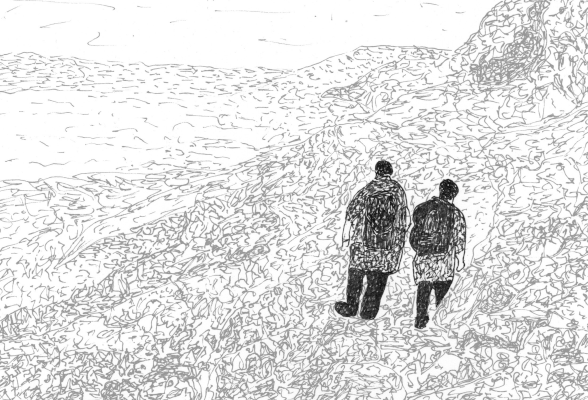
(English) After Helmut had been at the helm for a while, Heinz is slowly waking up from his slumber. It isn’t his plans that are driving the story forward; rather, he is having a completely new and momentous experience. |
 |
(Italiano) Dopo che Helmut ha tenuto le redini per un po', Heinz si sta lentamente risvegliando dal suo sonno profondo. Non sono i suoi piani a far progredire la storia, ma piuttosto un'esperienza completamente nuova e significativa che sta vivendo. |
(Deutsch) Nachdem Helmut eine Weile lang das Ruder in der Hand gehabt hat, wacht Heinz langsam aus seinem Dornröschenschlaf auf. Es sind nicht seine Planungen, die ihn die Geschichte nach vorn bringen lassen, vielmehr macht er eine völlig neue und folgenreiche Erfahrung. Normal Version | ||
Tag 10 1 Helmut: Werd endlich wach, du Pfeife! Es ist schon hell. |
Day 10 Helmut: Wake up already, you doofus! It's broad daylight. |
Jour 10 Helmut : Réveille-toi enfin, espèce d'andouille ! Il fait déjà jour. |
Giorno 10 Helmut: Svegliati finalmente, imbranato! È già giorno. |
Día 10 Helmut: ¡Despierta de una vez, zoquete! Ya es de día. |
2 Heinz: Madame Laila! Die mysteriöse Antiquitätenverkäuferin. |
Heinz: Madame Laila! The mysterious antiques dealer. |
Heinz : Madame Laila ! La mystérieuse marchande d'antiquités. |
Heinz: Madame Laila! La misteriosa venditrice di antiquariato. |
Heinz: ¡Madame Laila! La misteriosa vendedora de antigüedades. |
3 Helmut: (…) Madame Laila, es tut wirklich gut, wieder hier zu sein! Hier hinter den Verkaufsräumen lebst du also. |
Helmut: (...) Madame Laila, it really feels good to be back here! So this is where you live, behind the sales rooms. |
Helmut : (...) Madame Laila, ça fait vraiment du bien d'être de retour ici ! C'est donc derrière les salles de vente que tu habites. |
Helmut: (...) Madame Laila, è davvero bello essere di nuovo qui! Quindi vivi qui dietro, oltre i locali del negozio. |
Helmut: (...) Madame Laila, ¡de verdad sienta bien volver a estar aquí! Así que aquí es donde vives, detrás de las salas de ventas. |
4 Helmut: (…) Jetzt setz dich an den Tisch und tu, was sie gesagt hat! |
Helmut: (...) Now sit down at the table and do what she said! |
Helmut : (...) Maintenant, assieds-toi à la table et fais ce qu'elle a dit ! |
Helmut: (...) Adesso siediti al tavolo e fai quello che ti ha detto! |
Helmut: (...) ¡Ahora siéntate a la mesa y haz lo que ella dijo! |
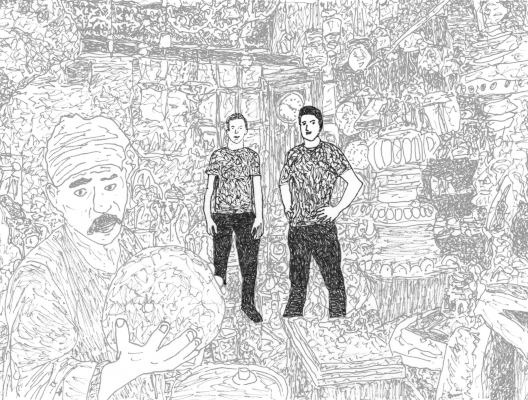
(English) Somehow, Heinz and Helmut always manage to take turns being the strong one. And they don’t even notice it! In this episode, the two of them are faced with a problem they never expected, but they manage to solve it. |
 |
(Italiano) In qualche modo, Heinz e Helmut riescono sempre ad alternarsi nei loro momenti di forza. E non se ne accorgono nemmeno! In questo episodio, i due si trovano davanti a un problema che non avevano previsto, ma riescono a risolverlo. |
(Deutsch) Irgendwie gelingt es Heinz und Helmut immer wieder, sich gegenseitig in ihren starken Phasen abzulösen. Und sie merken es nicht einmal! In dieser Folge stehen die beiden vor einem Problem, mit dem sie nicht gerechnet haben, doch können sie es lösen. Normal Version | ||
Schlecht justiert Tag 15 1 Heinz: Die Nachrichten werden immer absurder, kuck dir das an: die Briten, Deutschen und Franzosen überbieten sich gegenseitig in Angriffsfantasien gegen Russland. Die wollen es echt wissen. Wie verrückt ist das?! |
Calibrated Day 15 Heinz: The news keeps getting more and more absurd. Look at this: the British, Germans, and French are outdoing each other with fantasies of attacking Russia. They really mean business. How crazy is that?! |
Mal calibré Jour 15 Heinz : Les infos deviennent de plus en plus absurdes, regarde ça : les Britanniques, les Allemands et les Français se surpassent les uns les autres dans leurs fantasmes d'attaque contre la Russie. Ils veulent vraiment en découdre. Complètement dingue ! |
Mal calibrato Giorno 15 Heinz: Le notizie diventano sempre più assurde, guarda un po': inglesi, tedeschi e francesi fanno a gara a chi ha le fantasie di attacco più folli contro la Russia. Ci tengono davvero. Ma quanto è pazzesco?! |
Mal calibrado Día 15 Heinz: Las noticias son cada vez más absurdas, mira esto: británicos, alemanes y franceses compiten entre sí con fantasías de ataque contra Rusia. De verdad van en serio. ¡¿Qué tan loco es eso?! |
2 Helmut: Ich hab auf die Fresse gekriegt, während dich das Schicksal beschenkt hat, weil du goldrichtig gelegen hast. Auch wenn das Geschenk nutzlos ist, ist es eine schöne Geste. |
Helmut: I got my ass kicked while fate showered you with gifts because you were spot on. Even if the gift is useless, it's a nice gesture. |
Helmut : Je me suis fait casser la figure pendant que le destin te couvrait de cadeaux parce que tu avais visé juste. Même si ce cadeau est inutile, le geste est appréciable. |
Helmut: Io ho preso botte mentre il destino ti colmava di regali perché avevi visto giusto. Anche se il regalo è inutile, è comunque un bel gesto. |
Helmut: A mí me dieron una paliza mientras el destino te colmaba de regalos porque habías acertado de lleno. Aunque el regalo sea inútil, sigue siendo un bonito gesto. |
3 Helmut: Auf der Bloblaif-Website ist nicht ein einziges Logenmitglied in Amarna beziehungsweise Tall Bani Umran verzeichnet. Irgendjemand muss doch für die Brücke zuständig sein! |
Helmut: There isn't a single Lodge member in Amarna listed on the Bloblaif website, or Tall Bani Umran, respectively. But there must be someone in charge of the Bridge! |
Helmut : Sur le site Bloblaif, il n'y a pas un seul membre de la Loge répertorié à Amarna, ou plutôt à Tall Bani Umran. Il faut bien que quelqu'un soit responsable du Pont ! |
Helmut: Sul sito Bloblaif non è registrato nemmeno un membro della Loggia ad Amarna, o meglio a Tall Bani Umran. Qualcuno dovrà pur essere responsabile del Ponte! |
Helmut: En la página web de Bloblaif no aparece ni un solo miembro de la Logia en Amarna, o más bien en Tall Bani Umran. ¡Pero tiene que haber alguien a cargo del Puente! |
4 Helmut: Natürlich! Der Mann, der mir beim letzten Mal die ägyptischen Gallabiyes verkauft und mich danach zu Madame Laila geschickt hat! Der ist in der Loge? |
Helmut: Of course! The man who sold me those Egyptian galabiyas last time and then sent me to Madame Laila! He's in the Lodge? |
Helmut : Bien sûr ! L'homme qui m'a vendu les gallabiyas égyptiennes la dernière fois avant de m'envoyer chez Madame Laila ! Il fait partie de la Loge ? |
Helmut: Certo! L'uomo che l'ultima volta mi ha venduto le gallabiyya egiziane e poi mi ha mandato da Madame Laila! Fa parte della Loggia? |
Helmut: ¡Claro! ¡El hombre que la última vez me vendió las galabiyas egipcias y luego me envió a ver a Madame Laila! ¿Está en la Logia? |
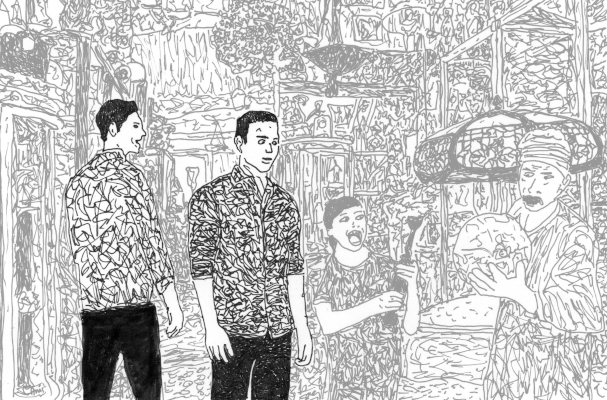
(English) The Boys spend time with friends and have almost become part of the staff at Madame Laila’s antique shop. But even though they seem to be far away from everything and are sweltering in Egypt’s summer heat, things are moving forward. |
 |
(Italiano) I Ragazzi trascorrono del tempo con gli amici e sono ormai quasi parte del personale del negozio di antiquariato di Madame Laila. Ma anche se sembrano lontani da tutto e boccheggiano nella calura dell’estate egiziana, le cose vanno avanti. |
(Deutsch) Die Jungs verbringen Zeit mit Freunden und gehören schon fast zum Personal von Madame Lailas Antiquitätengeschäft. Doch auch wenn sie weit weg von allem zu sein scheinen und in der Sommerhitze Ägyptens brüten, gehen die Dinge voran. Normal Version | ||
Tag 18 1 Helmut: Madame Laila hat gesagt, dass sie für zwei bis drei Stunden mit ihrem Sohn Leute besucht. Wir sollen solange auf den Laden aufpassen. |
Day 18 Helmut: Madame Laila said she and her son are visiting some people for two or three hours. We're supposed to watch the shop until they get back. |
Jour 18 Helmut : Madame Laila a dit qu'elle allait rendre visite à des gens avec son fils pendant deux ou trois heures. On est censés surveiller la boutique en attendant. |
Giorno 18 Helmut: Madame Laila ha detto che andrà a trovare alcune persone con suo figlio per due o tre ore. Nel frattempo dobbiamo badare al negozio. |
Día 18 Helmut: Madame Laila ha dicho que va a visitar a unas personas con su hijo durante dos o tres horas. Mientras tanto, debemos vigilar la tienda. |
2 Helmut: Dieser Schaukelstuhl hier ist ziemlich bequem. Probier den mal! Schaukel schaukel. Madame Laila überlässt uns gern ihr Gästezimmer. Das Problem ist eher, dass du schnarchst. |
Helmut: This rocking chair is pretty comfortable. Give it a try! Rock rock. Madame Laila is happy to let us use her guest room. The real problem is that you snore. |
Helmut : Ce fauteuil à bascule est plutôt confortable. Essaie-le ! Bascule bascule. Madame Laila nous laisse volontiers sa chambre d'amis. Le vrai problème, c'est que tu ronfles. |
Helmut: Questa sedia a dondolo è davvero comoda. Provala! Dondola dondola. Madame Laila ci lascia volentieri la sua camera degli ospiti. Il problema è piuttosto che tu russi. |
Helmut: Esta mecedora es bastante cómoda. ¡Pruébala! Mec mec. Madame Laila nos deja encantada su habitación de invitados. El problema es más bien que tú roncas. |
3 Heinz: Oh, Arabisch! Na, wen haben wir denn da?! Ist das nicht die kleine Muna? Ja, mein Ausländerradio hab ich noch. Übersetzer nennt man das. |
Heinz: Oh, Arabic! Well, who do we have here?! Isn't that little Muna? Yeah, I still have my foreigner radio. We call it a translator. |
Heinz : Oh, de l'arabe ! Alors, qui est-ce qu'on a là ?! Ce n'est pas la petite Muna ? Oui, j'ai toujours ma radio des étrangers. On appelle ça un traducteur. |
Heinz: Oh, arabo! E chi abbiamo qui?! Ma non è la piccola Muna? Sì, la mia radio degli stranieri ce l'ho ancora. Si chiama traduttore. |
Heinz: ¡Oh, árabe! Bueno, ¿y a quién tenemos aquí?! ¿No es la pequeña Muna? Sí, todavía tengo mi radio de los extranjeros. Lo llamamos traductor. |
4 Helmut: Hier ist ein Zettel, du kannst ... Au verdammt, ich hab die Melone losgelassen und sie ist mir auf die Füße gefallen. Alles nass und klebrig hier! |
Helmut: Here's a piece of paper, you can... Aw damn, I let go of the watermelon and it fell on my feet. Everything's wet and sticky now! |
Helmut : Voilà un bout de papier, tu peux... Ah, mince, j'ai lâché la pastèque et elle m'est tombée sur les pieds. Tout est mouillé et collant ici ! |
Helmut: Ecco un foglio, puoi... Ah, maledizione, mi è scivolata l'anguria ed è caduta sui miei piedi. Adesso è tutto bagnato e appiccicoso! |
Helmut: Aquí tienes un papel, puedes... Ay, maldita sea, he soltado la sandía y se me ha caído sobre los pies. ¡Todo está mojado y pegajoso aquí! |
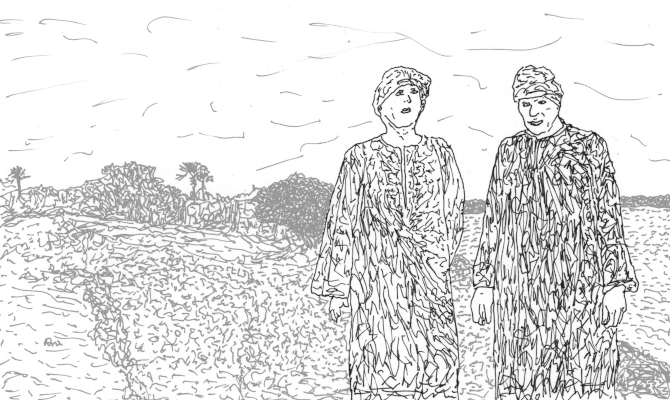
(English) Hot days in Amarna. The Boys enjoy the evening breeze as they walk along the Nile to meet their friend Abed. Children are playing by the water while their parents sit beneath the palm trees, watching them... Everything would be perfect if those disturbances didn't keep happening. |
 |
(Italiano) Giornate calde ad Amarna. I Ragazzi si godono la brezza serale mentre camminano lungo il Nilo per incontrare il loro amico Abed. I bambini giocano in riva al fiume, i genitori stanno seduti sotto le palme e li guardano… Tutto andrebbe bene, se non fosse per questi continui disturbi. |
(Deutsch) Heiße Tage in Amarna. Die Jungs genießen die abendliche Brise, als sie am Nil entlanggehen, um ihren Freund Abed zu treffen. Kinder spielen am Wasser, Eltern sitzen unter den Palmen und sehen ihnen zu … Alles wäre gut, wenn nicht immer wieder diese Störungen auftreten würden. Normal Version | ||
Tag 21 1 Helmut: Da, siehst du da hinten das kleine blaue Boot neben der Palme? Wo die Kinder ins Wasser springen. Da sind wir mit Abed verabredet. |
Day 21 Helmut: There. See that little blue boat over there next to the palm tree? Where the kids are jumping into the water. That's where we're meeting Abed. |
Jour 21 Helmut : Là, tu vois la petite barque bleue là-bas, à côté du palmier ? Là où les enfants sautent dans l'eau. C'est là qu'on a rendez-vous avec Abed. |
Giorno 21 Helmut: Là, vedi quella piccola barca blu laggiù accanto alla palma? Dove i bambini si tuffano nell'acqua. È lì che abbiamo appuntamento con Abed. |
No paran Día 21 Helmut: Mira, ¿ves aquella barquita azul junto a la palmera, allí al fondo? Donde los niños se tiran al agua. Ahí hemos quedado con Abed. |
2 Helmut: Maria kann jetzt schon ganz gut laufen, weißt du? Und sie singt, das ist neu. Es klingt wie Sphärenmusik und wird von Monat zu Monat komplexer. |
Helmut: Maria can already walk pretty well, you know? And she sings now, that's new. Sounds like music of the spheres and gets more complex every month. |
Helmut : Maria marche déjà plutôt bien, tu sais ? Et elle chante maintenant, c'est nouveau. Ça ressemble à une musique des sphères et ça devient plus complexe chaque mois. |
Helmut: Maria cammina già piuttosto bene, sai? E adesso canta, è una novità. Sembra musica delle sfere e diventa ogni mese più complessa. |
Helmut: ¿Sabes? María ya camina bastante bien. Y ahora canta, eso es nuevo. Suena como música de las esferas y se vuelve más compleja cada mes. |
3 Heinz: Azad hat jedenfalls recht. Wir haben nur einen Schuss und der muss treffen. Die Amerikaner... ach Quatsch, Vito und das Chamäleon dürfen nicht auf die Idee kommen, uns nächstes Jahr wieder anzugreifen. |
Heinz: Azad is right, anyway. We've only got one shot, and it has to hit the mark. The Americans... erm, nonsense, Vito and the Chameleon mustn't get the idea that they can attack us again next year. |
Heinz : En tout cas, Azad a raison. On n'a qu'un seul coup à jouer et il faut qu'il fasse mouche. Les Américains... enfin non, Vito et le Caméléon ne doivent surtout pas avoir l'idée de nous attaquer de nouveau l'année prochaine. |
Heinz: In ogni caso Azad ha ragione. Abbiamo un solo colpo e deve andare a segno. Gli americani... ma no, Vito e il Camaleonte non devono avere l'idea di attaccarci di nuovo l'anno prossimo. |
Heinz: En cualquier caso, Azad tiene razón. Tenemos un solo tiro y tiene que dar en el blanco. Los estadounidenses... eh no, Vito y el Camaleón no deben ni pensar en volver a atacarnos el año que viene. |
4 Heinz: Nein nein, morgen werd ich... Sag mal, ist das ein Programm, das bei dir abläuft? Du hörst nicht auf damit, Entscheidungen für uns beide zu treffen. |
Heinz: No, no, tomorrow I'm... Hey, is this some kind of program running inside you? You just won't stop making decisions for both of us. |
Heinz : Non, non, demain je vais... Dis, c'est un programme qui tourne chez toi ? Tu ne t'arrêtes jamais de prendre des décisions pour nous deux. |
Heinz: No, no, domani io... Senti, ma è un programma che gira dentro di te? Non la smetti mai di prendere decisioni per tutti e due. |
Heinz: No, no, mañana voy a... Oye, ¿es que tienes algún tipo de programa metido en la cabeza? No paras de tomar decisiones por los dos. |
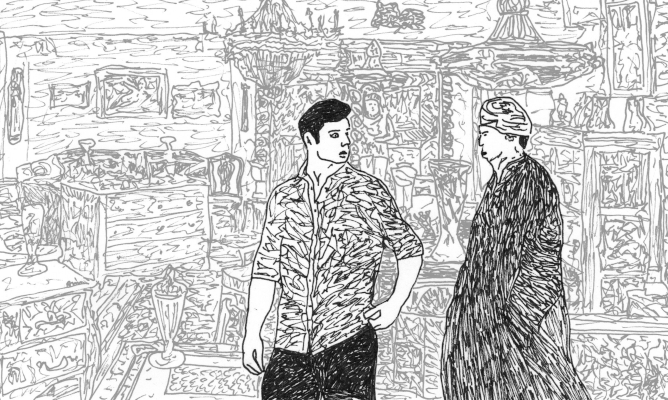
(English) The two days apart did the Boys good, and by the time Helmut returns, the tension between them has almost faded away. Both have remarkable stories to tell that, in the end, come together in a wondrous way as one. |
 |
(Italiano) I due giorni trascorsi lontani l’uno dall’altro hanno fatto bene ai Ragazzi e, al ritorno di Helmut, le tensioni sono quasi dimenticate. Entrambi hanno storie sorprendenti da raccontare che, alla fine, si uniscono in modo meraviglioso fino a diventarne una sola. |
(Deutsch) Es hat den Jungs gutgetan, zwei Tage Pause voneinander zu haben, und die Spannungen sind bei Helmuts Rückkehr fast vergessen. Beide haben erstaunliche Geschichten zu erzählen, die sich am Ende auf wundersame Weise zu einer einzigen verbinden. Normal Version | ||
Tag 23 1 Helmut: Hup huup. HUUUUUP |
Day 23 Helmut: Honk hooonk. HOOOOOOONK |
Jour 23 Helmut : Corn coorn. COOOOOORN |
Giorno 23 Helmut: Tromb troomb. TROOOOOOOMP |
Día 23 Helmut: Boc booc. BOOOOOC |
2 Helmut: Ich wusste es! Hab ich nicht prophezeit, dass ich in dieser Staffel ständig auf die Fresse kriege? Ich hasse meinen Job! |
Helmut: I knew it! Didn't I predict I'd keep getting my face smashed in all season long? I hate my job! |
Helmut : Je le savais ! Je l'avais pas prédit que j'allais en prendre plein la gueule tout au long de cette saison ? Je déteste mon boulot ! |
Helmut: Lo sapevo! Non l'avevo predetto che in questa stagione avrei preso botte in continuazione? Odio il mio lavoro! |
Helmut: ¡Lo sabía! ¿No profeticé que en esta temporada me iban a dar por la cara constantemente? ¡Odio mi trabajo! |
3 Heinz: Klingt nicht sehr dramatisch. |
Heinz: Doesn't sound very dramatic. |
Heinz : Ça n'a pas l'air très dramatique. |
Heinz: Non sembra molto drammatico. |
Heinz: No parece muy dramático. |
4 Helmut: „Geht mit dem Wasserbüffelreiter zu den drei Palmen und lasst ihn leiden für die Sünden anderer. Er wird es verstehen. Alle werden es verstehen.” Das ist ein schlechter Scherz, oder? |
Helmut: "Go with the water buffalo rider to the three palm trees and let him suffer for the sins of others. He will understand. Everyone will understand." This is a bad joke, right? |
Helmut : « Allez avec le cavalier de buffle d'eau jusqu'aux trois palmiers et laissez-le souffrir pour les péchés des autres. Il comprendra. Tout le monde comprendra. » C'est une mauvaise blague, hein ? |
Helmut: "Andate con il cavaliere del bufalo d'acqua alle tre palme e lasciatelo soffrire per i peccati degli altri. Lui capirà. Tutti capiranno." È uno scherzo di cattivo gusto, vero? |
Helmut: "Id con el jinete de búfalos de agua hasta las tres palmeras y dejad que sufra por los pecados de otros. Él lo comprenderá. Todos lo comprenderán." Es una broma de mal gusto, ¿verdad? |
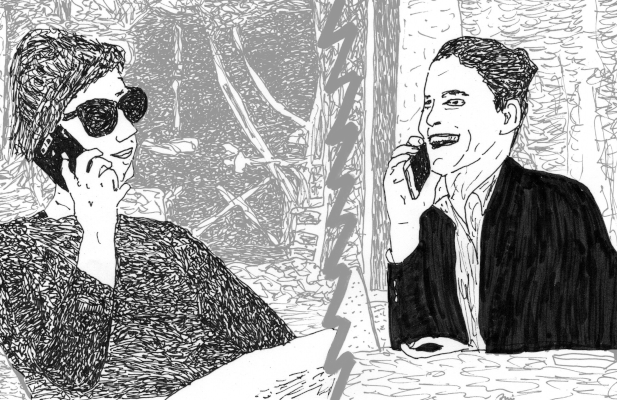
(English) For two weeks now, Fiona has devoted herself wholeheartedly to taking care of Franz, who feels perfectly at home in Wuppertal-Elberfeld. When she finally has a longer conversation with Fanni to catch up on the latest news from the office, she's absolutely astonished. |
 |
(Italiano) Da ormai due settimane Fiona si dedica con tutto il cuore a Franz, che si trova benissimo a Wuppertal-Elberfeld. Quando finalmente riesce ad avere una lunga conversazione con Fanni per informarsi sulle ultime novità dell'ufficio, rimane a bocca aperta. |
(Deutsch) Zwei Wochen lang hat sich Fiona jetzt hingebungsvoll um Franz gekümmert, der sich in Wuppertal-Elberfeld pudelwohl fühlt. Als sie endlich ein längeres Gespräch mit Fanni führt, um sich über die Neuigkeiten im Büro zu informieren, kommt sie aus dem Staunen nicht heraus. Normal Version | ||
Über Kreuz Tag 24 1 Fiona: Fanni, hi! Endlich hab ich Zeit für ein vernünftiges Gespräch. Alles klar bei euch? |
Day 24 Fiona: Fanni, hi! Finally I find the time for a proper conversation. Everything okay with you guys? |
Jour 24 Fiona : Fanni, salut ! Enfin j'ai le temps de discuter tranquillement avec toi. Tout va bien chez vous ? |
Giorno 24 Fiona: Fanni, ciao! Finalmente ho tempo per una conversazione come si deve. Tutto bene da voi? |
Día 24 Fiona: ¡Fanni, hola! Por fin tengo tiempo para una conversación como es debido. ¿Todo bien por ahí? |
2 Fanni: Ah, vielleicht entdeckt er einen Bazillus und findet ein Heilmittel, mit dem er die Menschheit erpresst. Das könnte gehen. |
Fanni: Ah, maybe he'll discover a bacillus and find a cure that he can use to blackmail humanity. That could work. |
Fanni : Ah, peut-être qu'il va découvrir un bacille et trouver un remède avec lequel il fera chanter l'humanité. Ça pourrait marcher. |
Fanni: Ah, magari scopre un bacillo e trova una cura con cui ricatta l'umanità. Potrebbe funzionare. |
Fanni: Ah, quizá descubra un bacilo y encuentre una cura con la que chantajear a la humanidad. Eso podría funcionar. |
3 Fanni: Den Kaffee macht jetzt Isabel, unsere Praktikantin. Jenny hat sie letzte Woche eingestellt. |
Fanni: Isabel, our intern, makes the coffee now. Jenny hired her last week. |
Fanni : C'est Isabel, notre stagiaire, qui fait le café maintenant. Jenny l'a engagée la semaine dernière. |
Fanni: Adesso il caffè lo prepara Isabel, la nostra stagista. Jenny l'ha assunta la settimana scorsa. |
Fanni: Ahora el café lo prepara Isabel, nuestra becaria. Jenny la contrató la semana pasada. |
4 Fiona: Sag mal, wovon redest du eigentlich? Hab ich außer den tiefgreifenden Veränderungen in meiner eigenen PR-Agentur noch was verpasst? |
Fiona: Hey, what exactly are you talking about? Have I missed something else, apart from the profound changes at my own PR agency? |
Fiona : Mais de quoi tu parles exactement ? J'ai raté autre chose, à part les changements profonds dans ma propre agence de relations publiques? |
Fiona: Senti, di cosa stai parlando esattamente? Mi sono persa qualcosa oltre ai profondi cambiamenti nella mia stessa agenzia di PR? |
Fiona: Oye, ¿de qué estás hablando exactamente? ¿Me he perdido algo más, aparte de los cambios radicales en mi propia agencia de relaciones públicas? |
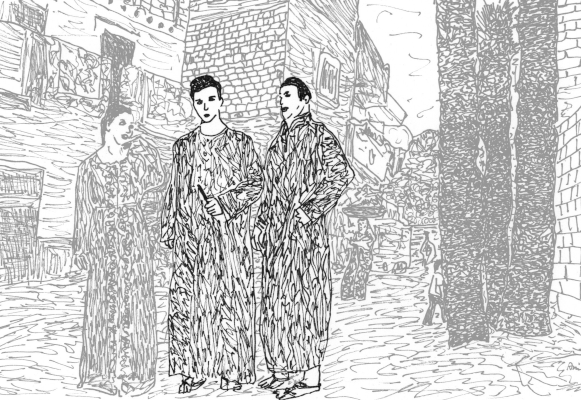
(English) Helmut is hiding because he doesn't want to become a victim. Soon after he realizes that his decision isn't a real solution, he's drawn back into the story. It doesn't take long before he's taking the reins once again. |
 |
(Italiano) Helmut si nasconde perché non vuole diventare una vittima. Quando si rende conto che la sua decisione non rappresenta una vera soluzione, viene subito trascinato di nuovo nella storia. Non passa molto tempo prima che riprenda ancora una volta le redini della situazione. |
(Deutsch) Helmut versteckt sich, denn er will nicht zum Opfer werden. Als er merkt, dass seine Entscheidung keine wirkliche Lösung darstellt, wird er auch schon wieder in die Geschichte gezogen. Es dauert nicht lange, bis er die Zügel ein weiteres Mal in die Hand nimmt. Normal Version | ||
Tag 24 1 Heinz: Ah, Jamaal und Lutfi! Irgendwelche Neuigkeiten? Das gibt's doch nicht! Ihr habt das ganze Dorf durchsucht und überall geklingelt? Oh, Mann. Madame Laila, Mustafa, Abed und seine Freunde haben auch keine Spur entdeckt. |
Day 24 Heinz: Ah, Jamaal and Lutfi! Any news? You've got to be kidding me! You searched the whole village and rang every doorbell? Oh, man. Madame Laila, Mustafa, Abed, and his friends didn't find a trace of him either. |
Jour 24 Heinz : Ah, Jamaal et Lutfi ! Des nouvelles ? Mais c'est pas possible ! Vous avez fouillé tout le village et sonné partout ? Oh là là. Madame Laila, Mustafa, Abed et ses amis n'ont pas trouvé la moindre trace non plus. |
Giorno 24 Heinz: Ah, Jamaal e Lutfi! Qualche novità? Non è possibile! Avete cercato in tutto il villaggio e suonato a tutte le porte? Oh, cavolo. Anche Madame Laila, Mustafa, Abed e i suoi amici non hanno trovato nessuna traccia. |
Día 24 Heinz: ¡Ah, Jamaal y Lutfi! ¿Alguna novedad? ¡No puede ser! ¿Habéis buscado por todo el pueblo y llamado a todas las puertas? Vaya, tío. Madame Laila, Mustafa, Abed y sus amigos tampoco han encontrado ninguna pista. |
2 Heinz: Wie ich es gesagt hab: Wenn man ihn richtig justiert, gibt er hilfreiche und klare Antworten. Ich muss dafür nur gut drauf sein und ... |
Heinz: Like I said: If you adjust it correctly, it gives helpful and clear answers. I just have to be in a good mood and… |
Heinz : Comme je l'ai dit : si on le règle correctement, il donne des réponses utiles et claires. Il faut seulement que je sois de bonne humeur et… |
Heinz: Come ho detto: se la regoli bene, dà risposte utili e chiare. Devo solo essere di buon umore e… |
Heinz: Como he dicho: si lo ajustas correctamente, da respuestas claras y útiles. Para eso solo tengo que estar de buen humor y… |
3 Helmut: Seit wann interessierst du dich für Fußball? |
Helmut: Since when are you interested in soccer? |
Helmut : Depuis quand tu t'intéresses au foot ? |
Helmut: Da quando ti interessa il calcio? |
Helmut: ¿Desde cuándo te interesa el fútbol? |
4 Helmut: (Wieso kann der so was? Erst kriegt er den Stift, dann wird er zum Fußballwunder. Und ich soll für die Sünden anderer leiden. Ist das gerecht?) |
Helmut: (How can he do something like that? First he gets the pen, then he becomes a soccer miracle. And I'm supposed to suffer for the sins of others. Is that fair?) |
Helmut : (Comment il peut faire un truc pareil ? D'abord il reçoit le stylo, ensuite il devient une star du football. Et moi, je suis censé souffrir pour les péchés des autres. C'est juste, ça ?) |
Helmut: (Come fa a fare una cosa del genere? Prima ottiene la penna, poi diventa un fenomeno del calcio. E io dovrei soffrire per i peccati degli altri. È giusto?) |
Helmut: (¿Cómo puede hacer algo así? Primero consigue el bolígrafo, después se convierte en un fenómeno del fútbol. Y yo tengo que sufrir por los pecados de otros. ¿Es justo?) |
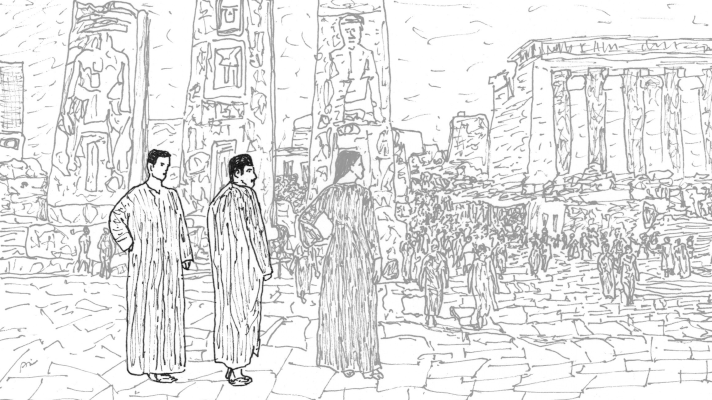
(English) Helmut’s overzealousness has taken the three of them back to the early sixth century, to the legendary African kingdom of Aksum on the Red Sea. Heinz immediately senses danger, but the water buffalo rider charges ahead boldly and has no intention of letting this historic opportunity pass him by. |
 |
(Italiano) L’eccessivo zelo di Helmut ha portato i tre all’inizio del VI secolo, nel leggendario regno africano di Axum sul Mar Rosso. Heinz fiuta subito il pericolo, ma il cavaliere del bufalo d’acqua procede con decisione e non ha alcuna intenzione di lasciarsi sfuggire questa occasione storica. |
(Deutsch) Helmuts Übereifer hat die drei ins frühe sechste Jahrhundert gebracht, ins legendäre afrikanische Reich von Aksum am Roten Meer. Heinz wittert sofort Gefahren, doch der Wasserbüffelreiter geht forsch voran und hat nicht vor, sich diese historische Gelegenheit entgehen zu lassen. Normal Version | ||
Tag 24 1 Heinz: Wupp |
Day 24 Heinz: Whoop |
Jour 24 Heinz : Woup |
Giorno 24 Heinz: Vup |
Día 24 Heinz: Vup |
2 Heinz: Das Beste wird sein, wenn wir sofort abreisen, bevor der Schmied zurück in seine Werkstatt kommt und wir Ärger kriegen. |
Heinz: The best thing to do is to travel back immediately, before the blacksmith returns to his workshop and we get into trouble. |
Heinz : Le mieux serait de repartir immédiatement avant que le forgeron ne retourne dans son atelier et qu'on ait des ennuis. |
Heinz: La cosa migliore sarà tornare subito indietro, prima che il fabbro torni nella sua bottega e che ci cacciamo nei guai. |
Heinz: Lo mejor será que volvamos inmediatamente antes de que el herrero regrese a su taller y nos metamos en problemas. |
3 Helmut: (…) Böööööörps |
Helmut: (…) Buuuuuurp |
Helmut : (…) Buuuuuurp |
Helmut: (…) Buuuuuurp |
Helmut: (…) Buuuuuurp |
4 Heinz: Ha! Dieses Mal liegt Helmut gar nicht so falsch mit seinem Italienisch für alle Gelegenheiten! |
Heinz: Ha! This time Helmut isn't completely wrong with his Italian for all occasions! |
Heinz : Ha ! Cette fois, Helmut n'a pas complètement tort avec son italien passe-partout ! |
Heinz: Ah! Questa volta Helmut non ha poi tutti i torti con il suo italiano per ogni occasione! |
Heinz: ¡Ja! ¡Esta vez Helmut no se equivoca del todo con su italiano para todas las ocasiones! |
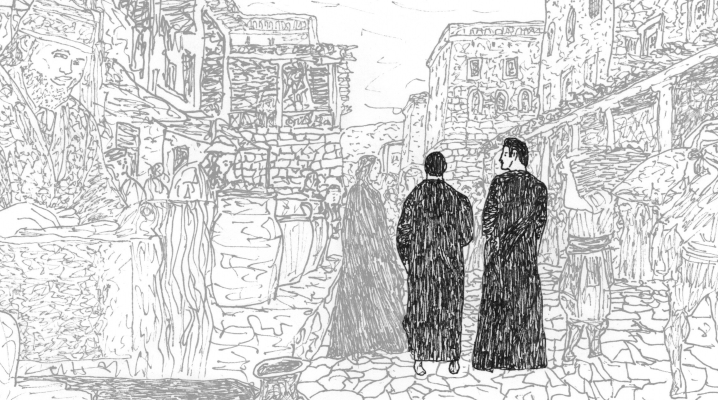
(English) Later that evening, the pen starts writing again, but this time in a language they don't understand. Heinz, Helmut, and Madame Laila walk through Aksum, continuing their search the next day for a translator. Before they find one, Helmut has a small solo adventure. |
 |
(Italiano) Più tardi, quella sera, la penna ricomincia a scrivere, ma in una lingua che non capiscono. Heinz, Helmut e Madame Laila girano per Axum, anche il giorno dopo, alla ricerca di un traduttore. Prima di trovarne uno, Helmut vive una piccola avventura in solitaria. |
(Deutsch) Später am Abend schreibt der Stift wieder, allerdings in einer Sprache, die sie nicht verstehen. Heinz, Helmut und Madame Laila laufen durch Aksum, auch am nächsten Tag, um einen Übersetzer zu suchen. Bevor sie ihn finden, erlebt Helmut ein kleines Solo-Abenteuer. Normal Version | ||
Interpretare Tag 25 1 Heinz: Ich weiß es nicht, Madame Laila. Er wollte nur kurz auf Klo gehen. Könntest du telepathisch Kontakt aufnehmen, falls ... ah, da ist er ja wieder. Mensch, Helmut! Was ist? Du bist ganz außer Atem. |
Interpretare Day 25 Heinz: I don't know, Madame Laila. He just wanted to use a restroom real quick. Could you try contacting him telepathically in case... ah, there he is. Geez, Helmut! What happened? You're completely out of breath. |
Interpretare Jour 25 Heinz : Je ne sais pas, Madame Laila. Il voulait juste aller rapidement aux toilettes. Tu pourrais le contacter par télépathie au cas où... ah, le voilà. Mais enfin, Helmut ! Qu'est-ce qu'il y a ? Tu es complètement essoufflé. |
Interpretare Giorno 25 Helmut: Non lo so, Madame Laila. Voleva solo fare un salto in bagno. Potresti contattarlo telepaticamente nel caso... ah, eccolo che torna. Cavolo, Helmut! Che succede? Sei tutto senza fiato. |
Interpretare Día 25 Heinz: No lo sé, Madame Laila. Solo quería ir un momento al baño. ¿Podrías contactar con él telepáticamente por si acaso… ah, ahí está otra vez. ¡Vaya, Helmut! ¿Qué pasa? Estás completamente sin aliento. |
2 Heinz: Ich glaub das nicht! Du hast die Bundeslade mit Moses Gebotstafeln aufgemacht. Beim touristischen Rumstöbern! |
Heinz: I can't believe it! You opened the Ark of the Covenant with Moses' tablets! While casually snooping around as a tourist! |
Heinz : J'y crois pas ! Tu as ouvert l'Arche d'Alliance avec les Tables de la Loi de Moïse ! En fouinant tranquillement en tant que touriste ! |
Heinz: Non ci posso credere! Hai aperto l'Arca dell'Alleanza con le Tavole della Legge di Mosè! Durante una curiosata da turista! |
Heinz: ¡No me lo puedo creer! ¡Has abierto el Arca de la Alianza con las tablas de los mandamientos de Moisés! ¡Mientras curioseabas como un turista! |
3 Heinz: Der Stift hätte ruhig die Übersetzung mitliefern können! Echt jetzt. |
Heinz: The pen should really have included the translation! I mean, come on! |
Heinz : Le stylo aurait quand même pu fournir la traduction avec ! Franchement. |
Heinz: La penna avrebbe davvero dovuto includere la traduzione! Insomma, dai! |
Heinz: No habría estado de más que el bolígrafo hubiera incluido una traducción. De verdad. |
4 Helmut: Zumindest den Anfang: „Ich bin der Stift aus Aksum, wieder zu Hause.” Aber dann: „Ich habe mich selbst gesehen und bin jetzt frei.” Das muss ein Übersetzungsfehler sein. Es ergibt keinen Sinn. |
Helmut: At least the beginning: "I am the pen from Aksum, back home again." But then: "I have seen myself and now I am free." That must be a translation error. It doesn't make any sense. |
Helmut : Au moins le début : « Je suis le stylo d'Aksoum, de retour chez moi. » Mais ensuite : « Je me suis vu et je suis libre maintenant. » Ça doit être une erreur de traduction. Ça n'a aucun sens. |
Helmut: Almeno l'inizio: "Io sono la penna di Axum, tornata a casa." Ma poi: "Ho visto me stessa e ora sono libera." Dev'essere un errore di traduzione. Non ha alcun senso. |
Helmut: Al menos el principio: "Soy el bolígrafo de Aksum, de vuelta en casa." Pero después: "Me he visto a mí mismo y ahora soy libre." Tiene que ser un error de traducción. No tiene sentido. |
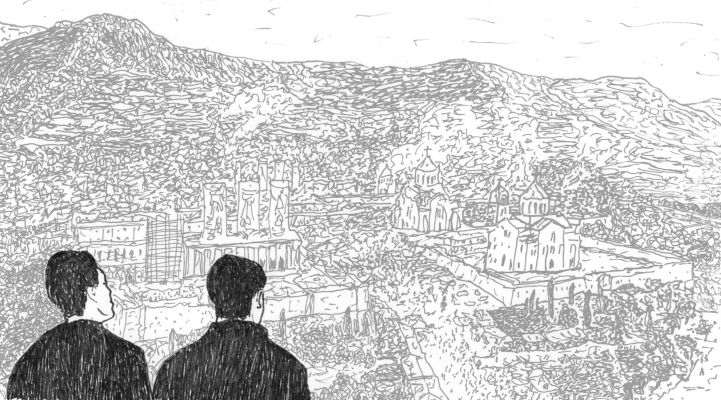
(English) Sometimes you have to move away from the group a little to come up with good ideas. Heinz and Helmut are looking down at the city from one of the many hills, while Madame Laila is at home learning about Aksumite cuisine from the blacksmith’s wife. |
 |
(Italiano) A volte bisogna allontanarsi un po’ dal gruppo per avere delle buone idee. Heinz e Helmut osservano la città dall’alto di una delle tante colline, mentre Madame Laila, a casa, si fa spiegare la cucina aksumita dalla moglie del fabbro. |
(Deutsch) Manchmal muss man sich ein wenig von der Gruppe entfernen, um auf gute Ideen zu kommen. Heinz und Helmut blicken von einem der vielen Hügel auf die Stadt hinab, während sich Madame Laila zu Hause von der Frau des Schmieds die aksumitische Küche erklären lässt. Normal Version | ||
Tag 26 1 Helmut: Hier auf dem Hügel hat man einen guten Überblick. Hätten wir doch bloß unsere Handys mitgenommen! Dann könnten wir Fotos machen. Kuck doch, die Elefanten! |
Day 26 Helmut: Up here on the hill you get a great view. If only we'd brought our phones! Then we could take pictures. Look, the elephants! |
Jour 26 Helmut : D'ici, sur la colline, on a une belle vue d'ensemble. Si seulement on avait pris nos portables ! On pourrait faire des photos. Regarde donc, les éléphants ! |
Giorno 26 Helmut: Da qui sulla collina si ha una bella panoramica. Se solo avessimo portato i nostri cellulari! Potremmo fare delle foto. Guarda, gli elefanti! |
Día 26 Helmut: Desde aquí arriba, en la colina, se tiene una vista estupenda. ¡Ojalá hubiéramos traído nuestros móviles! Entonces podríamos hacer fotos. ¡Mira, los elefantes! |
2 Helmut: Sie könnten sie durch Latein ersetzen, das wäre mal praktisch. Sag mal, was ich dich fragen wollte: Hattest du nicht Latein in der Schule? |
Helmut: They could replace it with Latin, that would be practical. Say, what I wanted to ask you: Didn't you have Latin in school? |
Helmut : Ils pourraient la remplacer par le latin, ce serait pratique. Dis-moi, ce que je voulais te demander : tu n'avais pas fait du latin à l'école ? |
Helmut: Potrebbero sostituirla con il latino, sarebbe pratico. Senti, quello che volevo chiederti: non avevi fatto latino a scuola? |
Helmut: Podrían sustituirla por el latín, eso sí que sería práctico. Oye, lo que quería preguntarte: ¿no dabas latín en la escuela? |
3 Heinz: Oh. Na dann lass uns das Mädel schnell finden! |
Heinz: Oh. Well then, let's find the girl quickly! |
Heinz : Oh. Eh bien, alors trouvons vite cette fille ! |
Heinz: Oh. Beh, allora troviamo subito quella ragazza! |
Heinz: Ah. Bueno, pues ¡vamos a encontrar a la chica rápido! |
4 Heinz: Vielleicht ist es das auch. Lass mal überlegen ... Bevor wir Bushras Geheimnis verstehen können, müssen wir den Stift verstehen, und der ist vor genau zwei Tagen in der Schmiede entstanden. Hier in Aksum. |
Heinz: Maybe it is. Let's think about it... Before we can understand Bushra's secret, we have to understand the pen, and it was created exactly two days ago in the blacksmith's workshop. Here in Aksum. |
Heinz : Peut-être que ça l'est. Laisse-moi réfléchir... Avant de pouvoir comprendre le secret de Bushra, il faut comprendre le stylo, et celui-ci a été créé il y a exactement deux jours dans la forge. Ici, à Aksoum. |
Heinz: Forse lo è. Riflettiamoci un po'... Prima di poter capire il segreto di Bushra, dobbiamo capire la penna, e questa è nata esattamente due giorni fa nella fucina. Qui ad Axum. |
Heinz: Quizá lo sea. Déjame pensar... Antes de poder entender el secreto de Bushra, tenemos que entender el bolígrafo, y esta nació exactamente hace dos días en la herrería. Aquí en Axum. |
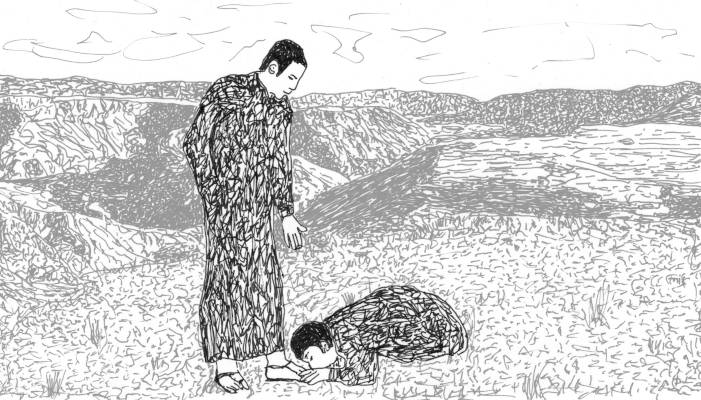
(English) Heinz can solve a small part of the mystery in this episode, as he has a fruitful conversation with Tekle, who commissioned the pen. Heinz notices that the behavior of Tekle’s spirit is unusual compared to his previous encounters with spirits. |
 |
(Italiano) Una piccola parte del mistero può essere risolta da Heinz in questo episodio, perché ha una conversazione ricca di informazioni con Tekle, colui che ha commissionato la realizzazione della penna. Heinz nota che il comportamento dello spirito di Tekle è insolito rispetto ai suoi precedenti incontri con gli spiriti. |
(Deutsch) Einen kleinen Teil des Rätsels kann Heinz in dieser Folge lösen, denn er führt ein ergiebiges Gespräch mit Tekle, der den Stift in Auftrag gegeben hat. Heinz fällt das Verhalten von Tekles Geist auf, das im Vergleich zu früheren Begegnungen mit Geistern untypisch ist. Normal Version | ||
Der Blitz Tag 26 1 Heinz: Tekle? |
The Lightning Day 26 Heinz: Tekle? |
La Foudre Jour 26 Heinz : Tekle ? |
Il Fulmine Giorno 26 Heinz: Tekle? |
El Rayo Día 26 Heinz: ¿Tekle? |
2 Helmut: Du kennst es nicht? Aber wie ...? Welcher Gott hat dich eigentlich geschickt? |
Helmut: You don't know it? But how...? Which god actually sent you? |
Helmut : Tu ne le connais pas ? Mais comment... ? C'est quel dieu qui t'a envoyé, au juste ? |
Helmut: Non lo conosci? Ma come…? Quale dio ti ha mandato, in realtà? |
Helmut: ¿No lo conoces? Pero ¿cómo...? Entonces, ¿qué dios te ha enviado? |
3 Heinz: Schon gut. Was ist dann passiert? |
Heinz: You're welcome. What happened then? |
Heinz : De rien. Et ensuite, qu'est-ce qui s'est passé ? |
Heinz: Non c'è di che. E poi cos'è successo? |
Heinz: No pasa nada. ¿Y qué pasó después? |
4 Heinz: Sofort. Der Hirte, was war das für einer? Irgendwelche Auffälligkeiten? |
Heinz: Soon. The shepherd, what was he like? Anything unusual? |
Heinz : Bientôt. Le berger, c'était quel genre de type ? Quelque chose d'inhabituel ? |
Heinz: Subito. Il pastore, che tipo era? Aveva qualcosa di particolare? |
Heinz: Enseguida. El pastor, ¿qué tipo de persona era? ¿Tenía algo peculiar? |
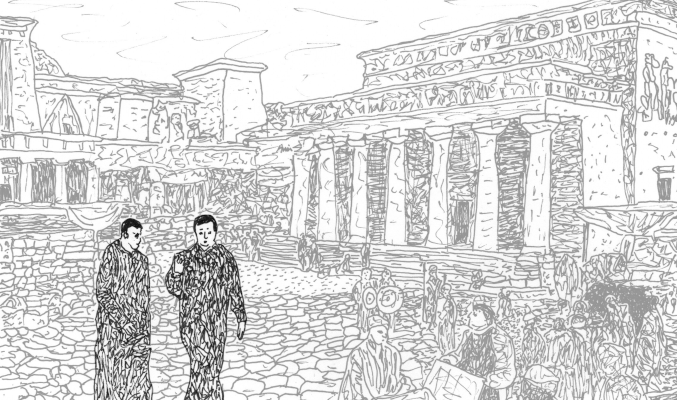
(English) On the way back from the hill, after another interesting encounter in the city, the Boys think about the pen. Helmut suggests contacting Tekle once again to clear up the remaining questions, because back in Egypt, people are slowly starting to worry about the travelers. |
 |
(Italiano) Sulla via del ritorno dalla collina, dopo un altro incontro interessante in città, i Ragazzi riflettono sulla penna. Helmut propone di contattare di nuovo Tekle per chiarire le ultime domande, perché in Egitto cominciano lentamente a preoccuparsi per i viaggiatori. |
(Deutsch) Auf dem Rückweg vom Hügel, nach einer weiteren interessanten Begegnung in der Stadt, denken die Jungs über den Stift nach. Helmut schlägt vor, Tekle noch einmal zu kontaktieren, um die letzten Fragen zu klären, denn in Ägypten macht man sich langsam Sorgen um die Reisenden. Normal Version | ||
Reinen Herzens Tag 26 1 Helmut: Saladin, Baal, Pinocchio? Sag mal, was für Scheiße hast du dem Typ erzählt?! |
Pure of Heart Day 26 Helmut: Saladin, Baal, Pinocchio? Seriously, what kind of bullshit did you tell that guy?! |
Le Cœur pur Jour 26 Helmut : Saladin, Baal, Pinocchio ? Dis donc, c'est quoi ces conneries que t'as racontées à ce type ?! |
Il Cuore puro Giorno 26 Helmut: Saladino, Baal, Pinocchio? Ma che razza di stronzate hai raccontato a quel tizio?! |
El Corazón puro Día 26 Helmut: ¿Saladino, Baal, Pinocho? Oye, ¿qué mierda le has contado a ese tío?! |
2 Helmut: Ich halt mich lieber an die Römer. Unsere Mutternation! Die Bäder, die Kultur, die Baukunst, die Überlegenheit ... |
Helmut: I'd rather stick with the Romans. Our mother nation! The baths, the culture, the architecture, the superiority... |
Helmut : Moi, je préfère les Romains. Notre nation mère ! Les bains, la culture, l'architecture, la supériorité... |
Helmut: Io preferisco i Romani. La nostra nazione madre! Le terme, la cultura, l'architettura, la superiorità... |
Helmut: Yo prefiero a los romanos. ¡Nuestra nación madre! Los baños, la cultura, la arquitectura, la superioridad... |
3 Helmut: Gehen wir das Gespräch noch mal durch! Tekle hat den Metallklumpen nach dem Blitzeinschlag in sein Dorf gebracht, hast du erzählt. |
Helmut: Let's go over the conversation again! You said Tekle brought the lump of metal to his village after the lightning strike. |
Helmut : Repassons la conversation ! Tu as raconté que Tekle avait rapporté le morceau de métal dans son village après la foudre. |
Helmut: Ripassiamo la conversazione! Hai raccontato che Tekle ha portato il pezzo di metallo nel suo villaggio dopo il fulmine. |
Helmut: ¡Repasemos la conversación! Contaste que Tekle llevó el trozo de metal a su pueblo después del rayo. |
4 Helmut: (…) Heinz, jetzt schlafen alle. Willst du noch mal mit Tekle sprechen? Madame Laila hat gesagt, dass wir morgen zurückreisen sollten, weil ihre Leute sich bestimmt langsam Sorgen machen. |
Helmut: (...) Heinz, everyone's asleep now. Do you want to talk to Tekle one more time? Madame Laila said we should head back tomorrow because her people are probably starting to worry. |
Helmut : (...) Heinz, tout le monde dort maintenant. Tu veux encore parler une fois à Tekle ? Madame Laila a dit qu'on devrait repartir demain, parce que les siens commencent sûrement à s'inquiéter. |
Helmut: (...) Heinz, adesso dormono tutti. Vuoi parlare ancora una volta con Tekle? Madame Laila ha detto che domani dovremmo tornare indietro, perché la sua gente comincerà sicuramente a preoccuparsi. |
Helmut: (...) Heinz, ahora ya están todos dormidos. ¿Quieres hablar otra vez con Tekle? Madame Laila dijo que mañana deberíamos regresar, porque su gente seguramente ya estará empezando a preocuparse. |
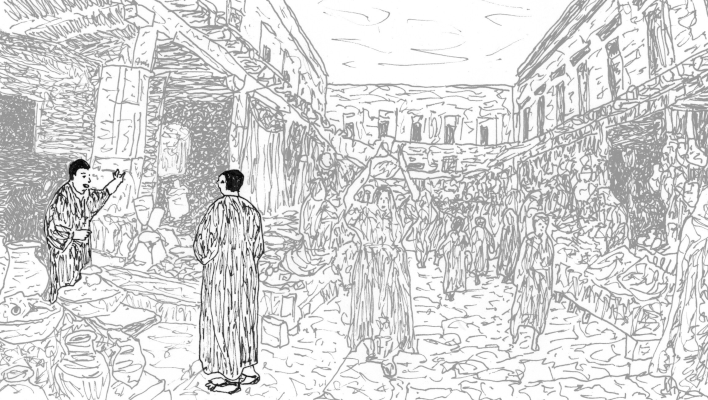
(English) Everything points to the three travelers returning to their own time now to solve the rest of the mystery from Egypt. In the blacksmith's forge, where their stay in Aksum began, it also comes to an end. Just not in the way they imagined. |
 |
(Italiano) Tutto lascia pensare che i tre viaggiatori dovrebbero ormai tornare al loro tempo per risolvere il resto del mistero dall'Egitto. Nella fucina, dove è iniziato il loro soggiorno ad Axum, esso giunge anche al termine. Ma in un modo completamente diverso da come se lo erano immaginato. |
(Deutsch) Alles spricht dafür, dass die drei Reisenden jetzt in ihre Zeit zurückkehren sollten, um den Rest des Geheimnisses von Ägypten aus zu lösen. In der Schmiede, wo ihr Aksum-Aufenthalt begonnen hat, endet er auch. Allerdings ganz anders, als sie es sich vorgestellt haben. Normal Version | ||
Tag 27 1 Heinz: Madame Laila!! Ich hab ihn gefunden! Er ist hier draußen. |
Day 27 Heinz: Madame Laila!! I found him! He's out here. |
Jour 27 Heinz : Madame Laila !! Je l'ai trouvé ! Il est dehors. |
Giorno 27 Heinz: Madame Laila!! L'ho trovato! È qui fuori. |
Día 27 Heinz: ¡¡Madame Laila!! ¡Lo encontré! Está aquí fuera. |
2 Helmut: Gleich halten wir an der Station. / Du freust dich auf dampfendes Gebäck. / Steig nicht zu früh aus, Wanderer! |
Helmut: We'll be stopping at the station soon. / You're looking forward to steaming pastries. / Don't get off too early, traveler! |
Helmut : On va bientôt s'arrêter à la station. / Tu te réjouis de pâtisseries fumantes. / Ne descends pas trop tôt, voyageur ! |
Helmut: Tra poco ci fermeremo alla stazione. / Non vedi l'ora di mangiare dolci fumanti. / Non scendere troppo presto, viandante! |
Helmut: Dentro de poco pararemos en la estación. / Te hace ilusión un bollo humeante. / ¡No te bajes demasiado pronto, caminante! |
3 Heinz: Dann wollen wir mal sehen: „Gedichte steigen auf. Schon ist die Flasche leer. Hab keine Angst vor der Wolke!” |
Heinz: Well then, let's see: "Poems rise up. The bottle is already empty. Don't be afraid of the cloud!" |
Heinz : Voyons voir : « Les poèmes s'élèvent. La bouteille est déjà vide. N'aie pas peur du nuage ! » |
Heinz: Vediamo un po': "Le poesie si levano. La bottiglia è già vuota. Non avere paura della nuvola!" |
Heinz: Veamos: "Los poemas se elevan. La botella ya está vacía. ¡No tengas miedo de la nube!". |
4 Heinz: Madame Laila, nimm meine Hand und Helmuts auch! Im Anschluss an das Wasser, das unsichtbar macht, kommt der Sog nach oben. Warum auch immer. Wir haben das schon zweimal erlebt. |
Heinz: Madame Laila, take my hand, and Helmut's too! Right after the water that turns us invisible comes the upward pull. For whatever reason. We've already gone through this twice. |
Heinz : Madame Laila, prends ma main et celle de Helmut aussi ! Après l'eau qui nous rend invisibles vient l'aspiration vers le haut. On ne sait pas pourquoi. On a déjà vécu ça deux fois. |
Heinz: Madame Laila, prendi la mia mano e anche quella di Helmut! Dopo l'acqua che ci rende invisibili arriva il risucchio verso l'alto. Chissà perché. L'abbiamo già vissuto due volte. |
Heinz: ¡Madame Laila, coge mi mano y también la de Helmut! Después del agua que nos vuelve invisibles viene la succión hacia arriba. Vete tú a saber por qué. Ya lo hemos vivido dos veces. |
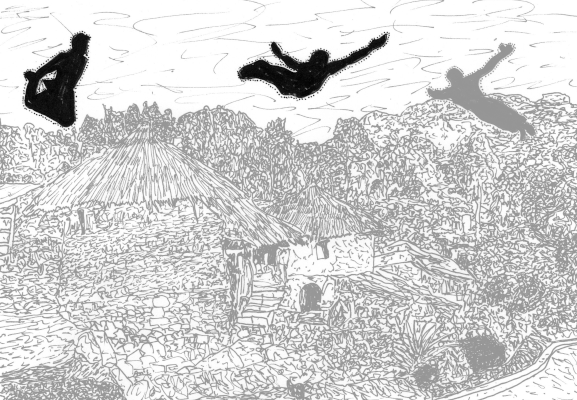
(English) Heinz, Helmut, and Madame Laila travel through time without their bodies and watch what becomes of the pen from Aksum. They recognize a pattern but can't quite make sense of it. Little by little, they are moving toward the future. |
 |
(Italiano) Heinz, Helmut e Madame Laila viaggiano nel tempo senza corpo e possono osservare ciò che accade alla penna di Axum. Riconoscono uno schema, ma non riescono a interpretarlo completamente. A poco a poco si spostano in avanti verso il futuro. |
(Deutsch) Heinz, Helmut und Madame Laila reisen körperlos durch die Zeit und können beobachten, wie es mit dem Stift aus Aksum weitergeht. Sie erkennen ein Muster, können es aber nicht hinreichend deuten. Allmählich bewegen sie sich in Richtung Zukunft. Normal Version | ||
Tag 27 bis 52 1 Helmut: Seht ihr das? Wir schweben in einen nebligen Morgen hinein, als würden wir in einem lautlosen Hubschrauber sitzen. |
Day 27 to 52 Helmut: Do you see that? We're floating into a foggy morning, as if we were sitting in a silent helicopter. |
Jour 27 à 52 Helmut : Vous voyez ça ? On entre dans un matin brumeux, comme si on était assis dans un hélicoptère silencieux. |
Giorno 27 fino a 52 Helmut: Vedete quello? Stiamo fluttuando in una mattina nebbiosa, come se fossimo seduti in un elicottero silenzioso. |
Día 27 hasta 52 Helmut: ¿Veis eso? Estamos flotando en una mañana brumosa, como si estuviéramos sentados en un helicóptero silencioso. |
2 Helmut: Da vorn! Der neblige Morgen ist wieder da. Und die Hütten unter uns. |
Helmut: Over there! The foggy morning is back. And the huts beneath us. |
Helmut : Devant nous ! Le matin brumeux est de retour. Et les huttes en dessous. |
Helmut: Là davanti! La mattina nebbiosa è tornata. E le capanne sotto di noi. |
Helmut: ¡Ahí delante! La mañana brumosa ha vuelto. Y las chozas debajo de nosotros. |
3 Heinz: (…) Mir wird langsam schwindelig von dieser Zeitreise. Hast du mitgezählt? Das war der zweiundzwanzigste Blackout. Immer wieder dieselbe Szene. Nur mit anderen Leuten. |
Heinz: (...) This time travel is starting to make me dizzy. Were you keeping count? That was the twenty-second blackout. The same scene over and over again. Just with different people. |
Heinz : (…) Ce voyage dans le temps commence à me donner le vertige. Tu as compté ? C'était le vingt-deuxième blackout. Toujours la même scène. Avec simplement d'autres personnes. |
Heinz: (…) Questo viaggio nel tempo comincia a farmi girare la testa. Hai tenuto il conto? Questo era il ventiduesimo blackout. Sempre la stessa scena. Solo con persone diverse. |
Heinz: (…) Este viaje en el tiempo empieza a marearme. ¿Has contado? Ese ha sido el vigésimo segundo apagón. Siempre la misma escena. Solo con personas diferentes. |
4 Helmut: Nein nein, du verstehst nicht. Breite mal vorsichtig deine Arme aus! |
Helmut: No, no, you don't understand. Stretch out your arms carefully. |
Helmut : Non, non, tu ne comprends pas. Écarte doucement les bras. |
Helmut: No, no, non capisci. Allarga lentamente le braccia! |
Helmut: No, no, no entiendes. ¡Extiende los brazos con cuidado! |
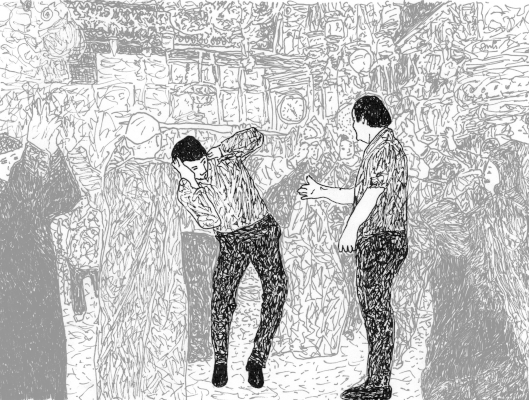
(English) As soon as the three time travelers are back in their own world, they are greeted so enthusiastically by the community that it overwhelms Heinz. When Helmut reassures him and Heinz relaxes, he remembers a detail that he had not noticed before. |
 |
(Italiano) Non appena i tre viaggiatori nel tempo sono tornati nel loro mondo, vengono accolti con tanto entusiasmo dalla comunità che Heinz si sente sopraffatto. Quando Helmut lo rassicura e Heinz si rilassa, si ricorda di un dettaglio che prima non aveva notato. |
(Deutsch) Kaum sind die drei Zeitreisenden zurück in ihrer Welt, werden sie so überschwänglich von der Gemeinschaft begrüßt, dass es Heinz überfordert. Als Helmut ihm Sicherheit gibt und Heinz sich entspannt, erinnert er sich an ein Detail, das ihm zuvor nicht aufgefallen ist. Normal Version | ||
Tag 52 1 Helmut: Ha ha, Mustafa, du erdrückst mich ja! Ist ja gut! Wir sind wieder da. |
Day 52 Helmut: Ha ha, Mustafa, you're crushing me! It's OK! We're back. |
Jour 52 Helmut : Ha ha, Mustafa, tu m'écrases ! C'est bon, c'est bon ! On est de retour. |
Giorno 52 Helmut: Ah ah, Mustafa, mi stai soffocando! Va bene, va bene! Siamo tornati. |
Día 52 Helmut: Ja ja, Mustafa, ¡me estás aplastando! ¡Está bien! Ya estamos de vuelta. |
2 Helmut: Du hast ja recht. Aber wenn du so überfordert bist wie jetzt, wirst du ... unbrauchbar. |
Helmut: You're right, of course. But when you're as overwhelmed as you are now, you'll become... useless. |
Helmut : T'as tout à fait raison. Mais quand tu es aussi dépassé que maintenant, tu vas devenir... inutilisable. |
Helmut: Certo che hai ragione. Ma quando sei così sopraffatto come adesso, diventerai... inutilizzabile. |
Helmut: Tienes toda la razón. Pero cuando estás tan abrumado como ahora, te volverás... inútil. |
3 Heinz: Oh nein, jetzt geht das wieder los! Bumm-bada-bumm-bada-bumm-bumm |
Heinz: Oh no, here we go again! Boom-bada-boom-bada-boom-boom |
Heinz : Oh non, ça recommence ! Boum-bada-boum-bada-boum-boum |
Heinz: Oh no, ricomincia! Bum-bada-bum-bada-bum-bum |
Heinz: ¡Oh no, ya empieza otra vez! Bum-bada-bum-bada-bum-bum |
4 Heinz: Er schreibt nicht. |
Heinz: It doesn't write. |
Heinz : Il n'écrit pas. |
Heinz: Non scrive. |
Heinz: No escribe. |
(English) Heinz stays awake all night to catch up on everything that's happened during his month-long absence. When he wakes up, a surprise is waiting for him, and at first he has no idea whether it's a disaster or a stroke of luck. |
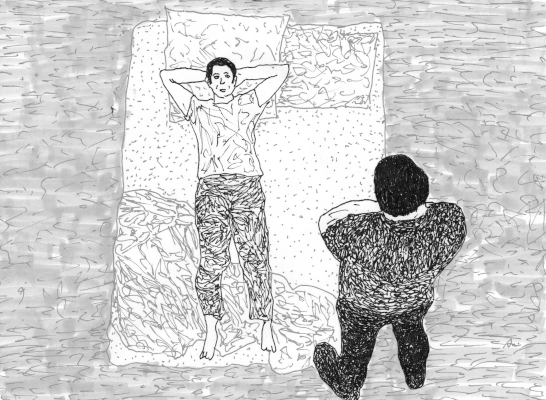 |
(Italiano) Heinz passa la notte in bianco per aggiornarsi su tutto quello che è successo durante il suo mese di assenza. Quando si sveglia, lo aspetta una sorpresa, e all'inizio non sa se sia una catastrofe o un colpo di fortuna. |
(Deutsch) Heinz schlägt sich die Nacht um die Ohren, um sich nach einem Monat der Abwesenheit auf den neusten Stand zu bringen. Als er aufwacht, erwartet ihn eine Überraschung, von der er zunächst nicht weiß, ob sie eine Katastrophe oder ein Glücksfall ist. Normal Version | ||
Tag 53 1 Helmut: Moin! |
Day 53 Helmut: Morning! |
Jour 53 Helmut : Bonjour ! |
Giorno 53 Helmut: Buongiorno! |
Día 53 Helmut: ¡Buenos días! |
2 Heinz: Keine schockierenden Scherze vor dem Frühstück, Mann! Ich muss auf meinen Blutdruck achten. Erst die laute Party gestern, dann die Weltnachrichten des letzten Monats, die ich durchgesehen hab. Die Lage spitzt sich zu und es kann jederzeit zum großen Knall kommen. |
Heinz: No shocking jokes before breakfast, man! I have to watch my blood pressure. First that loud party yesterday, then all the world news from the past month that I went through. Things are coming to a head, and things could blow up at any moment. |
Heinz : Pas de blagues choquantes avant le petit-déjeuner, mec ! Je dois faire attention à ma tension. D'abord cette fête bruyante hier, puis toutes les infos du monde du mois dernier que j'ai passées en revue. La situation devient de plus en plus tendue et le grand boum peut arriver à tout moment. |
Heinz: Niente scherzi da infarto prima di colazione, amico! Devo stare attento alla pressione. Prima quella festa rumorosa di ieri, poi tutte le notizie dal mondo dell'ultimo mese che mi sono studiato. La situazione si sta aggravando e il grande botto potrebbe arrivare da un momento all'altro. |
Heinz: ¡Nada de bromas de infarto antes del desayuno, tío! Tengo que cuidar mi tensión. Primero la fiesta tan ruidosa de ayer, luego todas las noticias del mundo del último mes que me puse a revisar. La situación se está agravando y el gran estallido puede producirse en cualquier momento. |
3 Heinz: Vielleicht über die Suchaktion, als wir auf Zeitreisen waren? Siehst du irgendwo mein Hemd? Ah, da liegt es ja. |
Heinz: Maybe through the search operation while we were time traveling? Do you see my shirt anywhere? Ah, there it is. |
Heinz : Peut-être grâce aux recherches lancées quand on était en voyage dans le temps ? Tu vois ma chemise quelque part ? Ah, la voilà. |
Heinz: Magari tramite le ricerche, quando eravamo nei viaggi nel tempo? Vedi da qualche parte la mia camicia? Ah, eccola. |
Heinz: ¿Quizá por la operación de búsqueda, cuando estábamos de viaje en el tiempo? ¿Has visto mi camisa por algún sitio? Ah, aquí está. |
4 Heinz: Du wolltest doch alle Infos, die wir über das Chamäleon, SocSpace und Sanjay R. Mahajan III. haben, richtig? Auf dem Stick ist alles drauf. Hast du einen Laptop dabei? Du kannst es überprüfen. |
Heinz: You wanted all the information we have on the Chameleon, SocSpace, and Sanjay R. Mahajan III., right? It's all on the drive. Do you have a laptop with you? You can check it. |
Heinz : Tu voulais toutes les informations qu'on a sur le Caméléon, SocSpace et Sanjay R. Mahajan III., c'est bien ça ? Tout est sur la clé. T'as un ordi portable avec toi ? Tu peux vérifier. |
Heinz: Volevi tutte le informazioni che abbiamo sul Camaleonte, SocSpace e Sanjay R. Mahajan III., giusto? Sulla chiavetta c'è tutto. Hai un portatile con te? Puoi controllare. |
Heinz: Querías toda la información que tenemos sobre el Camaleón, SocSpace y Sanjay R. Mahajan III., ¿verdad? Está toda en la memoria. ¿Has traído un portátil? Puedes comprobarlo. |
(English) Mallawi is a colorful city with historic landmarks. From Amarna, you cross the Nile Bridge, and then it's not much farther. The Boys have a few unpleasant experiences here, but in the end they're quite satisfied with how things turn out. |
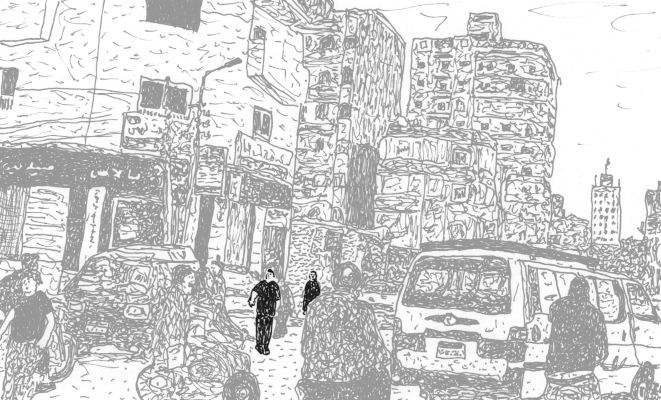 |
(Italiano) Mallawi è una città vivace, ricca di monumenti storici. Da Amarna si attraversa il ponte sul Nilo e poi non è più molto lontana. I Ragazzi vivono qui alcune esperienze spiacevoli, ma alla fine sono piuttosto soddisfatti di come si sono messe le cose. |
(Deutsch) Mallawi ist eine bunte Stadt mit historischen Sehenswürdigkeiten. Von Amarna aus fährt man über die Nilbrücke und dann ist es nicht mehr weit. Die Jungs haben hier einige negative Erlebnisse, aber am Ende sind sie mit den Entwicklungen recht zufrieden. Normal Version | ||
Zwei bleiben zwei Tag 53 1 Helmut: Ja, genau so haben wir es mit Madame Laila abgesprochen, Herr Wachtmeister. Wir würden Ihnen am liebsten sogar die Wahrheit sagen, also die echte, aber die würden Sie uns niemals glauben. Zu abgefahren. |
Two Remain Two Day 53 Helmut: Yes, that's exactly what we agreed on with Madame Laila, Officer. We'd actually love tell you the truth-the real truth-but you'd never believe us. It's way too far out. |
Jour 53 Helmut : Oui, c'est exactement comme on l'avait convenu avec Madame Laila, Monsieur l'Agent. On préférerait même vous dire la vérité, la vraie, mais vous ne nous croiriez jamais. C'est trop dingue. |
Due restano due Giorno 53 Helmut: Sì, è proprio quello che abbiamo concordato con Madame Laila, signor agente. Preferiremmo persino dirle la verità, cioè quella vera, ma non ci crederebbe mai. È troppo assurda. |
Día 53 Helmut: Sí, así es exactamente como lo acordamos con Madame Laila, señor agente. De hecho, nos encantaría decirte la verdad, la verdadera, pero nunca nos creería. Es demasiado disparatado. |
2 Helmut: (…) Vielleicht hier in der Seitenstraße. Nee, auch nicht. Hm, ich dachte, er wartet irgendwo beim Auto auf uns. |
Helmut: (…) Maybe in this side street. Nope, not here either. Hmm, I thought he was waiting for us somewhere around the car. |
Helmut : (...) Peut-être ici, dans la rue latérale. Non, pas là non plus. Hum, je croyais qu'il nous attendait quelque part près de la voiture. |
Helmut: (...) Forse in questa stradina laterale. No, neanche qui. Mmm, pensavo che ci stesse aspettando da qualche parte vicino alla macchina. |
Helmut: (...) Quizás aquí en la calle lateral. No, tampoco. Mmm, pensaba que nos estaría esperando en algún sitio cerca del coche. |
3 Heinz: Madame Laila läuft ihm schon mit offenen Armen entgegen. |
Heinz: Madame Laila's already running toward him with open arms. |
Heinz : Madame Laila court déjà vers lui les bras grands ouverts. |
Heinz: Madame Laila gli corre già incontro a braccia aperte. |
Heinz: Madame Laila ya corre hacia él con los brazos abiertos. |
4 Heinz: Das Zebu und der Hirte! Zwei bleiben zwei! |
Heinz: The zebu and the shepherd! Two remain two! |
Heinz : Le zébu et le berger ! Deux restent deux ! |
Heinz: Il zebù e il pastore! Due restano due! |
Heinz: ¡El cebú y el pastor! ¡Dos siguen siendo dos! |
(English) Heinz senses that he’s on the verge of solving the mystery, but he can’t seem to make any progress. To make matters worse, Helmut distracts him while he’s sitting at a table in Madame Laila’s antique shop, pondering the secret of the Aksum pen. |
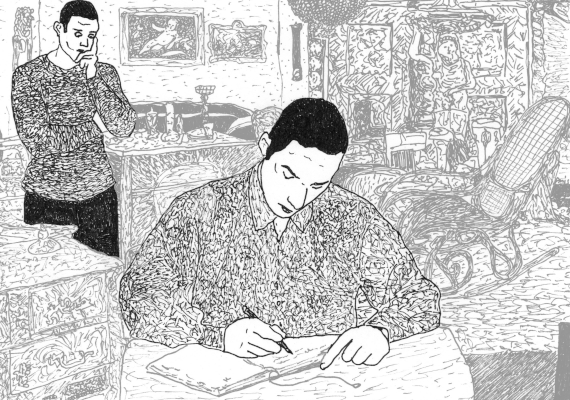 |
(Italiano) Heinz sente di essere a un passo dal risolvere l’enigma, ma non riesce ad andare avanti. Come se non bastasse, Helmut lo distrae anche mentre è seduto al tavolo nel negozio di antiquariato di Madame Laila e riflette sul mistero della penna di Axum. |
(Deutsch) Heinz spürt, dass er kurz davor ist, das Rätsel zu lösen, aber er kommt nicht voran. Zu allem Überfluss lenkt Helmut ihn auch noch ab, als er am Tisch in Madame Lailas Antiquitätengeschäft sitzt und über das Geheimnis des Stifts aus Aksum nachdenkt. Normal Version | ||
Tag 53 1 Helmut: Immer noch? Du grübelst jetzt schon seit unserer Rückkehr aus Mallawi. Ich hab dir ein Eis mitgebracht, hier! |
Day 53 Helmut: Still? You've been brooding ever since we got back from Mallawi. I brought you an ice cream, here! |
Jour 53 Helmut : Encore ? Ça fait déjà un moment que tu rumine, depuis notre retour de Mallawi. Je t'ai apporté une glace, tiens ! |
Giorno 53 Helmut: Ancora? Stai rimuginando già da quando siamo tornati da Mallawi. Ti ho portato un gelato, tieni! |
Día 53 Helmut: ¿Todavía? Ya llevas rumiando desde que volvimos de Mallawi. Te he traído un helado, ¡toma! |
2 Helmut: Was hat sie dir denn nun erzählt über ihre letzte Begegnung mit Bushra? Schaukel schaukel schleck |
Helmut: So what did she tell you about her last encounter with Bushra? Rock rock lick |
Helmut : Alors, qu'est-ce qu'elle t'a raconté au juste sur sa dernière rencontre avec Bushra ? Bascule bascule lèche |
Helmut: Allora, cosa ti ha raccontato del suo ultimo incontro con Bushra? Dondola dondola lecc |
Helmut: ¿Y qué te ha contado al final sobre su último encuentro con Bushra? Mec mec lam |
3 Helmut: Ach so, das wusste ich nicht. Das bedeutet, dass ... Moment, Jamaal kommt mit einem Zettel wedelnd durch die Tür. Was gibt's, Jamaal? Für uns? Aha. Heinz, das ist von Vito. Er will uns morgen um diese Zeit in einem Café treffen. |
Helmut: Oh, I didn't know. That means that... Wait, Jamaal is coming through the door waving a piece of paper. What is it, Jamaal? For us? I see. Heinz, this is from Vito. He wants to meet us tomorrow at this time in a coffee shop. |
Helmut : Ah bon, je ne savais pas ça. Ça signifie que... Attends, Jamaal arrive par la porte en agitant un bout de papier. Qu'est-ce qu'il y a, Jamaal ? Pour nous ? Ah, d'accord. Heinz, ça vient de Vito. Il veut nous retrouver demain à cette heure-ci dans un café. |
Helmut: Ah, non lo sapevo. Questo significa che... Aspetta, Jamaal entra dalla porta sventolando un foglio. Che c'è, Jamaal? Per noi? Ah, vedo. Heinz, questo è da parte di Vito. Vuole incontrarci domani a quest'ora in un caffè. |
Helmut: Ah, eso no lo sabía. Eso significa que... Espera, Jamaal entra por la puerta agitando un papelito. ¿Qué pasa, Jamaal? ¿Para nosotros? Ajá. Heinz, esto es de Vito. Quiere encontrarse con nosotros mañana a esta hora en un café. |
4 Helmut: Ist doch egal! Madame Laila hat intuitiv erfasst, worum es geht, wenn man irgendwas gut sichtbar versteckt. |
Helmut: So what? Madame Laila intuitively understood what it's about when you hide something in plain sight. |
Helmut : Peu importe ! Madame Laila a compris intuitivement de quoi il s'agissait quand on cache quelque chose bien en vue. |
Helmut: Non importa! Madame Laila ha intuito di cosa si tratta quando si nasconde qualcosa in bella vista. |
Helmut: ¡Da igual! Madame Laila comprendió intuitivamente de qué se trata cuando uno esconde algo a plena vista. |
(English) Helmut is absolutely right. After the pen officially passes into Heinz's possession, a flood of words is unleashed. Heinz's hand races quickly and frantically across the sheet of paper. He has to hurry while reading, because more changes are taking place, leaving him no time. |
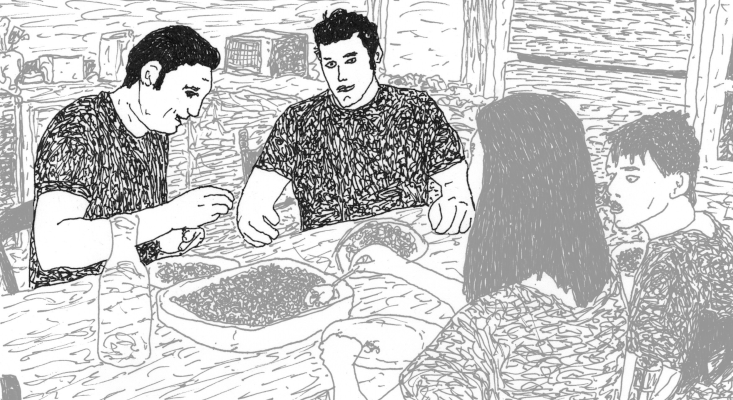 |
(Italiano) Helmut ha visto giusto. Dopo che la penna è passata ufficialmente nelle mani di Heinz, si scatena un fiume di parole. La mano di Heinz corre rapida e frenetica sul foglio. Deve affrettarsi a leggere, perché continuano a verificarsi altri cambiamenti che non gli lasciano tempo. |
(Deutsch) Helmut liegt goldrichtig. Nachdem der Stift offiziell in Heinz' Besitz übergegangen ist, löst sich eine Flut von Worten. Schnell und hektisch fährt Heinz' Hand über das Blatt. Er muss sich beim Lesen beeilen, denn es treten weitere Veränderungen ein, die ihm keine Zeit lassen. Normal Version | ||
Tag 53 1 Helmut: So, jetzt gehört der Stift dir. Spürst du irgendwas? |
Day 53 Helmut: All right, now the pen belongs to you. Do you feel anything? |
Jour 53 Helmut : Bon, maintenant le stylo est à toi. Tu sens quelque chose ? |
Giorno 53 Helmut: Bene, adesso la penna è tua. Senti qualcosa? |
Día 53 Helmut: Bueno, ahora el bolígrafo es tuyo. ¿Sientes algo? |
2 Heinz: Es geht zu schnell. Ich bin schon fast wieder unten auf der Seite angekommen. |
Heinz: It's going too fast. I'm almost back at the bottom of the page already. |
Heinz : Ça va trop vite. Je suis déjà presque revenu en bas de la page. |
Heinz: Va troppo veloce. Sono già quasi tornato in fondo alla pagina. |
Heinz: Va demasiado rápido. Ya estoy casi otra vez abajo de la página. |
3 Heinz: Naja, da ist noch dieser Teil der Geschichte, der ... |
Heinz: Well, there's still that part of the story that... |
Heinz : Oui, mais il reste cette partie de l'histoire qui... |
Heinz: Beh, c'è ancora quella parte della storia che... |
Heinz: Bueno, aún queda esa parte de la historia que... |
4 Helmut: Meine Opferung! |
Helmut: My sacrifice! |
Helmut : Mon sacrifice ! |
Helmut: Il mio sacrificio! |
Helmut: ¡Mi sacrificio! |
(English) Helmut is nervous. If the prophecy comes true, Bushra will soon appear in Tall Bani Umran and get him into trouble. The comic that Rami and Heinz are drawing distracts him for a while, but he can't completely hide how uneasy he is. |
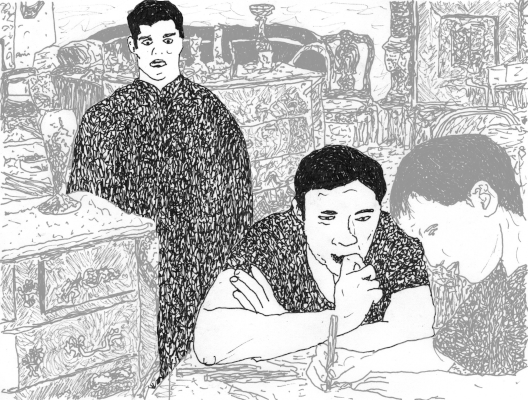 |
(Italiano) Helmut è nervoso. Se la profezia si avvererà, Bushra comparirà presto a Tall Bani Umran e lo metterà nei guai. Il fumetto che Rami e Heinz stanno disegnando lo distrae per un po', ma non riesce a nascondere del tutto la sua inquietudine. |
(Deutsch) Helmut ist nervös. Wenn sich die Weissagung erfüllt, wird schon bald Bushra in Tall Bani Umran erscheinen und ihn in Schwierigkeiten bringen. Der Comic, den Rami und Heinz gerade zeichnen, lenkt ihn für eine Weile ab, doch ganz verbergen kann er seine Unruhe nicht. Normal Version | ||
Ramis Comic Tag 54 1 Helmut: Hier, deine Gallabiya! Lass uns losgehen und Vito treffen! |
Day 54 Helmut: Here, your gallabiya! Let's go meet Vito! |
Jour 54 Helmut : Tiens, ta galabiya ! Allons retrouver Vito ! |
Giorno 54 Helmut: Ecco, la tua galabiya! Andiamo a incontrare Vito! |
Día 54 Helmut: ¡Toma, tu galabiya! ¡Vamos a ver a Vito! |
2 Heinz: Die Wahrheit ist, dass ich es selbst nicht genau weiß. Wirklich. Der Stift hat jemanden wie mich gebraucht, um mit sich selbst ins Reine zu kommen, und er braucht jemanden wie dich, um ... zu sterben. |
Heinz: The truth is, I don't know exactly myself. Really. The pen needed someone like me to make peace with itself, and it needs someone like you to... die. |
Heinz : La vérité, c'est que moi non plus, je le sais pas exactement. Vraiment. Le stylo avait besoin de quelqu'un comme moi pour se réconcilier avec lui-même, et il a besoin de quelqu'un comme toi pour... mourir. |
Heinz: La verità è che non lo so con precisione nemmeno io. Davvero. La penna aveva bisogno di qualcuno come me per fare pace con se stessa, e ha bisogno di qualcuno come te per... morire. |
Heinz: La verdad es que ni yo mismo lo sé exactamente. Honestamente. El bolígrafo necesitaba a alguien como yo para reconciliarse consigo mismo, y necesita a alguien como tú para... morir. |
3 Heinz: Oder es ist wegen der Helmut-Methode. Oder weil du der Erwählte bist, der Gepriesene, Vater der großen Maria Gaza, Hüter des magischen Rings, Träger des dritten Grades der altehrwürdigen Loge ... |
Heinz: Or it's because of the Helmut method. Or because you're the chosen one, the praised one, father of the great Maria Gaza, keeper of the magic ring, bearer of the third degree of the venerable Lodge... |
Heinz : Ou alors c'est à cause de la méthode Helmut. Ou parce que tu es l'élu, le glorifié, père de la grande Maria Gaza, gardien de la bague magique, détenteur du troisième degré de la vénérable Loge... |
Heinz: Oppure è per via del metodo Helmut. O perché sei il prescelto, il celebrato, padre della grande Maria Gaza, custode dell'anello magico, portatore del terzo grado della venerabile Loggia... |
Heinz: O es por el método Helmut. O porque eres el elegido, el alabado, padre de la gran Maria Gaza, guardián del anillo mágico, portador del tercer grado de la venerable Logia... |
4 Helmut: Hilmusa, der immer noch auf der Straße liegt, steht auf und fragt Action-Rami, ob er bitte gehen darf. Weit, weit weg von den Tankwagen, den Stiften und den Bushras, die plötzlich von allen Seiten auf ihn zuströmen. |
Helmut: Hilmusa, who's still lying in the road, gets up and asks Action Rami if he may please leave. Far, far away from the tanker trucks, the pens, and the Bushras suddenly rushing toward him from every direction. |
Helmut : Hilmusa, qui est toujours allongé sur la route, se relève et demande à Action Rami s'il peut partir, s'il te plaît. Très, très loin des camions-citernes, des stylos et des Bushras qui se précipitent soudain vers lui de toutes parts. |
Helmut: Hilmusa, che è ancora sdraiato in mezzo alla strada, si alza e chiede ad Action Rami se può andarsene, per favore. Lontano, molto lontano dalle autocisterne, dalle penne e dalle Bushra che all'improvviso gli arrivano addosso da tutte le direzioni. |
Helmut: Hilmusa, que sigue tumbado en la carretera, se levanta y le pregunta a Action Rami si, por favor, puede irse. Muy, muy lejos de los camiones cisterna, de los bolígrafos y de las Bushras que de repente empiezan a abalanzarse sobre él desde todas las direcciones. |
(English) Heinz has mentally prepared himself for the meeting with Vito. Helmut stays in the background and hardly says a word, mostly just listening. He knows his friend has the situation under control, so he can sit back, relax, and enjoy his hookah. |
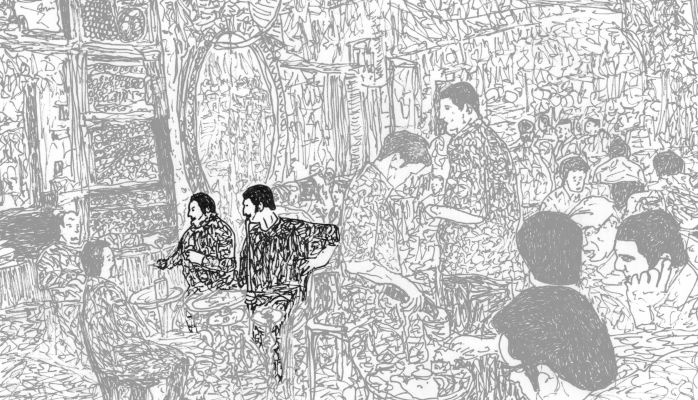 |
(Italiano) Heinz si è preparato mentalmente all'incontro con Vito. Helmut rimane in disparte e quasi non parla, limitandosi soprattutto ad ascoltare. Sa che il suo amico ha la situazione sotto controllo, quindi può rilassarsi tranquillamente e godersi il suo narghilè. |
(Deutsch) Heinz hat sich innerlich auf die Begegnung mit Vito vorbereitet. Helmut hält sich im Hintergrund und hört fast nur zu. Er weiß, dass sein Freund die Situation im Griff hat, daher kann er sich ruhig zurücklehnen und seine Wasserpfeife genießen. Normal Version | ||
Tag 54 1 Heinz: Sieh mal, wer da vor seinem Laden steht! Hi, Mustafa! Wir? Wir treffen Vito im Kaffeehaus. Nein, Quatsch, du musst dir keine Vorwürfe machen, weil du die Loge über unser Verschwinden informiert hast. Jeder hätte so gehandelt. Nun hör schon auf damit! |
Day 54 Heinz: Look who's standing in front of his shop! Hi, Mustafa! Us? We're meeting Vito at the coffeehouse. No, nonsense, you don't need to blame yourself for informing the Lodge about our disappearance. Anyone would have done the same. Now stop it already! |
Au Café Jour 54 Heinz : Regarde qui est devant sa boutique ! Salut, Mustafa ! Nous ? On va retrouver Vito au café. Non, n'y pense même pas, tu n'as pas à t'en vouloir d'avoir informé la Loge de notre disparition. N'importe qui aurait fait pareil. Allez, arrête un peu avec ça ! |
Al Caffè Giorno 54 Heinz: Guarda chi c'è davanti al suo negozio! Ciao, Mustafa! Noi? Ci vediamo con Vito al caffè. No, ma va', non devi farti nessun rimprovero per aver informato la Loggia della nostra scomparsa. Chiunque avrebbe fatto lo stesso. Adesso smettila! |
En el Café Día 54 Heinz: ¡Mira quién está delante de su tienda! ¡Hola, Mustafa! ¿Nosotros? Nos encontramos con Vito en el café. No, qué va, no tienes que hacerte ningún reproche por haber informado a la Logia de nuestra desaparición. Cualquiera habría hecho lo mismo. ¡Ya deja eso! |
2 Helmut: Und wo ist er jetzt? |
Helmut: And where is he now? |
Helmut : Et il est où, maintenant ? |
Helmut: E adesso dov'è? |
Helmut: ¿Y dónde está ahora? |
3 Heinz: Du fühlst dich überall auf der Welt zu Hause, was, Vito? Es ist aber auch ein schöner Ort hier. Hattest du Gelegenheit, Amarna zu erkunden? Nicht. Nun ... |
Heinz: You feel at home everywhere in the world, don't you, Vito? It's a nice place here, too. Did you get a chance to explore Amarna? Not. Well... |
Heinz : Tu te sens chez toi partout dans le monde, n'est-ce pas, Vito ? C'est sympa ici aussi. Tu as eu l'occasion de visiter Amarna ? Non. Eh bien... |
Heinz: Ti senti a casa in ogni parte del mondo, eh, Vito? È anche un bel posto, questo. Hai avuto modo di visitare Amarna? No. Be'... |
Heinz: Te sientes como en casa en cualquier parte del mundo, ¿eh, Vito? También es un sitio bonito. ¿Tuviste ocasión de explorar Amarna? No. Bueno... |
4 Helmut: Schnorg schnorg. Hm, zieht immer noch nicht richtig. |
Helmut: Snorg snorg. Hm, still not drawing right. |
Helmut : Snorg snorg. Hm, ça ne tire toujours pas comme il faut. |
Helmut: Snorg snorg. Hm, ancora non tira bene. |
Helmut: Snorg snorg. Hm, sigue sin tirar bien. |
(English) The Boys have one last adventure ahead of them before they can wrap up their stay in Egypt. But where will they go next? Back to Mainz? Heinz has other plans, and he shamelessly takes advantage of his friend's temporary weakness. |
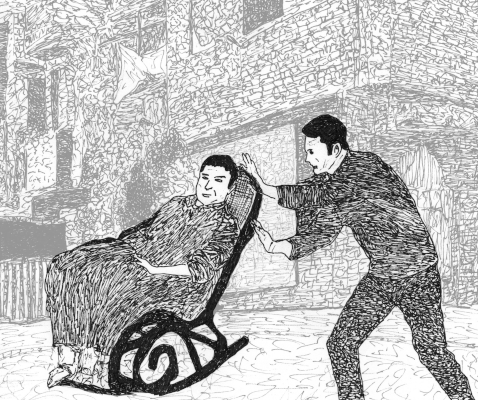 |
(Italiano) Ai Ragazzi resta ancora un'ultima avventura prima di poter concludere il loro soggiorno in Egitto. Ma dove andranno dopo? Torneranno a Magonza? Heinz ha altri piani e approfitta senza alcuno scrupolo della temporanea debolezza del suo amico. |
(Deutsch) Den Jungs steht noch ein letztes Abenteuer bevor, dann können sie ihren Aufenthalt in Ägypten beenden. Aber wohin geht es als Nächstes? Zurück nach Mainz? Heinz hat andere Pläne und er nutzt die vorübergehende Schwäche seines Freundes schamlos aus. Normal Version | ||
Staub zu Staub Tag 55 1 Heinz: Es wird gleich schon wieder dunkel. Hm. Was macht dein Fuß? |
Dust to Dust Day 55 Heinz: It's getting dark again already. Hm. How's your foot? |
Tu es poussière... Jour 55 Heinz : Il va bientôt faire nuit de nouveau. Hm. Comment va ton pied ? |
Giorno 55 Heinz: Si sta già facendo di nuovo buio. Hm. Come va il tuo piede? |
Polvo eres... Día 55 Heinz: Ya está oscureciendo otra vez. Hm. ¿Qué tal el pie? |
2 Helmut: Der Stift zerbröselt zwischen meinen Fingern. Hatschi! Hatschi! Hatschua!! Verdammt, ich hab einen Teil von dem Mist eingeatmet. Das ist bestimmt nicht gesund. Schnaub schnaub |
Helmut: The pen is crumbling between my fingers. Achoo! Achoo! Hachooa!! Damn, I inhaled some of that stuff. That can't be healthy. Snort blow |
Helmut : Le stylo s'effrite entre mes doigts. Atchoum ! Atchoum ! Atchouaa !! Merde, j'ai inhalé une partie de cette saleté. Ça doit pas être bon pour la santé. Mouche mouche |
Helmut: La penna si sbriciola tra le mie dita. Etciù! Etciù! Eccì!! Dannazione, ho inalato un po' di quella schifezza. Non fa di certo bene alla salute. Sbuff soff |
Helmut: El bolígrafo se desmorona entre mis dedos. ¡Achís! ¡Achís! ¡Achú!! Joder, he inhalado parte de esa porquería. Eso no puede ser bueno para la salud. Sopl sopl |
3 Heinz: Und bin ich denn ...? |
Heinz: So am I...? |
Heinz : Et moi, suis-je...? |
Heinz: E io allora sono...? |
Heinz: ¿Y yo, soy...? |
4 Heinz: Danke für alles, Mustafa! Wusstest du übrigens, dass Rami Comics zeichnet? Frag ihn doch mal nach Action-Rami, Hilmusa und der Eule Buhm, das wird ihn bestimmt freuen. |
Heinz: Thanks for everything, Mustafa! By the way, did you know Rami draws comics? Why don't you ask him about Action Rami, Hilmusa, and the owl Boom, that'll surely make him happy. |
Heinz : Merci pour tout, Mustafa ! Au fait, tu savais que Rami dessine des BD ? Pourquoi tu ne lui demandes pas de parler d'Action Rami, d'Hilmusa et de la chouette Boum ? Ça lui fera sûrement plaisir. |
Heinz: Heinz: Grazie di tutto, Mustafa! A proposito, lo sapevi che Rami disegna fumetti? Perché non gli chiedi di Action Rami, Hilmusa e del gufo Buum? Gli farà sicuramente piacere. |
Heinz: ¡Gracias por todo, Mustafa! Por cierto, ¿sabías que Rami dibuja cómics? ¿Por qué no le preguntas por Action Rami, Hilmusa y el búho Buum? Seguro que eso le hace ilusión. |
| Weiter geht's mit Staffel 17: Die Jungs im Iran / The story continues with The Boys in Iran |
| up | |
| Datenschutzerklärung und Impressum (data privacy statement and imprint) |

