



|
home ao english musik literatur journalismus bilder sprachen mehr shop sitemap | |
In Moskau 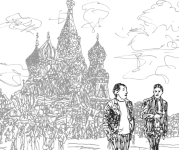 |
In Moscow |
À Moscou |
A Mosca |
En Moscú |
(Deutsch) Dies ist die linguistische Version der dritten Staffel der Jungs. Die Texte sind dieselben wie auf der Hauptseite. |
(English) This is the linguistic version of the third season of the Boys. The texts are the same as on the main page. |
(Français) Voici la version linguistique de la troisième saison des Gars. Les textes sont les mêmes que sur la page principale. |
(Italiano) Questa è la versione linguistica della terza stagione dei Ragazzi. I testi sono gli stessi della pagina principale. |
(Español) Esta es la versión lingüística de la tercera temporada de los Chicos. Los textos son los mismos que en la página principal. |
(English) A new adventure begins. Heinz and Helmut are already on the plane from Istanbul to Moscow, wondering whether they will find Dr. Volk, the "Banksy of bionics". If they succeed, Helmut will have proven himself in the Brotherhood. |
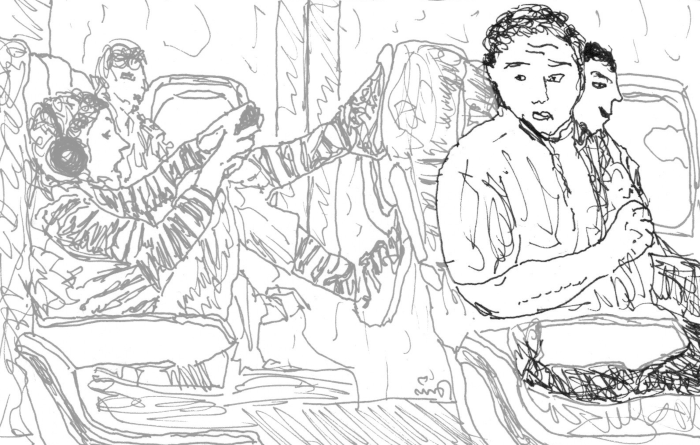 |
(Italiano) Inizia una nuova avventura. Heinz e Helmut sono già sull'aereo da Istanbul a Mosca e si chiedono se riusciranno a trovare il dottor Wolk, il "Banksy della bionica". Se ci riusciranno, Helmut avrà dimostrato il suo valore all'interno della confraternita. |
(Deutsch) Ein neues Abenteuer beginnt. Heinz und Helmut sitzen bereits im Flugzeug von Istanbul nach Moskau und fragen sich, ob sie Dr. Wolk finden werden, den „Banksy der Bionik”. Wenn ihnen das gelingt, hat sich Helmut nämlich in der Bruderschaft bewährt. Normal Version | ||
Dr. Wolk Tag 1 1 Helmut: Hast du schon mit den Verbtabellen geübt, die ich dir gegeben habe? |
Dr. Volk Day 1 Helmut: Have you practiced yet with the verb tables I gave you? |
Dr Volc Jour 1 Helmut : As-tu déjà pratiqué avec les tableaux de verbes que je t'ai donnés ? |
Dr. Volc Giorno 1 Helmut: Hai già fatto pratica con le tavole dei verbi che ti ho dato? |
Día 1 Helmut: ¿Has practicado ya con las tablas de verbos que te di? |
2 Heinz: Jetzt zieht er mir an den Haaren. OK, jetzt reicht's. |
Heinz: Now he's pulling my hair. OK, that's enough. |
Heinz : Maintenant, il me tire les cheveux. OK, ça suffit maintenant. |
Heinz: Ora mi sta tirando i capelli. Ok, basta così. |
Heinz: Ahora me está tirando del pelo. Vale, ya está bien. |
3 Heinz: Und dann Spanisch. |
Heinz: And then Spanish. |
Heinz : Et puis l'espagnol. |
Heinz: E poi lo spagnolo. |
Heinz: Y luego español. |
4 Heinz: Du, ich glaube, das da unten sind schon die Lichter von Moskau. |
Heinz: Helmut, I think those are already the lights of Moscow down there. |
Heinz : Helmut, je crois que ce sont déjà les lumières de Moscou en bas. |
Heinz: Helmut, credo che laggiù ci siano già le luci di Mosca. |
Heinz: Helmut, creo que ahí abajo ya están las luces de Moscú. |
5 Heinz: Trotzdem. Was können wir beiden Tröten schon erreichen, wenn selbst die Organisation Dr. Wolk bisher nicht hat aufspüren können! |
Heinz: But still. What are we two goofballs supposed to achieve when even the organization hasn't been able to track down Dr. Volk yet! |
Heinz : Mais quand même. Qu'est-ce que nous sommes censés faire, nous pauvres hères, alors que même l'organisation n'a pas encore réussi à retrouver le Dr Volc ! |
Heinz: Ma comunque. Che cosa dovremmo ottenere noi due svitati se nemmeno l'organizzazione è ancora riuscita a rintracciare il Dr. Volc! |
Heinz: Pero aun así. ¿Qué vamos a conseguir nosotros dos, pringaos, si ni siquiera la organización ha conseguido localizar aún al Dr. Volc? |
(English) As their hostess Svetlana is giving a lecture in St. Petersburg and is out of town, the Boys spend the night in a hotel. Heinz is faced with an unforeseen problem, but his friend has the situation under control right from the start. |
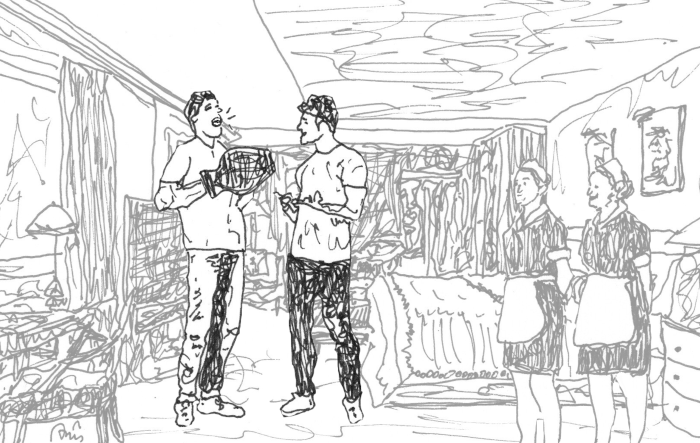 |
(Italiano) Poiché la loro padrona di casa Svetlana sta tenendo una conferenza a San Pietroburgo ed è fuori città, i Ragazzi trascorrono la notte in un hotel. Heinz si trova di fronte a un problema imprevisto, ma il suo amico ha la situazione sotto controllo fin dall'inizio. |
(Deutsch) Da ihre Gastgeberin Svetlana einen Vortrag in Sankt Petersburg hält und nicht in der Stadt ist, übernachten die Jungs im Hotel. Heinz steht vor einem unvorhergesehenen Problem, doch sein Freund hat die Lage von Anfang an im Griff. Normal Version | ||
Tag 1 1 Helmut: Was ist denn das für ein Lärm? Heinz? Klopf, klopf |
Day 1 Helmut: What's all that racket? Heinz? Knock, knock |
Jour 1 Helmut : C'est quoi ce vacarme ? Heinz ? Toc, toc |
Giorno 1 Helmut: Cos'è tutto questo baccano? Heinz? Toc, toc |
Día 1 Helmut: ¿Qué es todo ese jaleo? ¿Heinz? Toc, toc |
2 Helmut: OK, Ruhe jetzt! Ruhe! Mädels, seid so nett, пожалуйста. Ja bitte, nach draußen. |
Helmut: OK, quiet now! Quiet! Girls, be so nice, пожалуйста. Yes please, out. |
Helmut : OK, silence maintenant ! Silence ! Les filles, soyez si gentilles, пожалуйста. Oui, s'il vous plaît, à l'extérieur. |
Helmut: Ok, ora silenzio! Silenzio! Ragazze, siate così gentili, пожалуйста. Sì, per favore, fuori. |
Helmut: ¡Vale, ahora silencio! ¡Silencio! Chicas, sed tan amables, пожалуйста. Sí, por favor, fuera. |
3 Heinz: Ich will wieder nach Hause! |
Heinz: I want to go back home! |
Heinz : Je veux rentrer à la maison ! |
Heinz: Voglio tornare a casa! |
Heinz: ¡Quiero volver a casa! |
4 Helmut: So, nun gib mal die Vase her und reiß dich ein bisschen zusammen! |
Helmut: Now hand over the vase and pull yourself together a little! |
Helmut : Maintenant, donne moi le vase et reprends toi un peu ! Fais un effort ! |
Helmut: Ora consegnami il vaso e controllati un po'! |
Helmut: ¡Ahora entrégame el jarrón y contrólate un poco! |
(English) As she is aware of Helmut's special connection to animals, Svetlana accompanies the two to the zoo. And indeed, it doesn't take long for Helmut to make contact with some of the local mammals. |
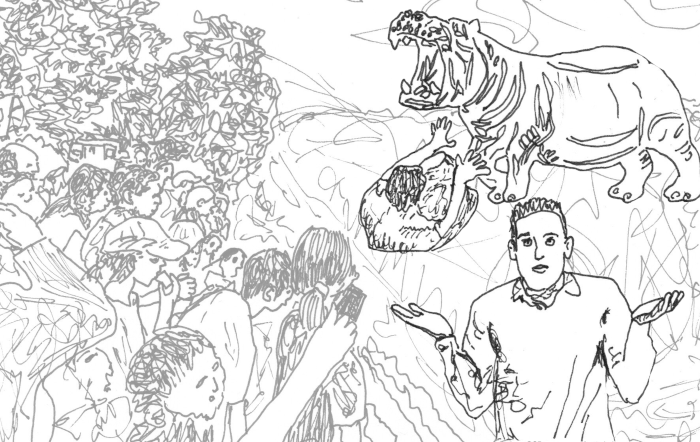 |
(Italiano) Essendo a conoscenza del particolare legame di Helmut con gli animali, Svetlana porta i due allo zoo. In effetti, non ci vuole molto perché Helmut entri in contatto con alcuni dei mammiferi locali. |
(Deutsch) Da sie von Helmuts besonderer Verbindung zu Tieren weiß, nimmt Svetlana die beiden mit in den Zoo. Und tatsächlich, es dauert nicht lange, bis Helmut Kontakt zu einigen der dortigen Säugetiere aufnimmt. Normal Version | ||
Tag 2 1 Helmut: Super Idee von Svetotschka, in den Zoo zu gehen! Ein stilvoller Beginn. |
Day 2 Helmut: Great idea from Svetochka to visit the zoo! A stylish start. |
Jour 2 Helmut : Excellente idée de Svetochka d'aller au zoo ! Un début élégant. |
Giorno 2 Helmut: Ottima idea quella di Svetochka di andare allo zoo! Un inizio elegante. |
Día 2 Helmut: ¡Gran idea la de Svetochka de ir al zoo! Un comienzo con estilo. |
2 Heinz: Ach nö, ich hab mein Handy in Svetlanas Wohnung vergessen. |
Heinz: Oh no, I left my cell phone in Svetlana's apartment. |
Heinz : Oh non, j'ai oublié mon portable dans l'appart de Svetlana. |
Heinz: Oh no, ho lasciato il mio cellulare nell'appartamento di Svetlana. |
Heinz: Oh no, me he dejado el móvil en el piso de Svetlana. |
3 Helmut: Das Universum spricht mit mir. |
Helmut: The universe is talking to me. |
Helmut : L'univers me parle. |
Helmut: L'universo mi sta parlando. |
Helmut: El universo me está hablando. |
4 Helmut: Es hat mich einfach so umgehauen, das Biest. Was ist bloß los mit der Welt? |
Helmut: It simply blew me away, the devil. What is wrong with the world? |
Helmut : Il m'a assommé juste comme ça, le diable. Qu'est-ce qui ne va pas dans le monde ? |
Helmut: Mi ha semplicemente steso, il diavolo. Cosa c'è di sbagliato nel mondo? |
Helmut: Me ha simplemente derribado, el demonio. ¿Qué le pasa al mundo? |
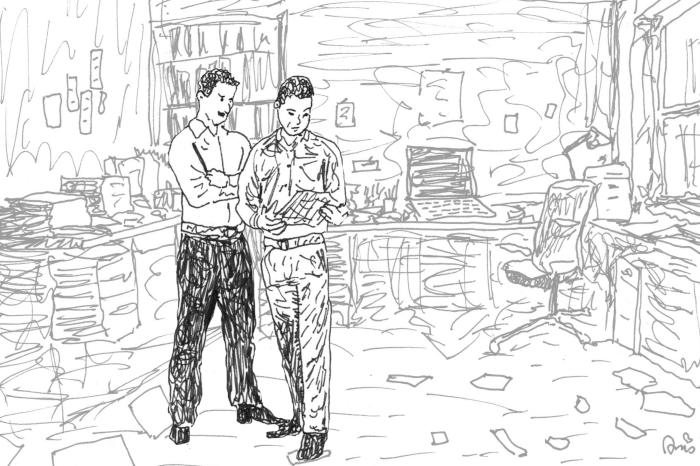
(English) Time for the file analysis! Helmut makes sure that his friend has the peace and quiet he needs to study everything to do with the case. Heinz thanks him with a small gift. |
 |
(Italiano) È ora di analizzare la cartella! Helmut si assicura che il suo amico abbia la tranquillità necessaria per studiare tutto ciò che riguarda il caso. Heinz lo ringrazia con un piccolo regalo. |
(Deutsch) Zeit für die Aktenanalyse! Helmut sorgt dafür, dass sein Freund die nötige Ruhe hat, um alles zu studieren, was mit dem Fall zu tun hat. Heinz bedankt sich dafür mit einem kleinen Geschenk. Normal Version | ||
Tag 2 1 Helmut: Und? Bist du weitergekommen? |
Day 2 Helmut: So? Did you get any further? |
Jour 2 Helmut : Et alors ? As-tu progressé ? |
Giorno 2 Helmut: Allora? Hai fatto qualche progresso? |
Día 2 Helmut: ¿Y? ¿Has hecho algún progreso? |
2 Helmut: Diese Zettel und Markierungen sagen mir, dass du erfolgreich warst. Voll das Chaos hier. |
Helmut: These notes and markings tell me that you were successful. What a chaos in here! |
Helmut : Ces notes et ces marques me disent que tu as réussi. C'est le chaos ici. |
Helmut: Questi appunti e segni mi dicono che hai avuto successo. È un vero caos qui dentro! |
Helmut: Estas notas y marcas me dicen que has tenido éxito. ¡Menudo caos hay aquí! |
3 Heinz: Jedenfalls fehlt bei den Beschreibungen ein Psychogramm. |
Heinz: In any case, there's no psychogram in the descriptions. |
Heinz : En tout cas, il manque un psychogramme dans les descriptions. |
Heinz: In ogni caso, manca uno psicogramma nelle descrizioni. |
Heinz: En cualquier caso, falta un psicograma en las descripciones. |
4 Helmut: Italophiler wäre toll. Die Bruderschaft hat diese These auch schon gehabt. |
Helmut: Italophile would be great. The Brotherhood already suggested that. |
Helmut : Italophile serait parfait. La Confrérie a déjà eu cette thèse. |
Helmut: Italofilo sarebbe perfetto. La Confraternita aveva già questa tesi. |
Helmut: Italófilo sería estupendo. La Hermandad ya tenía esta tesis. |
5 Helmut: Dann sollten wir am besten im Verlag mit unserer Suche weitermachen. |
Helmut: Then we'd better continue our search at the publishing house. |
Helmut : Alors nous ferions mieux de continuer nos recherches à la maison d'édition. |
Helmut: Allora è meglio continuare la ricerca presso la casa editrice. |
Helmut: Entonces será mejor que sigamos investigando en la editorial. |
6 Heinz: Hey, strategisch ist das sehr gut. Du bist damit sozusagen in die Gesellschaft eingeführt. |
Heinz: Hey, strategically that's very good. It introduces you to society, so to speak. |
Heinz : Hé, stratégiquement, c'est vraiment bien. Tu es ainsi introduit dans la société, pour ainsi dire. |
Heinz: Eh, dal punto di vista strategico, è davvero ottimo. Ti introduce alla società, per così dire. |
Heinz: Eh, estratégicamente está muy bien. Te presenta en sociedad, por así decirlo. |
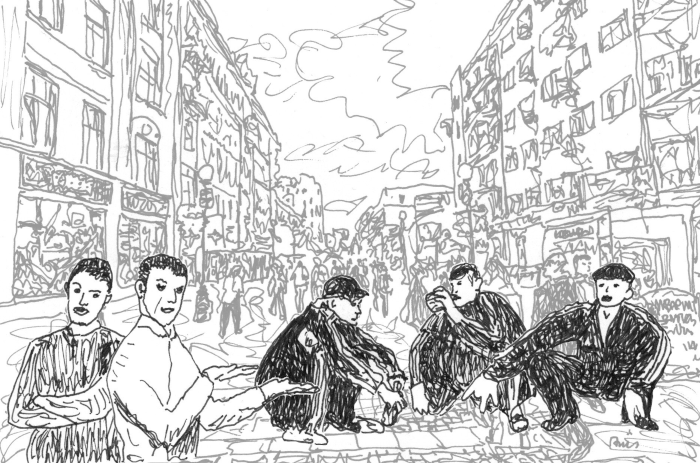
(English) A group of followers of a Russian subculture attracts the Boys' attention. They linger with them for a moment to find out more about their traditions and cultural heritage. One of them finds this easier than the other. |
 |
(Italiano) Un gruppo di seguaci di una sottocultura russa attira l'attenzione dei Ragazzi. Si soffermano con loro per scoprire di più sulle loro tradizioni e sul loro patrimonio culturale. Questo è più facile per uno che per l'altro. |
(Deutsch) Eine Gruppe von Anhängern einer russischen Subkultur erregt die Aufmerksamkeit der Jungs. Sie verweilen für einen Moment bei ihnen, um mehr über ihre Traditionen und ihr kulturelles Erbe zu erfahren. Das fällt dem einen leichter als dem anderen. Normal Version | ||
Tag 3 1 Heinz: Ist alles ganz normal hier. Öffentliche Verkehrsmittel, Straßen, Häuser ... |
Day 3 Heinz: It's all quite normal here. Public transportation, streets, houses... |
Jour 3 Heinz : Tout est tout à fait normal ici. Les transports en commun, les rues, les maisons... |
Giorno 3 Heinz: Qui è tutto abbastanza normale. Trasporti pubblici, strade, case... |
Día 3 Heinz: Todo es bastante normal aquí. Transporte público, calles, casas... |
2 Heinz: Diese großen freien Flächen hier überall, das ist sehr angenehm. |
Heinz: These large open spaces everywhere here, that's very pleasant. |
Heinz : Ces grands espaces ouverts partout ici, c'est très agréable. |
Heinz: È bello avere tutti questi ampi spazi aperti qui. |
Heinz: Estos grandes espacios abiertos por todas partes aquí, eso es muy agradable. |
3 Helmut: Komm, hock dich zu uns! |
Helmut: Come and squat with us! |
Helmut : Viens, accroupis-toi avec nous ! |
Helmut: Vieni, accovacciati con noi! |
Helmut: ¡Venga, agáchate con nosotros! |
4 Helmut: Mach dich nicht lustig! Damals im Knast war es kalt und es gab wenig Sitzplätze. |
Helmut: Don't make fun of it! Back then in jail it was cold and there were few seats. |
Helmut : Ne te moque pas ! À l'époque, en taule, il faisait froid et il y avait peu de places assises. |
Helmut: Non prenderlo in giro! A quei tempi in carcere faceva freddo e non c'erano molti posti a sedere. |
Helmut: ¡No te burles! En aquella época en la cárcel hacía frío y había pocos asientos. |
5 Helmut: Du musst aber auch immer ... hey! |
Helmut: Oh, you always have to... hey! |
Helmut : Oh, il faut toujours que tu... hey ! |
Helmut: Oh, devi sempre... Ehi! |
Helmut: Oh, siempre tienes que... ¡eh! |
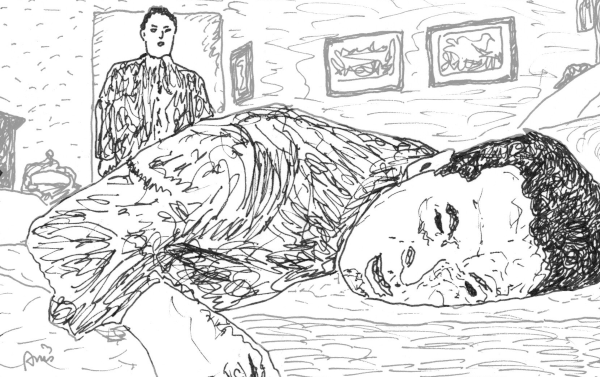
(English) Heinz can't sleep and visits his friend in his room to distract himself. Helmut, however, doesn't feel like it, not even when he realizes that he might have something to do with the bad mood that is spoiling Sveta's husband's night. |
 |
(Italiano) Heinz non riesce a dormire e va a trovare l'amico nella sua stanza per distrarsi. Ma Helmut non ne ha voglia, anche se si rende conto che potrebbe avere qualcosa a che fare con il malumore che sta rovinando la serata del marito di Sveta. |
(Deutsch) Heinz kann nicht schlafen und besucht seinen Freund in dessen Zimmer, um auf andere Gedanken zu kommen. Helmut aber hat keinen Sinn dafür, auch nicht, als er merkt, dass er vielleicht etwas mit der schlechten Laune zu tun hat, die Svetas Mann die Nacht verdirbt. Normal Version | ||
Tag 3 1 Heinz: Helmut, bist du noch wach? |
Day 3 Heinz: Helmut, are you still awake? |
Jour 3 Heinz : Helmut, tu es encore réveillé ? |
Giorno 3 Heinz: Helmut, sei ancora sveglio? |
Día 3 Heinz: Helmut, ¿sigues despierto? |
2 Heinz: Was „oh”? Was ist dir gerade eingefallen? |
Heinz: What "oh"? What did you just think of? |
Heinz : Quoi « oh » ? Qu'est-ce qui t'est venu à l'esprit ? |
Heinz: Cosa "oh"? A cosa hai appena pensato? |
Heinz: ¿Qué "oh"? ¿Qué se te acaba de ocurrir? |
3 Helmut: Sie ist Familie für mich, darüber muss ich mir keine Gedanken machen. Rang vier in der Bruderschaft. |
Helmut: She's family to me, I don't have to worry about that. Rank four in the Brotherhood. |
Helmut : Elle fait partie de ma famille, je n'ai pas à m'en préoccuper. Rang quatre dans la Confrérie. |
Helmut: Per me è una di famiglia, non devo preoccuparmi di questo. Di grado quattro della Confraternita. |
Helmut: Para mí es de la familia, no tengo que preocuparme por eso. De grado cuatro en la Hermandad. |
4 Helmut: Lass mich schlafen jetzt! |
Helmut: Let me sleep now! |
Helmut : Laisse-moi dormir maintenant ! |
Helmut: Lasciami dormire ora! |
Helmut: ¡Déjame dormir ya! |
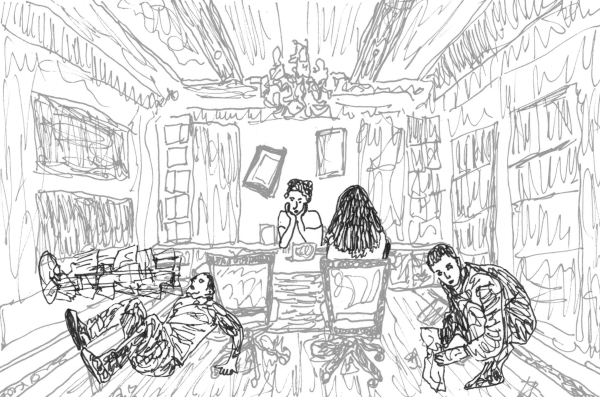
(English) Their research leads the Boys to the publishing house where Dr. Volk's articles were published. While Sveta is interpreting, Helmut notices that a picture on the wall is crooked. Being a man of action, he immediately takes care of it. |
 |
(Italiano) La loro ricerca porta i Ragazzi alla casa editrice dove sono stati pubblicati gli articoli del dottor Volc. Mentre Sveta fa da interprete, Helmut nota che un quadro sulla parete è storto. Essendo un uomo d'azione, se ne occupa immediatamente. |
(Deutsch) Ihre Recherchen führen die Jungs in den Verlag, in dem Dr. Wolks Artikel erschienen sind. Während Sveta dolmetscht, fällt Helmut auf, dass ein Bild an der Wand schief hängt. Als Mann der Tat kümmert er sich sofort darum. Normal Version | ||
Im Verlag Tag 5 1 Helmut: Ich glaube, sie hat gesagt, dass die Sekretärin einmal hier gewesen ist. |
Day 5 Helmut: I think she said that the secretary was here once. |
Jour 5 Helmut : Je crois qu'elle a dit que la secrétaire était venue une fois. |
Giorno 5 Helmut: Credo che abbia detto che la segretaria è stata qui una volta. |
En la Editorial Día 5 Helmut: Creo que dijo que el secretario estuvo aquí una vez. |
2 Helmut: Das Bild da hängt schief. |
Helmut: The picture there is crooked. |
Helmut : Le tableau est de travers. Là. |
Helmut: La cornice è storta. |
Helmut: El marco de ahí está torcido. |
3 Helmut: Du bist ja so schlau! Du solltest lieber ... |
Helmut: You're so clever! You'd better... |
Helmut : Tu es si intelligent ! Tu ferais mieux de... |
Helmut: Sei così intelligente! Faresti meglio a... |
Helmut: ¡Qué listo eres! Más te valdría... |
4 Heinz: (...) Alles klar, wir sind außer Sichtweite. Lass uns einen Kaffee trinken gehen. Sveta, кофе? |
Heinz: (...) All right, we're out of sight. Let's go for a coffee. Sveta, кофе? |
Heinz : (...) Très bien, nous sommes hors de vue. Allons prendre un café. Sveta, кофе ? |
Heinz: (...) Bene, siamo fuori dalla vista. Andiamo a prendere un caffè. Sveta, кофе? |
Heinz: (...) Bueno, estamos fuera de la vista. Vamos a tomar un café. Sveta, кофе? |
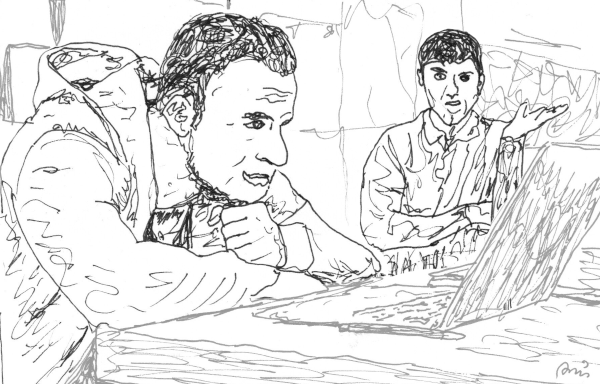
(English) For a week now, the two have been in Moscow, but there is no progress. When Sveta forwards them an email, that changes. Helmut is immediately bursting with ideas. Heinz tries to stop him, but he hears some convincing arguments. |
 |
(Italiano) Da una settimana ormai sono a Mosca, ma non stanno facendo progressi. Quando Sveta invia loro un'e-mail, le cose cambiano. Helmut è subito pieno di idee. Heinz cerca di fermarlo, ma deve ascoltare delle argomentazioni convincenti. |
(Deutsch) Eine Woche sind die beiden nun schon in Moskau, aber sie kommen nicht voran. Als Sveta ihnen eine Mail weiterleitet, ändert sich das. Helmut sprüht sofort vor Ideen. Heinz will ihn bremsen, doch muss er sich einige überzeugende Argumente anhören. Normal Version | ||
Tag 7 1 Heinz: Eine Woche sind wir jetzt schon in Moskau, aber viel erreicht haben wir noch nicht. |
Day 7 Heinz: We've been in Moscow for a week now, but we haven't achieved much yet. |
Jour 7 Heinz : Cela fait une semaine que nous sommes à Moscou, mais nous n'avons pas encore accompli grand-chose. |
Giorno 7 Heinz: Siamo a Mosca da una settimana, ma non abbiamo ancora ottenuto molto. |
Día 7 Heinz: Llevamos una semana en Moscú, pero aún no hemos conseguido gran cosa. |
2 Helmut: Was für 'n Film? |
Helmut: What movie? |
Helmut : Quel film ? |
Helmut: Quale film? |
Helmut: ¿Qué película? |
3 Helmut: Es ist der Anfang einer Spur, sagen wir mal so. Was ist mit der ... ah, er lebt in Moskau! |
Helmut: It's the beginning of a lead, let's put it that way. So what about the... ah, he lives in Moscow! |
Helmut : C'est le début d'une piste, disons. Et pour l'ad... ah, il vit à Moscou ! |
Helmut: È l'inizio di una pista, mettiamola così. E l'indir... ah, vive a Mosca! |
Helmut: Es el principio de una pista, digámoslo así. ¿Y el dir...? ¡Ah, vive en Moscú! |
4 Heinz: Genau genommen ist das eine übermäßig bescheuerte Idee, selbst für deine Verhältnisse. |
Heinz: Actually, it's an excessively stupid idea, even by your standards. |
Heinz : En fait, c'est une idée excessivement stupide, même selon tes critères. |
Heinz: In realtà è un'idea eccessivamente stupida, anche per i tuoi standard. |
Heinz: En realidad, es una idea excesivamente estúpida, incluso para tus estándares. |
5 Heinz: Nimm doch deine Gopniks mit, das ist der perfekte Job für die. |
Heinz: Why don't you take your gopniks with you, it's the perfect job for them. |
Heinz : Pourquoi n'emmènes-tu pas tes gopniks avec toi, c'est le travail parfait pour eux. |
Heinz: Perché non porti con te i tuoi gopnik, è proprio il lavoro perfetto per loro. |
Heinz: ¿Por qué no te llevas a tus gopnik contigo? Es el trabajo perfecto para ellos. |
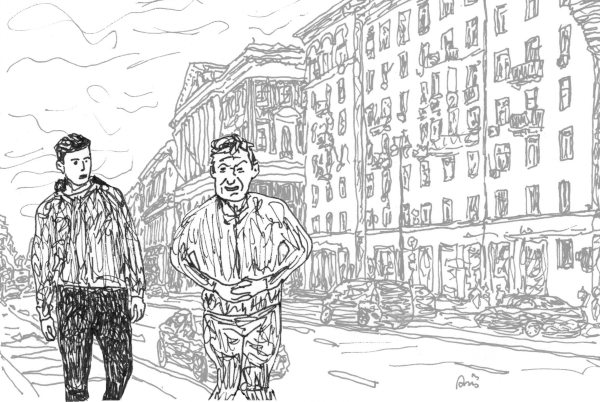
(English) Will Helmut with his unusual methods succeed in talking to an informant in a covert operation? Heinz is skeptical, but then events come thick and fast. |
 |
(Italiano) Riuscirà Helmut a utilizzare i suoi metodi insoliti per parlare con un informatore in un'operazione segreta? Heinz è scettico, ma poi gli eventi si susseguono rapidamente. |
(Deutsch) Gelingt es Helmut mit seinen ungewöhnlichen Methoden, in einer verdeckten Aktion mit einem Informanten zu sprechen? Heinz ist skeptisch, doch dann überschlagen sich die Ereignisse. Normal Version | ||
Tag 8 1 Heinz: Da kommt wieder einer. |
Day 8 Heinz: Here comes another one. |
Jour 8 Heinz : En voilà un autre. |
Giorno 8 Heinz: Eccone un altro. |
Día 8 Heinz: Aquí viene otro. |
2 Helmut: (...) Von rechts nähern sich einige Jugendliche. Oh Mann, ein Klo wär jetzt nicht schlecht. |
Helmut: (...) Some teenagers are approaching from the right. Oh man, a toilet wouldn't be bad now. |
Helmut : (...) Quelques jeunes s'approchent par la droite. Oh là là, des toilettes ne seraient pas de refus maintenant. |
Helmut: (...) Alcuni giovani si stanno avvicinando da destra. Oh cavolo, un bagno non sarebbe male ora. |
Helmut: (...) Unos jóvenes se acercan por la derecha. Oh tío, un baño no estaría mal ahora. |
3 Helmut: Komm erst mal mit nach da vorne! Hier kann er uns durchs Küchenfenster sehen. |
Helmut: Come over there first! He can see us through the kitchen window. |
Helmut : Viens d'abord par là ! Il peut nous voir par la fenêtre de la cuisine. |
Helmut: Vieni prima da questa parte! Può vederci dalla finestra della cucina. |
Helmut: ¡Primero ven por aquí! Puedes vernos desde la ventana de la cocina. |
4 Heinz: Und wie hat er reagiert? |
Heinz: And how did he react? |
Heinz : Et comment a-t-il réagi ? |
Heinz: E come ha reagito? |
Heinz: ¿Y cómo reaccionó? |
5 Helmut: Genau, und dann plötzlich springt der Elefant aus dem Porzellanladen heraus ... |
Helmut: Exactly, and then suddenly the bull jumps out of the china shop... |
Helmut : Exactement, et puis soudain l'éléphant sort du magasin de porcelaine... |
Helmut: Esattamente, e poi all'improvviso l'elefante salta fuori dal negozio di porcellane... |
Helmut: Exacto, y de repente sale el elefante de la cacharrería... |
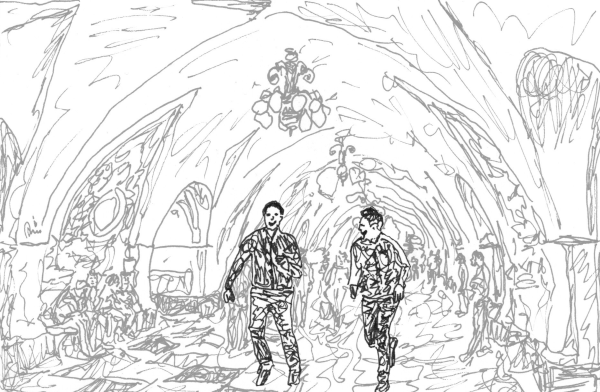
(English) The Boys marvel at the Moscow metro and a very long Russian word. They follow an important person and reach Taganskaya station. Despite the fact that they can't agree on a strategy, the day ends in success. |
 |
(Italiano) I Ragazzi si meravigliano della metropolitana di Mosca e di una parola russa molto lunga. Seguono una persona importante e raggiungono la stazione Taganskaja. Anche se non riescono a concordare una strategia, la giornata si conclude con un successo. |
(Deutsch) Die Jungs bestaunen die Moskauer Metro und ein sehr langes russisches Wort. Sie folgen einer wichtigen Person und erreichen die Station Taganskaja. Obwohl sie sich auf keine Strategie einigen können, endet der Tag mit einem Erfolg. Normal Version | ||
Tag 8 1 Heinz: Sie ist in die Metrostation gegangen. Schnell, hinterher! |
Day 8 Heinz: She's gone into the metro station. Quick, after her! |
Jour 8 Heinz : Elle est entrée dans la station de métro. Vite, suis-la ! |
Giorno 8 Heinz: È entrata nella stazione della metro. Presto, seguila! |
Día 8 Heinz: Ha entrado en la estación de metro. Rápido, ¡síguela! |
2 Helmut: Moskau! Mann, wir sind in Moskau, Mann! |
Helmut: Moscow! Man, we're in Moscow, man! |
Helmut : Moscou ! Mec, on est à Moscou, mec ! |
Helmut: Mosca! Amico, siamo a Mosca, amico! |
Helmut: ¡Moscú! Tío, ¡estamos en Moscú, tío! |
3 Heinz: (...) Helmut! Was ist, bist du eingeschlafen? |
Heinz: (...) Helmut! What's the matter, did you fall asleep? |
Heinz : (...) Helmut ! Qu'est-ce qu'il y a, tu t'es endormi ? |
Heinz: (...) Helmut! Che succede, ti sei addormentato? |
Heinz: (...) ¡Helmut! ¿Qué pasa, te quedaste dormido? |
4 Helmut: Nein, ich meine, dass Esposito sie nach meinem Besuch angerufen haben muss. |
Helmut: No, I mean that Esposito must have called her after my visit. |
Helmut : Non, je veux dire qu'Esposito a dû les appeler après ma visite. |
Helmut: No, voglio dire che Esposito deve averla chiamata dopo la mia visita. |
Helmut: No, me refiero a que Espósito debió de llamarla después de mi visita. |
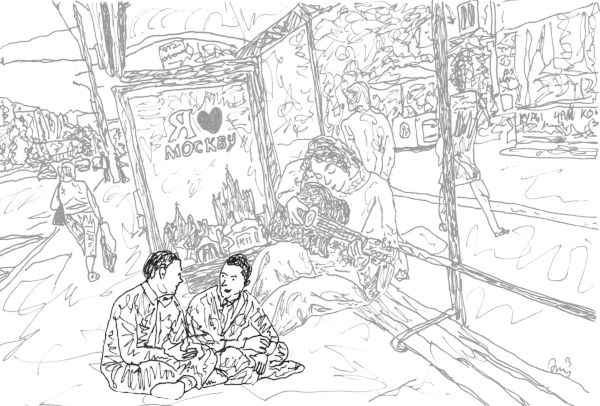
(English) The Boys wander around the secretary's neighborhood for days, hoping to bump into her sooner or later. Instead, they meet someone else, and Helmut is completely thrown off course. |
 |
(Italiano) I Ragazzi vagano per giorni nel quartiere della segretaria, sperando di imbattersi in lei prima o poi. Invece, incontrano un'altra persona che manda Helmut completamente fuori strada. |
(Deutsch) Die Jungs laufen tagelang durchs Viertel der Sekretärin, in der Hoffnung, ihr früher oder später über den Weg zu laufen. Stattdessen treffen sie jemand anderen, was Helmut völlig aus der Bahn wirft. Normal Version | ||
Tag 11 1 Helmut: Ganz schön sommerlich heute. Herrlich! |
Day 11 Helmut: It's pretty summery today. Wonderful! |
Jour 11 Helmut : C'est vraiment l'été aujourd'hui. Magnifique ! |
Giorno 11 Helmut: Oggi è piuttosto estivo. Meraviglioso! |
Día 11 Helmut: Hoy sí que es verano. ¡Qué maravilla! |
2 Helmut: Ach, das ist doch schon lange vergessen! Du überschätzt unsere schnelllebige Zeit. |
Helmut: Oh, that's long forgotten! You overestimate our fast-moving times. |
Helmut : Oh, c'est oublié depuis longtemps ! Tu surestimes notre époque qui bouge si vite. |
Helmut: Oh, questo è ormai dimenticato! Sopravvaluti i nostri tempi che corrono veloci. |
Helmut: ¡Ah, eso hace tiempo que se olvidó! Sobrevaloras nuestros tiempos tan rápidos. |
3 Helmut: Oah, das gibt eine Beule. Oh nein, jetzt auch noch der Polizeiwagen! Die Stimmung ist dahin. |
Helmut: Oah, that'll leave a bruise. Oh no, now the police car on top of that! The atmosphere is ruined. |
Helmut : Oh, ça va faire une bosse. Oh non, maintenant la voiture de police en plus ! L'ambiance est gâchée. |
Helmut: Oah, questo lascerà un bernoccolo. Oh no, ora c'è anche l'auto della polizia! L'atmosfera è rovinata. |
Helmut: Oh, eso va a hacer un chichón. Oh no, ¡ahora también el coche de policía! Se ha arruinado el ambiente. |
4 Heinz: Ach komm, halt den Rand jetzt, ich will zuhören! |
Heinz: Oh come on, shut up now, I want to listen! |
Heinz : Allez, boucle-la maintenant, je veux écouter ! |
Heinz: Oh, dai, tappati la bocca ora, voglio ascoltare! |
Heinz: ¡Oh, vamos, cierra la boca ya, quiero escuchar! |
5 Heinz: Soll ich euch dann lieber alleinlassen? |
Heinz: Should I better leave you guys alone then? |
Heinz : Je ferais mieux de vous laisser seuls alors ? |
Heinz: Allora è meglio che vi lasci soli? |
Heinz: ¿Entonces será mejor que os deje solos? |
(English) When Helmut goes his own way, his friend reminds him that they have a task to fulfill. Helmut then convincingly demonstrates his abilities, but fails to consider the consequences of his actions. |
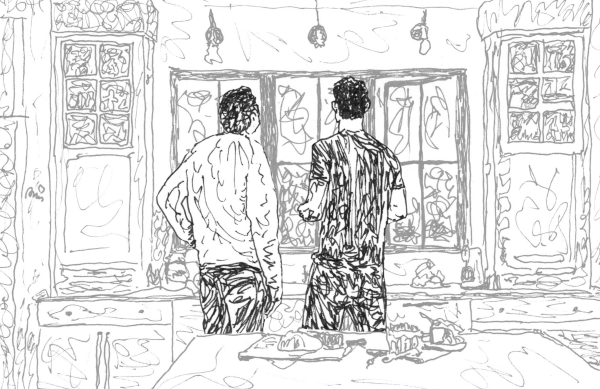 |
(Italiano) Quando Helmut se ne va per la sua strada, l'amico gli ricorda che hanno un compito da portare a termine. In risposta, Helmut dimostra in modo convincente le sue capacità, ma non considera le conseguenze delle sue azioni. |
(Deutsch) Als Helmut seinen eigenen Weg geht, erinnert sein Freund ihn daran, dass sie eine Aufgabe zu erfüllen haben. Daraufhin demonstriert Helmut ihm überzeugend seine Fähigkeiten, doch bedenkt er die Konsequenzen seines Handelns nicht. Normal Version | ||
Tag 14 1 Heinz: Und wirst du jetzt für immer in Moskau bleiben? |
Day 14 Heinz: And will you stay in Moscow forever now? |
Jour 14 Heinz : Et est-ce que tu vas rester à Moscou pour toujours maintenant ? |
Giorno 14 Heinz: E ora resterai a Mosca per sempre? |
Día 14 Heinz: ¿Y ahora te quedarás en Moscú para siempre? |
2 Helmut: Elvira kommt mit dem Tee zurück. Lass uns das Thema wechseln! |
Helmut: Elvira's coming back with the tea. Let's change the subject! |
Helmut : Elvira revient avec le thé. Changeons de sujet ! |
Helmut: Elvira sta tornando con il tè. Cambiamo argomento! |
Helmut: Elvira va a volver con el té. Cambiemos de tema. |
3 Helmut: Pflücken wir einfach erst mal diesen Tag ab und sehen wir dann weiter. |
Helmut: Let's just seize this day first and then we'll see. |
Helmut : Cueillons d'abord ce jour-là et nous verrons bien. |
Helmut: Cogliamo intanto questa giornata e poi vedremo. |
Helmut: Primero vamos a aprovechar el día y luego ya veremos. |
4 Helmut: Schnell, wo ist mein Handy? |
Helmut: Quick, where's my cell phone? |
Helmut : Vite, où est mon téléphone ? |
Helmut: Presto, dov'è il mio cellulare? |
Helmut: Rápido, ¿dónde está mi móvil? |
5 Heinz: Das müssten genug Fotos sein. |
Heinz: That should be enough photos. |
Heinz : Cela devrait suffire pour les photos. |
Heinz: Dovrebbe essere sufficiente per le foto. |
Heinz: Eso debería bastar para las fotos. |
(English) Heinz remains skeptical, but the facts speak for themselves. While they are discussing the controversial topic in front of the famous St. Basil's Cathedral, some passers-by become aware of the two, which Helmut did not see coming. |
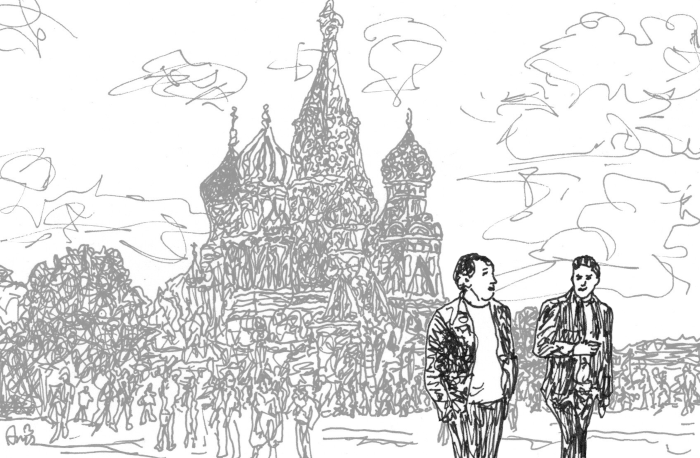 |
(Italiano) Heinz rimane scettico, ma i fatti parlano da soli. Mentre discutono del controverso argomento davanti alla famosa Cattedrale di San Basilio, alcuni passanti notano il duo, che Helmut non aveva previsto. |
(Deutsch) Heinz bleibt skeptisch, doch die Fakten sprechen für sich. Während sie das kontroverse Thema vor der berühmten Basiliuskathedrale ausdiskutieren, werden einige Passanten auf die beiden aufmerksam, was Helmut nicht hat kommen sehen. Normal Version | ||
Tag 15 1 Heinz: Ah, da bist du ja! Du lässt kein Klischee aus, was? |
Day 15 Heinz: Ah, there you are! You don't miss a single cliché, do you? |
Jour 15 Heinz : Ah, te voilà ! Tu ne laisses passer aucun cliché, n'est-ce pas ? |
Giorno 15 Heinz: Ah, eccoti qui! Non ti perdi neanche un cliché, vero? |
Día 15 Heinz: ¡Ah, ahí estás! No te pierdes ningún cliché, ¿verdad? |
2 Helmut: Verräter! Wieso, du hast es doch selbst gesehen, mehrfach: das Nilpferd, das Kwas, das Fenster ... um nur die Highlights zu nennen. |
Helmut: Traitor! Why, you've seen it yourself, several times: the hippo, the kvass, the window... to name just the highlights. |
Helmut : Traître ! Mais tu l'as vu toi-même, plusieurs fois : l'hippopotame, le kvass, la fenêtre... pour ne citer que les points forts. |
Helmut: Traditore! Ma l'hai visto tu stesso, più volte: l'ippopotamo, il kvas, la finestra... per citare solo i punti salienti. |
Helmut: ¡Traidor! Pero, tú mismo lo has visto varias veces: el hipopótamo, el kvas, la ventana... por nombrar solo lo más destacado. |
3 Helmut: Tja, dann gehen dir wohl langsam die Argumente aus. Warum glaubst du es nicht einfach und gibst Ruhe? |
Helmut: Well, I guess you're running out of arguments then. Why don't you just believe it and give it a rest? |
Helmut : Eh bien, donc tu es à court d'arguments. Pourquoi tu ne le crois pas, tout simplement, et tu laisses tomber ? |
Helmut: Beh, devi essere a corto di argomenti. Perché non ci credi e lasci perdere? |
Helmut: Bueno, supongo que entonces te estás quedando sin argumentos. ¿Por qué no lo crees y te callas? |
4 Heinz: Wenn du dich so von deinem Antennen-Ich leiten lässt, macht mir das ehrlich gesagt ein bisschen Angst. Du verlierst die Kontrolle. |
Heinz: When you let your antenna-self guide you like that, it frankly scares me a bit. You're losing control. |
Heinz : Si tu te laisses ainsi guider par ton moi-antenne, franchement, ça fiche un peu la trouille. Tu perds le contrôle. |
Heinz: Quando ti lasci guidare dal tuo io di antenne in questo modo, francamente mi spaventa un po'. Stai perdendo il controllo. |
Heinz: Cuando te dejas guiar así por tu yo-antena, francamente me da un poco de miedo. Estás perdiendo el control. |
5 Heinz: Naja, das Video war schon ziemlich gut. Du hast mich darin an den frühen Charlie Chaplin erinnert. |
Heinz: Well, the video was pretty good. You reminded me of the early Charlie Chaplin in it. |
Heinz : Eh bien, la vidéo est plutôt bonne. Tu m'as fait penser au premier Charlie Chaplin. |
Heinz: Beh, il video era piuttosto bello. Mi hai ricordato il primo Charlie Chaplin. |
Heinz: Bueno, el vídeo era bastante bueno. Me has recordado al primer Charlie Chaplin. |
(English) Sveta edits important photos while the Boys nibble on Russian pastries. But Heinz has something burning on his mind, so he takes his friend aside and tells him about it. Helmut's reaction is disappointing. |
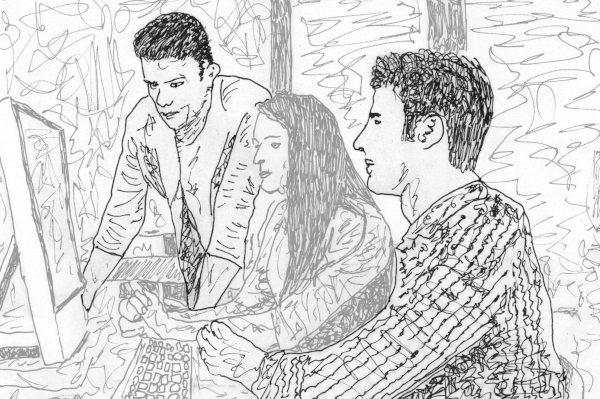 |
(Italiano) Sveta edita foto importanti mentre i Ragazzi sgranocchiano pasticcini russi. Ma Heinz ha qualcosa di scottante in mente, quindi prende da parte il suo amico e gliene parla. La reazione di Helmut è deludente. |
(Deutsch) Sveta bearbeitet wichtige Fotos, während die Jungs russisches Gebäck knabbern. Doch Heinz brennt etwas auf der Seele, sodass er seinen Freund beiseite nimmt und ihm davon erzählt. Helmuts Reaktion ist enttäuschend. Normal Version | ||
Tag 15 1 Heinz: Du, ich hab heut Nacht wirklich nicht gut geschlafen. Damit hattest du vorhin recht. |
Day 15 Heinz: You know, I didn't sleep well tonight indeed. You were right about that earlier. |
Jour 15 Heinz : Tu sais, je n'ai vraiment pas bien dormi cette nuit. Tu avais raison tout à l'heure. |
Giorno 15 Heinz: Sai, non ho dormito bene stanotte infatti. Avevi ragione prima. |
Día 15 Heinz: Sabes, la verdad es que no he dormido bien esta noche. Antes tenías razón. |
2 Helmut: Sie holt aber auch das Letzte aus den Bildern heraus. Kontraste, Farben, Vordergrund, Extrapolation ... |
Helmut: She really gets the most out of the pictures. Contrasts, colors, foreground, extrapolation... |
Helmut : Elle tire vraiment le maximum des photos. Contrastes, couleurs, premier plan, extrapolation... |
Helmut: Riesce davvero a trarre il massimo dalle foto. Contrasti, colori, primo piano, estrapolazione... |
Helmut: Realmente saca el máximo partido a las fotos. Contrastes, colores, primer plano, extrapolación... |
3 Helmut: Traum im Sinne von Wunsch oder im Sinne von Nachtbild? |
Helmut: Dream in the sense of wish or in the sense of nocturnal image? |
Helmut : Rêve au sens d'un souhait ou d'une image nocturne ? |
Helmut: Sogno nel senso di desiderio o nel senso di immagine notturna? |
Helmut: ¿Sueño en el sentido de deseo o en el sentido de imagen nocturna? |
4 Heinz: Dann waren da noch Kapuzenleute, die man nicht erkennen konnte, mit Kerzen. Die haben brummend gesummt oder summend gebrummt, ich erinnere mich nicht genau. |
Heinz: Then there were some hooded people with candles that weren't recognizable. They were buzzing in a humming way or humming in a buzzing way, I don't remember exactly. |
Heinz : Ensuite, il y avait des gens encapuchonnés qu'on ne pouvait pas identifier, avec des bougies. Ils bourdonnaient en fredonnant ou fredonnaient en bourdonnant, je ne me souviens pas exactement. |
Heinz: Poi c'erano delle persone incappucciate, non riconoscibili, con candele. Canticchiavano in modo ronzante o ronzavano in modo canticchiato, non ricordo esattamente. |
Heinz: Luego había unas personas encapuchadas que no eran reconocibles, con velas. Zumbaban mientras tarareaban, o tarareaban mientras zumbaban, no lo recuerdo exactamente. |
5 Helmut: Dr. Wolk. |
Helmut: Dr. Volk. |
Helmut : Dr Volc. |
Helmut: Il Dr. Volc. |
Helmut: El Dr. Volc. |
(English) When Helmut comes home with good news, his friend surprises him beyond all measure. Heinz has actually been very successful in his own research and the tide is turning. |
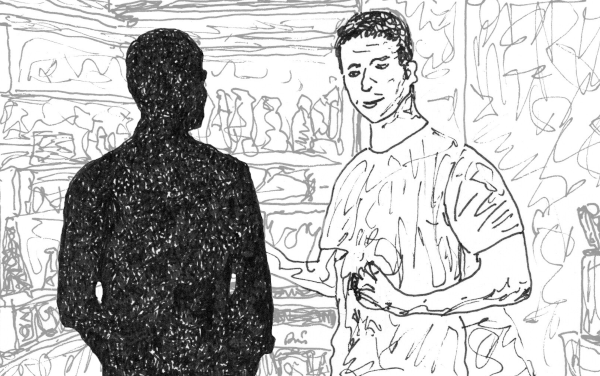 |
(Italiano) Quando Helmut torna a casa con buone notizie, il suo amico lo sorprende oltre ogni misura. Heinz infatti ha ottenuto un grande successo nella sua stessa ricerca e la situazione sta cambiando. |
(Deutsch) Als Helmut mit guten Neuigkeiten nach Hause kommt, überrascht sein Freund ihn über alle Maßen. Heinz hat nämlich sehr erfolgreich eigene Recherchen unternommen und das Blatt wendet sich. Normal Version | ||
Tag 17 1 Heinz: Ah, Mister Universum, lässt du dich auch mal wieder blicken? Komm rein! |
Day 17 Heinz: Ah, Mr. Universe, showing your face again? Come on in! |
Jour 17 Heinz : Ah, Monsieur Univers, tu te montres encore ? Entre donc ! |
Giorno 17 Heinz: Ah, signor Universo, ti sei fatto vivo di nuovo? Entra! |
Día 17 Heinz: Ah, Sr. Universo, ¿dejándote ver otra vez? Pasa. |
2 Helmut: Wieso ... das ... Es ist völlig unmöglich, dass du diesen Namen kennst. |
Helmut: Why... this... It's completely impossible that you know that name. |
Helmut : Pourquoi... ça... Il est tout à fait impossible que tu connaisses ce nom. |
Helmut: Ma perché... questo... È assolutamente impossibile che tu possa conoscere questo nome. |
Helmut: Por qué... eso... Es completamente imposible que conozcas ese nombre. |
3 Heinz: Kannst du dir kein Glas nehmen wie zivilisierte Menschen? |
Heinz: Can't you take a glass like civilized people? |
Helmut : Heinz : Tu ne peux pas prendre un verre comme les gens civilisés ? |
Heinz: Non puoi prendere un bicchiere come le persone civili? |
Heinz: ¿No puedes tomarte un vaso como la gente civilizada? |
4 Heinz: Ja, ich hab mich in der Nähe ihrer Wohnung aufgehalten und russische Meditationsaudios gehört. Вдох-выдох, einatmen ausatmen. Entspanntes Lernen nennt man das. |
Heinz: Yes, I was hanging out near her apartment and was listening to Russian meditation audios. Вдох-выдох, breathe in, breathe out. That's what we call relaxed learning. |
Heinz : Oui, je traînais près de son appartement et j'ai écouté des audios de méditation russe. Вдох-выдох, inspire, expire. C'est ce que nous appelons l'apprentissage détendu. |
Heinz: Sì, mi trovavo vicino al suo appartamento e ascoltavo gli audio di meditazione russa. Вдох-выдох, inspirare ed espirare. Questo è ciò che chiamiamo apprendimento rilassato. |
Heinz: Sí, estaba cerca de su piso escuché audios rusos de meditación. Вдох-выдох, inspira espira. Es lo que llamamos aprendizaje relajado. |
(English) How good it feels to go for a walk after a hearty meal! Helmut, however, is not happy with the course of their adventure, so Heinz has to remind him of the positive aspects. The two of them do agree on the main thing, though. |
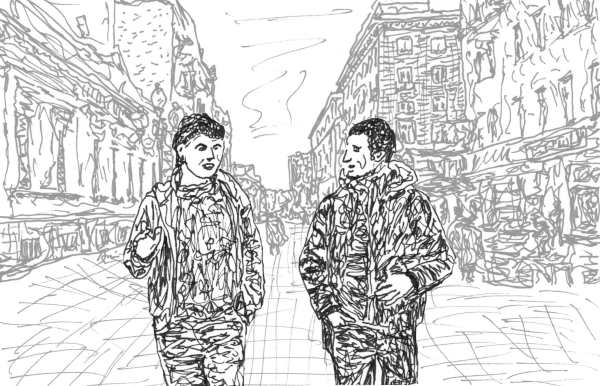 |
(Italiano) Com'è bello fare una passeggiata dopo un pasto abbondante! Helmut, tuttavia, non è contento di come sia andata la loro avventura, quindi Heinz deve ricordargli gli aspetti positivi. Comunque, i due sono d'accordo sull'essenziale. |
(Deutsch) Wie gut doch so ein Spaziergang nach einem herzhaften Essen tut! Helmut allerdings ist nicht zufrieden mit dem Verlauf ihres Abenteuers, sodass Heinz ihn an die positiven Seiten erinnern muss. Über die Hauptsache sind sich die beiden allerdings einig. Normal Version | ||
Tag 18 1 Helmut: Jetzt können wir praktisch wieder von vorne anfangen. |
Day 18 Helmut: Now we can basically start from scratch. |
Jour 18 Helmut : Maintenant, on peut pratiquement repartir de zéro. |
Giorno 18 Helmut: Ora possiamo praticamente ricominciare da capo. |
Día 18 Helmut: Ahora podemos empezar prácticamente de cero. |
2 Helmut: Was sollen wir denn jetzt machen? |
Helmut: What are we supposed to do now? |
Helmut : Qu'est-ce qu'on va faire maintenant ? |
Helmut: Cosa facciamo adesso? |
Helmut: ¿Qué hacemos ahora? |
3 Heinz: Weißt du eigentlich, dass Deutschland im Krieg um die 27 Millionen Russen und Sowjets umgebracht hat? |
Heinz: Did you know that Germany killed around 27 million Russians and Soviets during the war? |
Heinz : Sais-tu que l'Allemagne a tué environ 27 millions de Russes et de Soviétiques pendant la guerre ? |
Heinz: Sai che la Germania ha ucciso circa 27 milioni di russi e sovietici durante la guerra? |
Heinz: ¿Sabías que Alemania mató a unos 27 millones de rusos y soviéticos durante la guerra? |
4 Helmut: Ach so, das hatte ich vergessen. Es ist alles so verwirrend. |
Helmut: Oh right, I forgot. It's all so confusing. |
Helmut : Ah oui, j'avais oublié. Tout est si confus. |
Helmut: Oh, me ne ero dimenticato. È tutto così confuso. |
Helmut: Ah, sí, lo había olvidado. Es todo tan confuso. |
(English) The Boys enter the lion's den, accompanied by Tatyana. In their search for clues, they take a thorough look at the apartment and they do find something, even if Helmut acts a little clumsy. |
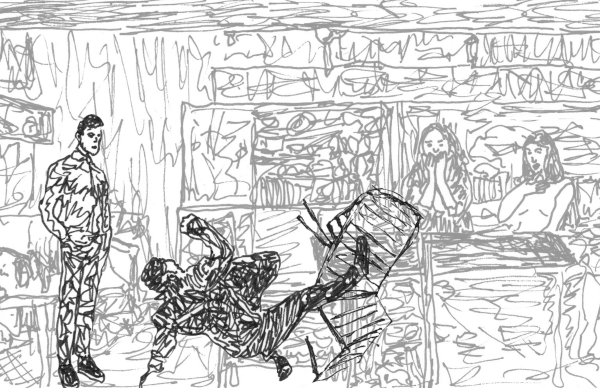 |
(Italiano) I Ragazzi entrano nella tana del leone, accompagnati da Tatiana. Alla ricerca di indizi, i due esaminano l'appartamento con attenzione e trovano qualcosa, anche se Helmut si dimostra un po' maldestro. |
(Deutsch) Die Jungs betreten die Höhle des Löwen, begleitet von Tatjana. Auf der Suche nach Spuren nehmen sie die Wohnung genau unter die Lupe und werden fündig, auch wenn sich Helmut ein wenig tollpatschig anstellt. Normal Version | ||
Die Widmung Tag 20 1 Heinz: Hast du verstanden, was Tatjana gerade zu Sveta gesagt hat? |
Day 20 Heinz: Did you understand what Tatyana just said to Sveta? |
Dédicace Jour 20 Heinz : Tu as compris ce que Tatiana vient de dire à Sveta ? |
La Dedica Giorno 20 Heinz: Hai capito cosa ha appena detto Tatiana a Sveta? |
Día 20 Heinz: ¿Has entendido lo que Tatiana acaba de decirle a Sveta? |
2 Helmut: Vielleicht ist hier was im ... wumm, plonk, aua! |
Helmut: Maybe there's something in the... boom, plonk, ouch! |
Helmut : Peut-être qu'il y a quelque chose dans le... woum, plonk, aïe ! |
Helmut: Forse c'è qualcosa nel... bum, plonc, ahi! |
Helmut: Quizá haya algo aquí en el... bum, plonc, ¡ay! |
3 Helmut: Die Bücher, so, und das, oh, eine Widmung, sieh mal! |
Helmut: The books, like this, and this, oh, a dedication, look! |
Helmut : Les livres, comme ça, et voilà, oh, une dédicace, regarde ! |
Helmut: I libri, così, e qui, oh, una dedica, guarda! |
Helmut: Los libros, así, y esto, ¡oh, una dedicatoria, mira! |
4 Helmut: Tatjana meinte, dass er anonym gearbeitet hat, weil ihm seine Privatsphäre wichtig gewesen ist. |
Helmut: Tatyana said that he worked anonymously because his privacy was important to him. |
Helmut : Tatiana dit qu'il a travaillé anonymement parce qu'il tenait à sa vie privée. |
Helmut: Tatiana ha detto che lavorava nell'anonimato perché la sua privacy era importante per lui. |
Helmut: Tatiana dijo que trabajaba de forma anónima porque su intimidad era importante para él. |
(English) Helmut is a man in demand because people are constantly calling him. Since Heinz can't get a word in edgewise, he looks for something meaningful to do to bridge the waiting time. |
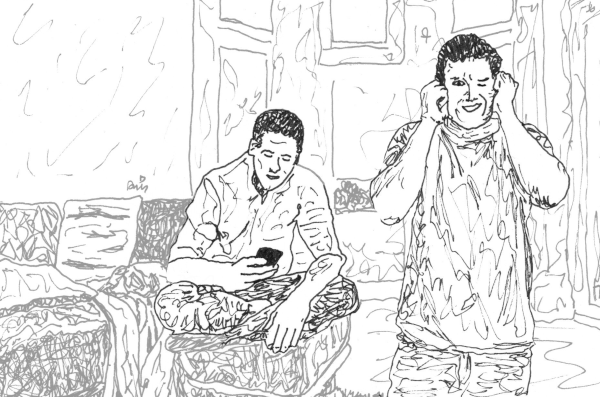 |
(Italiano) Helmut è un uomo molto richiesto perché le persone lo chiamano continuamente. Dato che Heinz non riesce a dire una parola, cerca qualcosa di significativo da fare per passare il tempo dell'attesa. |
(Deutsch) Helmut ist ein gefragter Mann, denn ständig rufen Leute bei ihm an. Da Heinz nicht zu Wort kommt, sucht er sich eine sinnvolle Beschäftigung, um die Wartezeit zu überbrücken. Normal Version | ||
Tag 22 1 Heinz: Und? Wo blamieren wir uns heute? |
Day 22 Heinz: Well? Where are we going to embarrass ourselves today? |
Jour 22 Heinz : Alors ? Où allons-nous nous ridiculiser aujourd'hui ? |
Giorno 22 Heinz: E? Dove ci mettiamo in imbarazzo oggi? |
Día 22 Heinz: ¿Y? ¿Dónde vamos a hacer el ridículo hoy? |
2 Heinz: War das Hedu? Seit wann redest du Deutsch mit ihr? |
Heinz: Was that Hedu? Since when do you speak German with her? |
Heinz : C'était Hédou ? Depuis quand tu parles allemand avec elle ? |
Heinz: Era Hedu? Da quando parli tedesco con lei? |
Heinz: ¿Era Hedu? ¿Desde cuándo hablas alemán con ella? |
3 Helmut: Sì, sì. Domani? Sì, è possibile. Sì. No. Ok. Ciao. |
Helmut: Sì, sì. Domani? Sì, è possibile. Sì. No. Ok. Ciao. |
Helmut : Sì, sì. Domani ? Sì, è possibile. Sì. Non. Ok. Ciao. |
Helmut: "Sì, sì. Domani? Sì, è possibile. Sì. No. Ok. Ciao." |
Helmut: Sì, sì. ¿Domani? Sì, è possibile. Sí. No. OK. Ciao. |
4 Helmut: Hallo? Да, да, ладно. |
Helmut: Hello? Да, да, ладно. |
Helmut : Allô ? Да, да, ладно. |
Helmut: Pronto? Да, да, ладно. |
Helmut: ¡Diga! Да, да, ладно. |
(English) The star of the show arrives! With a slight delay she does, but Aouda is immediately present and accompanies the Boys from now on. Even the fruit seller is thrilled. |
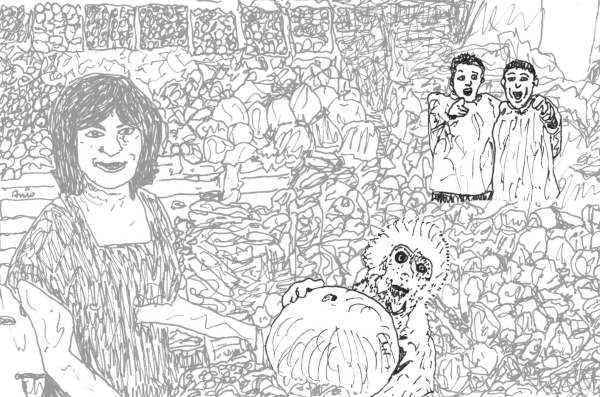 |
(Italiano) Arriva la star dello spettacolo! Con un po' di ritardo, questo è vero, ma Aouda è subito presente e accompagna i Ragazzi d'ora in poi. Anche il fruttivendolo è entusiasta. |
(Deutsch) Der Star der Show kommt an! Mit ein wenig Verzögerung zwar, aber Aouda ist sofort präsent und begleitet die Jungs von nun an. Selbst die Obstverkäuferin ist begeistert. Normal Version | ||
Tag 23 1 Heinz: Hast du noch mal was von Tatjana gehört? |
Day 23 1 Heinz: Have you heard from Tatyana again? |
Jour 23 Heinz : Tu as encore des nouvelles de Tatiana ? |
Giorno 23 Heinz: Hai più sentito Tatiana? |
Día 23 Heinz: ¿Has vuelto a saber algo de Tatiana? |
2 Helmut: (...) Ja, mein Kleines, jetzt gehen wir schön Obst für dich kaufen. |
Helmut: (...) Yes, my little one, now let's go and buy some fruit for you. |
Helmut : (...) Oui, ma petite, maintenant nous allons t'acheter des fruits. |
Helmut: (...) Sì, piccola mia, ora andiamo a comprare della frutta per te. |
Helmut: (...) Sí, mi pequeña, ahora vamos a comprarte fruta. |
3 Heinz: Da, jetzt nimmt sie sich ein zweites Körbchen, stülpt es sich über den Kopf wie einen Helm und eilt zu den Mandarinen! Was hat die Verkäuferin gerade gesagt? |
Heinz: There, now she takes a second basket, puts it over her head like a helmet and rushes to the mandarins! What did the seller just say? |
Heinz : Voilà, maintenant elle prend un deuxième panier, le met sur sa tête comme un casque et se précipite vers les mandarines ! Qu'est-ce que la vendeuse vient de dire ? |
Heinz: Ecco, ora prende un secondo cestino, se lo mette in testa come un casco e si precipita verso i mandarini! Cosa ha detto la commessa? |
Heinz: ¡Ya está, ahora coge una segunda cesta, se la pone en la cabeza como un casco y corre hacia las mandarinas! ¿Qué acaba de decir la vendedora? |
4 Heinz: Hey! Vielleicht ist Tatjana selbst Dr. Wolk! |
Heinz: Hey, maybe Tatyana is Dr. Volk herself! |
Heinz : Hé, peut-être que Tatiana est le Dr Volc elle-même ! |
Heinz: Ehi, forse Tatiana stessa è il Dr. Volc! |
Heinz: ¡Eh, a lo mejor Tatiana misma es el Dr. Volc! |
(English) As it turns out, not everyone is happy about the monkey's arrival. But that becomes irrelevant when the Boys realize that all their previous work is called into question. |
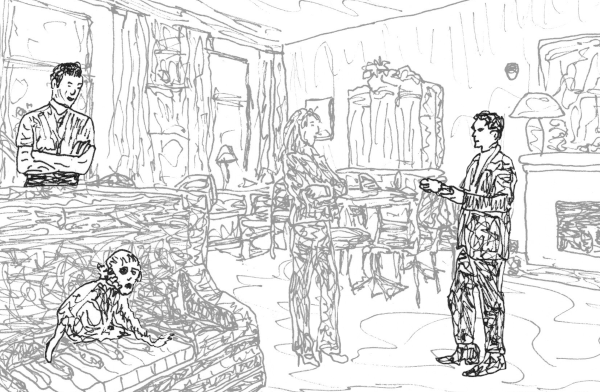 |
(Italiano) A quanto pare, non tutti sono felici dell'arrivo della scimmia. Ma questo diventa irrilevante quando i Ragazzi si rendono conto che tutto il loro lavoro precedente è messo in discussione. |
(Deutsch) Wie sich herausstellt, ist nicht jeder glücklich über die Ankunft des Affen. Doch das wird nebensächlich, als die Jungs feststellen müssen, dass ihre ganze bisherige Arbeit in Frage steht. Normal Version | ||
Tag 23 1 Heinz: Was ...? Ach so, Aouda nimmt die Schlüssel aus meiner Tasche, weil ich mit den Tüten die Tür nicht aufschließen kann. Ja, gib sie Helmut ... äh, Papa! So ist es brav. |
Day 23 Heinz: What...? Oh, Aouda takes the keys out of my pocket because I can't unlock the door with the bags. Yes, give them to Helmut... er, Daddy! That's a good girl. |
Jour 23 Heinz : Quoi... ? Oh, Aouda prend les clés de ma poche parce que je ne peux pas ouvrir la porte avec les sacs. Oui, donne-les à Helmut... euh, papa ! C'est une bonne fille. |
Giorno 23 Heinz: Cosa...? Oh, Aouda mi prende le chiavi dalla tasca perché non riesco ad aprire la porta con le borse. Sì, dalle a Helmut... ehm, a papà! Che brava ragazza. |
Día 23 Heinz: ¿Qué...? Ah, Aouda me saca las llaves del bolsillo porque no puedo abrir la puerta con las bolsas. Sí, ¡dáselas a Helmut... er, papá! Buena chica. |
2 Helmut: Als ich Sveta von dem Schachspiel erzählt habe, ist ihr eingefallen, wo sie den Namen in der Widmung schon mal gesehen hat. |
Helmut: When I told Sveta about the chess set, she remembered where she'd seen the name in the dedication before. |
Helmut : Quand j'ai parlé à Sveta de l'échiquier, elle s'est souvenue de l'endroit où elle avait déjà vu le nom dans la dédicace. |
Helmut: Quando ho detto a Sveta del set di scacchi, si è ricordata dove aveva visto il nome nella dedica. |
Helmut: Cuando le hablé a Sveta del juego de ajedrez, recordó dónde había visto antes el nombre en la dedicatoria. |
3 Helmut: (...) So, hier bei Ela sind wir erst mal sicher! |
Helmut: (...) Right, here at Ela's we're safe for now! |
Helmut : (...) Bon, ici, chez Ela, nous sommes en sécurité pour l'instant ! |
Helmut: (...) Bene, qui da Ela siamo al sicuro per ora! |
Helmut: (...) ¡Bueno, aquí en casa de Ela estamos a salvo por ahora! |
4 Helmut: Er hat uns seine Datscha angeboten und sein Leben. Wenn wir ihn nicht besuchen, wird ihn das fertigmachen. Er ist doch so feinfühlig! |
Helmut: He offered us his dacha and his life. If we don't visit him, he'll be devastated. He's so sensitive! |
Helmut : Il nous a offert sa datcha et sa vie. Si nous ne lui rendons pas visite, cela l'anéantira. Il est pourtant si sensible ! |
Helmut: Ci ha offerto la sua dacia e la sua vita. Se non lo andiamo a trovare, sarà distrutto. È così sensibile! |
Helmut: Nos ofreció su dacha y su vida. Si no le visitamos, se sentirá desolado. ¡Es tan sensible! |
(English) A reunion with the submarine captain brings all the participants together as they spend a sunny weekend at his lakeside dacha. The captain again causes problems, but this time he himself is the one who suffers the most. |
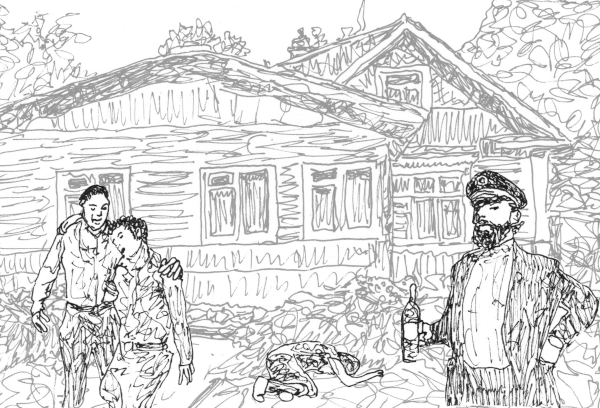 |
(Italiano) Una riunione con il capitano del sottomarino riunisce tutti i partecipanti che trascorrono un fine settimana di sole nella sua dacia sul lago. Il capitano è di nuovo causa di problemi, ma questa volta è lui stesso a soffrire di più. |
(Deutsch) Ein Wiedersehen mit dem U-Boot-Kapitän bringt alle Beteiligten zusammen, die ein sonniges Wochenende in seiner Datscha am See verbringen. Der Kapitän sorgt erneut für Probleme, doch dieses Mal ist er selbst der größte Leidtragende. Normal Version | ||
Tag 25 1 Heinz: La dolce vita! |
Day 25 Heinz: La dolce vita! |
Jour 25 Heinz : La dolce vita ! |
Giorno 25 Heinz: "La dolce vita!" |
Día 25 Heinz: ¡La dolce vita! |
2 Helmut: Ich puste noch mal, damit das besser glüht. Pfffft hust |
Helmut: I'll just blow on it again so it glows better. Pfffft cough |
Helmut : Je vais encore souffler dessus pour qu'il soit plus ardent. Pfffft tousse |
Helmut: Ci soffierò sopra un po' per renderla più infuocata. Pfffft tosse |
Helmut: Soplaré un poco para que esté más ardiente. Pfffft tos |
3 Heinz: Hör auf zu trinken, Helmut, das macht den Affen verrückt! |
Heinz: Stop drinking, Helmut, it's driving the monkey crazy! |
Heinz : Arrête de boire, Helmut, ça rend le singe fou ! |
Heinz: Smetti di bere, Helmut, fai impazzire la scimmia! |
Heinz: ¡Deja de beber, Helmut, estás volviendo loco al mono! |
4 Heinz: Du haust dich jetzt mal für 'ne Stunde hin und dann isst du was! |
Heinz: You'll have an hour's rest now and then you're gonna eat something! |
Heinz : Tu vas te reposer une heure et après tu mangeras quelque chose. |
Heinz: Ora ti riposerai un'ora e poi mangerai qualcosa! |
Heinz: ¡Ahora tendrás una hora de descanso y luego comerás algo! |
(English) On the way back to Moscow, Heinz excitedly tells his friend about the groundbreaking results of the brainstorming session, but Helmut can hardly listen as he is struggling with the after-effects of his weakness of will. |
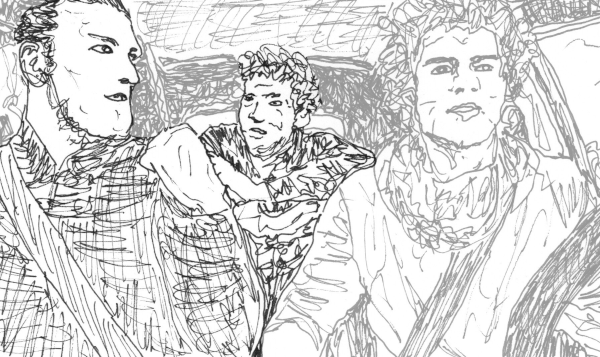 |
(Italiano) Durante il viaggio di ritorno a Mosca, Heinz racconta con entusiasmo all'amico i risultati decisivi della sessione di brainstorming, ma Helmut riesce a malapena ad ascoltare perché sta lottando con i postumi della sua debole volontà. |
(Deutsch) Auf der Rückfahrt nach Moskau erzählt Heinz seinem Freund aufgeregt von den richtungsweisenden Ergebnissen des Brainstormings, doch kann Helmut kaum zuhören, da er mit den Nachwirklungen seiner Willensschwäche zu kämpfen hat. Normal Version | ||
Kater Tag 26 1 Helmut: Oh Mannomannomann! |
Hangover Day 26 Helmut: Oh geez man! |
Gueule de bois Jour 26 Helmut : Oh là là ! |
della sbornia Giorno 26 Helmut: Oh amico, amico, amico! |
Resaca Día 26 Helmut: ¡Ay, madre mía! |
2 Heinz: Und? Besser? |
Heinz: And? Better? |
Heinz : Et alors ? Ça va mieux ? |
Heinz: E? Meglio? |
Heinz: ¿Y? ¿Mejor? |
3 Heinz: So kannst du nicht rechnen, Marco hat ... |
Heinz: You can't do the math like that, Marco has... |
Heinz : Tu ne peux pas faire le calcul comme ça, Marco a... |
Heinz: Non puoi fare i conti in questo modo, Marco ha... |
Heinz: No puedes hacer las cuentas así, Marco tiene... |
4 Heinz: Und? Besser? |
Heinz: And? Better? |
Heinz : Et alors ? Ça va mieux ? |
Heinz: E? Meglio? |
Heinz: ¿Y? ¿Mejor? |
(English) After two days, Heinz finally reaches his friend by phone. But Helmut seems to have forgotten everything the two of them had previously discussed and just wants to be left alone. Of course, Heinz won't let this happen. |
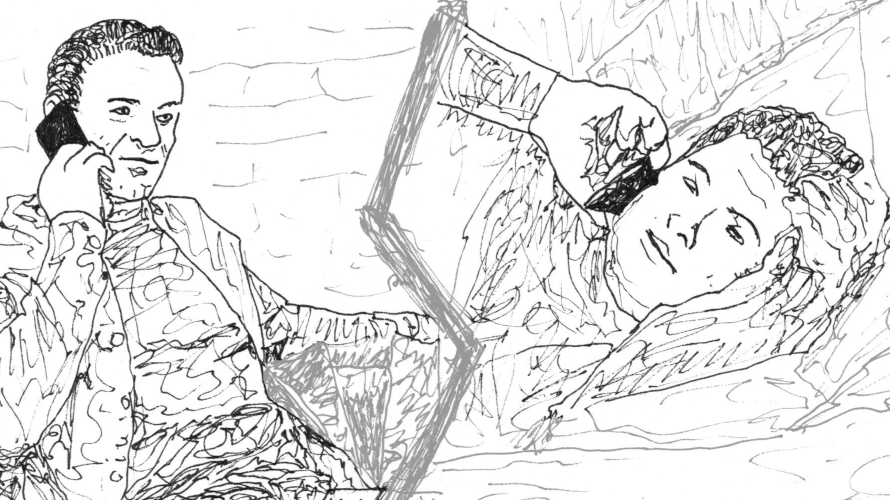 |
(Italiano) Dopo due giorni, Heinz raggiunge finalmente il suo amico per telefono. Ma Helmut sembra aver dimenticato tutto quello di cui avevano parlato in precedenza e vuole solo essere lasciato in pace. Naturalmente, Heinz non lo permette. |
(Deutsch) Nach zwei Tagen erreicht Heinz seinen Freund endlich telefonisch. Helmut aber scheint alles vergessen zu haben, was die beiden zuvor besprochen hatten, und will nur in Ruhe gelassen werden. Das lässt Heinz natürlich nicht zu. Normal Version | ||
Tag 28 1 Helmut: Hallo? |
Day 28 Helmut: Hello? |
Jour 28 Helmut : Allô ? |
Giorno 28 Helmut: Pronto? |
Día 28 Helmut: ¡¿Sí?! |
2 Heinz: Was glaubst du, wie egal mir das ist! Ich komm einfach. |
Heinz: I couldn't care less! I'll just come. |
Heinz : Je m'en fiche ! Je viens, c'est tout. |
Heinz: Non me ne frega niente! Verrò e basta. |
Heinz: ¡Me importa un bledo! Iré sin más. |
3 Helmut: Hallo? |
Helmut: Hello? |
Helmut : Allô ? |
Helmut: Pronto? |
Helmut: ¡¿Oiga?! |
4 Heinz: Lass es einfach! Also wann morgen? |
Heinz: Just drop it! So when tomorrow? |
Heinz : Laisse tomber ! Alors, quand demain ? |
Heinz: Lascia perdere! Allora, domani quando? |
Heinz: ¡Olvídalo! Entonces, ¿cuándo mañana? |
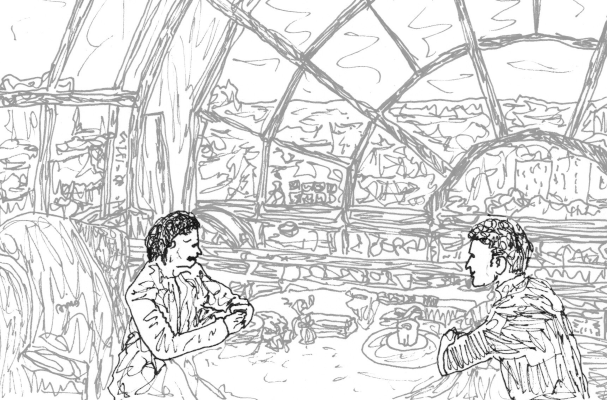
(English) The two visit a well-known Moscow restaurant, where Heinz wants to share something important with his friend concerning Dr. Volk. But first he asks a few fundamental questions that give Helmut a lot to think about. |
 |
(Italiano) I due si recano in un noto ristorante di Mosca, dove Heinz vuole dire al suo amico qualcosa di importante che riguarda il dottor Volc. Ma prima pone alcune domande fondamentali che danno a Helmut molto da pensare. |
(Deutsch) Die beiden besuchen ein bekanntes Moskauer Restaurant, wo Heinz seinem Freund etwas Wichtiges mitteilen möchte, das Dr. Wolk betrifft. Zuvor aber stellt er ein paar grundsätzliche Fragen, die Helmut stark ins Grübeln bringen. Normal Version | ||
Tag 29 1 Heinz: Hier jetzt rechts! Wir sind gleich da. |
White Rabbit Day 29 Heinz: Turn right here! We're almost there. |
blanc Jour 29 Heinz : Ici à droite ! Nous sommes juste là. |
Giorno 29 Heinz: Qui a destra! Siamo quasi arrivati. |
Día 29 Heinz: ¡Aquí a la derecha! Estamos justo allí. |
2 Helmut: Kommt jetzt die Frage? |
Helmut: Is the question coming now? |
Helmut : Est-ce que ça le moment de la question, là ? |
Helmut: La domanda viene ora? |
Helmut: ¿Ahora viene la pregunta? |
3 Helmut: Ach so, das. Lange her! Ah, ein Becken mit Meerestieren! |
Helmut: Oh, that. Long time since! Ah, a tank with sea creatures! |
Helmut : Oh, ça. Ça fait longtemps ! Ah, un bassin avec des créatures marines ! |
Helmut: Oh, quello. Molto tempo fa! Ah, una vasca con creature marine! |
Helmut: Ah, eso. Hace mucho tiempo. Ah, ¡una pecera con criaturas marinas! |
4 Helmut: Nein! Wirklich? Da ziehst du einfach so ein Kaninchen aus dem Hut, also das ... Moment mal, alles hinterfragen: Woher willst du das wissen? |
Helmut: No! Really? You just pull a rabbit out of your hat like that, now that... Wait a minute, question everything: How do you know that? |
Helmut : Non ! Vraiment ? Tu sors un lapin du chapeau comme ça, alors ça... Attends, tout remettre en question : comment tu sais ça ? |
Helmut: No! Davvero? Tiri fuori un coniglio dal cilindro così, allora questo è... Aspetta un attimo, mettere tutto in discussione: come fai a saperlo? |
Helmut: ¡No! ¿De verdad? Te sacas un conejo de la chistera así, sin más, esto es... Un momento, pregunta todo: ¿Cómo lo sabes? |
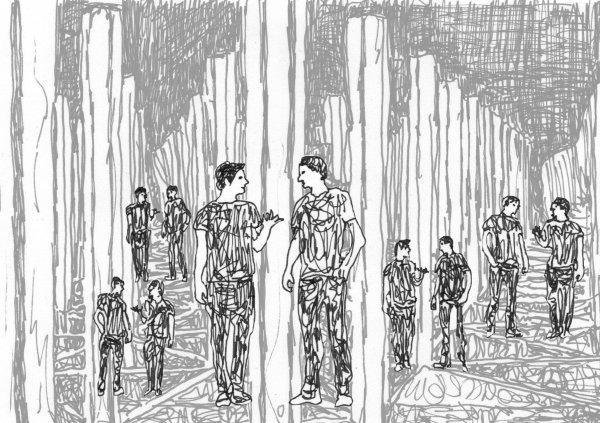
(English) On this day, it is Helmut's turn to share some news with his friend. He chooses Dream Island, an amusement park, as the location for this. Even though Heinz can't really enjoy the island, he is captivated by his companion's report. |
 |
(Italiano) In questo giorno, è il turno di Helmut di condividere alcune notizie con il suo amico. Sceglie l'Isola dei Sogni, un parco divertimenti, come quinta scena. Anche se Heinz non riesce a godersi l'isola, è affascinato dal reportage del suo compagno. |
(Deutsch) An diesem Tag ist es an Helmut, seinem Freund Neuigkeiten mitzuteilen. Er wählt dafür als Kulisse die Trauminsel, einen Vergnügungspark. Auch wenn Heinz die Insel nicht so recht genießen kann, ist er von den Ausführungen seines Gefährten gefesselt. Normal Version | ||
Tag 30 1 Heinz: Au wei, das kitzelt im Magen! Hui |
Day 30 Heinz: Oh my, this is tickling my stomach! Hoo |
Jour 30 Heinz : Oh là là, ça me chatouille l'estomac ! Houi |
Giorno 30 Heinz: Oh mio, mi fa il solletico allo stomaco! Hui |
Día 30 Heinz: ¡Vaya, eso me hace cosquillas en el estómago! Hui |
2 Helmut: Heinz, du kannst jetzt die Augen aufmachen und aufstehen. Du hast es überstanden. |
Helmut: Heinz, you can open your eyes now and get up. You've made it through. |
Helmut : Heinz, tu peux rouvrir les yeux et te lever maintenant. Tu as réussi à passer. |
Helmut: Heinz, ora puoi aprire gli occhi e alzarti. Ce l'hai fatta. |
Helmut: Heinz, ya puedes abrir los ojos y levantarte. Lo has conseguido. |
3 Helmut: Also, sie hat mich fünf Sekunden angesehen, dann hat sie gelächelt und zum Telefon gegriffen. |
Helmut: Well, she looked at me for five seconds, then she smiled and picked up the phone. |
Helmut : Alors, elle m'a regardé pendant cinq secondes, puis elle a souri et a pris le téléphone. |
Helmut: Beh, mi ha guardato per cinque secondi, poi ha sorriso e ha preso il telefono. |
Helmut: Bueno, me miró durante cinco segundos, luego sonrió y cogió el teléfono. |
4 Heinz: Du bist wegen meiner Idee in der Bruderschaft aufgestiegen und ich stoß mir den Kopf? Das ist mehr als ungerecht. Universum, hörst du mich? |
Heinz: You got promoted in the Brotherhood because of my idea and I'm the one banging his head? That's more than unfair. Universe, can you hear me? |
Heinz : Tu as été promu dans la Confrérie grâce à mon idée et c'est moi qui me cogne la tête ? C'est plus qu'injuste. Univers, tu m'entends ? |
Heinz: Sei stato promosso nella Confraternita grazie alla mia idea e sono io a sbattere la testa? Questo è più che ingiusto. Universo, mi senti? |
Heinz: ¿A ti te ascendieron en la Hermandad gracias a mi idea y soy yo el que se golpea la cabeza? Eso es más que injusto. Universo, ¿puedes oírme? |
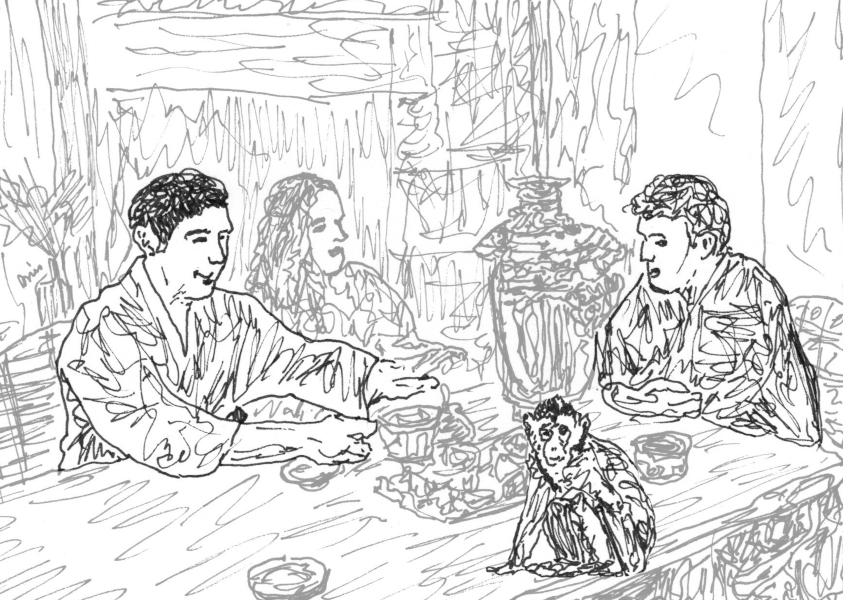
(English) It's getting serious. The Boys are on a hot track and working on a strategy. As he has done so many times before, Helmut comes up with an idea after having experienced a slight mishap. |
 |
(Italiano) La situazione si fa seria. I Ragazzi sono su una pista calda e stanno lavorando a una strategia. Come già accaduto diverse volte in passato, Helmut ha un'idea dopo aver avuto un lieve contrattempo. |
(Deutsch) Es wird Ernst. Die Jungs sind auf einer heißen Fährte und arbeiten an einer Strategie. Wie schon so manches Mal zuvor kommt Helmut eine Idee, nachdem er ein kleines Missgeschick erlebt hat. Normal Version | ||
Tag 31 1 Helmut: Übermorgen ist der große Tag und uns ist noch nichts Vernünftiges eingefallen! |
Day 31 Helmut: The day after tomorrow is the big day and we haven't come up with anything sensible yet! |
Jour 31 Helmut : Après-demain, c'est le grand jour et nous n'avons encore rien trouvé de palpable ! |
Giorno 31 Helmut: Dopodomani è il grande giorno e non abbiamo ancora trovato nulla di concreto! |
Día 31 Helmut: ¡Pasado mañana es el gran día y aún no se nos ha ocurrido nada sensato! |
2 Heinz: Gute Idee! Hey, sie könnte eine kleine Kamera im Haarband tragen! Fotos sind die halbe Miete. |
Heinz: Good idea! Hey, she could wear a little camera in her hairband! Photos are half the battle. |
Heinz : Bonne idée ! Hé, elle pourrait porter une petite caméra dans son bandeau ! Des photos, c'est la moitié de la bataille. |
Heinz: Buona idea! Ehi, potrebbe indossare una piccola macchina fotografica nella fascia per capelli! Le foto sono metà della battaglia. |
Heinz: ¡Buena idea! Oye, ¡podría llevar una camarita en la cinta del pelo! Las fotos son la mitad de la batalla. |
3 Heinz: Und wie willst du sie einbeziehen? |
Heinz: And how do you want to involve her? |
Heinz : Et comment comptes-tu la faire participer ? |
Heinz: E come pensi di coinvolgerla? |
Heinz: ¿Y cómo quieres involucrarla? |
4 Helmut: Kein Problem. Überleg mal: Allein in der letzten Viertelstunde hat sie dir Tee gemacht, sie hat Sveta zum Putzeimer gezogen, um mich zu löschen ... |
Helmut: No problem. Think about it: in the last quarter of an hour alone, she's made you tea, she's dragged Sveta to the cleaning bucket to extinguish me... |
Helmut : Pas de problème. Réfléchis : rien qu'au cours du dernier quart d'heure, elle t'a préparé du thé, elle a traîné Sveta jusqu'au seau de nettoyage pour m'éteindre... |
Helmut: Nessun problema. Pensaci: nell'ultimo quarto d'ora da sola, ti ha preparato il tè, ha trascinato Sveta al secchio delle pulizie per spegnermi... |
Helmut: No hay problema. Piénsalo: en el último cuarto de hora a solas, te ha preparado el té, ha arrastrado a Sveta hasta el cubo de la limpieza para extinguirme... |
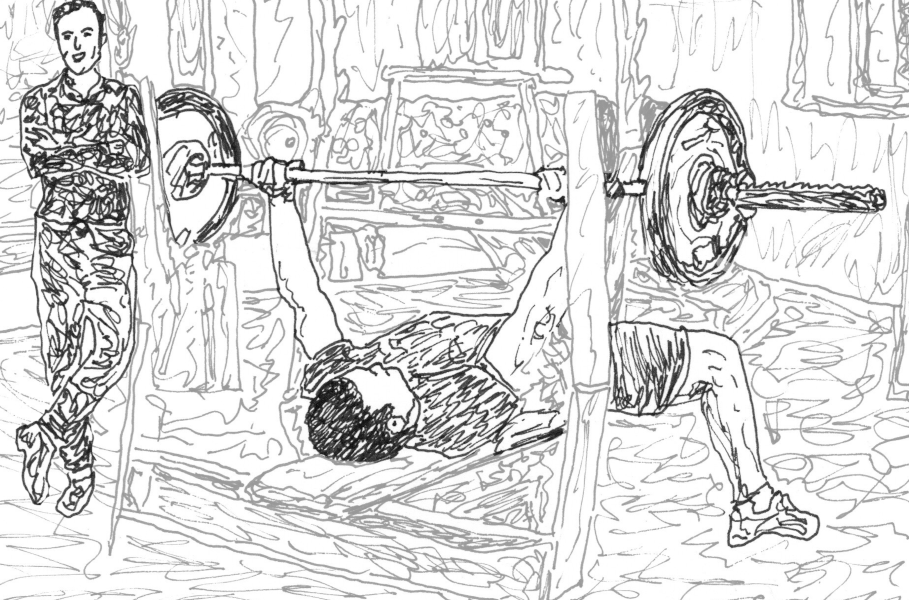
(English) The Boys are shopping for the big day when Helmut is unexpectedly invited to a gym. A good opportunity to try out the new sneakers! |
 |
(Italiano) I Ragazzi stanno facendo shopping per il grande giorno quando Helmut viene inaspettatamente invitato in palestra. Un'ottima occasione per provare le nuove scarpe da ginnastica! |
(Deutsch) Die Jungs kaufen für den großen Tag ein, als Helmut unverhofft in ein Fitnessstudio eingeladen wird. Eine gute Gelegenheit, um die neuen Turnschuhe auszuprobieren! Normal Version | ||
Tag 32 1 Helmut: Die sind für dich! |
Day 32 Helmut: These are for you! |
Jour 32 Helmut : Tiens, c'est pour toi ! |
Giorno 32 Helmut: Ecco, questi sono per te! |
Día 32 Helmut: ¡Son para ti! |
2 Heinz: Also gut, was soll's! (...) Und, womit willst du anfangen? Hanteln, Beinpresse? Da ist auch ein Rudergerät. |
Heinz: All right, what the hell! (...) So, what do you want to start with? Dumbbells, leg press? There's also a rowing machine over there. |
Heinz : Bon, d'accord, pourquoi pas ? (...) Alors, par quoi veux-tu commencer ? Des haltères, une presse à jambes ? Il y a aussi un rameur. |
Heinz: Va bene, che diavolo! (...) Allora, con cosa vuoi iniziare? Manubri, pressa per le gambe? C'è anche un vogatore. |
Heinz: ¡Muy bien, qué demonios! (...) Entonces, ¿con qué quieres empezar? ¿Mancuernas, prensa de piernas? También hay una máquina de remo. |
3 Heinz: Sehr gut, du hast es bis auf die Bank geschafft. Jetzt probier die Gewichte! Warte, ich komm mal rum und helf dir. Boing boing |
Heinz: Very good, you've made it onto the bench. Now try the weights! Wait, I'll come around and help you. Boing boing |
Heinz : Très bien, tu as réussi à monter sur le banc. Maintenant, essaie les poids ! Attends, je vais venir t'aider. Boing boing |
Heinz: Molto bene, sei riuscito a salire sulla panca. Ora prova con i pesi! Aspetta, vengo ad aiutarti. Boing boing |
Heinz: Muy bien, has conseguido subir al banco. ¡Ahora prueba con las pesas! Espera, voy a ayudarte. Boing boing |
4 Heinz: Und du bist der King, oder was? Herr Klatsch-an-die-Wand! |
Heinz: And you're the king, are you? Mr. Smack-on-the-wall! |
Heinz : Et tu es le roi, ou quoi ? Monsieur Clac-contre-le-mur |
Heinz: E tu sei il king, vero? Mr. Schianta-muro. |
Heinz: ¿Y tú eres el king o qué? ¡Sr. Machaca-contra-la-pared! |
(English) The two wait anxiously for hours under the arcades, while Ela stands outside the entrance with the monkey. It is raining buckets, but they are prepared for anything. They only have one question on their minds: will he come? |
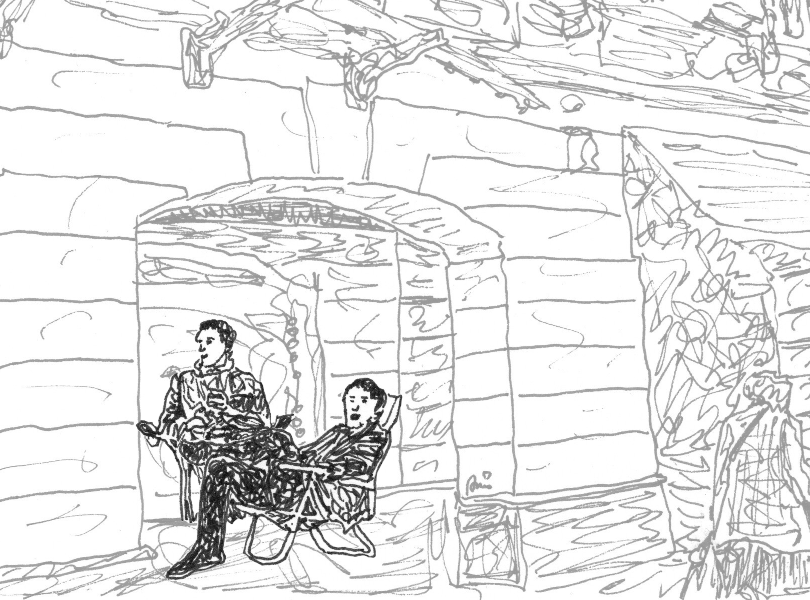 |
(Italiano) I due aspettano impazienti per ore sotto i portici, mentre Ela sta all'ingresso con la scimmia. Piove a dirotto, ma sono pronti a tutto. C'è solo una domanda nella loro mente: arriverà? |
(Deutsch) Gespannt warten die beiden stundenlang unter den Arkaden, während Ela mit dem Affen vorm Eingang steht. Es regnet in Strömen, doch sie sind auf alles vorbereitet. Sie haben nur eine Frage im Sinn: Wird er kommen? Normal Version | ||
Tag 33 1 Helmut: ♪ Dú-wap-di-dú-da-da. Dú-wap-di-dú-da-da. |
Day 33 Helmut: ♪ Doo-wop-dee-doo-da-da. Doo-wop-dee-doo-da-da. |
Jour 33 Helmut : ♪ Dou-wop-di-dou-da-da. Dou-wop-di-dou-da-da. |
Giorno 33 Helmut: ♪ Dú-wap-di-dú-da-da. Dú-wap-di-dú-da-da. |
Frente al Pasaje Smolenski Día 33 Helmut: ♪ Dú-wap-di-dú-da-da. Dú-wap-di-dú-da-da. |
2 Heinz: Kannst du ihn erkennen? |
Heinz: Can you recognize him? |
Heinz : Peux-tu le reconnaître ? |
Heinz: Riesci a riconoscerlo? |
Heinz: ¿Le reconoces? |
3 Heinz: Helmut, Aouda ist ein Affe. |
Heinz: Helmut, Aouda is a monkey. |
Heinz : Helmut, Aouda est un singe. |
Heinz: Helmut, Aouda è una scimmia. |
Heinz: Helmut, Aouda es una mona. |
4 Heinz: (...) Es ist fast Mitternacht. Seufz. Die schließen gleich. So ein Mist! Wenigstens hat der Regen aufgehört. |
Heinz: (...) It's almost midnight. Sigh. They're about to close. What a drag! At least the rain has stopped. |
Heinz : (...) Il est presque minuit. Soupir. Ils sont sur le point de fermer. Quel gâchis ! Au moins, la pluie a cessé. |
Heinz: (...) È quasi mezzanotte. Sigh. Stanno per chiudere. Che peccato! Almeno ha smesso di piovere. |
Heinz: (...) Es casi medianoche. Suspiro. Están a punto de cerrar. ¡Qué faena! Al menos ha dejado de llover. |
(English) Sasha, the cab driver, is a really nice person. He helps the three of them to the last meter and beyond. He doesn't even turn on his taximeter! |
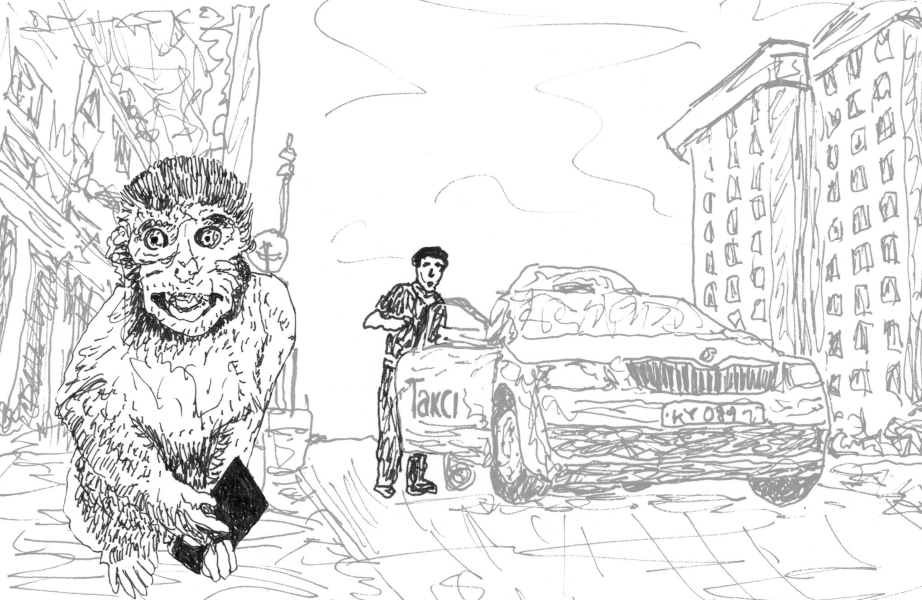 |
(Italiano) Sasha, il tassista, è una persona davvero gentile. Aiuta i tre fino all'ultimo metro e oltre. Non accende nemmeno il tassametro! |
(Deutsch) Sascha, der Taxifahrer, ist wirklich ein netter Mensch. Er hilft den dreien bis zum letzten Meter und darüber hinaus. Er stellt nicht mal sein Taxameter an! Normal Version | ||
Tag 33/34 1 Helmut: Jetzt können wir nur beten, dass Aouda Dr. Wolk mit ihrem Charme berührt hat. Warum rufst du nach einem Taxi? |
Day 33/34 Helmut: Now we can only pray that Aouda has managed to win over Dr. Volk with her charm. Why are you calling for a cab? |
Jour 33/34 Helmut : Il ne nous reste plus qu'à prier pour qu'Aouda ait touché le Dr Volc avec son charme. Pourquoi appelles-tu un taxi ? |
Giorno 33/34 Helmut: Ora possiamo solo pregare che Aouda abbia toccato il Dr. Volc con il suo fascino. Perché hai chiamato un taxi? |
Día 33/34 Helmut: Ahora solo nos queda rezar para que Aouda haya tocado al Dr. Volc con su encanto. ¿Por qué pides un taxi? |
2 Helmut: (...) Die laufen immer noch. Jetzt steigen sie mit Aouda in ein Auto! |
Helmut: (...) They're still walking. Now they're getting into a car with Aouda! |
Helmut : (...) Ils marchent toujours. Maintenant, ils montent dans une voiture avec Aouda ! |
Helmut: (...) Stanno ancora camminando. Ora stanno salendo su un'auto con Aouda! |
Helmut: (...) Siguen corriendo. ¡Ahora están subiendo a un coche con Aouda! |
3 Helmut: (...) Ey, wo wollen die mit Aouda hin? Die fahren schon fast eine Stunde! Siehst du sie wieder? |
Helmut: (...) Hey, where are they going with Aouda? They've been driving for almost an hour! Can you see them again? |
Helmut : (...) Hé, où vont-ils avec Aouda ? Cela fait presque une heure qu'ils roulent ! Tu peux les revoir ? |
Helmut: (...) Ehi, dove stanno andando con Aouda? Stanno guidando da quasi un'ora! Riesci a vederli di nuovo? |
Helmut: (...) Eh, ¿adónde van con Aouda? ¡Llevan casi una hora conduciendo! ¿Puedes volver a verlos? |
4 Helmut: Aouda läuft überall herum und dreht sich langsam, so wie wir es geübt haben. |
Helmut: Aouda is walking around everywhere and turning slowly, just like we practiced. |
Helmut : Aouda se promène partout et tourne lentement, comme nous l'avions répété. |
Helmut: Aouda cammina dappertutto e si gira lentamente, proprio come ci siamo esercitati. |
Helmut: Aouda se pasea por todas partes y gira lentamente, como hemos practicado. |
(English) On the flight back, the whole secret is revealed to Heinz. Helmut is allowed to tell him because Sergei, rank five in the Lodge, showed Heinz the secret finger salute at the farewell party. |
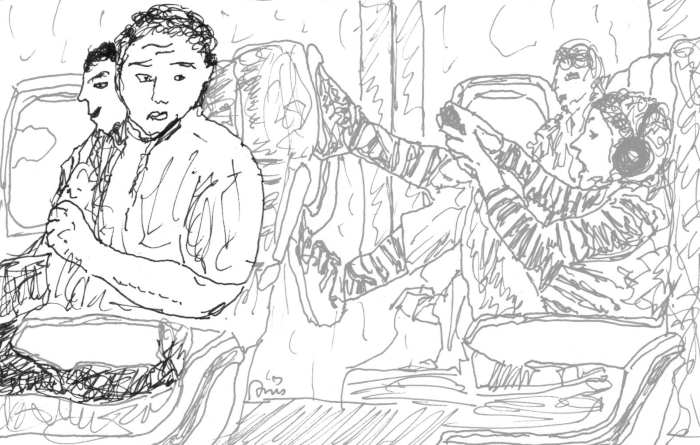 |
(Italiano) L'intero segreto viene rivelato a Heinz durante il volo di ritorno. Helmut ha il permesso di dirglielo perché Sergei, quinto grado della Loggia, ha mostrato a Heinz il saluto segreto con le dita alla festa di addio. |
(Deutsch) Auf dem Rückflug enthüllt sich Heinz das ganze Geheimnis. Helmut darf es ihm erzählen, denn Sergei, Rang Fünf in der Loge, hat Heinz auf der Abschlussfeier den geheimen Fingergruß gezeigt. Normal Version | ||
Scheveningen 1993 Tag 39 1 Heinz: Pong pong. Das darf ja wohl nicht wahr sein! Das hinter mir ist derselbe kleine Rotzlöffel wie auf dem Hinflug! |
Day 39 Heinz: Pong pong. You gotta be kidding me! The kid behind me is the same snotty little brat as on the outward flight! |
Scheveningen 1993 Jour 39 Heinz : Pong pong. Mais c'est pas vrai ! C'est le même petit morveux derrière moi qu'à l'aller ! |
Giorno 39 Heinz: Pong pong. Non ci posso credere! Il ragazzo dietro di me è lo stesso moccioso del volo di andata! |
Día 39 Heinz: Pong pong. ¡No puede ser verdad! ¡Detrás de mí está el mismo mocoso que en el viaje de ida! |
2 Heinz: Und was ist 1993 in Scheveningen passiert? |
Heinz: And what happened in Scheveningen in 1993? |
Heinz : Et que s'est-il passé à Scheveningen en 1993 ? |
Heinz: E cosa è successo a Scheveningen nel 1993? |
Heinz: ¿Y qué pasó en Scheveningen en 1993? |
3 Helmut: Ja, das verstehe ich. Also, in Scheveningen haben Sergej, Dr. Wolk und zwei andere geniale Köpfe Forschungen zu alternativen Energien betrieben. |
Helmut: Yes, I understand that. So, in Scheveningen, Sergei, Dr. Volk and two other brilliant minds were doing research into alternative energies. |
Helmut : Oui, je comprends. Donc, à Scheveningen, Sergueï, le Dr Volc et deux autres brillants esprits faisaient des recherches sur les énergies alternatives. |
Helmut: Sì, capisco. Quindi, a Scheveningen, Sergei, il Dr. Volc e altre due menti brillanti stavano facendo ricerca sulle energie alternative. |
Helmut: Sí, lo entiendo. Así que, en Scheveningen, Sergei, el Dr. Volc y otras dos mentes brillantes estaban investigando energías alternativas. |
4 Heinz: Und warum hat er nach dem dritten Artikel nicht weitergeschrieben? |
Heinz: And why didn't he continue writing after the third article? |
Heinz : Et pourquoi a-t-il arrêté d'écrire après le troisième article ? |
Heinz: E perché non ha continuato a scrivere dopo il terzo articolo? |
Heinz: ¿Y por qué no siguió escribiendo después del tercer artículo? |
| Weiter geht's mit Staffel 4: Die Jungs in der Loge / The story continues with The Boys in the Lodge |
| up | |
| Datenschutzerklärung und Impressum (data privacy statement and imprint) |

