



|
home ao english musik literatur journalismus bilder sprachen mehr shop sitemap | |
campen (12) 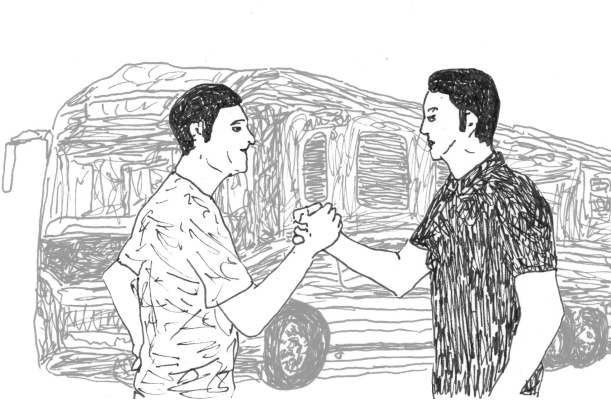 |
Go Camping (12) |
campent (12) |
(12) |
acampan (12) |
(Deutsch) Dies ist die linguistische Version der zwölften Staffel der Jungs. Die Texte sind dieselben wie auf der Hauptseite. |
(English) This is the linguistic version of the twelfth season of the Boys. The texts are the same as on the main page. |
(Français) Voici la version linguistique de la douzième saison des Gars. Les textes sont les mêmes que sur la page principale. |
(Italiano) Questa è la versione linguistica della dodicesima stagione dei Ragazzi. I testi sono gli stessi della pagina principale. Colori: parole singole (verde) frasi nominali (azzurro) frasi verbali (ocra) modi di dire + collocazioni (rosso) parolacce + onomatopea + giochi di parole (viola) |
(Español) Esta es la versión lingüística de la duodécima temporada de los Chicos. Los textos son los mismos que en la página principal. |
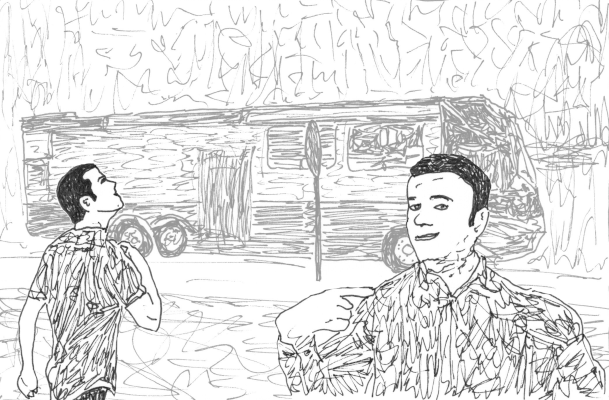
(English) After spending a few weeks with his woman and kid, Helmut surprises Heinz at home because he's scored one of his famous bargains and can't wait to tell his friend about an awesome plan. |
 |
(Italiano) Dopo aver passato qualche settimana con sua compagna e sua figlia, Helmut fa una visita a sorpresa a Heinz a casa sua, perché ha fatto uno dei suoi soliti affari e non vede l'ora di raccontare al suo amico un piano fantastico. |
(Deutsch) Nachdem Helmut einige Wochen mit Frau und Kind verbracht hat, besucht er Heinz überraschend zu Hause, denn er hat eines seiner berühmten Schnäppchen gemacht und kann es nicht erwarten, seinem Freund von einem großartigen Plan zu erzählen. Normal Version | ||
Tag 1 1 Helmut: ♫ Ü-Ü-Überraschung! |
Day 1 Helmut: ♫ Su-su-surprise! |
Camping-car Jour 1 Helmut : ♫ Su-su-surprise ! |
Il Camper Giorno 1 Helmut: ♫ So-so-so-sorpresa! |
Día 1 Helmut: ♫ ¡So-so-so-sorpresa! |
2 Heinz: Camping. Hm. Weiß nicht. Warum fragst du? Ping |
Heinz: Camping. Hm. I don't know. Why do you ask? Ping |
Heinz : Camping. Hum. Je ne sais pas. Pourquoi tu me demandes ça ? Ping |
Heinz: In campeggio. Hm. Non lo so. Perché me lo chiedi? Ping |
Heinz: Acampada. Hm. No sé. ¿Por qué lo preguntas? Ping |
3 Helmut: Die Wohnung sieht übrigens übel aus. Ts, kaum ist man für ein paar Wochen weg ... |
Helmut: By the way, the apartment looks terrible. Ts, as soon as one is away for a few weeks... |
Helmut : Au fait, l'appart est dans un état épouvantable. Ts, dès qu'on est parti quelques semaines... |
Helmut: A proposito, l'appartamento è un disastro. Ts, basta stare via un paio di settimane... |
Helmut: Por cierto, el piso está hecho un desastre. Ts, basta con estar fuera un par de semanas... |
4 Heinz: Street ... ein amerikanischer Film? |
Heinz: Street... an American movie? |
Heinz : Street... un film américain ? |
Heinz: Street... un film americano? |
Heinz: Street... ¿una película americana? |
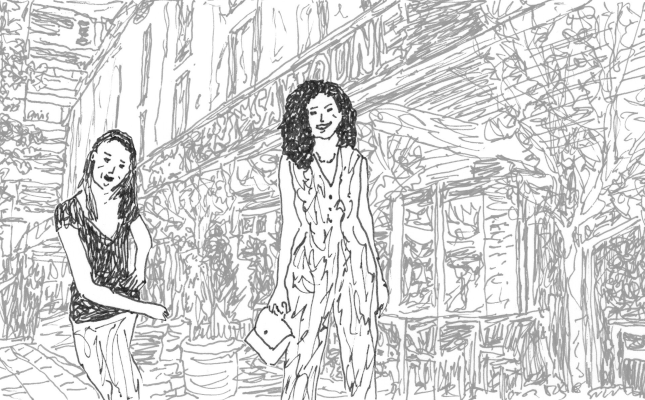
(English) Fiona and Fanni's PR agency is thriving. Once again, they have found a new client. However, it seems to Fanni that her boss is overworked, which is confirmed during a crisis. Just as if on cue, Fiona receives a message suggesting she take a vacation. |
 |
(Italiano) L'agenzia di pubbliche relazioni di Fiona e Fanni continua a crescere. Ancora una volta hanno trovato un nuovo cliente. Tuttavia, Fanni pensa che la sua capo sia troppo stressata, cosa che si conferma durante una crisi. Quasi come se fosse stato ordinato, Fiona riceve un messaggio che le suggerisce di prendersi una vacanza. |
(Deutsch) Die PR-Agentur von Fiona und Fanni floriert. Wieder haben sie einen neuen Kunden gefunden. Allerdings kommt Fanni ihre Chefin überarbeitet vor, was sich in der Krise bestätigt. Da geht, wie bestellt, bei Fiona eine Nachricht ein, die ihr einen Urlaub nahelegt. Normal Version | ||
Tag 1 1 Fanni: Das lief ja nicht schlecht. Dafür, dass ich Akquisegespräche eigentlich hasse. |
Day 1 Fanni: That didn't go too badly. Considering I actually hate sales meetings. |
Jour 1 Fanni : Ça s'est plutôt bien passé. Vu que je déteste les entretiens commerciaux, au fond. |
Giorno 1 Fanni: Non è andata male. Considerando che odio i colloqui di acquisizione in fondo. |
Día 1 Fanni: No ha ido tan mal. Teniendo en cuenta que, en el fondo, odio las reuniones con clientes potenciales. |
2 Fiona: Am besten gefallen mir deine Videos, in denen du dich als quirlige Touristin verkleidest und davon abrätst, sich für das Schloss zu bewerben. Zu viel Bürokratie, zu wenig Plätze … |
Fiona: I like your videos best, where you dress up as a bubbly tourist and advise people not to apply for the castle. Too much bureaucracy, too few places... |
Fiona : Ce que je préfère, ce sont tes vidéos où tu te déguises en touriste exubérante et où tu déconseilles de postuler pour le château. Trop de bureaucratie, trop peu de places... |
Fiona: Mi piacciono di più i tuoi video in cui ti travesti da turista esuberante e sconsigli di candidarsi per il castello. Troppa burocrazia, troppo pochi posti... |
Fiona: Lo que más me gustan son tus vídeos en los que te disfrazas de turista alegre y desaconsejas solicitar una visita al castillo. Demasiada burocracia, pocas plazas... |
3 Fiona: Hier müsste doch … wo ist das Auto, Fanni? |
Fiona: There should be... where's the car, Fanni? |
Fiona : Il devrait y avoir... où est la voiture, Fanni ? |
Fiona: Dovrebbe essere qui... dov'è la macchina, Fanni? |
Fiona: Debería estar aquí... ¿Dónde está el coche, Fanni? |
4 Fiona: Ja, Heinz will … |
Fiona: Yeah, Heinz wants... |
Fiona : Oui, Heinz veut... |
Fiona: Sì, Heinz vuole... |
Fiona: Sí, Heinz quiere... |
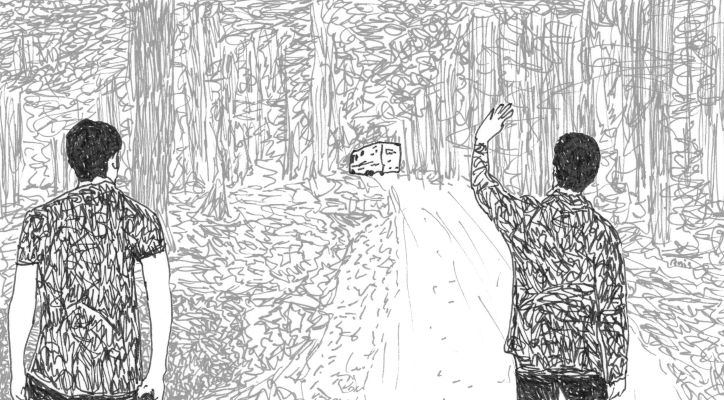
(English) The test drive with the new motorhome convinces Heinz, and the idea of a camping vacation seems appealing to him when they stop at a wooded area to get a taste of what it might be like. If Helmut had behaved himself, the little trip would certainly have gone very well. |
 |
(Italiano) Il giro con il nuovo camper convince Heinz e l'idea di una vacanza in campeggio gli sembra allettante quando si fermano in un bosco per avere un assaggio. Se Helmut si fosse comportato bene, la gita sarebbe sicuramente andata benissimo. |
(Deutsch) Die Spritztour mit dem neuen Wohnmobil überzeugt Heinz und ihm erscheint die Idee eines Campingurlaubs verlockend, als sie an einem Waldstück halten, um einen Vorgeschmack zu bekommen. Wenn sich Helmut gut benommen hätte, wäre der kleine Ausflug bestimmt sehr gut verlaufen. Normal Version | ||
Tag 1 1 Helmut: Übrigens, deine Sandalen sind cool. Sind die neu? |
Day 1 Helmut: By the way, your sandals are cool. Are they new? |
Jour 1 Helmut : Au fait, tes sandales sont cool. Elles sont neuves ? |
Giorno 1 Helmut: A proposito, i tuoi sandali sono fichi. Sono nuovi? |
Día 1 Helmut: Por cierto, tus sandalias son muy chulas. ¿Son nuevas? |
2 Heinz: Hm. Hat das Wohnmobil einen Namen? |
Heinz: Hm. Does the motorhome have a name? |
Heinz : Hum. Le camping-car a un nom ? |
Heinz: Hm. Il camper ha un nome? |
Heinz: Hm. ¿La autocaravana tiene nombre? |
3 Helmut: Ah, sehr gut, Holger ist schon unterwegs. Und? Erzähl mal, wie geht's dir? Was geht dir im Kopf rum nach unserer Reise in die Urzeit? |
Helmut: Ah, very good, Holger is already on his way. So? Tell me how are you? What's on your mind after our trip to prehistoric times? |
Helmut : Ah, très bien, Holger est déjà en route. Alors ? Dis-moi, comment ça va ? Qu'est-ce qui te passe par la tête après notre voyage dans la préhistoire ? |
Helmut: Ah, bene, Holger è già in viaggio. Allora? Dimmi, come stai? Cosa ti passa per la testa dopo il nostro viaggio nella preistoria? |
Helmut: Ah, muy bien, Holger ya está de camino. ¿Y bien? Cuéntame, ¿cómo estás? ¿Qué te ronda por la cabeza después de nuestro viaje a la prehistoria? |
4 Heinz: Und was war jetzt mit unserem Bundesmerzer? Du wolltest irgendwas zugeben. Ich schreib grad mal Fiona. |
Heinz: And what was that about our Federal Merz guy? You wanted to admit something. Just gonna text Fiona. |
Heinz : Et c'était quoi cette histoire avec notre Merz fédéral ? Tu voulais avouer quelque chose. Je vais envoyer un message à Fiona. |
Heinz: E cos'era quella storia con il nostro Merz federale? Volevi confessare qualcosa. Vado a scrivere a Fiona. |
Heinz: ¿Y qué era eso de nuestro federal Merz? Querías confesar algo. Voy a enviarle un mensaje a Fiona. |
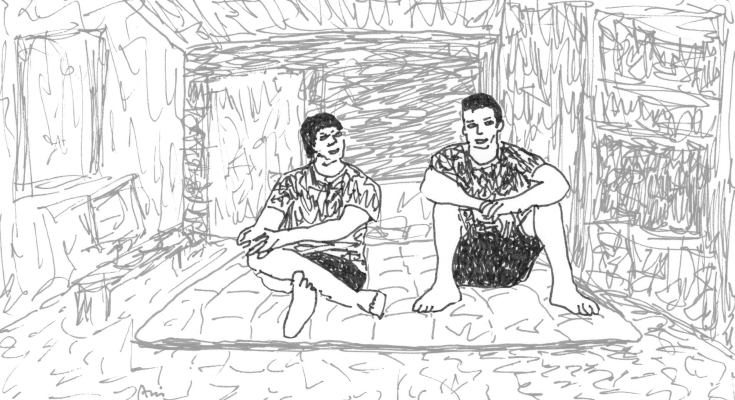
(English) After the three-Heinz, Helmut, and Holger, the motorhome-have spoken their minds, nothing stands in the way of a harmonious camping vacation. Just as the Boys realize that they still have room for guests, Heinz remembers the letter from Moscow. |
 |
(Italiano) Dopo che i tre - Heinz, Helmut e Holger, il camper - si sono chiariti, nulla ostacola più una vacanza in campeggio in modo armonioso. Proprio quando i Ragazzi si rendono conto di avere anche posto per degli ospiti, Heinz si ricorda della lettera da Mosca. |
(Deutsch) Nachdem sich die drei ausgesprochen haben - Heinz, Helmut und Holger, das Wohnmobil - steht einem harmonischen Campingurlaub nichts mehr im Weg. Just als den Jungs auffällt, dass sie sogar noch Platz für Gäste haben, erinnert sich Heinz an den Brief aus Moskau. Normal Version | ||
Tag 1 1 Helmut: So, es ist alles wieder geregelt. Heinz? |
Day 1 Helmut: Okay, everything's sorted out. Heinz? |
Jour 1 Helmut : OK, tout est réglé. Heinz ? |
Giorno 1 Helmut: Bene, tutto è a posto. Heinz? |
Día 1 Helmut: Vale, ya está todo arreglado. ¿Heinz? |
2 Heinz: Und was hat er zu deiner Entschuldigung gesagt, wegen der Drecksarbeit und deinem Rückfall ins Mittelalter? |
Heinz: And what did he say in response to your apology for the dirty work and your relapse into the Middle Ages? |
Heinz : Et qu'est-ce qu'il a répondu à tes excuses pour le sale boulot et ton retour au Moyen Âge ? |
Heinz: E cosa ha detto in risposta alle tue scuse per il lavoro sporco e alla tua ricaduta nel Medioevo? |
Heinz: ¿Y qué te respondió cuando te disculpaste por el trabajo sucio y por tu recaída en la Edad Media? |
3 Helmut: (…) Das mit der Schildkröte vorhin sollte nur ein Witz sein. Das hat ja ewig gedauert. |
Helmut: (...) The comment about the turtle earlier was supposed to be just a joke. That took forever. |
Helmut : (...) La remarque sur la tortue tout à l'heure, c'était juste une blague. Ça a duré une éternité. |
Helmut: (...) Il commento sulla tartaruga di prima era solo uno scherzo. Ci hai messo una vita. |
Helmut: (...) El comentario sobre la tortuga de antes era solo una broma. Tardaste una eternidad. |
4 Heinz: Ach so, dann ist das wohl Zufall, dass du diese Buchungsbestätigung mit dir rumträgst. Oh Scheiße, der Brief von Sergej! Den hatte ich ja ganz vergessen. Wo ...? Ah, er ist noch da. |
Heinz: Oh, I see, then it's just a coincidence that you're carrying this booking confirmation around with you. Oh shit, the letter from Sergei! I completely forgot about that. Where...? Ah, it's still here. |
Heinz : Ah, je vois, c'est donc une simple coïncidence si tu as cette confirmation de réservation sur toi. Merde, la lettre de Sergueï ! J'ai complètement oublié. Où... ? Ah, encore là. |
Heinz: Oh, capisco, allora è solo una coincidenza che tu abbia con te la conferma della prenotazione. Oh merda, la lettera di Sergei! Me ne ero completamente dimenticato. Dove...? Ah, è ancora qui. |
Heinz: Ah, ya veo, entonces es solo una coincidencia que lleves contigo la confirmación de la reserva. ¡Mierda, la carta de Sergei! Se me había olvidado por completo. ¿Dónde...? Ah, aquí está. |
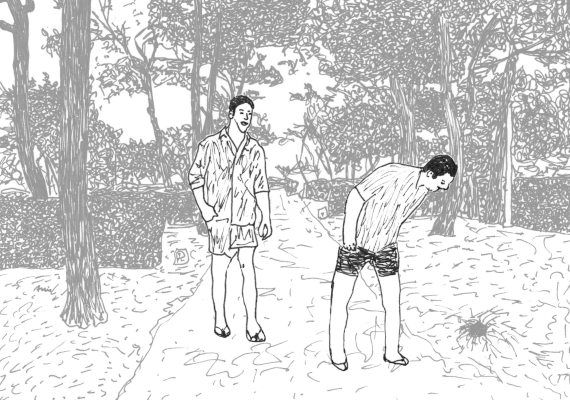
(English) Is Heinz ready for this vacation? The question arises as he sits by the pool with Helmut and finds plenty to complain about. Something is going on in his head. To understand what is weighing on his mind, he must go down the proverbial rabbit hole. |
 |
(Italiano) Heinz è pronto per questa vacanza? La domanda sorge spontanea quando è seduto a bordo piscina con Helmut e trova un sacco di cose di cui lamentarsi. Qualcosa gli frulla in testa. Per capire cosa lo tormenta, deve scendere nella proverbiale tana del coniglio del mondo anglofono. |
(Deutsch) Ist Heinz bereit für diesen Urlaub? Die Frage stellt sich, als er mit Helmut am Pool sitzt und vieles findet, worüber er sich beschweren will. Etwas geht in seinem Kopf vor. Um zu verstehen, was ihm keine Ruhe lässt, muss er den in der anglophilen Welt sprichwörtlichen Kaninchenbau hinunter. Normal Version | ||
Tag 8 1 Heinz: Es ist ein bisschen schräg, am Pool zu sitzen, wenn man das Meer buchstäblich sehen kann, findest du nicht? |
Day 8 Heinz: It's a bit weird sitting by the pool when you can literally see the sea, don't you think? |
Jour 8 Heinz : C'est un peu bizarre d'être assis au bord de la piscine alors qu'on voit littéralement la mer, tu ne trouves pas ? |
Giorno 8 Heinz: È un po' strano stare seduti a bordo piscina quando si vede letteralmente il mare, non trovi? |
Día 8 Heinz: Es un poco raro sentarse junto a la piscina cuando se ve literalmente el mar, ¿no crees? |
2 Helmut: Nein, weil sie gefragt haben, warum wir heute keine Mammutfelle tragen. Für deren Verhältnisse war das ein Schenkelklopfer. |
Helmut: No, because they asked why we weren't wearing mammoth skins today. For their standards, that was a real knee-slapper. |
Helmut : Non, parce qu'ils nous ont demandé pourquoi on ne portait pas de peaux de mammouth aujourd'hui. À leur échelle, c'était une blague hilarante. |
Helmut: No, perché ci hanno chiesto perché oggi non indossavamo pelli di mammut. Per i loro standard era qualcosa di incredibile. |
Helmut: No, porque nos preguntaron por qué no llevábamos pieles de mamut hoy. Para sus estándares, eso era para partirse de risa. |
3 Helmut: Oh, das ist ... Wow! OK. Halt mal deine Hand höher, sonst muss ich mich bücken. Noch höher. Ja, so. Gluck. Äh, pfui Teufel! Schrumpf. Schrumpf schrumpf schrumpf |
Helmut: Oh, that's... Wow! OK. Hold your hand higher, else I'll have to bend down. Even higher. Yes, that's it. Glug. Ugh, yuck! Shrink. Shrink shrink shrink |
Helmut : Oh, c'est... Ouah ! OK. Lève la main plus haut, sinon je vais devoir me baisser. Encore plus haut. Oui, c'est ça. Glouglou. Euh, beurk, c'est dégueulasse ! Rétrécis. Rétrécis rétrécis rétrécis |
Helmut: Oh, ma è... Wow! Ok. Tieni la mano più in alto, altrimenti devo chinarmi. Ancora più in alto. Sì, così. Glug. Ugh, che schifo! Rimpicciolisci. Rimpicciolisci rimpicciolisci rimpicciolisci |
Helmut: Oh, eso es... ¡Guau! Vale. Levanta más la mano, si no tendré que agacharme. Más arriba. Sí, eso es. Glug. ¡Uf, qué asco! Encoje. Encoje encoje encoje |
4 Helmut: Der Eingang zu einem Labor. „Genozidforschung” steht da drauf. Willst du da rein? Ja, natürlich willst ... Hey! Warte auf mich! |
Helmut: The entrance to a laboratory. It says "Genocide Research" on it. Do you want to go in? Yes, of course you... Hey! Wait for me! |
Helmut : L'entrée d'un laboratoire. Il y a écrit « Recherche sur le génocide ». Tu veux entrer ? Oui, bien sûr que tu... Hé ! Attends-moi ! |
Helmut: L'ingresso di un laboratorio. C'è scritto "Ricerca sul genocidio". Vuoi entrare? Sì, certo che tu... Ehi! Aspettami! |
Helmut: La entrada a un laboratorio. Pone "Investigación sobre genocidio". ¿Quieres entrar? Sí, claro que tú... ¡Eh! ¡Espérame! |
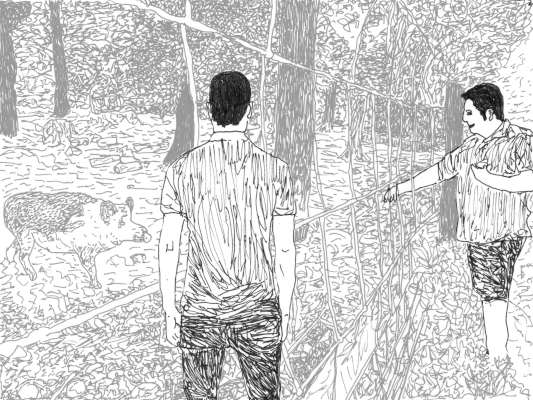
(English) During a walk in the nearby forest, Heinz learns more details about their new friend, the motorhome. But before he can worry, Helmut manages to distract him with a spectacular maneuver. |
 |
(Italiano) Durante una passeggiata nel bosco vicino, Heinz scopre altri dettagli sul suo nuovo amico, il camper. Ma prima che possa preoccuparsi, Helmut riesce a distraerlo con una manovra spettacolare. |
(Deutsch) Bei einem Spaziergang im nahegelegenen Wald erfährt Heinz weitere Details über ihren neuen Freund, das Wohnmobil. Bevor er sich aber Sorgen machen kann, gelingt es Helmut, ihn mit einem spektakulären Manöver abzulenken. Normal Version | ||
Tag 12 1 Heinz: OK. Super. Was? Nein, über Lyon, glaub ich. Wir fahren ungefähr zwölf Stunden. Also sehen wir uns in vier Tagen! Und danke noch mal für die Wiedervereinigung! Пока-пока. |
Day 12 Heinz: OK. Great. What? No, via Lyon, I think. It's about a twelve-hour drive. So, see you in four days! And thanks again for the reunification! Пока-пока. |
Jour 12 Heinz : OK, super. Quoi ? Non, via Lyon, je crois. On roule environ douze heures. On se voit dans quatre jours alors ! Et merci encore une fois pour la réunification ! Пока-пока. |
Giorno 12 Heinz: Ok, perfetto. Cosa? No, via Lione, credo. Sono circa dodici ore di macchina. Ci vediamo tra quattro giorni allora! E grazie ancora per la riunificazione! Пока-пока. |
Día 12 Heinz: Vale, perfecto. ¿Qué? No, vía Lyon, creo. Son unas doce horas en coche. ¡Nos vemos dentro de cuatro días entonces! ¡Y gracias de nuevo por la reunificación! Пока-пока. |
2 Heinz: Und wo warst du dann die ganze Zeit? Du warst selten zu Hause. |
Heinz: And where have you been all this time? You've hardly been home. |
Heinz : Et où étais-tu pendant tout ce temps Tu n'étais presque jamais à la maison. |
Heinz: E tu dove sei stato tutto questo tempo? Non sei quasi mai stato a casa. |
Heinz: ¿Y dónde has estado todo este tiempo? Apenas has estado en casa. |
3 Helmut: Holger hat den Film zunehmend sabotiert und eine Menge Kosten verursacht. Der Konstrukteur hat metikulöse Arbeit geleistet und dem Vehikel eine charakterfeste Disposition mit einem signifikanten Maß an Autonomiefähigkeit und Resilienz konzediert. |
Helmut: Holger increasingly sabotaged the movie and caused a lot of costs. The designer did meticulous work and conceded the vehicle a strong character disposition with a significant degree of autonomous capability and resilience. |
Helmut : Holger a de plus en plus saboté le film et causé beaucoup de frais. Le constructeur a réalisé un travail méticuleux et a concédé au véhicule une disposition stable avec un degré significatif d'autonomie et de résilience. |
Helmut: Holger ha sabotato sempre più il film e causato un sacco di spese. Il progettista ha svolto un lavoro meticoloso e ha concesso al veicolo un carattere ben definito, con un notevole grado di autonomia e resilienza. |
Helmut: Holger fue saboteando cada vez más la película y causó muchos gastos. El diseñador ha realizado un trabajo meticuloso y ha concedido al vehículo una disposición de carácter firme con un grado significativo de autonomía y resistencia. |
4 Heinz: Müssen wir denn nichts zahlen? |
Heinz: But don't we have to pay anything? |
Heinz : On ne doit rien payer ? |
Heinz: Ma non dobbiamo pagare nulla? |
Heinz: ¿Pero no tenemos que pagar nada? |
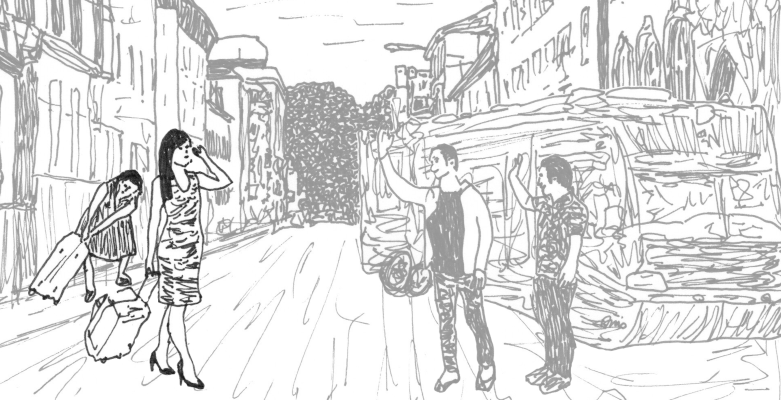
(English) Vacation! The suitcases are packed and the journey begins. The Boys pick up Fiona and Fanni from home. The Gals quickly realize that Holger is not just any motorhome and they have mixed feelings about a mind of his own. |
 |
(Italiano) Vacanze! Le valigie sono pronte e il viaggio sta per iniziare. I Ragazzi vanno a prendere Fiona e Fanni a casa. Le Ragazze capiscono subito che Holger non è un camper qualsiasi. Il suo funzionamento autonomo dà loro sentimenti contrastanti. |
(Deutsch) Urlaub! Die Koffer sind gepackt und die Reise beginnt. Die Jungs holen Fiona und Fanni von zu Hause ab. Schnell begreifen die Mädels, dass Holger nicht irgendein Wohnmobil ist. Seinem Eigenleben stehen sie mit gemischten Gefühlen gegenüber. Normal Version | ||
Auf der Autobahn (Mädels-Version) Tag 14 1 Fanni: Ich glaube, da sind sie. Um Gottes Willen! Der Wagen ist ja riesig. Ich bin beeindruckt. Komm mal ans Fenster! |
On the Highway (Gals' Version) Day 14 Fanni: I think they're here. Oh my gosh! That car is huge. I'm impressed. Come to the window! |
Sur l'Autoroute (Version Filles) Jour 14 Fanni : Je crois qu'ils sont là. Oh mon Dieu ! Cette voiture est énorme. Je suis impressionnée. Viens voir par la fenêtre ! |
In Autostrada (Versione Ragazze) Giorno 14 Fanni: Credo che siano arrivati. Oh mio Dio! Che veicolo enorme. Sono impressionata. Vieni alla finestra! |
En la Autopista (Versión Chicas) Día 14 Fanni: Creo que han llegado. ¡Dios mío! El coche es enorme. Estoy impresionada. ¡Ven a la ventana! |
2 Fanni: Ah, die süße Nachtluft weht mich an. Da ist Helmut. |
Fanni: Ah, the sweet night air is caressing me. There's Helmut. |
Fanni : Ah, l'air doux de la nuit me caresse. Voilà Helmut. |
Fanni: Ah, la dolce aria della notte mi accarezza. Ecco Helmut. |
Fanni: Ah, el dulce aire nocturno me acaricia. Ahí está Helmut. |
3 Fanni: Ist es OK, wenn ich mich auf die Couch setze? Ah, da ist ja ein kleines Bücherregal neben der Garderobe versteckt. Und was ist das hier? Schuhschrank mit Gästepantoffeln, ha! |
Fanni: Is it OK if I sit on the couch? Oh, there's a little bookcase hidden next to the wardrobe. And what's this? A shoe rack with guest slippers, ha! |
Fanni : Je peux m'asseoir sur le canapé ? Oh, il y a une petite bibliothèque cachée à côté de l'armoire. Et ça, c'est quoi? Un meuble à chaussures avec des chaussons pour les invités, ha ! |
Fanni: Va bene se mi siedo sul divano? Oh, c'è una piccola libreria nascosta accanto all'armadio. E questo cos'è? Una scarpiera con le pantofole per gli ospiti, ah! |
Fanni: ¿Puedo sentarme en el sofá? Oh, hay una pequeña estantería escondida junto al armario. ¿Y qué es esto? Un zapatero con zapatillas para invitados, ¡ja! |
4 Fiona: Der war in der geschlossenen Abteilung? |
Fiona: He was in a locked ward? |
Fiona : Il était à l'hôpital psychiatrique ? |
Fiona: Era in ospedale psichiatrico? |
Fiona: ¿Estaba en un psiquiátrico? |
(English) Vacation! The suitcases are packed and the journey begins. The Boys pick up Fiona and Fanni from home. The Gals quickly realize that Holger is not just any motorhome and they have mixed feelings about a mind of his own. |
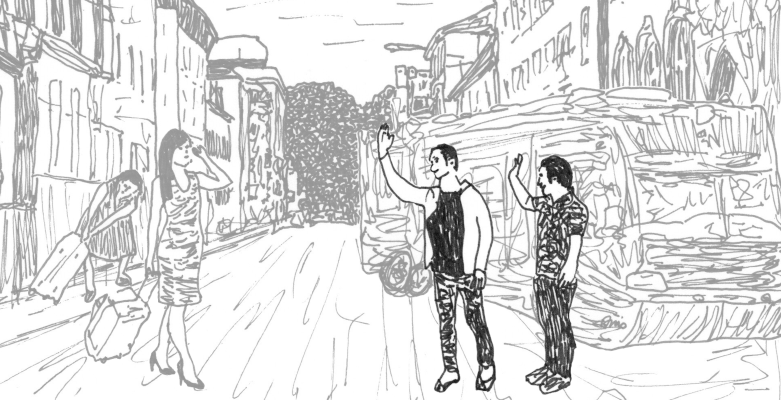 |
(Italiano) Vacanze! Le valigie sono pronte e il viaggio sta per iniziare. I Ragazzi vanno a prendere Fiona e Fanni a casa. Le Ragazze capiscono subito che Holger non è un camper qualsiasi. Il suo funzionamento autonomo dà loro sentimenti contrastanti. |
(Deutsch) Urlaub! Die Koffer sind gepackt und die Reise beginnt. Die Jungs holen Fiona und Fanni von zu Hause ab. Schnell begreifen die Mädels, dass Holger nicht irgendein Wohnmobil ist. Seinem Eigenleben stehen sie mit gemischten Gefühlen gegenüber. Normal Version | ||
Auf der Autobahn (Jungs-Version) Tag 14 1 Helmut: Ich glaube, da sind wir. Holger, gleich kommen die beiden Damen, die wir beeindrucken wollen. |
On the Highway (Boys' Version) Day 14 Helmut: I think we're here. Holger, the two ladies we want to impress are about to arrive. |
Sur l'Autoroute (Version Gars) Jour 14 Helmut : Je crois qu'on y est. Holger, les deux dames qu'on veut impressionner vont arriver. |
In Autostrada (Versione Ragazzi) Giorno 14 Helmut: Credo che siamo arrivati. Holger, tra poco arrivano le due signore che vogliamo impressionare. |
En la Autopista (Versión Chicos) Día 14 Helmut: Creo que ya hemos llegado. Holger, en un momento llegarán las dos señoras a las que queremos impresionar. |
2 Helmut: Ah, die süße Nachtluft weht mich an. Da ist Fanni. |
Helmut: Ah, the sweet night air is caressing me. There's Fanni. |
Helmut : Ah, l'air doux de la nuit me caresse. Voilà Fanni. |
Helmut: Ah, la dolce aria della notte mi accarezza. Ecco Fanni. |
Helmut: Ah, el dulce aire nocturno me acaricia. Ahí está Fanni. |
3 Heinz: Ja, alles ganz entspannt. Holger, kannst du bitte das Jazz-Album Getz/Gilberto von 1964 anmachen? Moderate Lautstärke. Ja, wunderbar. Seufz. Wo sind denn die Sektgläser? Wir sollten anstoßen. |
Heinz: Yes, everything's relaxed. Holger, can you put on the 1964 jazz album Getz/Gilberto? Moderate volume. Yes, wonderful. Sigh. Where are the champagne glasses? We should toast. |
Heinz : Oui, tout est détendu. Holger, tu peux mettre l'album de jazz Getz/Gilberto de 1964 ? À volume modéré. Oui, c'est parfait. Soupir. Où sont les coupes à champagne ? On devrait trinquer. |
Heinz: Sì, è tutto molto rilassato. Holger, puoi mettere l'album jazz del 1964 Getz/Gilberto? A volume moderato. Sì, perfetto. Sigh. Dove sono i bicchieri da champagne? Dovremmo brindare. |
Heinz: Sí, todo muy relajado. Holger, ¿puedes poner el álbum de jazz de 1964 Getz/Gilberto? A un volumen moderado. Sí, maravilloso. Suspiro. ¿Dónde están las copas de champán? Deberíamos brindar. |
4 Heinz: Wir haben nur leider die Locke von Goethe in der Urzeit verloren. Die deiner rumänischen Freundin gehört hat, Nicoleta. |
Heinz: Unfortunately, we lost Goethe's curl in prehistoric times. The one that belonged to your Romanian friend, Nicoleta. |
Heinz : Malheureusement, on a perdu la boucle de Goethe à la préhistoire. Celle qui appartenait à ta copine roumaine, Nicoleta. |
Heinz: Purtroppo abbiamo perso il ricciolo di Goethe nella preistoria. Quello che apparteneva alla tua amica rumena, Nicoleta. |
Heinz: Por desgracia, perdimos el rizo de Goethe en la prehistoria. El que le pertenecía a tu amiga rumana, Nicoleta. |
(English) Hardly have the four arrived at their vacation paradise when Heinz seizes the opportunity to spend some time alone with Holger and find out more about him. In the middle of the therapy session in the motorhome, Helmut calls him and reminds him of his duties. |
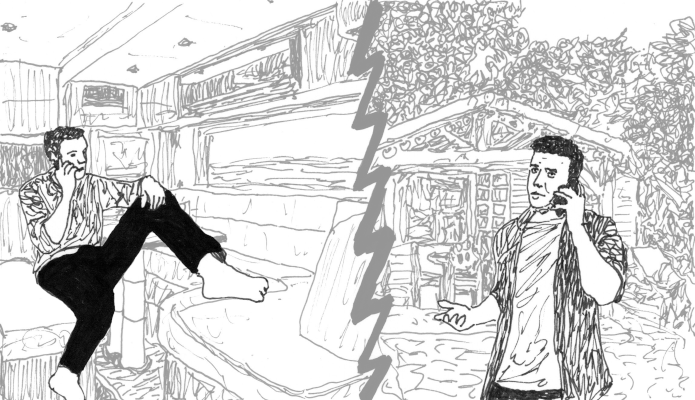 |
(Italiano) Appena i quattro sono arrivati nel paradiso delle vacanze, Heinz ne approfitta per passare un po' di tempo da solo con Holger e scoprirne di più su di lui. Nel bel mezzo della seduta terapeutica nel camper, Helmut lo chiama e gli ricorda i suoi doveri. |
(Deutsch) Kaum sind die vier im Ferienparadies angekommen, nutzt Heinz die Gelegenheit, um ein wenig Zeit allein mit Holger zu verbringen und mehr über ihn zu erfahren. Mitten in der psychotherapeutischen Sitzung im Wohnmobil ruft Helmut ihn an und erinnert ihn an seine Pflichten. Normal Version | ||
Tag 15 1 Heinz: Ja, hallo? |
Day 15 Heinz: Yes, hello? |
Jour 15 Heinz : Oui, allô ? |
Giorno 15 Heinz: Sì, pronto? |
Día 15 Heinz: Sí, ¿dígame? |
2 Helmut: Du meinst, der Sportwagen auf der Autobahn heute Nacht war gar kein echter Verfolger? |
Helmut: You mean the sports car on the highway tonight wasn't really following us? |
Helmut : Tu veux dire que la voiture de sport sur l'autoroute cette nuit n'était pas vraiment quelqu'un qui le suivait ? |
Helmut: Vuoi dire che l'auto sportiva sull'autostrada stanotte non era davvero qualcuno che lo stava seguendo? |
Helmut: ¿Quieres decir que el coche deportivo de la autopista de anoche no era realmente alguien que lo estaba siguiendo? |
3 Helmut: Da sind mehrere Käfer, eine Art Grashüpfer, eine Eidechse, eine Spinne, eine Schnecke … |
Helmut: There are several beetles, a kind of grasshopper, a lizard, a spider, a snail... |
Helmut : Il y a plusieurs coléoptères, une sorte de sauterelle, un lézard, une araignée, un escargot... |
Helmut: Ci sono diversi coleotteri, una specie di cavalletta, una lucertola, un ragno, una lumaca... |
Helmut: Hay varios escarabajos, una especie de saltamontes, un lagarto, una araña, un caracol... |
4 Heinz: Letztens hatte sie ja diesen Schmetterling zum Leuchten gebracht. In Hedus Haus. |
Heinz: The other day she made that butterfly glow. In Hedu's house. |
Heinz : L'autre jour, elle a fait briller ce papillon. Chez Hédou. |
Heinz: L'altro giorno ha fatto brillare quella farfalla. A casa di Hedu. |
Heinz: El otro día hizo brillar esa mariposa. En casa de Hedu. |
(English) Even by the third day after his arrival in the French vacation paradise, Sergei still hasn't revealed the reason for wanting to meet. Instead, he invites the Boys to a tennis match and discovers Heinz's mystery ability in the process. |
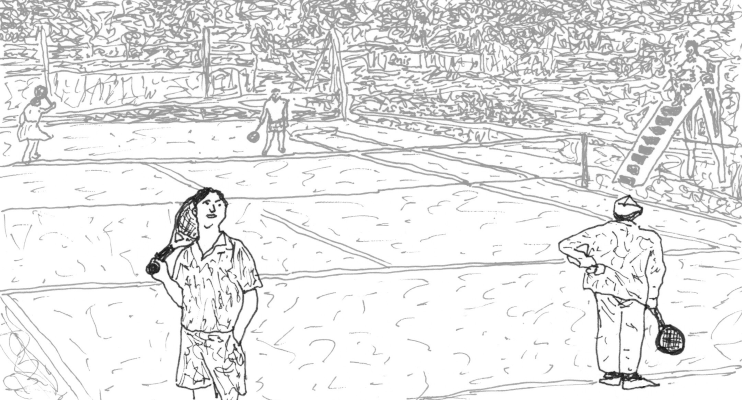 |
(Italiano) Anche il terzo giorno dopo il suo arrivo nel paradiso delle vacanze in Francia, Sergei non ha ancora detto perché voleva incontrarli. Invece, invita i Ragazzi a una partita di tennis e scopre così il potere del mistero di Heinz. |
(Deutsch) Auch am dritten Tag nach seiner Anreise im französischen Ferienparadies hat Sergej den Grund seines Wunsches nach einem Treffen noch nicht genannt. Stattdessen lädt er die Jungs zu einem Tennisspiel ein und lernt dabei Heinz' Mysteryfähigkeit kennen. Normal Version | ||
Tag 18 1 Helmut: Äh, hallo? Heinz? Äh … Heienz!! Hm. Vielleicht, wenn ich hier so dagegentrete … pock pock |
Day 18 Helmut: Uh, hello? Heinz? Uh... Heyenz!! Hm. Maybe if I kick here like this... pock pock |
Jour 18 Helmut : Euh, salut ! Heinz ? Euh... Heienz !! Hum. Peut-être que si je donne un coup ici comme ça... poc poc |
Giorno 18 Helmut: Ehm, ciao! Heinz? Ehm... Heienz!! Hm. Forse se do un calcio qui così... poc poc |
Día 18 Helmut: ¡Eh, hola! ¿Heinz? Eh... ¡Heienz! Hm. Quizás si doy una patada aquí así... poc poc |
2 Heinz: Kt |
Heinz: Kt |
Heinz : Kt |
Heinz: Kt |
Heinz: Kt |
3 Helmut: Was ist eigentlich diese Sinorität, von der ihr gestern Abend gesprochen habt, Hedu und du? Sinulität. |
Helmut: So what is this sinority that you and Hedu were talking about last night? Sinulity. |
Helmut : Alors, c'est quoi cette sinurité dont toi et Hédou parliez hier soir ? Sinulité. |
Helmut: Allora, cos'è questa sinorità di cui parlavate tu e Hedu ieri sera? Sinularità. |
Helmut: ¿Y qué es esa sinoridad de la que hablabas anoche con Hedu? Sinulidad. |
4 Helmut: Äh, warum schiebst du deinen Tennisschläger ruckartig vor und zurück, als würdest du eine Pizza in den Ofen schieben? Ist das ein Ritual? |
Helmut: Uh, why are you jerking your tennis racket back and forth like you're putting a pizza in the oven? Is that a ritual? |
Helmut : Euh, pourquoi tu agites ta raquette de tennis comme si tu mettais une pizza au four ? C'est un rituel ? |
Helmut: Ehm, perché agiti la racchetta da tennis avanti e indietro come se stessi mettendo una pizza nel forno? È un rituale? |
Helmut: Eh, ¿por qué agitas la raqueta de tenis hacia adelante y hacia atrás como si estuvieras metiendo una pizza en el horno? ¿Es un ritual? |
(English) Fiona is eager to show her friend the tennis video she just made. She finds her with Maria in her arms at the Norwegian neighbors' house. Two unusual, even eerie events and a mishap interrupt their chat. |
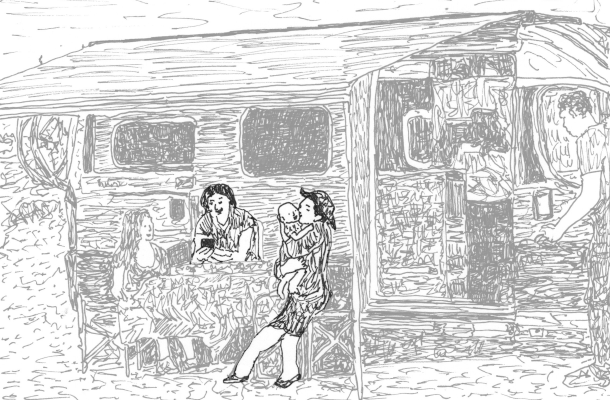 |
(Italiano) Fiona non vede l'ora di mostrare alla sua amica il video di tennis che ha appena fatto. La trova con Maria in braccio dai vicini norvegesi. Due eventi insoliti, persino inquietanti, e un contrattempo interrompono la loro chiacchierata. |
(Deutsch) Fiona brennt darauf, ihrer Freundin das Tennisvideo zu zeigen, das sie gerade gemacht hat. Sie findet sie mit Maria auf dem Arm bei den norwegischen Nachbarn. Zwei ungewöhnliche, ja unheimliche Begebenheiten sowie ein Missgeschick unterbrechen ihre Plauderei. Normal Version | ||
Tag 18 1 Fiona: Äh, skål! So sagt ihr doch für hallo, oder? In Norwegen. |
Day 18 Fiona: Uh, skål! That's how you say hello, right? In Norway. |
Jour 18 Fiona : Euh, skål ! C'est comme ça qu'on dit bonjour, non ? En Norvège. |
Giorno 18 Fiona: Ehm, skål! È così che si dice ciao, vero? In Norvegia. |
Día 18 Fiona: ¡Eh, skål! Así es como se dice hola, ¿verdad? En Noruega. |
2 Fiona: Hm. Hat sie da mit Gewalt draufgehauen oder wie? |
Fiona: Hm. Did she hit it hard or something? |
Fiona : Hum. Elle a tapé dessus fort ou quoi ? |
Fiona: Hm. L'ha colpito con forza o cosa? |
Fiona: Hm. ¿Le ha dado un golpe fuerte o qué? |
3 Fiona: Da ist wieder dieser Typ. Der scheint hier um die Häuser zu schleichen. |
Fiona: There's this guy again. He seems to be lurking around the houses. |
Fiona : C'est encore ce type. On dirait qu'il rôde autour des maisons. |
Fiona: Ecco di nuovo quel tipo. Sembra che stia gironzolando intorno alle case. |
Fiona: Ahí está ese tipo otra vez. Parece que está merodeando por las casas. |
4 Fiona: Sag mal, hast du Nicoleta erzählt, wo wir sind? |
Fiona: Say, did you tell Nicoleta where we are? |
Fiona : Dis, t'as dit à Nicoleta où on était ? |
Fiona: Dimmi, hai detto a Nicoleta dove siamo? |
Fiona: Dime, ¿le has dicho a Nicoleta dónde estamos? |
(English) The mood after the tennis match is a bit tense, even though Heinz tries his best to play down the incident. But all this is soon forgotten, because the harmless camping vacation takes a dramatic turn. |
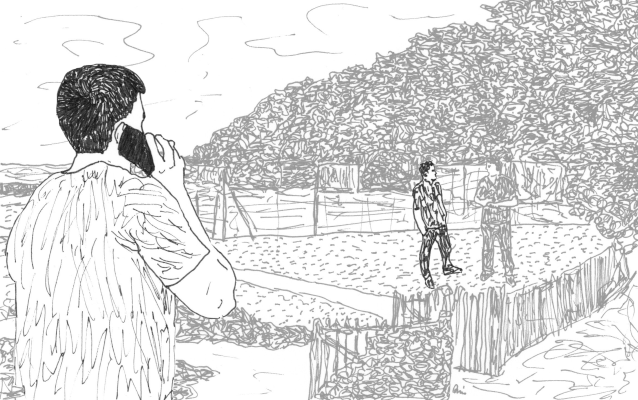 |
(Italiano) Dopo la partita di tennis, l'atmosfera è un po' pesante, anche se Heinz cerca di minimizzare l'accaduto. Ma tutto viene presto dimenticato, perché l'innocua vacanza in campeggio prende una piega drammatica. |
(Deutsch) Die Stimmung nach dem Tennisspiel ist gedrückt, auch wenn Heinz sich alle Mühe gibt, den Vorfall herunterzuspielen. Aber das alles ist schon nach kurzer Zeit vergessen, denn der harmlose Campingurlaub nimmt eine dramatische Wendung. Normal Version | ||
Tag 18 1 Helmut: He, Fiona, wo willst du mit meinem Handy hin? Hm. Weg ist sie. |
Day 18 Helmut: Hey, Fiona, where are you going with my cell phone? Hm. Off she went. |
Jour 18 Helmut : Hé, Fiona, où tu vas avec mon portable ? Hum. Elle est partie. |
Giorno 18 Helmut: Ehi, Fiona, dove stai andando con il mio cellulare? Hm. Se n'è andata. |
Día 18 Helmut: Oye, Fiona, ¿adónde vas con mi móvil? Hm. Se ha ido. |
2 Helmut: Unrea …? Che ne dici, Hedu? Ah, sì, certo, certo. Ciao. |
Helmut: Unrea...? Che ne dici, Hedu? Ah, sì, certo, certo. Ciao. |
Helmut : Irréa… ? Che ne dici, Hédou ? Ah, sì, certo, certo. Ciao. |
Helmut: Irreali...? "Che ne dici, Hedu? Ah, sì, certo, certo. Ciao." |
Helmut: Irrea... ¿Che ne dici, Hedu? Ah, sì, certo, certo. Ciao. |
3 Heinz: Jetzt übertreib nicht! Was soll denn passieren? |
Heinz: Don't exaggerate! What could possibly happen? |
Heinz : N'exagère pas ! Que crois-tu qu'il va se passer ? |
Heinz: Non esagerare! Cosa dovrebbe succedere? |
Heinz: ¡No exageres! ¿Qué podría pasar? |
4 Heinz: Und was genau ist deren Problem? |
Heinz: And what exactly is their problem? |
Heinz : Et c'est quoi exactement leur problème ? |
Heinz: E qual è esattamente il loro problema? |
Heinz: ¿Y cuál es exactamente su problema? |
(English) The Boys want to hide their motorhome as a precaution, but in the end it is Holger who gets everyone to safety, using means that no one expected. Sergei accompanies the trio and keeps his feelings to himself. |
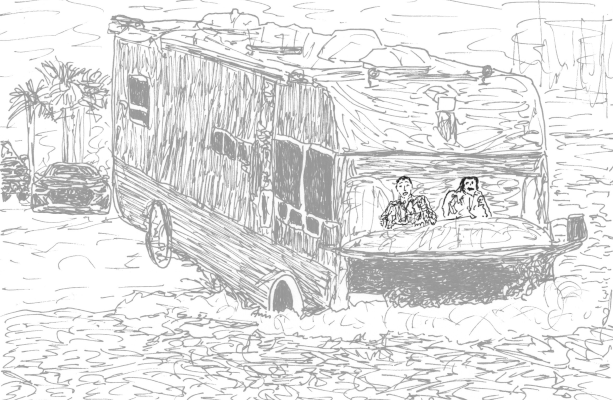 |
(Italiano) I Ragazzi vogliono nascondere il loro camper per sicurezza, ma alla fine è Holger che mette tutti al sicuro, usando mezzi che nessuno si sarebbe mai aspettato. Sergei accompagna il trio senza far trasparire nulla. |
(Deutsch) Die Jungs wollen vorsichtshalber ihr Wohnmobil verstecken, doch am Ende ist es Holger, der alle in Sicherheit bringt, wobei er Mittel einsetzt, mit denen niemand gerechnet hat. Sergej begleitet das Trio und lässt sich nichts anmerken. Normal Version | ||
Tag 18 1 Helmut: Also gut, wir haben es unbeschadet geschafft, ins Wohnmobil zu gelangen. Das ist der erste Schritt. Sergej, warum grinst du schon wieder so? Die Lage ist ernst. |
Day 18 Helmut: All right, we made it into the motorhome unharmed. That's the first step. Sergei, why are you grinning again? The situation is serious. |
Jour 18 Helmut : Bon, on est arrivés sains et saufs dans le camping-car. C'est déjà ça. Sergueï, pourquoi tu rigoles encore ? La situation est grave. |
Giorno 18 Helmut: Bene, siamo arrivati sani e salvi nel camper. È il primo passo. Sergei, perché stai sorridendo di nuovo? La situazione è seria. |
Día 18 Helmut: Bueno, hemos llegado sanos y salvos a la autocaravana. Es el primer paso. Sergei, ¿por qué sonríes otra vez? La situación es grave. |
2 Helmut: Der arme Max. Ist er verletzt? |
Helmut: Poor Max. Is he hurt? |
Helmut : Pauvre Max. Il est blessé ? |
Helmut: Povero Max. È ferito? |
Helmut: Pobre Max. ¿Está herido? |
3 Heinz: Natürlich haben sie das. Holger fährt mit fast hundert Sachen die Piste zum Strand runter. Aah! Oh Mann, er hätte fast diesen verzottelten Mann am Wegrand umgenietet. Unfälle sind ausgeschlossen, was? |
Heinz: Of course they did. Holger is driving down the road to the beach at almost a hundred kilometers an hour. Aah! Oh man, he almost ran over that scruffy man on the side of the road. Accidents are impossible, right? |
Heinz : Bien sûr qu'ils nous ont vus. Holger roule à presque 100 km/h sur la piste qui mène à la plage. Aah ! Oh non, il a failli renverser ce type débraillé au bord de la route. Les accidents sont impossibles, pas vrai ? |
Heinz: Certo che ci hanno visti. Holger sta sfrecciando a quasi cento all'ora sulla pista che porta alla spiaggia. Aah! Oh cavolo, ha quasi investito quel tipo trasandato sul ciglio della strada. Gli incidenti sono impossibili, vero? |
Heinz: Claro que nos han visto. Holger está conduciendo por la pista que lleva a la playa a casi cien kilómetros por hora. ¡Aah! Oh, tío, casi atropella a ese hombre desaliñado que está al lado de la carretera. Los accidentes son imposibles, ¿verdad? |
4 Heinz: Das war knapp. In was für einem Film sind wir hier? |
Heinz: That was close. What kind of movie is this? |
Heinz : On l'a échappé belle. Dans quel film on est ? |
Heinz: Ci mancava poco. In che film siamo finiti? |
Heinz: Por poco. ¿En qué tipo de película estamos metidos? |
(English) Hedu picks up her daughter, who is at the Norwegians' place, and is surprised by a few things Fanni tells her. When the sand swirls up in front of her, she quickly runs into the house with Maria, while Fanni and Fiona witness a frightening event. |
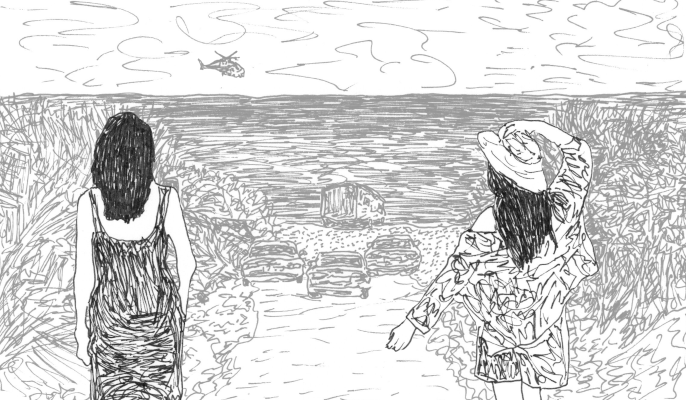 |
(Italiano) Hedu va a prendere sua figlia, che sta dai norvegesi, e rimane sorpresa da alcune cose che Fanni le racconta. Quando la sabbia si solleva davanti a lei, corre velocemente in casa con Maria, mentre Fanni e Fiona assistono a un evento spaventoso. |
(Deutsch) Hedu holt ihre Tochter ab, die sich bei den Norwegern aufhält, und ist überrascht von einigen Dingen, die Fanni ihr erzählt. Als der Sand vor ihr aufwirbelt, läuft sie schnell mit Maria ins Haus, während Fanni und Fiona Zeuginnen eines erschreckenden Ereignisses werden. Normal Version | ||
Tag 18 1 Fanni: Kuck mal, Mäuschen, da kommt deine Mama! |
Day 18 Fanni: Look, sweetie, here comes your mom! |
Jour 18 Fanni : Regarde, ma puce, voilà ta maman ! |
Giorno 18 Fanni: Guarda, tesoro, arriva la tua mamma! |
Día 18 Fanni: Mira, cariño, ¡ahí viene tu mamá! |
2 Fiona: Was auch immer auf der Cocos-Insel passiert ist ... Sie werden sich in den nächsten fünf Jahren sowieso nicht begegnen. Das waren doch fünf Jahre, oder? |
Fiona: Whatever happened on Cocos Island... They won't be seeing each other for the next five years anyway. It's five years, right? |
Fiona : Peu importe ce qui s'est passé sur l'île Cocos... Ils ne se croiseront pas avant cinq ans de toute façon. C'est cinq ans, non ? |
Fiona: Qualunque cosa sia successa sull'Isola del Cocco... Comunque non si vedranno per i prossimi cinque anni. Sono cinque anni, giusto? |
Fiona: Sea lo que sea lo que pasó en la Isla del Coco... De todos modos, no se verán en los próximos cinco años. Son cinco años, ¿no? |
3 Fanni: Was war das? Ich seh nichts mehr, ich hab Sand im Auge. |
Fanni: What was that? I can't see anything, I've got sand in my eye. |
Fanni : C'était quoi ça ? Je ne vois rien, j'ai du sable dans les yeux. |
Fanni: Cos'è stato? Non vedo più niente, ho della sabbia negli occhi. |
Fanni: ¿Qué ha sido eso? No veo nada, tengo arena en los ojos. |
4 Fiona: Der Hubschrauber schießt Raketen ab. Ssssss platsch BUMM spritz spritz |
Fiona: The helicopter is firing rockets. Zzzzzz splash BOOM splash splash |
Fiona : L'hélicoptère tire des missiles. Zzzzzz plouf BOUM splash splash |
Fiona: L'elicottero sta sparando razzi. Zzzzzz splash BOOM splash splash |
Fiona: El helicóptero está disparando cohetes. Zzzzzz splash BOOM splash splash |
(English) Holger proves to be a confident vessel underwater as well. He even provides his three guests with all kinds of delicacies from the sea. However, the news of the day comes from a very different direction. Heinz and Helmut are speechless. |
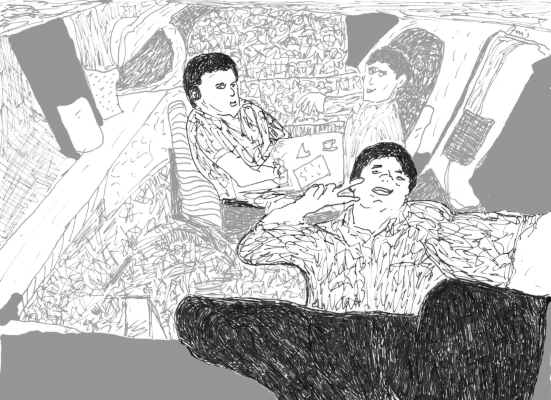 |
(Italiano) Anche sott'acqua Holger si dimostra un veicolo affidabile. Porta persino ai suoi tre ospiti ogni sorta di prelibatezza dal mare. Ma la notizia del giorno arriva da una direzione completamente diversa. Heinz e Helmut sono senza parole. |
(Deutsch) Auch unter Wasser erweist sich Holger als souveränes Fahrzeug. Er besorgt seinen drei Gästen sogar allerlei Köstlichkeiten aus dem Meer. Die Nachricht des Tages aber kommt aus einer ganz anderen Richtung. Heinz und Helmut sind sprachlos. Normal Version | ||
Tag 19 1 Heinz: Das alles muss ein Vermögen gekostet haben. Ein Hubschrauber mit Raketen, ein wasserdichtes Wohnmobil dieser Qualität … Warum wollen sie es zerstören? Was steckt dahinter? Wer hat das alles bezahlt? |
Day 19 Heinz: All that must have cost a fortune. A helicopter with missiles, a waterproof motorhome of that quality... Why do they want to destroy it? What's behind it? Who paid for all that? |
Jour 19 Heinz : Tout ça a dû coûter une fortune. Un hélicoptère avec des missiles, un camping-car étanche de cette qualité... Pourquoi veulent-ils le détruire ? Qu'est-ce qui se cache derrière tout ça ? Qui a payé tout ça ? |
Giorno 19 Heinz: Tutto questo deve aver costato una fortuna. Un elicottero con razzi, un camper impermeabile di questa qualità... Perché vogliono distruggerlo? Cosa c'è dietro? Chi ha pagato tutto questo? |
Día 19 Heinz: Todo eso debe de haber costado una fortuna. Un helicóptero con misiles, una autocaravana impermeable de esa calidad... ¿Por qué quieren destruirlo? ¿Qué hay detrás? ¿Quién ha pagado todo eso? |
2 Helmut: Ja, er holt damit auch frische Luft von oben. Und das Meerwasser kann er übrigens filtern, er hat … Hey, das ist ja ein Fünf-Gänge-Menü! |
Helmut: Yep, he also uses it to get fresh air from above. And he can filter the sea water, too, by the way. He has... Hey, that's a five-course meal! |
Helmut : Ouais, il s'en sert aussi pour prendre de l'air frais par le haut. Et il peut filtrer l'eau de mer aussi, d'ailleurs. Il a... Hé, mais c'est un repas cinq plats ! |
Helmut: Sì, lo usa anche per prendere aria fresca dall'alto. E tra l'altro può filtrare l'acqua di mare. Ha... Ehi, è un pasto di cinque portate! |
Helmut: Sí, también lo usa para tomar aire fresco de arriba. Y, por cierto, puede filtrar el agua del mar. Tiene... ¡Eh, eso es un menú de cinco platos! |
3 Helmut: Ja ja, langweile Sergej nicht mit alten Geschichten! Was sagst du? Welche Zeit? Ach so, es ist Zeit. Äh, wofür ist es Zeit? |
Helmut: Yeah, yeah, don't bore Sergei with old stories! What do you say? Which time? Oh, it's time. Uh, time for what? |
Helmut : Oui, oui, n'ennuie pas Sergueï avec de vieilles histoires ! Qu'est-ce que tu en dis ? Quelle heure ? Oh, c'est l'heure. Euh, l'heure de quoi ? |
Helmut: Sì, sì, non annoiare Sergei con vecchie storie! Che ne dici? Che ora? Oh, è ora. Ehm, ora di cosa? |
Helmut: Sí, sí, ¡no aburras a Sergei con viejas historias! ¿Qué decís? ¿Qué hora? Oh, es la hora. Eh, ¿la hora de qué? |
4 Helmut: Ach so? Ich erinnere mich nicht. |
Helmut: Really? I don't remember. |
Helmut : Vraiment ? Je ne m'en souviens pas. |
Helmut: Davvero? Non me lo ricordo. |
Helmut: ¿En serio? No lo recuerdo. |
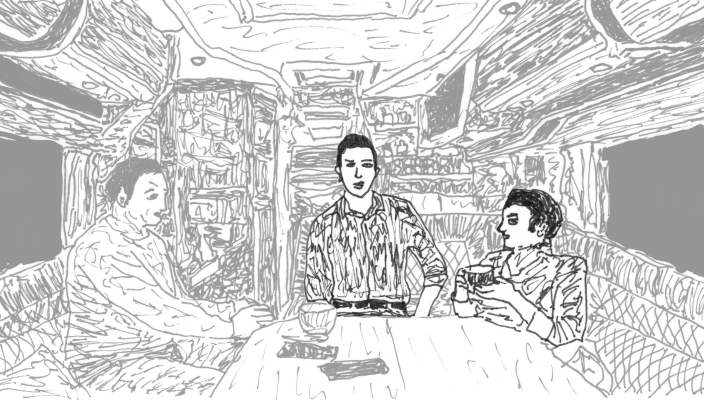
(English) While Heinz is asking Helmut questions about the plot against Holger, Helmut in turn is asking Sergei questions and suffers from being separated from his family. At the end of the conversation, the Boys at least know where their journey in the legendary motorhome will take them next. |
 |
(Italiano) Mentre Heinz fa domande a Helmut sul complotto contro Holger, Helmut fa domande a Sergei e soffre per essere lontano dalla sua famiglia. Alla fine della chiacchierata, i Ragazzi almeno sanno dove continuerà il loro viaggio nel leggendario camper. |
(Deutsch) Während Heinz Helmut über das Komplott gegen Holger ausfragt, fragt Helmut Sergej aus und leidet darunter, von seiner Familie getrennt zu sein. Am Ende der Unterhaltung wissen die Jungs zumindest, wohin ihre Reise in dem legendären Wohnmobil weitergeht. Normal Version | ||
Kein Popcorn Tag 20 1 Heinz: Alles in Ordnung bei dir? |
No Popcorn Day 20 Heinz: Everything okay? |
Jour 20 Heinz : Tout va bien ? |
Giorno 20 Heinz: Tutto a posto? |
Día 20 Heinz: ¿Todo bien? |
2 Heinz: Helmut! |
Heinz: Helmut! |
Heinz : Helmut ! |
Heinz: Helmut! |
Heinz: ¡Helmut! |
3 Heinz: Ja, aber wir werden jetzt von diesen Leuten gejagt. Wer hatte Holger noch mal einfach so mitgehen lassen, ohne zu prüfen, welche Gefahren damit verbunden sein könnten? |
Heinz: Yes, but we're chased by these people now. Who was the one that pinched Holger just like that without checking what dangers that could entail? |
Heinz : Oui, mais on est poursuivis par ces gens maintenant. Qui a piqué Holger comme ça, sans vérifier les dangers que ça pouvait comporter ? |
Heinz: Sì, ma ora siamo inseguiti da queste persone. E chi ha rubato Holger semplicemente così, senza verificare i pericoli che poteva comportare? |
Heinz: Sí, pero ahora nos persigue esa gente. ¿Quién ha sido el que se ha llevado a Holger así, sin pensar en el peligro que podía suponer? |
4 Heinz: Wir müssen unsere Feinde identifizieren und ihre Motive verstehen. Das ist jetzt wichtig, verstehst du? |
Heinz: We have to identify our enemies and understand their motives. That's important now, you understand? |
Heinz : On doit identifier nos ennemis et comprendre leurs motivations. C'est important maintenant, tu comprends ? |
Heinz: Dobbiamo identificare i nostri nemici e capire le loro motivazioni. È importante ora, capisci? |
Heinz: Tenemos que identificar a nuestros enemigos y comprender sus motivos. Ahora es importante, ¿entiendes? |
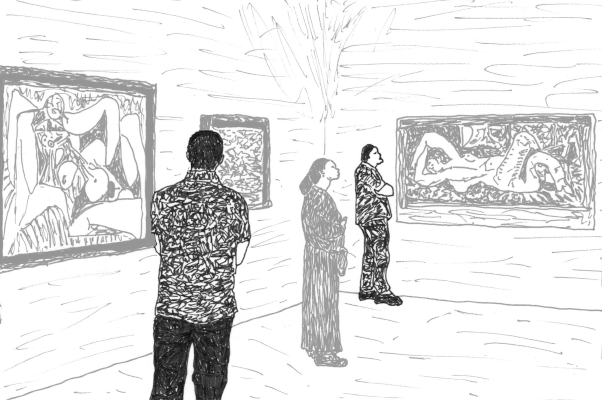
(English) Three days after escaping from the Audis and the helicopter, the group reaches Málaga by sea. While Sergei takes the motorhome to a gas station, Heinz and Helmut use their stay in Picasso's city for a cultural interlude. |
 |
(Italiano) Tre giorni dopo essere scappati dalle Audi e dall'elicottero, il gruppo arriva a Malaga via mare. Mentre Sergei porta il camper a una stazione di servizio, Heinz e Helmut approfittano della sosta nella città di Picasso per un po' di cultura. |
(Deutsch) Drei Tage nach ihrer Flucht vor den Audis und dem Hubschrauber erreicht die Gruppe Málaga auf dem Seeweg. Während Sergej den Wohnwagen zu einer Tankstelle bringt, nutzen Heinz und Helmut den Aufenthalt in der Picasso-Stadt für ein kulturelles Intermezzo. Normal Version | ||
Tag 21 1 Helmut: Gibst du mir das Horoskop? |
Day 21 Helmut: Can you give me the horoscope? |
Jour 21 Helmut : Tu me passes l'horoscope ? |
Giorno 21 Helmut: Mi dai l'oroscopo? |
Día 21 Helmut: ¿Me pasas el horóscopo? |
2 Heinz: Sicher. Wenn du es so willst. Ich kann es mir ja leisten, seit mich das Huhn von Baskerville mehr als saniert hat. Seht mal, Holger hat einen Feldweg gefunden. |
Heinz: Sure. If that's what you want. I can certainly afford it since the Chicken of the Baskervilles more than revitalized my finances. Look, Holger has found a dirt road. |
Heinz : Bien sûr. Si c'est ce que tu veux. Je peux certainement me le permettre depuis que la Poule des Baskerville a plus que revitalisé mes finances. Regardez, Holger a trouvé un chemin de terre. |
Heinz: Certo. Se è quello che vuoi. Me lo posso permettere, dato che il Pollo dei Baskerville ha più che risanato le mie finanze. Guardate, Holger ha trovato una strada sterrata. |
Heinz: Claro. Si eso es lo que quieres. Sin duda puedo permitírmelo, ya que la Gallina de los Baskerville ha dejado mis finanzas más que saneado. Mirad, Holger ha encontrado un camino de tierra. |
3 Helmut: Ja, wie Picasso. Wir sind angekommen, Holger schmeißt uns hier raus. Hier, nimm dein Notizbuch mit, für kreative Gedanken. Kt tropf tropf |
Helmut: Yeah, like Picasso. We've arrived, Holger is kicking us out. Here, take your notebook with you, for creative thoughts. Kt drip drip |
Helmut : Oui, comme Picasso. On est arrivés, Holger nous met dehors. Tiens, prends ton carnet pour noter tes idées créatives. Kt goutte coule |
Helmut: Sì, come Picasso. Siamo arrivati, Holger ci sta mettendo fuori. Tieni, prendi il tuo taccuino, per le idee creative. Kt goccia goccia |
Helmut: Sí, como Picasso. Hemos llegado, Holger nos echa. Toma, llévate tu cuaderno para anotar ideas creativas. Kt gotea-gotea |
4 Heinz: Hat mich zweihundert Tacken gekostet. Aber dafür hab ich die durchsichtige Plastiktüte dazugekriegt. |
Heinz: It cost me two hundred bucks. But I got the transparent plastic bag with it. |
Heinz : Ça m'a coûté deux cents balles. Mais j'ai eu le sac en plastique transparent avec. |
Heinz: Mi è costato duecento grane. Ma con quella ho ricevuto anche la bustina di plastica trasparente. |
Heinz: Me ha costado doscientos pelas. Pero también recibí la bolsita de plástico transparente con él. |
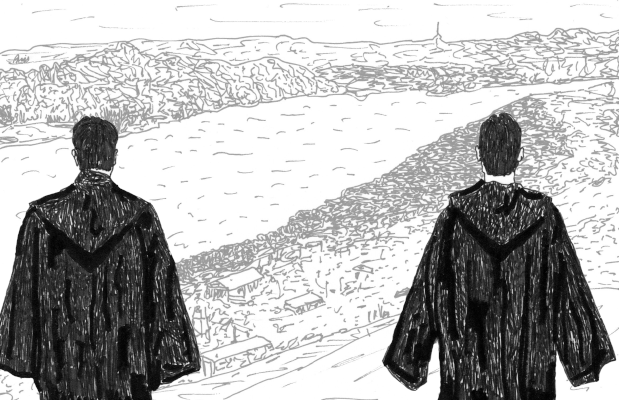
(English) The Boys find themselves in Carmen's Lodge room in a basement in Córdoba for a second time, but this time everything is different, not just the lighting. We see four Lodge brothers moving from one room to another, where they are already expected. |
 |
(Italiano) I Ragazzi finiscono di nuovo nella stanza della Loggia da Carmen in una cantina a Cordova, ma questa volta è tutto diverso, non solo l'illuminazione. Vediamo quattro fratelli della Loggia che si spostano da una stanza all'altra, dove sono già attesi. |
(Deutsch) Ein zweites Mal gelangen die Jungs in Carmens Logenraum in einem Keller in Córdoba, nur ist dieses Mal alles anders, nicht nur die Beleuchtung. Wir sehen vier Logenbrüder, die sich von einem Raum in einen anderen bewegen und dort schon erwartet werden. Normal Version | ||
Tag 22 1 Helmut: Kreativ kreativ! |
Day 22 Helmut: Creative, creative! |
Jour 22 Helmut : Créatif, créatif ! |
Giorno 22 Helmut: Creativo, creativo! |
Día 22 Helmut: ¡Creativo, creativo! |
2 Helmut: Carmen! Schön, dich wiederzusehen! |
Helmut: Carmen! Great to see you again! |
Helmut : Carmen ! Ravi de te revoir ! |
Helmut: Carmen! Che piacere rivederti! |
Helmut: ¡Carmen! ¡Qué alegría verte! |
3 Heinz: Hoffentlich hab ich mir den altägyptischen Text gut genug gemerkt. Ich hab gestern stundenlang mit dem Audio und dem Begleitheft geübt. |
Heinz: I hope I remembered the ancient Egyptian text well enough. I practiced for hours yesterday with the audio and the booklet. |
Heinz : J'espère que je me souviens bien du texte égyptien ancien. Je me suis entraîné pendant des heures hier avec l'audio et le livret. |
Heinz: Spero di ricordarmi bene il testo egizio antico. Ieri mi sono esercitato per ore con l'audio e il libretto. |
Heinz: Espero recordar bien el texto egipcio antiguo. Ayer estuve horas practicando con el audio y el folleto. |
4 Helmut: Die Decke ist niedrig, das nimmt dem Raum ein wenig das Majestätische, find ich. Aber gut, ich will nicht meckern. |
Helmut: The ceiling is low, which takes away some of the room's majesty, I guess. But okay, I don't want to complain. |
Helmut : Le plafond est bas, ce qui enlève un peu de majesté à la pièce, je trouve. Mais bon, je ne vais pas me plaindre. |
Helmut: Il soffitto è basso, il che toglie un po' di maestosità alla stanza, secondo me. Ma va bene, non voglio lamentarmi. |
Helmut: El techo es bajo, lo que le quita un poco de majestuosidad a la habitación, en mi opinión. Pero está bien, no quiero quejarme. |
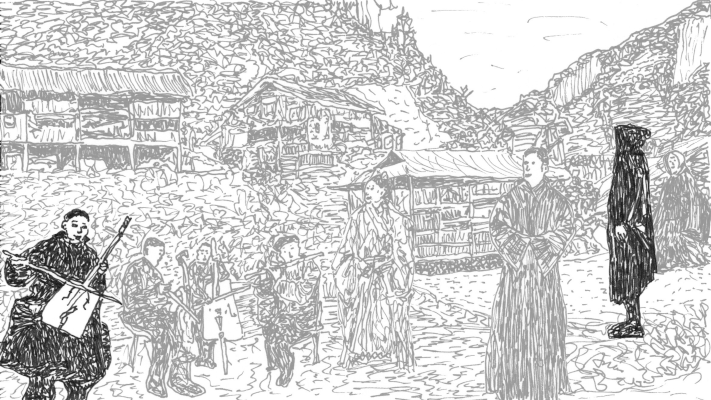
(English) After the ceremony in which the Boys are bestowed the third degree of the Lodge, the five walk along the Yellow River to the nearby village, where they hear some musicians playing. There they solve the mystery of Heinz's temporary mystery ability. |
 |
(Italiano) Dopo la cerimonia in cui i Ragazzi ottengono il terzo grado della Loggia, i cinque si dirigono lungo il Fiume Giallo verso il villaggio vicino, dove sentono suonare alcuni musicisti. Lì risolvono il segreto del potere temporaneo del mistero di Heinz. |
(Deutsch) Nach der Zeremonie, mit der die Jungs den dritten Grad der Loge zugesprochen bekommen, gehen die fünf am Gelben Fluss entlang ins nahegelegene Dorf, wo sie einige Musikanten spielen hören. Dort lösen sie das Rätsel um Heinz' temporäre Mystery-Fähigkeit. Normal Version | ||
Kniegeige Tag 22 1 Helmut: Tp-dj-nswt wsjr ntj jmntjw ... nr o nb obw wp-wowt nb to sr |
Knee Fiddle Day 22 Helmut: Tp-dj-nswt wsjr ntj jmntjw... nr o nb obw wp-wowt nb to sr |
Jour 22 Helmut : Tp-dj-nswt wsjr ntj jmntjw... nr o nb obw wp-wowt nb to sr |
Giorno 22 Helmut: Tp-dj-nswt wsjr ntj jmntjw... nr o nb obw wp-wowt nb to sr |
Día 22 Helmut: Tp-dj-nswt wsjr ntj jmntjw... nr o nb obw wp-wowt nb to sr |
2 Helmut: Wie, von Amarna aus? Amarna ist in Ägypten. Wir sind von Córdoba hierhergekommen, nicht von Amarna aus. Was, der zweite Raum war in Amarna? Hä? |
Helmut: What do you mean, from Amarna? Amarna is in Egypt. We came here from Córdoba, not from Amarna. What, the second room was in Amarna? Huh? |
Helmut : Comment ça, depuis Amarna ? Amarna, c'est en Égypte. On est venus ici depuis Cordoue, pas depuis Amarna. Quoi, la deuxième pièce était à Amarna ? Hein ? |
Helmut: Cosa intendi, da Amarna? Amarna è in Egitto. Siamo venuti qui da Cordova, non da Amarna. Cosa, la seconda stanza era ad Amarna? Eh? |
Helmut: ¿Cómo que desde Amarna? Amarna está en Egipto. Hemos venido aquí desde Córdoba, no desde Amarna. ¿Qué, la segunda pieza estaba en Amarna? ¿Eh? |
3 Helmut: Hört ihr das auch? Da kommt Musik aus dem Dorf. |
Helmut: Do you hear that? There is music coming from the village. |
Helmut : Vous entendez ça ? Il y a de la musique qui vient du village. |
Helmut: Sentite? C'è della musica che viene dal villaggio. |
Helmut: ¿Oís eso? Se oye música procedente del pueblo. |
4 Heinz: ♪♫♪♫♪♫♪♫ |
Heinz: ♪♫♪♫♪♫♪♫ |
Heinz : ♪♫♪♫♪♫♪♫ |
Heinz: ♪♫♪♫♪♫♪♫ |
Heinz: ♪♫♪♫♪♫♪♫ |
(English) After their stay with the wise Chinese woman is over, the men find themselves back in the room with the seven doors, in Amarna. They are ready for the return journey, but something gets in the way as Helmut employs his famous method. |
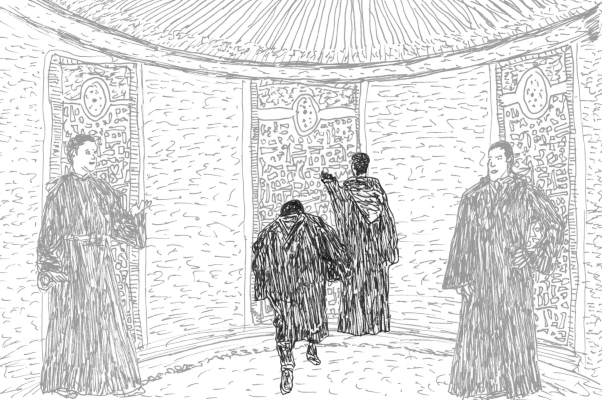 |
(Italiano) Dopo aver finito di stare con la saggia donna cinese, gli uomini si ritrovano nella stanza con le sette porte, ad Amarna. Sono pronti per tornare a casa, ma qualcosa va storto quando Helmut applica il suo famoso metodo. |
(Deutsch) Nachdem ihr Aufenthalt bei der weisen chinesischen Frau beendet ist, finden sich die Männer im Raum mit den sieben Türen wieder, in Amarna. Sie sind bereit für die Rückreise, doch kommt ihnen etwas dazwischen, als Helmut seine berühmte Methode einsetzt. Normal Version | ||
Tag 22 1 Heinz: Was für ein denkwürdiger Tag! Findest du nicht, Kniegeigen-Helmut, der Erleuchtete? |
Day 22 Heinz: What a memorable day! Don't you think so, Knee-fiddle Helmut, the enlightened one? |
Jour 22 Heinz : Quelle journée mémorable ! Tu ne trouves pas, Helmut la viole de gambe, l'illuminé ? |
Giorno 22 Heinz: Che giornata memorabile! Non credi, Helmut, la viola da gamba, l'illuminato? |
Día 22 Heinz: ¡Qué día tan memorable! ¿No crees, Helmut, la viola da gamba, el iluminado? |
2 Heinz: Hast du gehört? Sergej sagt, dass schon die ältesten Logenaufzeichnungen in altägyptischer Sprache von der verlorenen Tür sprechen. Faszinierend. Wenn man mit den Händen darüberfährt, ist es wie eine Art extreme Blindenschrift. Als könnte man lesen, was … |
Heinz: Did you hear that? Sergei says that even the oldest Lodge records in ancient Egyptian speak of the lost door. Fascinating. When you run your hands over it, it's like a kind of extreme Braille. As if you could read what... |
Heinz : T'as entendu ça ? Sergueï dit que même les plus anciens registres de la Loge en égyptien ancien parlent de la porte perdue. Fascinant. Quand on passe la main dessus, c'est comme une sorte de braille extrême. Comme si on pouvait lire ce qui... |
Heinz: Hai sentito? Sergei dice che anche le più antiche registrazioni della Loggia in egizio antico parlano della porta perduta. Affascinante. Quando ci passi le mani sopra, è come una sorta di scrittura braille estrema. Come se si potesse leggere cosa... |
Heinz: ¿Has oído? Sergei dice que incluso los registros más antiguos de la Logia en el antiguo Egipto hablan de la puerta perdida. Fascinante. Cuando pasas las manos por encima, es como una especie de braille extremo. Como si pudieras leer lo que... |
3 Heinz: Bleibt schön in der Tür stehen und fasst nichts an, OK? Wir sind gleich wieder da. Knirsch knirsch |
Heinz: Stay nicely in the doorway and don't touch anything, OK? We'll be right back. Crunch crunch |
Heinz : Restez bien dans l'embrasure de la porte et ne touchez à rien, OK ? On revient tout de suite. Craque craque |
Heinz: Rimanete fermi sulla porta e non toccate niente, ok? Torniamo subito. Scricch scricch |
Heinz: Quedaos en la puerta y no toquéis nada, ¿vale? Volvemos enseguida. Cruj cruj |
4 Helmut: Was schreibst du da, Sergej, zeig mal dein Heft! |
Helmut: What are you writing, Sergei? Let me see your notebook! |
Helmut : Qu'est-ce que tu écris, Sergueï ? Montre-moi ton cahier ! |
Helmut: Cosa stai scrivendo, Sergei? Fammi vedere il tuo quaderno! |
Helmut: ¿Qué estás escribiendo, Sergei? ¡Enséñame tu cuaderno! |
(English) Shortly before the French border, an incident occurs in which the Boys prove that they can keep their cool even in extremely stressful situations. However, one or two times they come close to blabbing a bit too much. |
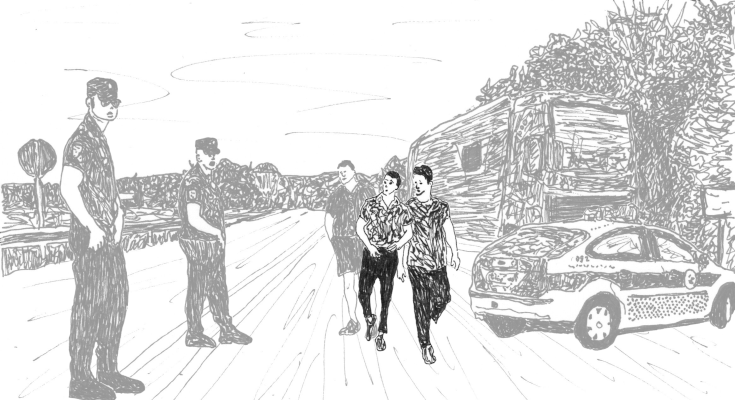 |
(Italiano) Poco prima del confine francese succede un incidente in cui i Ragazzi dimostrano di saper mantenere la calma anche in situazioni di stress estremo. Un paio di volte, però, rischiano di dire qualcosa di troppo. |
(Deutsch) Kurz vor der französischen Grenze kommt es zu einem Zwischenfall, bei dem die Jungs beweisen, dass sie auch in extremen Stresssituationen einen kühlen Kopf behalten. Ein oder zwei Mal sind sie allerdings kurz davor, sich ein wenig zu verplappern. Normal Version | ||
Tag 23 1 Helmut: Lass uns ein Spiel spielen! |
Day 23 Helmut: Let's play a game! |
Jour 23 Helmut : On joue à un jeu ! |
Giorno 23 Helmut: Facciamo un gioco! |
Día 23 Helmut: ¡Juguemos a un juego! |
2 Helmut: Dieses Gerät da gegenüber von der Fritteuse. Lass es dir schmecken! Du hast es ja nicht leicht. |
Helmut: That thing over there, opposite the deep fryer. Enjoy! You don't have it easy, after all. |
Helmut : Cet appareil là, en face de la friteuse. Bon appétit ! Tu n'as pas la vie facile. |
Helmut: Quell'aggeggio lì, di fronte alla friggitrice. Buon appetito! Non hai vita facile. |
Helmut: Ese aparato de ahí, frente a la freidora. ¡Que aproveche! No lo tienes fácil. |
3 Helmut: Schnell, nach vorne ins Cockpit, die winken uns an den Straßenrand. |
Helmut: Quick, get forward into the cockpit, they're waving us over to the side of the road. |
Helmut : Vite, va dans le cockpit, ils nous font signe de nous garer sur le côté. |
Helmut: Presto, vai davanti nella cabina di guida, ci stanno facendo cenno di accostare. |
Helmut: Rápido, pasa delante a la carlinga, nos están haciendo señas para que nos detengamos en el arcén. |
4 Heinz: Helmut! Äh, was? Oh, das weiß ich nicht. Bestimmt teuer. Ein Geschenk aus … Katar. |
Heinz: Helmut! Uh, what? Oh, I don't know. Probably expensive. A gift from... Qatar. |
Heinz : Helmut ! Euh, quoi ? Oh, je ne sais pas. C'est sûrement cher. Un cadeau du... Qatar. |
Heinz: Helmut! Ehm, cosa? Oh, non lo so. Sarà costoso. Un regalo dal... Qatar. |
Heinz: ¡Helmut! Eh, ¿qué? Oh, no sé. Probablemente caro. Un regalo de... Qatar. |
(English) The spot where Holger was first shot at and then fled into the sea becomes a magical place. The Boys approach it from the west, the Gals from the east, as they walk along the beach. In the middle, many surprises await them. |
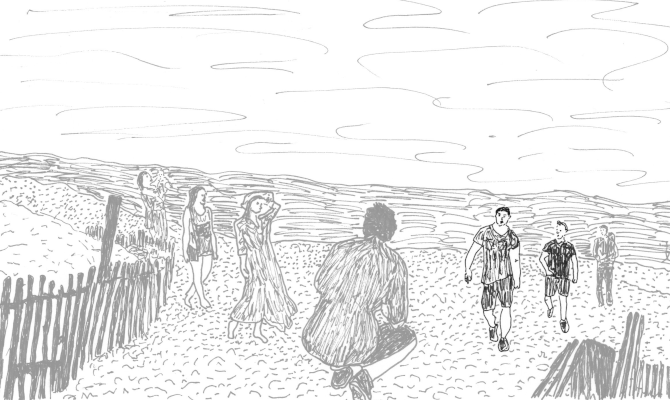 |
(Italiano) Il posto dove Holger è stato colpito e poi è scappato in mare diventa un posto magico. I Ragazzi si avvicinano da ovest, le Ragazze da est, mentre camminano lungo la spiaggia. Al centro li aspettano un sacco di sorprese. |
(Deutsch) Die Stelle, an der Holger erst beschossen worden und dann ins Meer geflüchtet ist, wird zu einem magischen Ort. Die Jungs nähern sich ihm von Westen, die Mädels von Osten, während sie den Strand entlanggehen. In der Mitte warten viele Überraschungen auf sie. Normal Version | ||
(Jungs-Version) Tag 23 1 Helmut: Holger hat versprochen, dass er zwanzig Kilometer Abstand halten wird. Sergej, soll ich dir die Tasche abnehmen? Geht schon? OK. |
(Boys' Version) Day 23 Helmut: Holger promised he would keep twenty kilometers away. Sergei, shall I take the bag? You're okay? OK. |
(Version Gars) Jour 23 Helmut : Holger a promis de rester à vingt kilomètres. Sergueï, je te prends le sac ? Ça va ? OK. |
(Versione Ragazzi) Giorno 23 Helmut: Holger ha detto che si terrà a venti chilometri di distanza. Sergei, vuoi che prenda la borsa? Tutto bene? Ok. |
(Versión Chicos) Día 23 Helmut: Holger ha prometido que mantendrá una distancia de veinte kilómetros. Sergei, ¿te quito el bolso? ¿Todo bien? Vale. |
2 Heinz: Übrigens ist mir eingefallen, dass die Loge den Ort in Australien noch mal überprüfen sollte. Ich hab nämlich geträumt, dass wir die Kängurus und Dingos in einem Zoo gesehen haben. |
Heinz: By the way, it occurred to me that the Lodge should double-check the location in Australia. I dreamt that we saw the kangaroos and the dingoes in a zoo. |
Heinz : Au fait, je me disais que la Loge devrait revérifier l'emplacement en Australie. J'ai rêvé qu'on voyait les kangourous et les dingos dans un zoo. |
Heinz: A proposito, mi è venuto in mente che la Loggia dovrebbe ricontrollare il posto in Australia. Ho sognato che vedevamo i canguri e i dingo in uno zoo. |
Heinz: Por cierto, se me ha ocurrido que la Logia debería volver a comprobar el lugar en Australia. He soñado que veíamos los canguros y los dingos en un zoológico. |
3 Helmut: Wir müssen symmetrisch am Pfad ankommen, dann ist alles gut. |
Helmut: We have to arrive symmetrically on the path, then everything will be fine. |
Helmut : On doit arriver symétriquement sur le chemin et tout ira bien. |
Helmut: Dobbiamo arrivare sul sentiero in modo simmetrico e andrà tutto bene. |
Helmut: Tenemos que llegar simétricamente al camino, entonces todo irá bien. |
4 Helmut: Mann, die beiden da gehen ganz schön ran. Sie sind schon ganz außer Atem vom Knutschen. |
Helmut: Man, those two are really going at it. They're already out of breath from snogging. |
Helmut : Mec, ils y vont fort, ces deux-là. Ils sont déjà essoufflés à force de s'embrasser. |
Helmut: Cavolo, quei due ci stanno davvero dando dentro. Sono già senza fiato per aver pomiciato così. |
Helmut: Tío, estos dos van a por todas. Ya están sin aliento de tanto besuquearse. |
(English) The spot where Holger first got shot at and then fled into the sea becomes a magical place. The Boys approach it from the west, the Gals from the east, as they walk along the beach. In the middle, many surprises await them. |
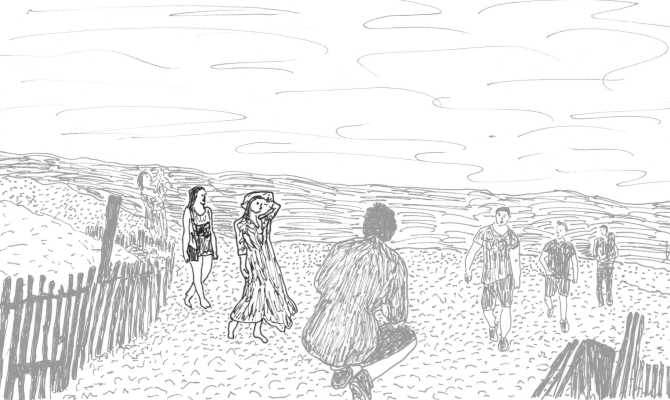 |
(Italiano) Il posto dove Holger è stato colpito e poi è scappato in mare diventa un posto magico. I Ragazzi si avvicinano da ovest, le Ragazze da est, mentre camminano lungo la spiaggia. Un sacco di sorprese li aspettano al centro. |
(Deutsch) Die Stelle, an der Holger erst beschossen worden und dann ins Meer geflüchtet ist, wird zu einem magischen Ort. Die Jungs nähern sich ihm von Westen, die Mädels von Osten, während sie den Strand entlanggehen. In der Mitte warten viele Überraschungen auf sie. Normal Version | ||
(Mädels-Version) Tag 23 1 Fanni: Dann wird das Wohnmobil wohl Abstand halten vom Campingplatz. Hedu, soll ich dir die Kleine abnehmen? Geht schon? OK. |
(Gals' Version) Day 23 Fanni: Then the motorhome will probably stay away from the campsite. Hedu, shall I take the little one? You're okay? OK. |
(Version Filles) Jour 23 Fanni : Alors le camping-car restera probablement loin du camping. Hédou, je te prends la petite ? Ça va ? OK. |
(Versione Ragazze) Giorno 23 Fanni: Allora il camper probabilmente resterà lontano dal campeggio. Hedu, ti prendo la piccola? Tutto bene? Ok. |
(Versión Chicas) Día 23 Fanni: Entonces la autocaravana probablemente se quedará lejos del camping. Hedu, ¿te quito a la pequeña? ¿Estás bien? Vale. |
2 Fiona: Klar, angefangen damit, dass wir in der Unizeit Hagenbecks Tierpark besucht haben und du davon überzeugt warst, dass der Geist deiner Großmutter in diesem Gorilla weiterlebt. |
Fiona: Sure, starting with when we visited Hagenbeck Zoo in our university days and you were convinced that your grandmother's spirit lived on in that gorilla. |
Fiona : Bien sûr, à commencer par la fois où on a visité le zoo Hagenbeck pendant nos études et où tu étais convaincue que l'esprit de ta grand-mère continuait de vivre dans ce gorille. |
Fiona: Certo, a cominciare da quando siamo andate allo zoo Hagenbeck ai tempi dell'università e tu eri convinta che lo spirito di tua nonna vivesse in quel gorilla. |
Fiona: Claro, empezando por cuando visitamos el zoológico Hagenbeck durante la época universitaria y estabas convencida de que el espíritu de tu abuela vivía en ese gorila. |
3 Fanni: Wir müssen nach ihnen am Pfad ankommen, dann ist alles gut. |
Fanni: We have to get to the path after them, then everything will be fine. |
Fanni : On doit rejoindre le chemin après eux, et tout ira bien. |
Fanni: Dobbiamo raggiungere il sentiero dopo di loro e andrà tutto bene. |
Fanni: Tenemos que llegar al camino después de ellos, entonces todo irá bien. |
4 Fiona: Hallo Heinz, lass dich drücken! |
Fiona: Hi Heinz, give me a hug! |
Fiona : Salut Heinz, fais-moi un câlin ! |
Fiona: Ciao Heinz, dammi un abbraccio! |
Fiona: ¡Hola, Heinz, dame un abrazo! |
(English) Now the Boys are finally able to enjoy a few peaceful days at the campsite. They have every reason to pat each other on the back and enjoy their barbecue evening with friends and family. While they still can. |
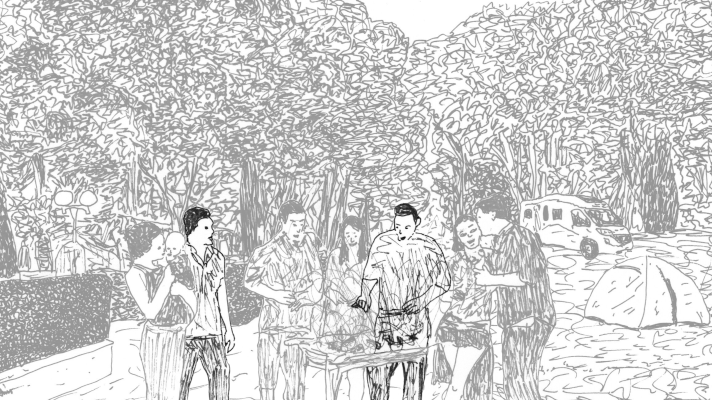 |
(Italiano) Alla fine i Ragazzi ottengono comunque qualche giorno di tranquillità al campeggio. Hanno motivo di congratularsi a vicenda e godersi la loro serata barbecue con amici e familiari. Finché possono. |
(Deutsch) Nun sind den Jungs am Ende doch noch einige geruhsame Tage auf dem Campingplatz vergönnt. Sie haben Grund, sich gegenseitig auf die Schultern zu klopfen und ihren Grillabend mit Freunden und der Familie zu genießen. Solange sie noch können. Normal Version | ||
Tag 25 1 Heinz: Es ist ein bisschen schräg, am Pool zu sitzen, wenn man das Meer buchstäblich sehen kann, findest du nicht? |
Day 25 Heinz: It's a bit weird sitting by the pool when you can literally see the sea, don't you think? |
Jour 25 Heinz : C'est un peu bizarre d'être assis au bord de la piscine alors qu'on voit littéralement la mer, tu ne trouves pas ? |
Giorno 25 Heinz: È un po' strano stare seduti a bordo piscina quando si vede letteralmente il mare, non trovi? |
Día 25 Heinz: Es un poco raro sentarse junto a la piscina cuando se ve literalmente el mar, ¿no crees? |
2 Helmut: Es hat sich alles wie von selbst zusammengefügt, ich habe eigentlich nur beobachtet. Aber du, wie du mit Eugen fertiggeworden bist, das war wirklich bewunderswert. Er hat geweint und deine Hand geküsst. |
Helmut: Everything sort of fell into place on its own, I was just observing. But you, the way you handled Eugen was really admirable. He cried and kissed your hand. |
Helmut : Tout s'est mis en place tout seul, j'ai juste observé. Mais toi, la façon dont tu as géré Eugen, c'était vraiment admirable. Il a pleuré et t'a baisé la main. |
Helmut: Tutto si è sistemato da solo, io ho solo osservato. Ma tu, il modo in cui hai gestito Eugen, è stato davvero ammirevole. Ha pianto e ti ha baciato la mano. |
Helmut: Todo se resolvió por sí solo, yo solo observé. Pero tú, la forma en que manejaste a Eugen fue realmente admirable. Lloró y te besó la mano. |
3 Helmut: Na Schacki, alles paletti? Was? Duschgel? Ja, hab ich. Im Schalett im Bad. In meinem Kulturbeutel, blaue Plastikflasche. Klar, immer gern. |
Helmut: Hey Schacki, everything peachy? What? Shower gel? Yeah, I've got some. In the shalett, bathroom. In my toiletries bag, blue plastic bottle. Sure, you're welcome. |
Helmut : Salut Schacki, tout va bien ? Quoi ? Du gel douche ? Oui, j'en ai. Dans la chalett, salle de bain. Dans ma trousse de toilette, une bouteille en plastique bleue. Bien sûr, je t'en prie. |
Helmut: Ehi Schacki, tutto a posto? Cosa? Gel doccia? Sì, ce l'ho. Nello scialet nel bagno. Nella mia beauty-case, bottiglia di plastica blu. Certo, sempre volentieri. |
Helmut: Hola, Schacki, ¿todo bien? ¿Qué? ¿Gel de ducha? Sí, tengo. En el shalet en el baño. En mi neceser, botella de plástico azul. Claro, de nada. |
4 Heinz: Fiona, gibst du mir bitte die Teller rüber? Danke. So, einmal für dich ... und hier ist das zweite leckere Steak. |
Heinz: Fiona, can you pass me the plates, please? Thanks. Here's one for you... and here's the second delicious steak. |
Heinz : Fiona, tu peux me passer les assiettes, s'il te plaît ? Merci. Voilà, un pour toi... et voici le deuxième délicieux steak. |
Heinz: Fiona, mi passi i piatti, per favore? Grazie. Ecco, uno per te... e qui c'è la seconda bistecca deliziosa. |
Heinz: Fiona, ¿puedes pasarme los platos, por favor? Gracias. Bueno, uno para ti... y aquí está el segundo delicioso filete. |
(English) Fanni and Fiona do their best to free Peter Schack from his predicament. They bring him into the house and try to cut him free with scissors. Is Helmut responsible for the disaster? The three of them cannot agree on an answer to this question. |
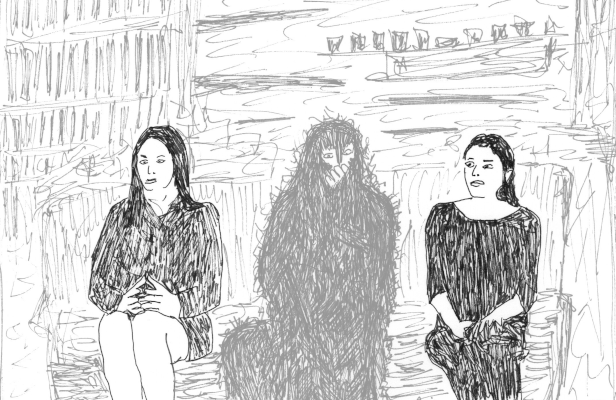 |
(Italiano) Fanni e Fiona fanno del loro meglio per aiutare Peter Schack a uscire dalla sua situazione difficile. Lo portano in casa e provano a liberarlo con delle forbici. È colpa di Helmut se è successo questo disastro? Le tre ragazze non riescono a mettersi d'accordo su questo punto. |
(Deutsch) Fanni und Fiona tun ihr Bestes, um Peter Schack aus seiner misslichen Lage zu befreien. Sie bringen ihn ins Haus und versuchen es mit einer Schere. Ist Helmut für das Desaster verantwortlich? Die drei kommen in dieser Frage zu keiner einheitlichen Antwort. Normal Version | ||
Tag 25 1 Fanni: Dein Kartoffelsalat hat einen neuen Fan gefunden. Helmut scheint begeistert zu sein in seinen nassen Klamotten. Ist der in den Pool gefallen? Und sein Hemd ist eingerissen. Ts. |
Day 25 Fanni: Your potato salad has found a new fan. Helmut seems to be thrilled in his wet clothes. Did he fall into the pool? And his shirt is torn. Tsk. |
Jour 25 Fanni : Ta salade de pommes de terre a un nouveau fan. Helmut a l'air ravi dans ses fringues mouillées. Il est tombé dans la piscine ? Et sa chemise est déchirée. Ts. |
Giorno 25 Fanni: La tua insalata di patate ha conquistato un nuovo fan. Helmut sembra entusiasta nei suoi vestiti bagnati. È caduto in piscina? E la sua camicia è strappata. Ts. |
Día 25 Fanni: Tu ensalada de patatas tiene un nuevo admirador. Helmut parece estar encantado con su ropa mojada. ¿Se ha caído a la piscina? Y tiene la camisa rota. Ts. |
2 Fanni: Das hast du gesagt. Zu uns war er immer anständig und korrekt. Peter ist sogar bei ihm zum Festessen eingeladen, nächste Woche. Da werden sie alles Weitere besprechen. |
Fanni: That's what you said. He has always been decent and correct to us. Peter is even invited to his dinner party next week. They will discuss all further details there. |
Fanni : C'est toi qui l'as dit. Avec nous, il a toujours été honnête et correct. Peter est même invité à un dîner chez lui la semaine prochaine. Ils discuteront de tous les détails là-bas. |
Fanni: Questo l'hai detto tu. Con noi è sempre stato gentile e corretto. Peter è persino invitato a una cena da lui la prossima settimana. Lì discuteranno tutti i dettagli. |
Fanni: Eso lo has dicho tú. Con nosotros siempre se ha portado bien y ha sido correcto. Peter incluso está invitado a una cena con él la semana que viene. Allí hablarán de todos los detalles. |
3 Fiona: Reib ihn vorsichtshalber mit dem Schaum aus dem Feuerlöscher ein. Kannst du laufen, Peter? Es sind nur ein paar Schritte. |
Fiona: Rub him with the foam from the fire extinguisher, just to be on the safe side. Can you walk, Peter? It's only a few steps. |
Fiona : Frotte-le avec la mousse de l'extincteur, juste pour être sûr. Tu peux marcher, Peter ? Il n'y a que quelques pas. |
Fiona: Spalmalo con la schiuma dell'estintore, per sicurezza. Riesci a camminare, Peter? Sono solo pochi passi. |
Fiona: Frótalo con la espuma del extintor, por si acaso. ¿Puedes caminar, Peter? Son solo unos pasos. |
4 Fiona: Nein nein, Peter, ich glaub nicht, dass Helmut das absichtlich gemacht hat. Blaue Flasche, ja gut, aber wenn du in der falschen Tasche nachkuckst ... |
Fiona: No, no, Peter, I don't think Helmut did that on purpose. Blue bottle, yes, but if you look in the wrong bag... |
Fiona : Non non, Peter, je ne pense pas qu'Helmut ait fait ça exprès. La bouteille bleue, oui, mais si tu regardes dans le mauvais sac... |
Fiona: No no, Peter, non credo che Helmut l'abbia fatto apposta. La bottiglia blu, sì, ma se guardi nella borsa sbagliata... |
Fiona: No, no, Peter, no creo que Helmut lo haya hecho a propósito. La botella azul, sí, pero si miras en el bolso equivocado... |
(English) The Boys leave a day before the Gals to take Holger to the Baltic Sea. When they meet up with their motorhome at the edge of the Pyrenees, Heinz notices a detail that they had overlooked until now and that makes them break out in a sweat. |
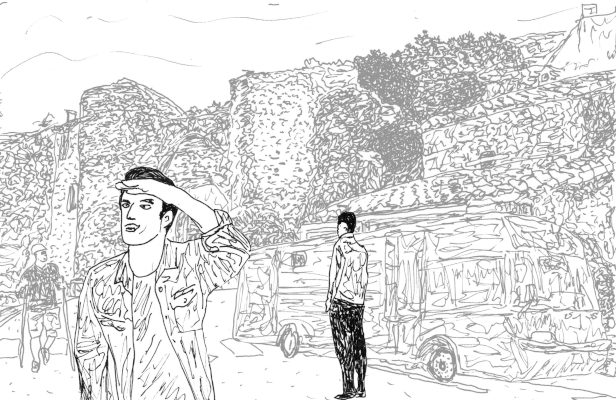 |
(Italiano) I Ragazzi partono un giorno prima delle Ragazze per portare Holger fino al Mar Baltico. Quando si incontrano ai margini dei Pirenei con il loro camper, Heinz nota un dettaglio che finora avevano trascurato e che li fa sudare freddo. |
(Deutsch) Die Jungs reisen einen Tag vor den Mädels ab, um Holger bis zur Ostsee zu bringen. Als sie sich am Rand der Pyrenäen mit ihrem Wohnmobil treffen, fällt Heinz ein Detail auf, das sie bislang übersehen haben und das sie ins Schwitzen bringt. Normal Version | ||
Tag 27 1 Helmut: Bist du da noch drinnen? Hey, Schack! Du hast jetzt zwei Tage das Zelt nicht verlassen. Lass uns über alles reden, Mann! Im Kulturbeutel IM BAD, hatte ich gesagt, nicht in Heinz' Rucksack im Flur. |
Day 27 Helmut: Are you still in there? Hey, Schack! You haven't left the tent for two days now. Let's talk about everything, man! In the toiletries bag IN THE BATHROOM, I said, not in Heinz's backpack in the hallway. |
Jour 27 Helmut : T'es toujours là-dedans ? Hé, Schack ! Ça fait deux jours que t'as pas quitté la tente. On doit parler de tout ça, mec ! Dans la trousse de toilette DANS LA SALLE DE BAIN, j'ai dit, pas dans le sac à dos de Heinz dans le couloir. |
Giorno 27 Helmut: Sei ancora lì dentro? Ehi, Schack! Sono due giorni che non esci dalla tenda. Parliamo di tutto, amico! Nel beauty-case IN BAGNO, ho detto, non nello zaino di Heinz nel corridoio. |
Día 27 Helmut: ¿Sigues ahí dentro? ¡Eh, Schack! Llevas dos días sin salir de la tienda. ¡Hablamos de todo, tío! En el neceser DEL BAÑO, he dicho, no en la mochila de Heinz en el pasillo. |
2 Heinz: Super. Hör zu: Wir bringen Holger nach Rostock, von wo aus er durch die Ostsee zu einem Ort nahe St. Petersburg taucht. Da wird er von einem Logenmitglied in Empfang genommen. |
Heinz: Great. Listen: We're taking Holger to Rostock, from where he'll dive through the Baltic Sea to a place near St. Petersburg. There he'll be received by a Lodge member. |
Heinz : Super. Écoute : on emmène Holger à Rostock, d'où il plongera dans la mer Baltique jusqu'à un endroit près de Saint-Pétersbourg. Là, il sera accueilli par un membre de la Loge. |
Heinz: Ottimo. Senti: porteremo Holger a Rostock, da dove si tufferà nel Mar Baltico fino a un posto vicino a San Pietroburgo. Lì sarà accolto da un membro della Loggia. |
Heinz: Estupendo. Escucha: vamos a llevar a Holger a Rostock, desde donde se sumergirá en el mar Báltico hasta un lugar cerca de San Petersburgo. Allí lo recibirá un miembro de la Logia. |
3 Helmut: Ich meine ja nur so. Sergej hat gesagt, dass ich mit der Helmut-Methode den Kern der Sache finde, so sicher, wie die Sonne aufgeht. Deshalb bin ich ja der Auserwählte. |
Helmut: I'm just saying. Sergei made the point that with the Helmut method, I'll get to the heart of the matter, as surely as the sun rises. That's why I'm the chosen one, after all. |
Helmut : Je dis juste ça comme ça. Sergueï a fait remarquer qu'avec la méthode Helmut, j'irai droit au but, aussi sûr que le soleil se lève. C'est pour ça que je suis l'élu, après tout. |
Helmut: Sto solo dicendo. Sergei ha detto che con il metodo Helmut arriverò dritto al cuore della questione, sicuro come il sorgere del sole. Dopotutto, è per questo che sono il prescelto. |
Helmut: Solo digo. Sergei señaló que con el método Helmut llegaré directo al fondo del asunto, tan seguro como que sale el sol. Por eso soy el elegido, después de todo. |
4 Heinz: Scheiße, du hast Max gerade gesagt, wo unser Treffpunkt ist. |
Heinz: Shit, you just told Max where our meeting place is. |
Heinz : Merde, tu viens de dire à Max où on se retrouve. |
Heinz: Cazzo, hai appena detto a Max dove ci incontriamo. |
Heinz: Mierda, le acabas de decir a Max dónde es nuestro lugar de encuentro. |
(English) Heinz blames himself and is worried, while Helmut is dreaming of a new career. Holger, for his part, behaves loyally and hospitably. He dutifully answers questions and gives gifts to his two friends. Everyone is aware that the farewell is approaching. |
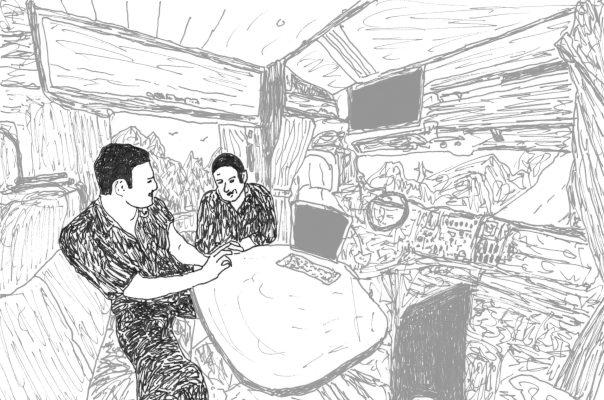 |
(Italiano) Heinz si sente in colpa ed è preoccupato, mentre Helmut sogna una nuova carriera. Holger invece si comporta in modo leale e ospitale. Risponde alle domande con gentilezza e fa dei regali ai suoi due amici. Tutti si rendono conto che l'addio si avvicina. |
(Deutsch) Heinz macht sich Vorwürfe und ist besorgt, während Helmut von einer neuen Karriere träumt. Holger wiederum verhält sich loyal und gastfreundlich. Er beantwortet brav Fragen und beschenkt seine beiden Freunde. Jeder ist sich über den nahenden Abschied bewusst. Normal Version | ||
Tag 28 1 Heinz: Wie konnte ich das bloß übersehen? Max' Handy! |
Day 28 Heinz: How could I have missed that? Max's cell phone! |
Jour 28 Heinz : Comment j'ai pu rater ça ? Le portable de Max ! |
Giorno 28 Heinz: Come ho fatto a non accorgermene? Il cellulare di Max! |
Día 28 Heinz: ¿Cómo se me ha podido pasar eso? ¡El móvil de Max! |
2 Heinz: Und das willst du alles machen? Mit der Helmut-Methode oder ...? |
Heinz: And you want to do all that? Using the Helmut method or...? |
Heinz : Et tu veux tout faire ? Avec la méthode Helmut ou... ? |
Heinz: E vuoi fare tutto questo? Usando il metodo Helmut o...? |
Heinz: ¿Y quieres hacer todo eso? ¿Usando el método Helmut o...? |
3 Heinz: Klingt nach einem größeren Projekt. Eine Karriere als Influencer also. |
Heinz: Sounds like a larger project. A career as an influencer, then. |
Heinz : On dirait un projet assez ambitieux. Une carrière d'influenceur, en somme. |
Heinz: Sembra un progetto piuttosto ambizioso. Una carriera da influencer, insomma. |
Heinz: Parece un proyecto bastante ambicioso. Una carrera como influencer, en definitiva. |
4 Heinz: Seufz. Weißt du, ob das Spezialeffekte waren oder echte Waffen? |
Heinz: Sigh. Do you know if those were special effects or real weapons? |
Heinz : Soupir. Tu sais si c'étaient des effets spéciaux ou de vraies armes ? |
Heinz: Sigh. Sai se erano effetti speciali o armi vere? |
Heinz: Suspiro. ¿Sabes si eran efectos especiales o armas reales? |
(English) To Helmut's displeasure, Heinz delays the journey because he doesn't feel safe. Besides, he still wants to find out what secret Holger is carrying around with him. Finally, they decide to leave the protection of the mountains. |
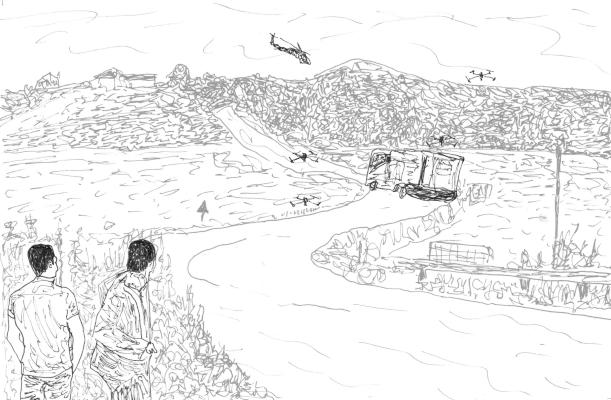 |
(Italiano) Con grande disappunto di Helmut, Heinz non ha fretta di ripartire perché non si sente al sicuro. Inoltre, vuole ancora scoprire il segreto che Holger si porta dietro. Alla fine, decidono di lasciare la protezione delle montagne. |
(Deutsch) Zu Helmuts Unmut zögert Heinz die Weiterfahrt hinaus, weil er sich nicht sicher fühlt. Außerdem will er immer noch herausfinden, welches Geheimnis Holger mit sich herumträgt. Schließlich entscheiden sie sich, den Schutz der Berge zu verlassen. Normal Version | ||
Tag 30 1 Heinz: Boravia? Also, ich hab den neuen Superman-Film nicht gesehen, daher ... |
Day 30 Heinz: Boravia? Well, I haven't seen the new Superman movie, so... |
Jour 30 Heinz : Boravia ? Eh bien, je n'ai pas vu le nouveau film Superman, donc... |
Giorno 30 Heinz: Boravia? Beh, non ho visto il nuovo film di Superman, quindi... |
Día 30 Heinz: ¿Boravia? Bueno, no he visto la nueva película de Superman, así que... |
2 Helmut: Das muss noch an der Küste in Norddeutschland passiert sein, denn bei den Szenen in Frankfurt waren die Auseinandersetzungen schon so heftig, dass sie Holger den Klaus Kinski der Wohnmobile genannt haben. |
Helmut: That must still have been on the coast in northern Germany, because during the scenes in Frankfurt, the arguments were already so heated that they called Holger the Klaus Kinski of motorhomes. |
Helmut : Ça a dû se passer sur la côte nord de l'Allemagne, parce que pendant les scènes à Francfort, les discussions étaient déjà tellement animées qu'ils ont traité Holger de Klaus Kinski des camping-cars. |
Helmut: Deve essere successo sulla costa della Germania settentrionale, perché durante le scene girate a Francoforte i litigi erano già così accesi che hanno soprannominato Holger il Klaus Kinski dei camper. |
Helmut: Debió de ser en la costa del norte de Alemania, porque durante las escenas rodadas en Fráncfort las discusiones ya eran tan acaloradas que apodaron a Holger el Klaus Kinski de las autocaravanas. |
3 Helmut: Wie du willst, dann lass uns zittern! Ein Getränk dazu? |
Helmut: Whatever you say, then let's tremble! Want a drink with that? |
Helmut : Comme tu veux, alors tremblons ! Tu veux boire un verre avec ça ? |
Helmut: Come vuoi tu, allora tremiamo! Da bere con quello? |
Helmut: ¡Lo que tú digas, entonces temblemos! ¿Quieres una bebida con eso? |
4 Helmut: Bist du verletzt? |
Helmut: Are you hurt? |
Helmut : T'es blessé ? |
Helmut: Sei ferito? |
Helmut: ¿Estás herido? |
(English) The dramatic experience has changed Heinz. Many thoughts go through his mind, which Helmut gradually learns about from him. Helmut also witnesses a lively conversation with a stranger in front of the train station in Oloron-Sainte-Marie. |
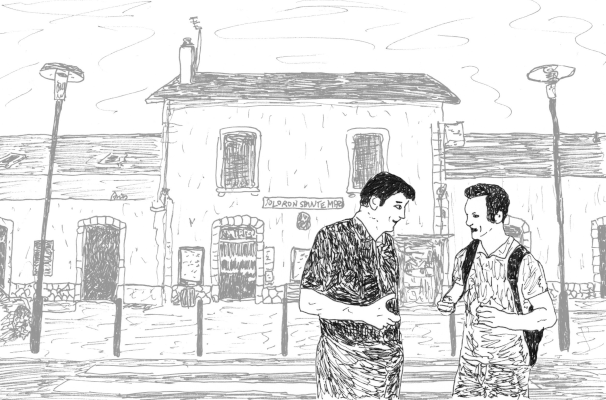 |
(Italiano) La drammatica esperienza ha cambiato Heinz. Ha un sacco di pensieri che Helmut scopre poco a poco. Inoltre, Helmut assiste a una conversazione animata con uno sconosciuto davanti alla stazione di Oloron-Sainte-Marie. |
(Deutsch) Das dramatische Erlebnis hat Heinz verändert. Viele Gedanken gehen ihm durch den Kopf, die Helmut nach und nach von ihm erfährt. Außerdem wird Helmut Zeuge einer angeregten Unterhaltung mit einem Fremden, vor dem Bahnhof von Oloron-Sainte-Marie. Normal Version | ||
Tag 30 1 Helmut: Deine Wangenknochen treten jedes Mal hervor, wenn du die Zähne zusammenbeißt. |
Day 30 Helmut: Your cheekbones stick out every time you clench your teeth. |
Jour 30 Helmut : Tes pommettes ressortent à chaque fois que tu serres les dents. |
Giorno 30 Helmut: Ogni volta che stringi i denti ti sporgono gli zigomi. |
Día 30 Helmut: Tus pómulos sobresalen cada vez que aprietas los dientes. |
2 Heinz: Die Polizei wird den Fahrer des zerstörten Wagens suchen und viele Fragen haben, oder nicht? |
Heinz: The police are going to look for the driver of the wrecked car and have a lot of questions, won't they? |
Heinz : La police va chercher le conducteur de la voiture accidentée pour lui poser plein de questions, non ? |
Heinz: La polizia cercherà il conducente dell'auto distrutta e avrà un sacco di domande da fare, no? |
Heinz: La policía va a buscar al conductor del coche accidentado para hacerle un montón de preguntas, ¿no? |
3 Helmut: Was macht er da? Der Mann scheint mit Heinz überfordert zu sein. Er schüttelt den Kopf. Jetzt hebt er seinen Zeigefinger. Oh oh. Nein, Heinz greift seinen Kragen und zieht ihn hoch, wobei er mit seinem Gesicht ganz nah kommt. Scheiße. Jetzt nimmt der Typ sein Telefon und ruft jemanden an. Heinz hält ihn immer noch am Kragen. Die Zeitung ist auf den Boden gefallen. Was macht er jetzt? Küsst er den? Nee, er scheint zu flüstern. Der Mann wischt sich den Schweiß ab. Jetzt nickt er und geht weg. Ts. |
Helmut: What is he doing? The man seems a bit overburdened with Heinz. He shakes his head. Now he raises his index finger. Oh oh. No, Heinz grabs his collar and pulls him up, bringing his face very close. Shit. Now the guy is taking his phone and calling someone. Heinz is still holding him by the collar. The newspaper has fallen to the ground. What is he doing now? Is he kissing him? No, he seems to be whispering. The man wipes the sweat from his brow. Now he nods and walks away. Tsk. |
Helmut : Qu'est-ce qu'il fait ? Le mec a l'air un peu dépassé par Heinz. Il secoue la tête. Maintenant, il lève l'index. Oh oh. Non, Heinz l'attrape par le col et le tire vers lui, approchant son visage tout près du sien. Merde. Maintenant, le type prend son téléphone et appelle quelqu'un. Heinz le tient toujours par le col. Le journal est tombé par terre. Qu'est-ce qu'il fait maintenant ? Il l'embrasse ? Non, il semble lui murmurer quelque chose. L'homme essuie la sueur de son front. Maintenant, il hoche la tête et s'en va. Ts. |
Helmut: Che sta facendo? Quell'uomo sembra un po' sopraffatto da Heinz. Scuote la testa. Ora alza l'indice. Oh oh. No, Heinz lo afferra per il colletto e lo tira su, avvicinandogli molto il viso. Merda. Ora il tipo prende il telefono e chiama qualcuno. Heinz lo tiene ancora per il colletto. Il giornale è caduto a terra. Cosa sta facendo adesso? Lo sta baciando? No, sembra che gli stia sussurrando qualcosa. L'uomo si asciuga il sudore dalla fronte. Ora annuisce e se ne va. Ts. |
Helmut: ¿Qué está haciendo? El hombre parece un poco agobiado con Heinz. Niega con la cabeza. Ahora levanta el dedo índice. Oh, oh. No, Heinz lo agarra por el cuello y lo levanta, acercándole mucho la cara. Mierda. Ahora el tipo está cogiendo su teléfono y llamando a alguien. Heinz sigue sujetándolo por el cuello. El periódico ha caído al suelo. ¿Qué está haciendo ahora? ¿Lo está besando? No, parece que le está susurrando algo. El hombre se seca el sudor de la frente. Ahora asiente con la cabeza y se aleja. Ts. |
4 Helmut: Wow, du hast Tickets auf dem Handy. So organisiert hab ich dich ja selten erlebt. Und dieser Typ im Bahnhof von ... |
Helmut: Wow, you have tickets on your cell phone. I've rarely seen you so organized. And that guy at the train station in... |
Helmut : Waouh, tu as tes billets sur ton portable. Je t'ai rarement vu aussi organisé. Et ce type à la gare de... |
Helmut: Wow, hai i biglietti sul cellulare. Raramente ti ho visto così organizzato. E quel tizio alla stazione ferroviaria di... |
Helmut: Vaya, tienes los billetes en tu móvil. Rara vez te he visto tan organizado. Y ese tipo en la estación de tren de... |
(English) The Boys meet up three days later for lunch in downtown Mainz. Heinz talks about visiting software developer Till in Brussels. Moreover, he exposes another spy, which makes Helmut increasingly uncomfortable. |
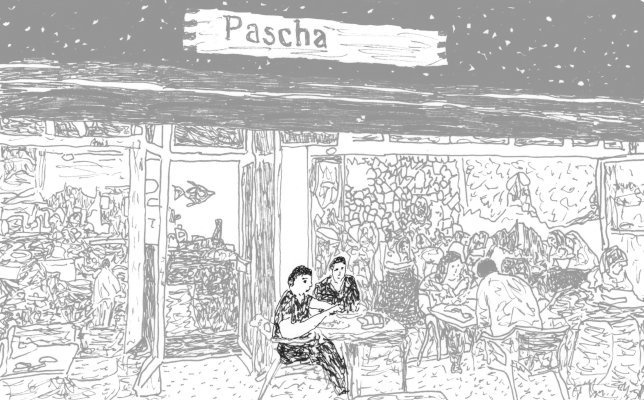 |
(Italiano) I Ragazzi si ritrovano tre giorni dopo per pranzo nel centro di Magonza. Heinz racconta che andrà a trovare Till, lo sviluppatore di software, a Bruxelles. Inoltre, smaschera un'altra spia, cosa che rende Helmut sempre più nervoso. |
(Deutsch) Die Jungs treffen sich drei Tage später zum Mittagessen in der Mainzer Innenstadt. Heinz erzählt davon, dass er den Software-Entwickler Till in Brüssel besuchen wird. Außerdem entlarvt er einen weiteren Spion, was Helmut zunehmend unheimlich wird. Normal Version | ||
Tag 33 1 Helmut: Ah, da kommt das Rotbarschfilet! Sieht köstlich aus. Gute Idee, mal wieder in unser Lieblingsfischrestaurant zu gehen. |
Day 33 Helmut: Ah, here comes the redfish fillet! Looks delicious. Good idea to visit our favorite fish restaurant once again. |
Jour 33 Helmut : Ah, voilà le filet de sébaste ! Ça a l'air délicieux. Bonne idée de revenir dans notre resto de poisson préféré. |
Giorno 33 Helmut: Ah, ecco il filetto di scorfano! Sembra delizioso. Ottima idea tornare nel nostro ristorante di pesce preferito. |
Día 33 Helmut: ¡Ah, aquí viene el filete de gallineta! Tiene una pinta deliciosa. Buena idea volver a visitar nuestro restaurante de pescado favorito. |
2 Helmut: Sag mal, muss ich mir Sorgen machen? |
Helmut: Do I have to worry? |
Helmut : Dois-je m'inquiéter ? |
Helmut: Devo preoccuparmi? |
Helmut: ¿Tengo que preocuparme? |
3 Helmut: Gut, dann schlag ich vor, dass wir Maria mitnehmen und mit dem Zug fahren. Ist ja nicht weit. |
Helmut: Okay, then I suggest we take Maria with us and go by train. It's not far. |
Helmut : D'accord, alors je suggère qu'on emmène Maria avec nous et qu'on y aille en train. Ce n'est pas loin. |
Helmut: Ok, allora suggerisco di portare Maria con noi e di andare in treno. Non è lontano. |
Helmut: De acuerdo, entonces sugiero que nos llevemos a María con nosotros y vayamos en tren. No está lejos. |
4 Heinz: Warte mal ab! Ah, der Tee. Und die Rechnung. OK, mach 45 draus. Wie bitte? Ja, sehr lecker, wie immer. |
Heinz: Just you wait! Ah, the tea. And the bill. OK, let's make it 45. What? Yes, very tasty, as always. |
Heinz : Attends un peu ! Ah, le thé. Et l'addition. OK, arrondis à 45. Pardon ? Oui, très bon, comme toujours. |
Heinz: Aspetta e vedrai! Ah, il tè. E il conto. Ok, facciamo 45. Come, scusa? Sì, molto buono, come sempre. |
Heinz: ¡Ya verás! Ah, el té. Y la cuenta. Vale, que sean 45. ¿Perdón? Sí, muy sabroso, como siempre. |
| Weiter geht's mit Staffel 13: Die Jungs in Hollywood / The story continues with The Boys in Hollywood |
| up | |
| Datenschutzerklärung und Impressum (data privacy statement and imprint) |

