



|
home ao english musik literatur journalismus bilder sprachen mehr shop sitemap | |
Albträume  |
Nightmares |
Cauchemars |
Incubi |
Pesadillas |
(Deutsch) Dies ist die linguistische Version der achten Staffel der Jungs. Die Texte sind dieselben wie auf der Hauptseite. |
(English) This is the linguistic version of the eighth season of the Boys. The texts are the same as on the main page. |
(Français) Voici la version linguistique de la huitième saison des Gars. Les textes sont les mêmes que sur la page principale. |
(Italiano) Questa è la versione linguistica dell'ottava stagione dei Ragazzi. I testi sono gli stessi della pagina principale. |
(Español) Esta es la versión lingüística de la octava temporada de los Chicos. Los textos son los mismos que en la página principal. |
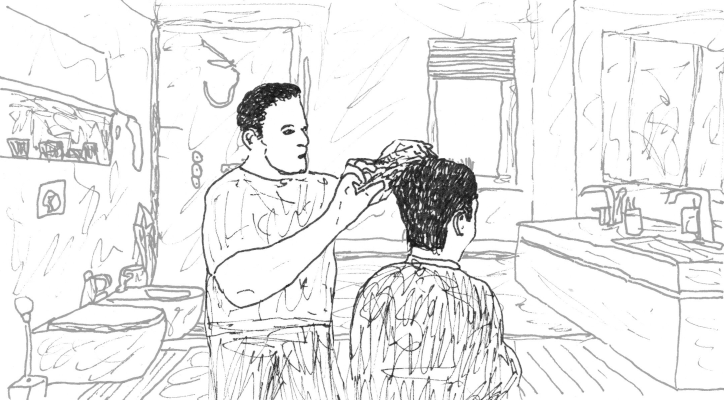
(English) Autumn begins. Heinz and Helmut have got used to their new situation and one would imagine that all is well with the Boys for a while, but Heinz is plagued by nightmares. He tells Helmut about it while he is getting his hair cut and learns the latest news in return. |
 |
(Italiano) Inizia l'autunno. Heinz e Helmut si sono abituati alla loro nuova situazione e si potrebbe pensare che per il momento tutto vada bene per i Ragazzi, ma Heinz è tormentato dagli incubi. Ne parla a Helmut mentre si fa tagliare i capelli e riceve in cambio le ultime notizie. |
(Deutsch) Der Herbst beginnt. Heinz und Helmut haben sich an ihre neue Situation gewöhnt und man könnte denken, dass nun erst einmal alles gut ist bei den Jungs, aber Heinz plagen Albträume. Er erzählt Helmut beim Haareschneiden davon und erfährt im Gegenzug das Allerneueste. Normal Version | ||
Tag 1 1 Helmut: Schnipp schnipp |
Day 1 Helmut: Snip snip |
Jour 1 Helmut : Clic-clic |
Giorno 1 Helmut: Zac-zac |
Día 1 Helmut: Tris-tris |
2 Helmut: Das klang wie damals im Winter, als du im Schreventeich in Kiel ins Eis eingebrochen bist. Am Ufer. Ein sattes, zwei Sekunden andauerndes, frisches Knacken. Ach, die Jugendzeit! |
Helmut: Sounded like that time in winter when you broke through the ice in the Schreven pond in Kiel. On the shore. A rich, fresh crack that lasted two seconds. Oh, the days of youth! |
Helmut : Cela sonnait comme la fois en hiver quand tu es tombé dans le lac gelé de Schreventeich à Kiel. Sur la rive. Un craquement riche et frais qui a duré deux secondes. Ah, les jours de jeunesse ! |
Helmut: Sembrava come quando in inverno sei caduto nel lago ghiacciato di Schreventeich a Kiel. Sulla riva. Un crac ricco e fresco che durò due secondi. Ah, i giorni della giovinezza! |
Helmut: Sonaba como cuando en invierno te caíste al lago helado de Schreventeich, en Kiel. En la orilla. Un crujido rico y fresco que duró dos segundos. Ah, ¡los días de juventud! |
3 Helmut: Die Seiten ... kurz bitte, hinten mittelmäßig und vorne nur die Spitzen. |
Helmut: The sides... short please, mediocre at the back and at the front only the tips. |
Helmut : Les côtés... courts s'il te plaît, médiocre à l'arrière et à l'avant seulement les pointes. |
Helmut: I lati... corti per favore, mediocre dietro e davanti solo le punte. |
Helmut: Los lados... cortos por favor, mediocre por detrás y por delante solo las puntas. |
4 Heinz: Seufz. Ich hab's dir gesagt. Du musst nicht mit dem ganzen Körper sprechen. Sonst erzähl's mir lieber später. |
Heinz: Sigh. I've told you. You don't have to talk with your whole body. Otherwise you'd better tell me later. |
Heinz : Soupir. Je te l'ai déjà dit. Tu n'es pas obligé de parler avec tout ton corps. Sinon, tu ferais mieux de me le dire plus tard. |
Heinz: Sigh. Te l'ho già detto. Non devi parlare con tutto il corpo. Se lo fai, è meglio che me lo dici dopo. |
Heinz: Suspira. Ya te lo he dicho. No hace falta que hables con todo el cuerpo. Si lo haces, será mejor que me lo digas después. |
5 Heinz: Und jetzt hast du als Ersatz Ego-Shooter am Computer entdeckt. |
Heinz: And now you've discovered first-person shooters on the computer as a substitute. |
Heinz : Et maintenant, tu as découvert les jeux de tir à la première personne sur ordinateur comme substitut. |
Heinz: E ora hai scoperto i videogiochi sparatutto in prima persona come sostituto. |
Heinz: Y ahora has descubierto los videojuegos de disparos en primera persona como sustituto. |
6 Heinz: Vielleicht sollte ich auch mal Computerspiele zur Entspannung probieren. Seit wir aus England zurück sind, hab ich nachts immer diese Albträume. Seit einem Monat geht das jetzt so. |
Heinz: Maybe I should try playing computer games to relax too. Ever since we got back from England, I've been having these nightmares at night. It's been going on for a month now. |
Heinz : Peut-être que je devrais aussi essayer les jeux d'ordinateur pour me détendre. Depuis que nous sommes rentrés d'Angleterre, j'ai toujours ces cauchemars la nuit. Ça dure depuis un mois. |
Heinz: Forse dovrei provare anch'io a giocare al computer per rilassarmi. Da quando siamo tornati dall'Inghilterra, ho questi incubi notturni. È da un mese che va avanti così. |
Heinz: Quizá yo también debería probar a jugar al ordenador para relajarme. Desde que hemos vuelto de Inglaterra, siempre he tenido estas pesadillas por la noche. Desde hace un mes. |
7 Heinz: Das wird jede Woche schlimmer! Du wachst morgens auf und gehst erst mal auf Al Jazeera kucken, ob die schon mit Atombomben angefangen haben. |
Heinz: It gets worse every week! I wake up in the morning and check Al Jazeera to see if they've already started with nuclear bombs. |
Heinz : C'est de pire en pire chaque semaine ! Je me réveille le matin et je regarde Al Jazeera pour voir s'ils ont déjà commencé avec les bombes nucléaires. |
Heinz: La situazione peggiora di settimana in settimana! Mi sveglio la mattina e controllo Al Jazeera per vedere se hanno già iniziato con le bombe nucleari. |
Heinz: ¡Cada semana es peor! Me levanto por la mañana y miro Al Jazeera para ver si ya han empezado con las bombas nucleares. |
8 Helmut: Die Herzen sind kalt geworden. Wir müssen wieder ganz von vorne anfangen, ja, aber erst mal müssen diese täglichen Massaker aufhören. Das in Gaza geht jetzt schon länger als ein Jahr. Tausende und Abertausende von Kindern und anderen. Unerträglich. |
Helmut: The hearts have grown cold. We have to start all over again, yes, but first these daily massacres have to stop. This in Gaza has been going on for more than a year now. Thousands and thousands of children and others. Unbearable. |
Helmut : Les cœurs se sont refroidis. Il faut tout reprendre à zéro, oui, mais d'abord, il faut que ces massacres quotidiens cessent. Cela fait plus d'un an que cela dure à Gaza. Des milliers et des milliers d'enfants et d'autres. Insupportable. |
Helmut: I cuori si sono raffreddati. Dobbiamo ricominciare tutto da capo, sì, ma prima devono finire questi massacri quotidiani. A Gaza questo va avanti da più di un anno. Migliaia e migliaia di bambini e altre persone. Insopportabile. |
Helmut: Los corazones se han enfriado. Hay que empezar de nuevo, sí, pero primero hay que poner fin a estas masacres diarias. Esto en Gaza dura ya más de un año. Miles y miles de niños y otras personas. Es insoportable. |
9 Helmut: Hedu ist schwanger. |
Helmut: Hedu is pregnant. |
Helmut : Hédou est enceinte. |
Helmut: Hedu è incinta. |
Helmut: Hedu está embarazada. |
10 Heinz: Scheiße, ich werd Onkel!! Also, eine Art Onkel. Wisst ihr schon, ob ... Schnipp |
Heinz: Shit, I'm going to be an uncle! Well, a sort of uncle. Do you already know whether... snap |
Heinz : Putain, je vais être un oncle ! Enfin, une sorte d'oncle. Sais-tu déjà si... clic |
Heinz: Cazzo, diventerò zio! Beh, una specie di zio. Sai già se... zac |
Heinz: Joder, ¡voy a ser tío! Bueno, una especie de tío. ¿Sabes ya si... tris |
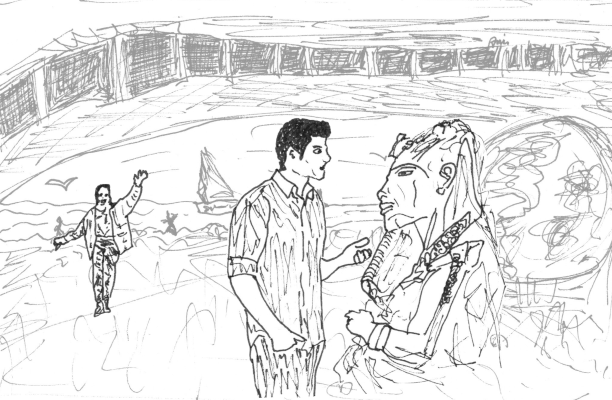
(English) The Boys visit the Lodge website again and marvel at the new features. Helmut promises Heinz to take him one step further without hesitation, and he can be relied upon. Or has it ever been any different? |
 |
(Italiano) I Ragazzi visitano di nuovo il sito web della Loggia e rimangono stupiti dalle nuove funzionalità. Helmut promette a Heinz di fare un ulteriore passo avanti senza esitazioni, e la gente può contare su di lui. O forse è mai stato diverso? |
(Deutsch) Die Jungs besuchen ein weiteres Mal die Website der Loge und staunen über die Neuerungen. Helmut verspricht Heinz, ihn ohne Umschweife einen Schritt weiterzubringen, und man kann sich auf ihn verlassen. Oder ist es vielleicht jemals anders gewesen? Normal Version | ||
Tag 1 1 Helmut: Hör zu, ich mach dir einen Vorschlag: Feg du die ... schschsch |
Day 1 Helmut: Listen, I'll make you a suggestion: you sweep the... shshsh |
Jour 1 Helmut : Ecoute, je vais te faire une proposition : tu balaies les... shshsh |
Giorno 1 Helmut: Ascolta, ti do un suggerimento: spazza il... shshsh |
Día 1 Helmut: Escucha, te haré una sugerencia: barre el... shshsh |
2 Helmut: Du stellst mal wieder die falsche Frage. Für dich will ich sie nutzen, Mann, jetzt sofort. Formuliere deinen Wunsch! |
Helmut: You're asking the wrong question again. I want to use it for you, man, right now. Formulate your wish! |
Helmut : Tu poses encore une fois la mauvaise question. Pour toi, je veux l'utiliser, mec, tout de suite. Formule ton souhait ! |
Helmut: Stai facendo di nuovo la domanda sbagliata. Voglio usarlo per te, amico, proprio adesso. Esprimi il tuo desiderio! |
Helmut: Vuelves a hacer la pregunta equivocada. Quiero utilizarlo para ti, tío, ahora mismo. ¡Formula tu deseo! |
3 Heinz: (...) Helmut? |
Heinz: (...) Helmut? |
Heinz : (...) Helmut ? |
Heinz: (...) Helmut? |
Heinz: (...) ¿Helmut? |
4 Heinz: Hä? Ich bin doch noch gar nicht eingeloggt. Oh, guten Tag, die Dame! Es grüßen uns Leute, die ich nicht kenne. |
Heinz: Huh? I'm not even logged in yet. Oh, good day, my lady! There are people greeting us that I don't know. |
Heinz : Hein ? Je ne suis même pas encore connecté. Oh, bonjour, la dame ! Il y a des gens qui nous saluent et que je ne connais pas. |
Heinz: Eh? Non ho ancora effettuato il login. Oh, buona giornata, signora! Ci sono persone che ci salutano e che non conosco. |
Heinz: ¿Eh? Ni siquiera he iniciado sesión. Oh, ¡buenos días, señora! Hay gente saludándonos que no conozco. |
5 Helmut: Man kann ein Meeresrauschen einblenden, mit Möwen und Touristen und allem. Da, ein Fischerboot! Pittoresk. |
Helmut: You can fade in the sound of the sea, with seagulls and tourists and everything. There, a fishing boat! Picturesque. |
Helmut : Tu peux mettre un bruit de mer, avec des mouettes, des touristes et tout. Là, un bateau de pêche ! Pittoresque. |
Helmut: Puoi inserire il rumore del mare, con gabbiani, turisti e tutto il resto. Ecco, un peschereccio! Pittoresco. |
Helmut: Puedes poner el sonido del mar, con gaviotas, turistas y todo eso. Allí, ¡un barco pesquero! Pintoresco. |
6 Helmut: Das macht umso mehr Spaß, als wir jetzt nicht mal mehr das Grundeinkommen der Loge brauchen. Freiheit! |
Helmut: It's even more fun now because we no longer need the Lodge's basic income. Freedom! |
Helmut : C'est d'autant plus amusant que maintenant nous n'avons même plus besoin du revenu de base de la Loge. La liberté ! |
Helmut: È ancora più divertente ora che non abbiamo nemmeno bisogno del reddito di base della Loggia. Libertà! |
Helmut: Es aún más divertido ahora que ni siquiera necesitamos la renta básica de la Logia. ¡Libertad! |
7 Heinz: Klingt schlüssig. Interessant. Und was hast du jetzt gemacht? Du wolltest doch mit deiner Methode was für mich tun, stante pede. |
Heinz: Sounds logical. Interesting. And what have you done now? You wanted to do something for me with your method, stante pede. |
Heinz : Cela semble cohérent. Intéressant. Et qu'as-tu fait maintenant ? Tu voulais faire quelque chose pour moi avec ta méthode, stante pede. |
Heinz: Sembra logico. Interessante. E cosa hai fatto ora? Volevi fare qualcosa per me con il tuo metodo, stante pede. |
Heinz: Suena lógico. Interesante. ¿Y qué has hecho ahora? Querías hacer algo por mí con tu método, stante pede. |
8 Helmut: Nun, wir schauen uns hier um und stellen uns ein bisschen auffällig auf diese Mauer am Strand ... Übrigens, glaubst du, Fanni kann mir auch so einen lebensechten Avatar machen wie dir? |
Helmut: Well, we'll take a look around and stand a bit conspicuously on this wall at the beach... By the way, do you think Fanni can make me a lifelike avatar like yours too? |
Helmut : Bon, nous allons jeter un coup d'œil et nous mettre un peu en évidence sur ce mur de la plage... Au fait, tu crois que Fanni peut me faire un avatar réaliste comme le tien aussi ? |
Helmut: Beh, daremo un'occhiata in giro e ci metteremo un po' in evidenza su questo muro della spiaggia... A proposito, pensi che Fanni possa creare anche per me un avatar realistico come il tuo? |
Helmut: Bueno, echaremos un vistazo y nos pondremos un poco llamativos en esta pared de la playa... Por cierto, ¿crees que Fanni también puede hacerme un avatar realista como el tuyo? |
9 Heinz: Mann, Hedu ist schwanger, ich fass es nicht. |
Heinz: Man, Hedu is pregnant, I can't believe it. |
Heinz : Hédou est enceinte, je n'arrive pas à y croire. |
Heinz: Amico, Hedu è incinta, non posso crederci. |
Heinz: Tío, Hedu está embarazada, no me lo puedo creer. |
10 Helmut: Und sie kennt so viele Jahreszahlen! Ende des römischen Reiches? 1453, als Konstantinopel fiel. Wow. Nachträglich haben sie Byzanz erfunden, um die Schmach der Niederlage gegen die Muslime zu vertuschen, hi hi. |
Helmut: And she knows so many dates! The end of the Roman Empire? 1453, when Constantinople fell. Wow. They invented Byzantium retrospectively to cover up the shame of the defeat at the hands of the Muslims, hee hee. |
Helmut : Et elle connaît tellement de dates ! La fin de l'Empire romain ? 1453, quand Constantinople est tombée. Ouah ! Après coup, ils ont inventé Byzance pour couvrir l'humiliation de la défaite contre les musulmans, hé hé. |
Helmut: E conosce così tante date! La fine dell'Impero Romano? 1453, quando cadde Costantinopoli. Wow. In seguito hanno inventato Bisanzio per coprire la vergogna della sconfitta per mano dei musulmani, hi hi. |
Helmut: ¡Y sabe tantas fechas! ¿El fin del Imperio Romano? 1453, cuando cayó Constantinopla. Vaya. Después inventaron Bizancio para tapar la vergüenza de la derrota a manos de los musulmanes, je, je. |
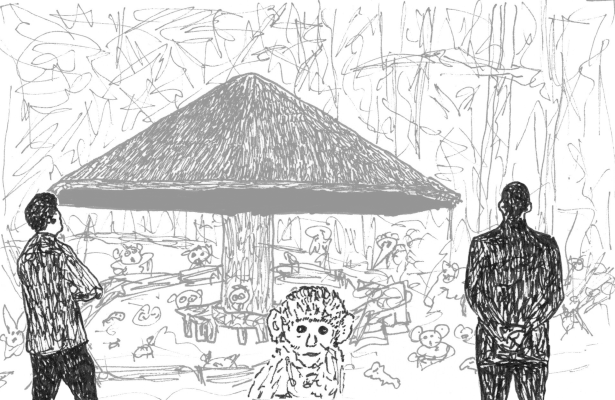
(English) Aouda, the little monkey from Mumbai who has been living in the park of the Hose family for some time, is also invited to the upcoming trip to Marseille and the Boys visit her to let her know about it. They realize that their animal friend has developed further once again. |
 |
(Italiano) Anche Aouda, la scimmietta di Mumbai che da tempo vive nel parco della famiglia Tubo, viene invitata all'imminente viaggio a Marsiglia e i Ragazzi le fanno visita per informarla di ciò. Si rendono conto che il loro amico animale si è evoluto ancora una volta. |
(Deutsch) Auch Aouda, das Äffchen aus Mumbai, das seit einiger Zeit im Park der Schlauch-Familie lebt, ist zur anstehenden Reise nach Marseille eingeladen, und die Jungs besuchen sie, um es ihr mitzuteilen. Sie stellen fest, dass sich ihre tierische Freundin erneut weiterentwickelt hat. Normal Version | ||
Tag 2 1 Helmut: Hey, ich dachte, du freust dich! |
Day 2 Helmut: Hey, I thought you'd be happy! |
Jour 2 Helmut : Hé, je pensais que tu serais content ! |
Giorno 2 Helmut: Ehi, pensavo che saresti stato contento! |
Día 2 Helmut: ¡Eh, pensé que te alegrarías! |
2 Heinz: Ja, komm zu Onkel Heinz! So ist es gut. Du bist eine Liebe. Streichel streichel |
Heinz: Yes, come to Uncle Heinz! There you go. You are a sweetheart. Pet pet |
Heinz : Oui, viens voir l'oncle Heinz ! C'est bien comme ça. Tu es un amour. Caresse caresse |
Heinz: Sì, vieni dallo zio Heinz! Ecco fatto. Sei un tesoro. Coccole coccole |
Heinz: ¡Sí, ven con el tío Heinz! Eso es bueno. Eres un encanto. Mimo mimo |
3 Helmut: Du wolltest doch schon immer mal nach Frankreich, hast du gesagt. |
Helmut: You've always wanted to go to France, you said. |
Helmut : Tu as toujours voulu aller en France, tu as dit. |
Helmut: Hai sempre voluto andare in Francia, hai detto. |
Helmut: Siempre has querido ir a Francia, dijiste. |
4 Heinz: OK. Na, was willst du uns zeigen? Deine Garage? |
Heinz: OK. Well, what do you want to show us? Your garage? |
Heinz : OK. Alors, qu'est-ce que tu veux nous montrer ? Ton garage ? |
Heinz: OK. Beh, cosa vuoi mostrarci? Il tuo garage? |
Heinz: Vale. Bueno, ¿qué quieres enseñarnos? ¿Tu garaje? |
5 Heinz: Ach ja, Florenz! Da kommen Erinnerungen hoch. Geht es Nonna Maria gut? |
Heinz: Oh yes, Florence! That brings back memories. Is Nonna Maria doing well? |
Heinz : Ah oui, Florence ! Ça me rappelle des souvenirs. Nonna Maria va-t-elle bien ? |
Heinz: Oh sì, Firenze! Mi fa tornare in mente i ricordi. Nonna Maria sta bene? |
Heinz: ¡Ah, sí, Florencia! Eso me trae recuerdos. ¿Se encuentra bien Nonna Maria? |
6 Heinz: Aha, ein hölzerner Unterstand in Pilzform mit einem Reetdach, einer runden Bank um den Stiel herum und einer weiteren Bank ringsherum auf der Außenseite. Ah, da ist ja Rupert. Hallo Rupert! |
Heinz: I see, a wooden shelter in the shape of a mushroom with a thatched roof, a round bench around the stem and another bench all around on the outside. Ah, there's Rupert. Hello Rupert! |
Heinz : Je vois, un abri en bois en forme de champignon avec un toit de chaume, un banc rond autour de la tige et un autre banc tout autour à l'extérieur. Ah, voilà Rupert. Salut, Rupert ! |
Heinz: Vedo, un rifugio di legno a forma di fungo con un tetto di paglia, una panchina rotonda intorno al gambo e un'altra panchina tutt'intorno all'esterno. Ah, ecco Rupert. Ciao Rupert! |
Heinz: Ya veo, un refugio de madera en forma de seta con tejado de paja, un banco redondo alrededor del tronco y otro banco alrededor del exterior. Ah, ahí está Rupert. ¡Hola Rupert! |
7 Heinz: Ob sie jemanden ruft? Ist das die Kirchenglocke des Hauses der Wahrheit? |
Heinz: Is she calling someone? Is that the church bell of the house of truth? |
Heinz : Est-ce qu'elle appelle quelqu'un ? Est-ce que c'est la cloche de l'église de la vérité ? |
Heinz: Sta chiamando qualcuno? È la campana della chiesa della verità? |
Heinz: ¿Está llamando a alguien? ¿Es la campana de la iglesia de la verdad? |
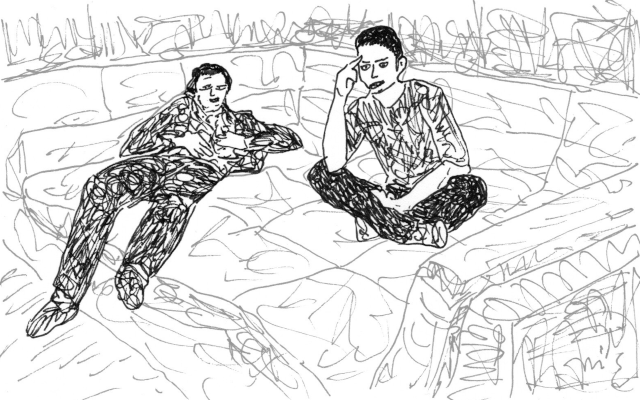
(English) After the wildlife experience under the mushroom, the two make themselves comfortable in Hedu's house. Helmut explains his fears about the monkey to Heinz. When Heinz shows himself to be less pessimistic than his friend, Helmut notices a certain similarity. |
 |
(Italiano) Dopo l'esperienza con gli animali sotto il fungo, i due si mettono comodi nella casa di Hedu. Helmut spiega a Heinz le sue paure riguardo alla scimmia. Quando Heinz si mostra meno pessimista del suo amico, Helmut nota una certa somiglianza. |
(Deutsch) Nach dem tierischen Erlebnis unter dem Pilz machen es sich die beiden in Hedus Haus gemütlich. Helmut erläutert Heinz seine Befürchtungen bezüglich des Affen. Als Heinz sich weniger pessimistisch äußert als sein Freund, fällt Helmut eine gewisse Ähnlichkeit auf. Normal Version | ||
Parallel-Affe Tag 2 1 Heinz: Und du bist sicher, dass Hedu nichts dagegen hat, wenn ich unabgesprochen in ihrem Haus rumlaufe? |
Day 2 Heinz: And you're sure that Hedu won't mind if I walk around her house without her permission? |
Singe parallèle Jour 2 Heinz : Et tu es sûr qu'Hédou ne verra pas d'inconvénient à ce que je me promène chez elle sans sa permission ? |
Giorno 2 Heinz: E sei sicuro che a Hedu non dispiaccia se giro per casa sua senza il suo permesso? |
paralelo Día 2 Heinz: ¿Y estás seguro de que a Hedu no le importará que me pasee por su casa sin su permiso? |
2 Heinz: Und wer trägt Hedu? Und wohin? |
Heinz: And who's carrying Hedu? And where to? |
Heinz : Et qui porte Hédou ? Et où ? |
Heinz: E chi trasporta Hedu? E dove? |
Heinz: ¿Y quién lleva a Hedu? ¿Y a dónde? |
3 Heinz: Du hattest das angedeutet. Was ist denn? Du als Tierflüsterer müsstest doch von dem Arche-Noah-Schauspiel unter dem Pilz begeistert sein! |
Heinz: You hinted at that. What's the matter? As an animal whisperer, you should be thrilled by this Noah's Ark spectacle under the mushroom! |
Heinz : Tu y as fait allusion. Qu'est-ce qu'il y a ? En tant que chuchoteur d'animaux, tu devrais être ravi par ce spectacle de l'arche de Noé sous le champignon ! |
Heinz: L'hai accennato. Qual è il problema? Come sussurratore di animali, dovresti essere entusiasta di questo spettacolo dell'Arca di Noè sotto il fungo! |
Heinz: Lo has insinuado. ¿Cuál es el problema? Como susurrador de animales, ¡deberías estar encantado con este espectáculo del Arca de Noé bajo la seta! |
4 Heinz: Cool, das kannte ich noch gar nicht. Und du bist jetzt also abergläubisch geworden. |
Heinz: Cool, I didn't know that yet. So you've become superstitious now. |
Heinz : Cool, je ne connaissais pas ça. Et tu es donc devenu superstitieux maintenant. |
Heinz: Forte, non lo sapevo ancora. Quindi ora sei diventato superstizioso. |
Heinz: Genial, aún no lo sabía. Así que ahora te has vuelto supersticioso. |
5 Helmut: Ja ja, leg dich hin. Mach's dir bequem. Oder „Zoo”. Weißt du, die Serie, wo sich die Tiere gegen die Menschheit verschwören. |
Helmut: Yes, yes, lie down. Make yourself comfortable. Or "Zoo". You know, the series where the animals conspire against humanity. |
Helmut : Oui, oui, allonge-toi. Mets-toi à l'aise. Ou bien « Zoo ». Tu sais, la série où les animaux conspirent contre l'humanité. |
Helmut: Sì, sì, sdraiati. Mettiti comodo. Oppure "Zoo". Sai, la serie in cui gli animali cospirano contro l'umanità. |
Helmut: Sí, sí, túmbate. Ponte cómodo. O "Zoo". Ya sabes, la serie en la que los animales conspiran contra la humanidad. |
6 Helmut: Ja, aber sie blickt langsam hinter die Fassade unserer Welt. Sie hat einen Einblick in Tierversuche bekommen. Auch für die Fleischindustrie hat sie sich schon interessiert. Kritisch, meine ich. Käfighaltung und alles. |
Helmut: Yes, but she's starting to see behind the façade of our world. She has gained an insight into animal testing. She's also taken an interest in the meat industry. With a critical eye, I mean. Cage farming and all. |
Helmut : Oui, mais elle commence à voir derrière la façade de notre monde. Elle s'est fait une idée sur l'expérimentation animale. Elle s'est aussi intéressée à l'industrie de la viande. De manière critique, je veux dire. L'élevage en cage et tout le reste. |
Helmut: Sì, ma sta iniziando a vedere dietro la facciata del nostro mondo. Si è fatta un'idea dei test sugli animali. Si è anche interessata all'industria della carne. In modo critico, intendo. Allevamenti in gabbia e tutto il resto. |
Helmut: Sí, pero está empezando a ver detrás de la fachada de nuestro mundo. Se ha hecho una idea de las pruebas con animales. También se ha interesado por la industria cárnica. Críticamente, quiero decir. La cría en jaulas y todo eso. |
7 Helmut: Falls du dich erinnerst: Das war in der letzten Staffel schon so. |
Helmut: If you remember, this was already the case in the previous season. |
Helmut : Si tu te souviens bien, c'était déjà le cas dans la saison précédente. |
Helmut: Se ricordi, è stato così anche nella stagione precedente. |
Helmut: Si recuerdas, esto ya ocurría en la temporada anterior. |
8 Helmut: Du bist ihr Parallel-Affe! Ihr Seelenspiegelprimat. Ihr Schattendoppelgänger, ihr ... |
Helmut: You're her parallel monkey! Her soul-mirror primate. Her shadow doppelganger, her... |
Helmut : Tu es son singe parallèle ! Son primate du miroir de l'âme. Son double d'ombre, son... |
Helmut: Sei la sua scimmia parallela! Il suo primate specchio dell'anima. La sua ombra controfigura, il suo... |
Helmut: ¡Eres su mono paralelo! Su primate alma-espejo. Su doble sombra, su... |
9 Heinz: Gut, dass Jane Miller Aouda bald kennenlernt. Bestimmt kann sie uns einen guten Rat geben. |
Heinz: Fortunately, Jane Miller will soon get to know Aouda. I'm sure she'll be able to give us some sound advice. |
Heinz : C'est bien que Jane Miller fasse bientôt la connaissance d'Aouda. Je suis sûr qu'elle pourra nous donner de bons conseils. |
Heinz: Fortunatamente, Jane Miller incontri presto Aouda. Sono sicuro che sarà in grado di darci qualche buon consiglio. |
Heinz: Afortunadamente, Jane Miller pronto conocerá a Aouda. Seguro que podrá darnos buenos consejos. |
10 Heinz: Und mach ich dir eigentlich auch Angst, sag mal? |
Heinz: And am I actually scaring you as well, do you think? |
Heinz : Et moi, est-ce que je te fais peur aussi, tu crois ? |
Heinz: E pensi che anch'io ti faccia paura, dimmi? |
Heinz: ¿Y yo también te estoy asustando, dime? |
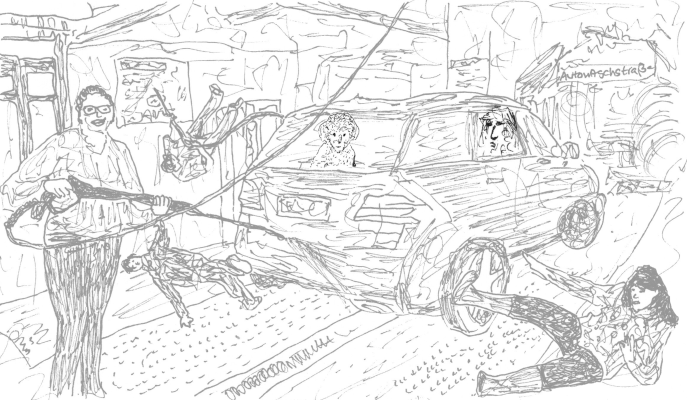
(English) After spending a few days on their own, the Boys meet up again the day before they leave for Marseille and they have Aouda with them. They find themselves in a situation full of clues and signs, which Heinz and the monkey experience as highly symbolic, while Helmut struggles to find his bearings. |
 |
(Italiano) Dopo aver trascorso alcuni giorni da soli, i Ragazzi si ritrovano il giorno prima della partenza per Marsiglia e hanno con loro Aouda. Si trovano in una situazione piena di indizi e segni, che Heinz e la scimmia vivono come altamente simbolici, mentre Helmut cerca di orientarsi. |
(Deutsch) Nachdem sie jeweils einige Tage allein verbracht haben, treffen sich die Jungs am Tag vor der Abfahrt nach Marseille wieder und sie haben Aouda bei sich. Sie geraten in eine Situation voller Hinweise und Zeichen, die Heinz und der Affe als hochgradig symbolhaft erleben, während Helmut nach Orientierung sucht. Normal Version | ||
Tag 10 1 Heinz: Ey, wo bist du? |
Day 10 Heinz: Dude, where are you? |
Au Lave-auto Jour 10 Heinz : Mec, où êtes-vous ? |
Giorno 10 Heinz: Ehi, dove siete? |
Día 10 Heinz: Eh, ¿dónde estáis? |
2 Helmut: Rupert hat ein Riesentheater gemacht, dabei haben wir das eine Woche lang geübt. |
Helmut: Rupert made a huge fuss, though we've been practicing this for a week. |
Helmut : Rupert a fait toute une histoire, même si nous l'avons répété pendant une semaine. |
Helmut: Rupert ha fatto un gran casino, anche se ci siamo esercitati per una settimana. |
Helmut: Rupert ha montado un escándalo enorme, a pesar de que hemos estado practicando durante una semana. |
3 Heinz: Wenn du willst. Dann sitz ich hinten mit Udi. Oh, ein hübsches Täschchen hast du auch. Wer ist denn darauf abgebildet? Eine Frau mit Blumen in Haar. |
Heinz: If you want. Then I'll sit in the back with Oody. Oh, you've got a nice little bag too. Who's on it? A woman with flowers in her hair. |
Heinz : Si tu veux. Alors je m'assiérai à l'arrière avec Oudi. Oh, tu as un joli petit sac aussi. Qui est représenté dessus ? Une femme avec des fleurs dans les cheveux. |
Heinz: Se vuoi. Allora mi siederò dietro con Udi. Oh, hai anche una bella borsa. Chi c'è sopra? Una donna con dei fiori nei capelli. |
Heinz: Si quieres. Entonces me sentaré detrás con Udi. Ah, también tienes una bonita bolsa. ¿Quién aparece en ella? Una mujer con flores en el pelo. |
4 Helmut: Und wie war's mit Fiona im Schwarzwald? |
Helmut: And how was it with Fiona in the Black Forest? |
Helmut : Et comment c'était avec Fiona dans la Forêt Noire ? |
Helmut: E com'è andata con Fiona nella Foresta Nera? |
Helmut: ¿Y cómo te fue con Fiona en la Selva Negra? |
5 Helmut: Zum Glück hab ich sie überzeugen können. Naja, eigentlich kommt sie wegen dir mit. Ihrem Alter Ego. |
Helmut: Luckily I was able to convince her. Well, actually, she's coming because of you. Her alter ego. |
Helmut : Heureusement, j'ai réussi à la convaincre. Ben, en fait, elle vient grâce à toi. Son alter ego. |
Helmut: Per fortuna sono riuscito a convincerla. Beh, in realtà viene grazie a te. Il suo alter ego. |
Helmut: Por suerte he conseguido convencerla. Bueno, en realidad, viene gracias a ti. Su alter ego. |
6 Heinz: Und ich hab gestern mit den Leuten in Marseille ein Videogespräch gehabt. Da, wo wir wohnen werden. Sieht alles gut aus, aber wir müssen uns ein Zimmer teilen, weil Jane das andere bekommt. Kriegst du das hin? |
Heinz: And I had a video call with the people in Marseille yesterday. Where we'll be staying. Everything looks good, but we have to share a room because Jane gets the other one. Can you manage that? |
Heinz : Et moi j'ai eu un appel vidéo avec les gars de Marseille hier. Là où nous serons logés. Tout a l'air bien, mais nous devons partager une chambre parce que Jane prend l'autre. Peux-tu gérer cela ? |
Heinz: Da parte mia, ieri ho avuto una videochiamata con le persone a Marsiglia. Dove alloggeremo. Sembra tutto a posto, ma dobbiamo condividere una stanza perché Jane ha l'altra. Va bene per te? |
Heinz: Por mi parte, ayer tuve una videollamada con la gente de Marsella. Donde nos alojaremos. Todo parece bien, pero tendremos que compartir habitación porque Jane tiene la otra. ¿Puedes arreglártelas? |
7 Helmut: Das Gesicht kenn ich. Sie hat eine Eingebung. Äh, Epaphylie. |
Helmut: I know that face. She has an inspiration. Uh, epiphylia. |
Helmut : Je connais cette tête. Elle a une inspiration. Euh, épiphylie. |
Helmut: Conosco quel viso. Ha un'ispirazione. Ehm, epafilia. |
Helmut: Conozco esa cara. Tiene una inspiración. Ehm, Epafilia. |
8 Heinz: Oh nein, jetzt hat sie ihren Kollegen mit dem Strahl erwischt und der verliert ebenfalls die Kontrolle über seinen Schlauch. |
Heinz: Oh no, now she's caught her colleague with the jet and he's losing control of his hose too. |
Heinz : Oh non, maintenant elle a attrapé son collègue avec le jet et il perd aussi le contrôle de son tuyau. |
Heinz: Oh no, ora ha preso il suo collega con il getto e anche lui sta perdendo il controllo del tubo. |
Heinz: Oh no, ahora ha pillado a su colega con el chorro y él también está perdiendo el control de su manguera. |
9 Helmut: Lasst uns nach vorne blicken! Ich meine das sowohl bildlich als auch ... Gwwww ... Aouda, nein! Lass das Fenster! Wwwwg |
Helmut: Let's look ahead! I mean that both figuratively and... Gvvvvv... Aouda, no! Leave the window! Vvvvvg |
Helmut : Regardons vers l'avant ! Je veux dire à la fois au sens figuré et... Gvvvvv... Aouda, non ! Laisse la fenêtre ! Vvvvvg |
Helmut: Guardiamo avanti! Lo dico sia in senso figurato che... Gvvvvv... Aouda, no! Lascia la finestra! Vvvvvg |
Helmut: ¡Miremos hacia delante! Lo digo tanto en sentido figurado como... Gvvvv... ¡Aouda, no! ¡Deja la ventana! Vvvvvg |
10 Heinz: ...voller Symbole, Hinweise und Geheimnisse. Überall sind Zeichen. |
Heinz: ...full of symbols, clues and secrets. There are signs everywhere. |
Heinz : ...pleine de symboles, d'indices et de secrets. Il y a des signes partout. |
Heinz: ...piena di simboli, indizi e segreti. Ci sono segni ovunque. |
Heinz: ...llena de símbolos, pistas y secretos. Hay señales por todas partes. |
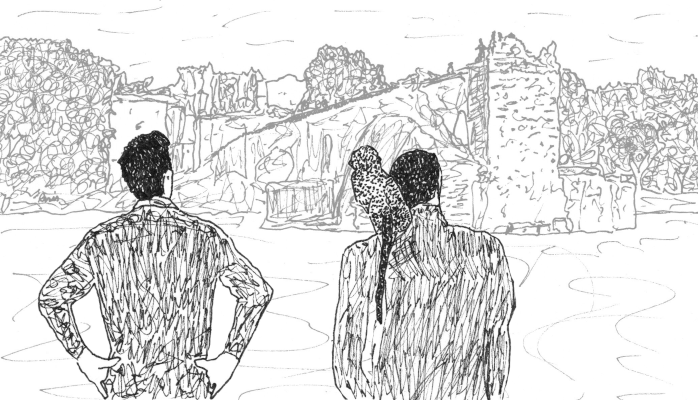
(English) Shortly before they reach Marseille, Helmut, following an inner voice, suddenly insists that Heinz turn. Heinz tries to understand Helmut's intuition through analysis, but doesn't get very far before the matter resolves itself. |
 |
(Italiano) Poco prima di raggiungere Marsiglia, Helmut, seguendo una voce interiore, insiste improvvisamente affinché Heinz giri. Heinz cerca di capire l'intuizione di Helmut analizzandola, ma non va molto lontano prima che la cosa si chiarisca da sola. |
(Deutsch) Kurz bevor sie Marseille erreichen, besteht Helmut, einer inneren Stimme folgend, plötzlich darauf, dass Heinz abbiegt. Heinz versucht mithilfe einer Analyse, Helmuts Eingebung zu verstehen, doch weit ist er damit nicht gekommen, als sich die Sache von selbst aufklärt. Normal Version | ||
Tag 11 1 Helmut: Soll ich dich noch mal ablösen? |
Day 11 Helmut: Shall I take over again? |
Jour 11 Helmut : Je te relève encore une fois ? |
Giorno 11 Helmut: Devo darti di nuovo il cambio? |
Día 11 Helmut: ¿Te relevo otra vez? |
2 Helmut: Hier, hier! |
Helmut: Here, here! |
Helmut : Ici, ici ! |
Helmut: Qui, qui! |
Helmut: ¡Aquí, aquí! |
3 Heinz: (...) Also, wir sind jetzt 50 Kilometer gefahren und es ist nichts passiert, außer dass wir bald wieder tanken müssen. Wir bewegen uns immer weiter von unserem Zielort weg. |
Heinz: (...) Well, we've now driven 50 kilometers and nothing has happened, except that we'll have to refuel soon. We're getting further and further away from our destination. |
Heinz : (...) Eh bien, nous avons maintenant parcouru 50 kilomètres et il ne s'est rien passé, sauf nous devrons bientôt refaire le plein. Nous sommes de plus en plus loin de notre destination. |
Heinz: (...) Beh, abbiamo percorso 50 chilometri e non è successo nulla, a parte il fatto che presto dovremo fare rifornimento. Ci stiamo allontanando sempre di più dalla nostra destinazione. |
Heinz: (...) Bueno, ya hemos recorrido 50 kilómetros y no ha pasado nada, salvo que pronto tendremos que repostar. Nos alejamos más y más de nuestro destino. |
4 Heinz: Es muss irgendeinen Grund dafür geben, dass wir hier sind. Die Brücke wäre naheliegend. |
Heinz: There must be a reason why we're here. The bridge would be an obvious choice. |
Heinz : Il doit y avoir une raison pour laquelle nous sommes ici. Le pont serait un choix évident. |
Heinz: Ci deve essere un motivo per cui siamo qui. Il ponte sarebbe ovvio. |
Heinz: Tiene que haber una razón para que estemos aquí. El puente sería obvio. |
5 Helmut: Was ist eigentlich auf einmal mit Udi los? Sie erzählt mir seit ... Grenoble, dass man unbedingt Experimente mit ihr machen soll. |
Helmut: What's going on with Oody all of a sudden? She's been telling me since... Grenoble that people should definitely do experiments with her. |
Helmut : Qu'est-ce qui se passe avec Oudi tout d'un coup ? Elle me dit depuis... Grenoble que les gens devraient absolument faire des expériences avec elle. |
Helmut: Cosa sta succedendo a Udi all'improvviso? Mi dice da... Grenoble che le persone dovrebbero assolutamente fare esperimenti con lei. |
Helmut: ¿Qué le pasa a Udi de repente? Lleva diciéndome desde... Grenoble que la gente absolutamente debería hacer experimentos con ella. |
6 Helmut: Ja, ist gut, aber bleib hier in der Nähe und komm zurück, wenn ich dich rufe, OK? Und keine Passanten belästigen. Also lauf los! |
Helmut: Yes, all right, but stay close by and come back when I call you, OK? And don't bother any passers-by. Now run ahead! |
Helmut : Oui, d'accord, mais ne t'éloigne pas et reviens quand je t'appelle, d'accord ? Et n'embête pas les passants. Alors cours ! |
Helmut: Sì, va bene, ma resta nei paraggi e torna quando ti chiamo, ok? E non disturbare i passanti. Ora corri! |
Helmut: Sí, de acuerdo, pero quédate cerca y vuelve cuando te llame, ¿vale? Y no molestes a los transeúntes. Así que ¡corre! |
7 Helmut: Und was hast du Aouda nun auf dem Rücksitz gesagt, dass sie auf einmal an Tierversuchen teilnehmen will? |
Helmut: And what did you tell Aouda in the back seat that suddenly made her want to take part in animal testing? |
Helmut : Et alors, qu'as-tu dit à Aouda sur la banquette arrière pour qu'elle ait soudain envie de participer à des expériences sur les animaux ? |
Helmut: E cosa hai detto ad Aouda sul sedile posteriore per farle venire voglia di partecipare agli esperimenti sugli animali? |
Helmut: ¿Y qué le dijiste a Aouda en el asiento de atrás para que de repente quisiera participar en experimentos con animales? |
8 Helmut: Ach so! Das hat Aouda bestimmt fasziniert. Ich verstehe. Gut, dass sie einen Parallel-Affen wie dich hat! |
Helmut: I see! That must have fascinated Aouda. I understand. It's a good thing she has a parallel monkey like you! |
Helmut : Je vois ! Cela a dû fasciner Aouda. Je comprends. Heureusement qu'elle a un singe parallèle comme toi ! |
Helmut: Ah! Questo deve aver affascinato Aouda. Posso capire perché. È un bene che abbia una scimmia parallela come te! |
Helmut: ¡Ya veo! Eso debió de fascinar a Aouda. Lo comprendo. ¡Menos mal que tiene un mono paralelo como tú! |
9 Helmut: Was zum ...? |
Helmut: What the...? |
Helmut : Qu'est-ce que... ? |
Helmut: Ma che...? |
Helmut: ¿Pero qué...? |
10 Heinz: Yes, we are OK. No problems. OK, bis dann. Äh, Atutalör. |
Heinz: Yes, we are OK. No problems. OK, see you then. Uh, atutalör. |
Heinz : Yes, we are OK. No problems. D'accord, atutalör. |
Heinz: Yes, we are OK. No problems. OK, ci vediamo allora. Er, atutalör. |
Heinz: Yes, we are OK. No problems. Vale, hasta luego. Eh, atutalör. |
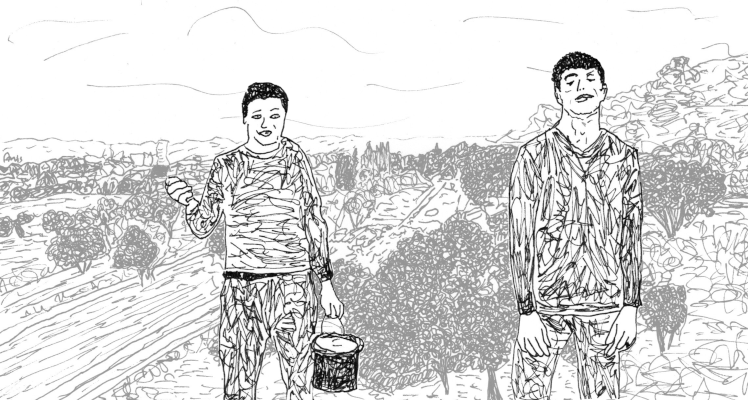
(English) When they arrive at the organic farm in Marseille, they learn that Jane will be a few days late. Heinz enjoys the country air and makes himself useful, while Helmut seems slightly sleepy until he suddenly and unexpectedly becomes a savior in need. Again. |
 |
(Italiano) Quando arrivano alla fattoria biologica a Marsiglia, apprendono che Jane avrà qualche giorno di ritardo. Heinz si gode l'aria di campagna e si rende utile, mentre Helmut sembra un po' assonnato, fino a quando non diventa improvvisamente e inaspettatamente un salvatore in caso di bisogno. Ancora. |
(Deutsch) Auf dem Bio-Hof in Marseille angekommen erfahren die beiden, dass sich Jane um einige Tage verspäten wird. Heinz genießt die Landluft und macht sich nützlich, während Helmut leicht verschlafen wirkt, bis er plötzlich und unerwartet zum Retter in der Not wird. Schon wieder. Normal Version | ||
Die Mars-Oase Tag 15 1 Helmut: Moin! Was ist das denn da, gehst du Pilze sammeln? |
Day 15 Helmut: Morning, what's that, are you going mushroom picking? |
Jour 15 Helmut : Bonjour ! Qu'est-ce que c'est, tu vas aux champignons ? |
L'Oasi di Mars Giorno 15 Helmut: Bongiorno, cos'è quello, vai a raccogliere funghi? |
Día 15 Helmut: Buenos días, ¿qué es eso, vas a recoger setas? |
| 2 Helmut: Was? Ach so, ich dachte, hier links ... Heinz: Nein, da geht's zum Hühnerstall. Hier, Mann, vor dem Haupthaus. Wo wir immer sitzen. Helmut: Gähn Heinz: Ah, da kommt Manon. Manon!! Ach, blöd, ich hab den Übersetzer nicht dabei. Helmut: Was willst du ihr denn sagen? Heinz: Dass ich gleich den Geräteschuppen streiche. Äh, sche wöh paint ... äh, la mäsong de ... Helmut: Vuole dipingere il capanno degli attrezzi. Heinz: Sì ... äh, oui. Ah, sie hat's geschnallt. OK. |
Helmut: What? Oh, I thought it was here on the left... |
Helmut : Quoi ? Oh, je croyais que c'était ici, à gauche... |
Helmut: Cosa? Oh, pensavo fosse qui a sinistra... |
Helmut: ¿Qué? Oh, creía que era aquí, a la izquierda... |
3 Helmut: Manchmal klappt es mit Italienisch. Und wie lange turnst du hier schon im Freien rum? |
Helmut: Sometimes Italian does the job. And how long have you been messing around outside? |
Helmut : Parfois, ça marche avec l'italien. Et depuis combien de temps fais-tu de la gymnastique en plein air ici ? |
Helmut: A volte funziona con l'italiano. E da quanto tempo fai ginnastica all'aperto qui? |
Helmut: A veces funciona con el italiano. ¿Y cuánto tiempo llevas haciendo gimnasia al aire libre aquí? |
4 Heinz: Sie hat jetzt drei Tage lang gebettelt und sich einwandfrei verhalten. Da hat sich Takumi ein Herz gefasst und es ihr erlaubt. Er passt schon auf sie auf. Sie ist eben neugierig. |
Heinz: She's been begging for three days now and has behaved perfectly. Takumi had a heart and allowed her to go. He'll keep an eye on her, don't worry. She's just curious. |
Heinz : Elle a supplié pendant trois jours maintenant et s'est comportée de manière irréprochable. Alors Takumi a pris son courage à deux mains et l'a laissée aller. Il gardera un œil sur elle, ne t'inquiète pas. Elle est curieuse. |
Heinz: Sono tre giorni che implora e si comporta in modo impeccabile. Così Takumi si è fatto coraggio e le ha permesso di andare. La terrà d'occhio, non preoccuparti. È una ragazza curiosa. |
Heinz: Lleva tres días mendigando y se ha comportado de forma impecable. Takumi se animó y la dejó ir. La vigilará, no te preocupes. Es una chica curiosa. |
5 Helmut: Ach so, jetzt verst ... äh, ein Kraftort, definitiv. Deshalb ist die Oase ja auch zum Treffpunkt für Forscher aus der Loge geworden. Hier ist immer was los. |
Helmut: Oh right, now I und... uh, a place of power, definitely. That's why the oasis has become a meeting place for researchers from the Lodge. There's always something going on here. |
Helmut : Ah oui, maintenant je comp... euh, un lieu de pouvoir, sans aucun doute. C'est pourquoi l'oasis est devenue un lieu de rencontre pour les chercheurs de la Loge. Il se passe toujours quelque chose ici. |
Helmut: Oh, giusto, ora capis... ehm, un luogo di potere, senza dubbio. Ecco perché l'oasi è diventata un luogo di incontro per i ricercatori della Loggia. Qui c'è sempre qualcosa in ballo. |
Helmut: Ah, claro, ahora lo entie... eh, un lugar de poder, definitivamente. Por eso el oasis se ha convertido en un lugar de encuentro para los investigadores de la Logia. Aquí siempre pasa algo. |
6 Helmut: Ich versteh das. Die Welt hat den Boden unter den Füßen verloren. Letzte Woche haben die ein Krankenhaus in Beirut bombardiert, weil darunter angeblich antisemitisches Gold versteckt war. So was kann man sich nicht ausdenken. Komplett irre! |
Helmut: I understand that. The world has lost its footing. Last week they bombed a hospital in Beirut because allegedly anti-Semitic gold was hidden underneath. You can't make something like that up. Completely bonkers! |
Helmut : Je comprends. Le monde a perdu le nord. La semaine dernière, ils ont bombardé un hôpital à Beyrouth parce qu'il y avait prétendument de l'or antisémite caché dessous. On ne peut pas inventer une chose pareille. Complètement fou ! |
Helmut: Lo capisco. Il mondo ha perso il controllo. La settimana scorsa hanno bombardato un ospedale a Beirut perché sotto c'era presumibilmente nascosto dell'oro antisemita. Non si può inventare una cosa del genere. Completamente folle! |
Helmut: Lo comprendo. El mundo ha perdido el norte. La semana pasada bombardearon un hospital en Beirut porque supuestamente había oro antisemita escondido debajo. No se puede inventar algo así. ¡Completamente loco! |
7 Heinz: Ja. Deshalb sind wir hier. Ich erhoffe mir viel von den Gesprächen mit Jane. Du nicht? |
Heinz: Yes. That's why we're here. I have high hopes for the conversations with Jane. Don't you? |
Heinz : Oui. C'est pour ça que nous sommes ici. J'ai de grands espoirs pour les conversations avec Jane. Pas toi ? |
Heinz: Sì. È per questo che siamo qui. Ho grandi speranze per le conversazioni con Jane. Tu no? |
Heinz: Sí. Por eso estamos aquí. Tengo grandes esperanzas en las conversaciones con Jane. ¿Tú no? |
8 Helmut: Irgendwas geht hier vor. |
Helmut: Something's going on here. |
Helmut : Il se passe quelque chose. |
Helmut: C'è qualcosa che non quadra. |
Helmut: Algo pasa. |
9 Helmut: Komm her, Kleines! Ja, es ist alles wieder gut. Steichel streichel |
Helmut: Come here, little one! Yes, it's all good again. Stroke stroke |
Helmut : Viens ici, petite ! Oui, tout va bien. Caresse caresse |
Helmut: Vieni qui, piccola! Sì, va tutto bene ancora. Carezza carezza |
Helmut: ¡Ven aquí, pequeña! Sí, todo vuelve a estar bien. Caricia caricia |
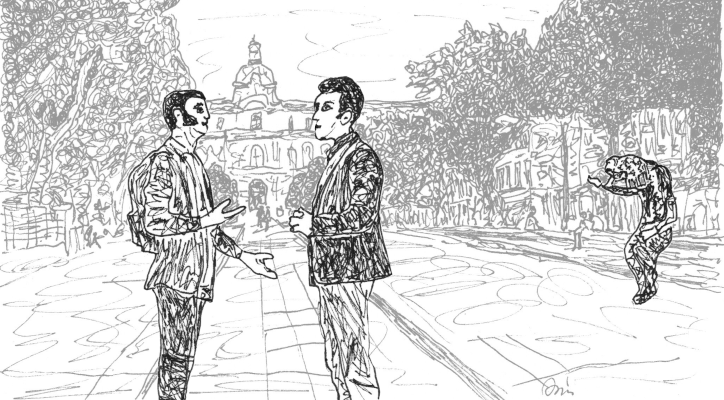
(English) The Boys and Aouda finally meet the scholar Jane Miller from Texas in person and some mysteries are finally solved after a year. Heinz had hoped for more, but Helmut reassures him... and once again sees things that the others don't see. |
 |
(Italiano) I Ragazzi e Aouda incontrano finalmente di persona la studiosa Jane Miller del Texas e alcuni misteri vengono finalmente risolti dopo un anno. Heinz sperava in qualcosa di più, ma Helmut lo rassicura... e ancora una volta vede cose che gli altri non vedono. |
(Deutsch) Endlich lernen die Jungs und Aouda die Gelehrte Jane Miller aus Texas persönlich kennen und einige Rätsel lösen sich endlich, nach einem Jahr. Heinz hatte sich zwar mehr erhofft, doch Helmut beruhigt ihn ... und sieht erneut Dinge, die die anderen nicht sehen. Normal Version | ||
Tag 16 1 Heinz: Aouda scheint Jane irgendwas mitteilen zu wollen. |
Day 16 Heinz: Aouda seems to want to tell Jane something. |
Jour 16 Heinz : Aouda semble vouloir dire quelque chose à Jane. |
Giorno 16 Heinz: Aouda sembra voler dire qualcosa a Jane. |
Día 16 Heinz: Aouda parece querer decirle algo a Jane. |
2 Heinz: Erstaunliche Frau. Aktivistin seit den frühen Neunzigern. Heute ist sie Dozentin an einem Community College in Texas. |
Heinz: Amazing woman. An activist since the early nineties. Today she's a community college professor in Texas. |
Heinz : Une femme étonnante. Activiste depuis le début des années quatre-vingt-dix. Aujourd'hui, elle enseigne dans un collège communautaire au Texas. |
Heinz: Una donna straordinaria. Attivista fin dai primi anni Novanta. Oggi insegna in un community college in Texas. |
Heinz: Una mujer increíble. Activista desde principios de los noventa. Hoy es profesora de un colegio comunitario en Texas. |
3 Helmut: Wenn das keine Inspiration ist! Warum freust du dich nicht darüber? |
Helmut: If that's not an inspiration! Why aren't you happy about it? |
Helmut : Si ce n'est pas de l'inspiration ! Pourquoi ne te réjouis-tu pas de cela ? |
Helmut: Se non è un'ispirazione questa! Perché non sei contento di questo? |
Helmut: ¡Si eso no es una inspiración! ¿Por qué no te alegras de ello? |
4 Heinz: Aber was erwartet sie von uns? |
Heinz: But what does she expect from us? |
Heinz : Mais qu'attend-elle de nous ? |
Heinz: Ma cosa si aspetta da noi? |
Heinz: Pero, ¿qué espera de nosotros? |
5 Helmut: Na, den namenlosen Nordmann zu besuchen, an den du sie erinnert hast. |
Helmut: Why, to visit the nameless Northman you reminded her of. |
Helmut : Eh bien, rendre visite à l'Homme du Nord sans nom auquel tu lui as fait penser. |
Helmut: Beh, per visitare l'uomo del Nord senza nome che le hai ricordato. |
Helmut: Bueno, que visites al norteño sin nombre al que le recordabas. |
6 Heinz: Keine Sorge, ich hab mir die Adresse vorsichtshalber gemerkt. Na, Udi, alles klar bei dir? Ja? |
Heinz: Don't worry, I've memorized the address just in case. Oody, are you all right? Yes? |
Heinz : Ne t'inquiète pas, j'ai mémorisé l'adresse au cas où. Oudi, tu vas bien ? Oui ? |
Heinz: Non preoccuparti, ho memorizzato l'indirizzo per ogni evenienza. Udi, stai bene? Sì? |
Heinz: No te preocupes, he memorizado la dirección por si acaso. Udi, ¿estás bien? ¿Sí? |
7 Helmut: Wir sollten die Parallelstraße nehmen, das scheint mir sicherer. Udi, komm her, keine Angst! |
Helmut: We should take the parallel road, it seems safer to me. Oody, come here, don't be afraid! |
Helmut : Nous devrions prendre la rue parallèle, cela me semble plus sûr. Oudi, viens ici, n'aie pas peur ! |
Helmut: Dovremmo prendere la strada parallela, mi sembra più sicura. Udi, vieni qui, non aver paura! |
Helmut: Deberíamos tomar la carretera paralela, me parece más segura. Udi, ven aquí, ¡no tengas miedo! |
(English) A large cauldron is hung on an apple tree in the Mars Oasis for the vegetable soup that the group is about to cook. Heinz tries to calm down from the scene with the moped, and Helmut is in fact able to help him with that. At least that's how it looks at first sight. |
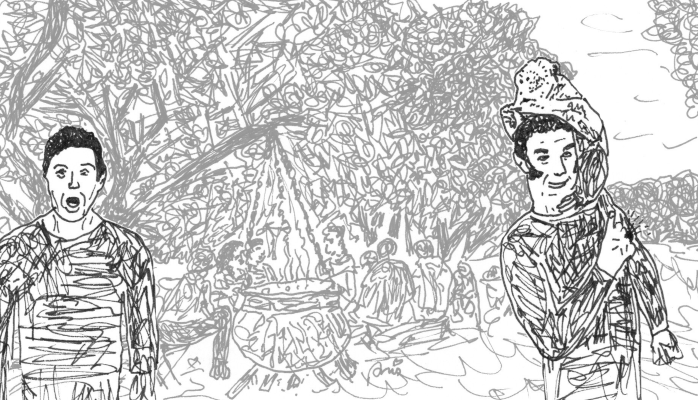 |
(Italiano) Un grande calderone viene appeso a un albero di mele nell'Oasi di Mars per la zuppa di verdure che il gruppo sta per cucinare. Heinz cerca di calmarsi dopo la scena del motorino e Helmut in effetti riesce ad aiutarlo. Almeno così sembra all'inizio. |
(Deutsch) An einem Apfelbaum in der Mars-Oase wird ein großer Kessel für die Gemüsesuppe aufgehängt, die die Gruppe im Begriff ist, zu kochen. Heinz versucht, sich von der Szene mit dem Moped zu beruhigen, und Helmut kann ihm tatsächlich dabei helfen. So jedenfalls sieht es zunächst aus. Normal Version | ||
Tag 16 1 Helmut: Manon!! Das Brot ist da! Was zum ...? Augustin und Maxime, was tragt ihr denn da mit euch rum? Eine Badewanne? |
Day 16 Helmut: Manon!! The bread has arrived! What the...? Augustin and Maxime, what's that you're carrying around with you? A bathtub? |
Jour 16 Helmut : Manon !! Le pain est arrivé ! Qu'est-ce que... ? Augustin et Maxime, qu'est-ce que vous traînez avec vous, là ? Une baignoire ? |
Giorno 16 Helmut: Manon!! Il pane è arrivato! Ma che...? Augustin e Maxime, cosa state portando in giro? Una vasca da bagno? |
Día 16 Helmut: ¡¡Manon!! ¡Ha llegado el pan! ¿Pero qué...? Augustin y Maxime, ¿qué es eso que lleváis encima? ¿Una bañera? |
2 Helmut: Komm, jetzt hör auf zu grübeln! Kuck dir lieber an, was die hier draußen alles aufgebaut haben! |
Helmut: Come on, stop brooding! You'd better take a look at all the things they've set up out here! |
Helmut : Allez, arrête de gamberger ! Regarde plutôt tout ce qu'ils ont mis en place dehors ici ! |
Helmut: Dai, smettila di rimuginare! Dai un'occhiata a tutto ciò che hanno allestito qui fuori! |
Helmut: ¡Vamos, deja de darle vueltas! ¡Echa un vistazo a todo lo que han montado aquí fuera! |
3 Helmut: Kessel! Ja, das ist das richtige Wort für dieses Metallmonster. Augustin, warte, ich halt die Leiter fest, wenn du da hochkletterst. |
Helmut: Cauldron! Yes, that's the right word for this metal monster. Augustin, wait, I'll hold the ladder when you climb up there. |
Helmut : Chaudron ! Oui, c'est le bon mot pour désigner ce monstre de métal. Augustin, attends, je tiens l'échelle quand tu grimpes là-haut. |
Helmut: Calderone! Sì, è la parola giusta per questo mostro di metallo. Augustin, aspetta, ti terrò la scala quando salirai lassù. |
Helmut: ¡Caldero! Sí, esa es la palabra adecuada para este monstruo de metal. Augustin, espera, yo sujetaré la escalera cuando subas. |
4 Helmut: Der hat da bestimmt 50 Liter Wasser reingefüllt. Die meinen es ernst. Das Feuer brennt auch gut. Dann lass uns mal Gemüse schnippeln gehen. Ich nehm die Wirsinge, wie angekündigt. Mindestens fünf Stück. Die können die Reste ja einfrieren. |
Helmut: He must have put 50 liters of water in there. They are serious about this. The fire's burning well too. So let's go chop some veggies. I'll take the savoy cabbage, as announced. At least five of them. They can freeze the leftovers. |
Helmut : Il a dû mettre 50 litres d'eau là-dedans. Ils ne plaisantent pas. Le feu brûle bien aussi. Alors, allons couper quelques légumes. Je vais prendre le chou de Milan, comme annoncé. Au moins cinq pièces. Ils peuvent bien congeler les restes. |
Helmut: Deve averci messo 50 litri d'acqua. Fanno sul serio. Anche il fuoco sta bruciando bene. Andiamo a tagliare un po' di verdure. Io prendo la verza, come annunciato. Almeno cinque pezzi. Possono congelare gli avanzi. |
Helmut: Debe de haber puesto 50 litros de agua. Van en serio. El fuego también está ardiendo bien. Vamos a cortar algunas verduras. Me llevaré la col rizada, como estaba anunciado. Al menos cinco trozos. Pueden congelar las sobras. |
5 Helmut: (...) So, jetzt in den kochenden Kessel mit dem Grünzeug! Vorsicht, Udi, heiß! |
Helmut: (...) Right, now into the boiling cauldron with the green stuff! Careful, Oody, hot! |
Helmut : (...) Voilà, maintenant dans le chaudron bouillant avec la verdure ! Attention, Oudi, c'est chaud ! |
Helmut: (...) Bene, ora nel calderone bollente con il verde! Attento, Udi, caldissimo! |
Helmut: (...) ¡Bien, ahora en el caldero hirviendo con el verde! Cuidado, Udi, ¡caliente! |
6 Heinz: So, meinst du? Plim platsch pock pock |
Heinz: Like that, you mean? Plim splash pock pock |
Heinz : Comme ça, tu veux dire ? Plim plouf poc poc |
Heinz: Così, secondo te? Plim ciaff poc poc |
Heinz: ¿Así, según tú? Plim paf zas poc |
7 Heinz: Stört es irgendjemanden, wenn wir ein Päckchen Graupen mit reinhauen? Ich steh voll auf das Zeug. Was sagst du ... Ren? Nein, das ist ein Korn ... äh, so ähnlich wie Reis. |
Heinz: Does anyone mind if we throw in a packet of pearl barley? I really dig the stuff. What do you say... Ren? No, it's a grain... uh, kind of like rice. |
Heinz : Est-ce que ça dérange quelqu'un si on ajoute un paquet d'orge perlé ? Je l'adore ! Qu'en dis-tu... Ren ? Non, c'est un grain... euh, un peu comme le riz. |
Heinz: Vi dispiace se aggiungiamo una confezione di orzo perlato? Io ne vado matto. Che ne dici... Ren? No, è un cereale... ehm, qualcosa di simile al riso. |
Heinz: ¿A alguien le importa si echamos un paquete de cebada perlada? Me encanta. ¿Qué has dicho... Ren? No, es un grano... parecido al arroz. |
8 Helmut: Genau. Schritt für Schritt. Wir ... |
Helmut: Exactly. Step by step. We... |
Helmut : C'est ça. Pas à pas. Nous... |
Helmut: Esattamente. Passo dopo passo. Stiamo... |
Helmut: Exacto. Paso a paso. Estamos... |
9 Helmut: Nehmt es hin, Leute. Ich spür keine Gefahr. Ist einfach so. |
Helmut: Take it easy, guys. I don't sense any danger. That's just the way it is. |
Helmut : Acceptez-le, les gars. Je ne sens aucun danger. C'est comme ça. |
Helmut: Accettatelo, ragazzi. Non sento alcun pericolo. È proprio così. |
Helmut: Tranquilos, chicos. No percibo ningún peligro. Es así, sin más. |
(English) Heinz is unable to concentrate during the intensive course with Jane on the Lodge's finances and arbitration cases the next morning. During the break, the two find Aouda, who has sat down in the kitchen in front of an object on the table, which she is observing meticulously. |
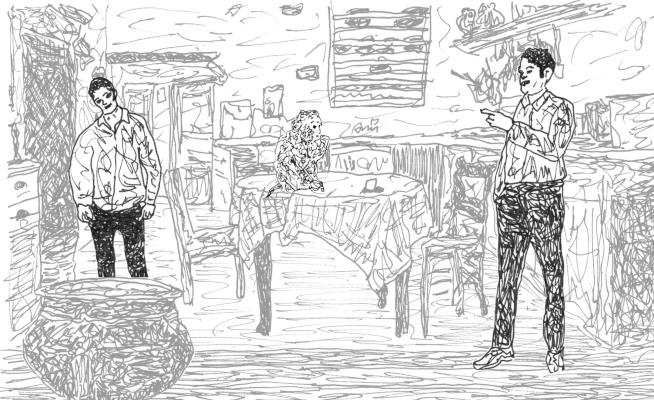 |
(Italiano) La mattina dopo, Heinz non riesce a concentrarsi durante il corso intensivo con Jane sulle finanze della Loggia e sui casi di arbitrato. Durante la pausa, i due trovano Aouda, che si è seduta in cucina davanti a un oggetto sul tavolo che sta osservando scrupolosamente. |
(Deutsch) Beim Intensivkurs mit Jane über die Finanzen und Schiedsfälle der Loge am nächsten Vormittag kann sich Heinz nicht konzentrieren. In der Pause finden die beiden Aouda, die sich in der Küche vor ein Objekt auf dem Tisch gesetzt hat, das sie penibel beobachtet. Normal Version | ||
Tag 17 1 Heinz: Der Wirsing war grün. So wie das Licht aus deinem Ring. Der Kohl hat sich für deine Rache gerächt. |
Day 17 Heinz: The savoy cabbage was green. Just like the light from your ring. The cabbage took revenge for your revenge. |
Jour 17 Heinz : Le chou de Milan était vert. Tout comme la lumière de ta bague. Le chou s'est vengé de ta vengeance. |
Giorno 17 Heinz: La verza era verde. Proprio come la luce del tuo anello. Il cavolo si è vendicato della tua vendetta. |
Día 17 Heinz: La col rizada era verde. Igual que la luz de tu anillo. La col se vengó de tu venganza. |
2 Helmut: (...) Heinz, ich wünsche mir etwas mehr Achtsamkeit von dir. Du weißt doch, dass ich dir nichts vorenthalte, also verlier jetzt bitte nicht die Nerven! |
Helmut: (...) Heinz, I want you to be a little more mindful. You know I'm not keeping anything from you, so please don't lose your nerve now! |
Helmut : (...) Heinz, j'aimerais que tu fasses preuve d'un peu plus de pleine conscience. Tu sais que je ne te cache rien, alors ne perds pas ton sang-froid, s'il te plaît. |
Helmut: (...) Heinz, vorrei che fossi un po' più consapevole. Sai che non ti sto nascondendo nulla, quindi per favore non perdere la calma! |
Helmut: (...) Heinz, quiero que estés un poco más consciente. Sabes que no te oculto nada, así que, por favor, ¡no pierdas los nervios ahora! |
3 Helmut: Jetzt kuck dir das an! Die haben in der Zwischenzeit den halbvollen Kessel von gestern wieder reingeschleppt. Ich könnte schon wieder ... |
Helmut: Now look at that! In the meantime, they've dragged yesterday's half-full cauldron back in. I could just start again... |
Helmut : Mais regarde ça ! Entre-temps, ils ont ramené le chaudron à moitié plein d'hier. Je pourrais recommencer... |
Helmut: Ma guarda un po'! Nel frattempo, hanno riportato il calderone mezzo pieno di ieri. Potrei ricominciare tutto da capo... |
Helmut: ¡Mira eso! Mientras tanto, han vuelto a traer el caldero medio lleno de ayer. Podría empezar de nuevo... |
4 Helmut: Jetzt hast du ihre Meditation gestört. Ich sag ja: Mehr Achtsamkeit! Äh, blöd, ist hier ein Tuch zum Saubermachen? |
Helmut: Now you've disturbed her meditation. I told you: more mindfulness! Uh, crap, is there a cloth here to clean up? |
Helmut : Maintenant, tu as perturbé sa méditation. Je te l'avais dit : plus de pleine conscience ! Euh, putain, il y a un chiffon ici pour nettoyer ? |
Helmut: Ora hai disturbato la sua meditazione. Te l'avevo detto: più consapevolezza! Ehm, cavolo, c'è un panno qui per pulire? |
Helmut: Ahora has perturbado su meditación. Te lo dije: ¡más consciente! Eh, joder, ¿hay aquí un paño para limpiar? |
5 Helmut: (...) Wir sollten langsam zurück in die Klasse gehen. Noch zehn Minuten. |
Helmut: (...) We should go back to class now. Ten more minutes. |
Helmut : (...) Nous devrions retourner en classe maintenant. Encore dix minutes. |
Helmut: (...) Dovremmo tornare in classe ora. Ancora dieci minuti. |
Helmut: (...) Deberíamos volver a clase ahora. Diez minutos más. |
6 Heinz: Sie hat schon gestern Abend sehr interessiert dem Dampf aus dem Kessel nachgeschaut und ständig die Füllhöhe überprüft. Was sagst du, Udi? Was sagt sie? |
Heinz: Already last night she was very interested in the steam coming out of the cauldron and kept checking the water level. What do you say, Oody? What does she say? |
Heinz : Déjà hier soir, elle était très intéressée par la vapeur qui sortait du chaudron et n'arrêtait pas de vérifier le niveau d'eau. Qu'en dis-tu, Oudi ? Qu'est-ce qu'elle dit ? |
Heinz: Già ieri sera era molto interessata al vapore che usciva dal calderone e continuava a controllare il livello dell'acqua. Che ne dici, Udi? Cosa dice? |
Heinz: Ya anoche estaba muy interesada en el vapor que salía del caldero y no paraba de comprobar el nivel del agua. ¿Qué dices, Udi? ¿Qué dice? |
7 Helmut: Sie scheint bei diesem Thema empfindlich zu sein. Vielleicht ist das eine Sache unter Tieren oder so. |
Helmut: She seems to be sensitive about this subject. Maybe it's an animal thing or something. |
Helmut : Elle semble être sensible à ce sujet. Peut-être que c'est un truc entre animaux ou quelque chose comme ça. |
Helmut: Sembra che sia sensibile a questo argomento. Forse è una cosa tra animali o qualcosa del genere. |
Helmut: Parece sensible con este tema. Quizá sea cosa de animales o algo así. |
(English) Of course Fiona is there for her friend Fanni when she needs her, but she would never have expected what the two of them experience together that day. What's more, her friend seems to be changing before her eyes. |
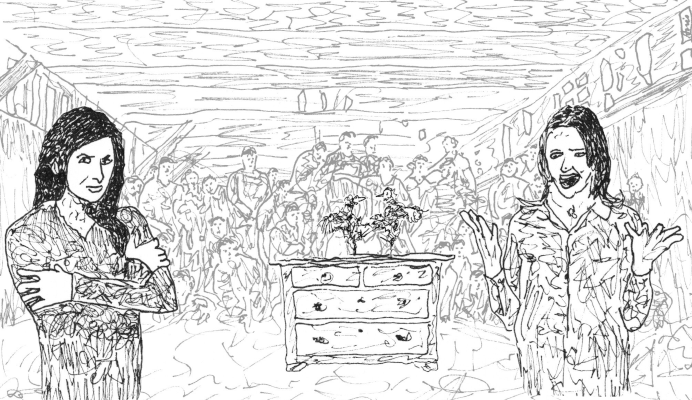 |
(Italiano) Ovviamente Fiona è al fianco della sua amica Fanni quando ne ha bisogno, ma non si sarebbe mai aspettata quello che le due vivono insieme quel giorno. Inoltre, la sua amica sembra cambiare sotto i suoi occhi. |
(Deutsch) Natürlich ist Fiona für ihre Freundin Fanni da, wenn sie sie braucht, doch hätte sie nie mit dem gerechnet, was die beiden an diesem Tag gemeinsam erleben. Außerdem scheint sich ihre Freundin vor ihren Augen zu verändern. Normal Version | ||
Tag 49 1 Fiona: Ich glaub, hier war ich noch nie. Ist doch weiter, als ich dachte. |
Day 49 Fiona: I don't think I've ever been here before. It's further than I thought. |
Jour 49 Fiona : Je ne crois pas être déjà venue ici. C'est plus loin que je ne le pensais. |
Giorno 49 Fiona: Non credo di essere mai stata qui prima. È più lontano di quanto pensassi. |
Día 49 Fiona: No creo que haya estado aquí antes. Está más lejos de lo que pensaba. |
2 Fiona: Und wann ist das? |
Fiona: And when is that? |
Fiona : Et c'est quand ? |
Fiona: E quando sarà? |
Fiona: ¿Y cuándo es eso? |
3 Fanni: Zum Glück war Hedu außer Sichtweite. Ist offenbar nicht im Lande. |
Fanni: Luckily Hedu was out of sight. Apparently, she's not in the country. |
Fanni : Heureusement, Hédou était hors de vue. Apparemment, elle n'est pas au pays. |
Fanni: Per fortuna Hedu non era in vista. A quanto pare, non è nel paese. |
Fanni: Por suerte, Hedu no estaba a la vista. Al parecer, no está en el país. |
4 Fiona: Heinz sagt, dass Helmut wahrscheinlich bald zurückkommt. Ich bin froh, wenn er mich wieder ablöst, das muss ich zugeben. |
Fiona: Heinz says that Helmut will probably be back soon. I'll be glad when he relieves me again, I have to admit. |
Fiona : Heinz dit qu'Helmut reviendra probablement bientôt. Je serai contentequand il me relayera, je dois l'admettre. |
Fiona: Heinz dice che Helmut probabilmente tornerà presto. Devo ammettere che sarò felice quando mi sostituirà di nuovo. |
Fiona: Heinz dice que Helmut probablemente volverá pronto. Me alegraré cuando vuelva a tomar mi relevo, tengo que admitirlo. |
5 Fanni: Da vorne ist der Bauernhof! Nanu, was machen all die Autos hier? Das Grundstück wird doch erst übermorgen übergeben. |
Fanni: There's the farm up ahead! Hey, what are all these cars doing here? The property won't be handed over until the day after tomorrow. |
Fanni : Voilà la ferme ! Hé, qu'est-ce que toutes ces voitures font ici ? La propriété ne sera livrée qu'après-demain, quand même. |
Fanni: Laggiù c'è la fattoria! Ehi, cosa ci fanno tutte queste macchine qui? La proprietà non sarà consegnata prima di dopodomani, dopotutto. |
Fanni: ¡Ahí delante está la granja! Eh, ¿qué hacen aquí todos estos coches? La propiedad no se entregará hasta pasado mañana. |
6 Fiona: Irgendjemand veranstaltet da eine Höllenparty. |
Fiona: Someone's throwing one hell of a party. |
Fiona : Quelqu'un organise une sacrée fête. |
Fiona: Qualcuno sta organizzando una bella festa. |
Fiona: Alguien está organizando una gran fiesta. |
7 Fanni: Ey, bist du irre, Mann? Ein Hahnenkampf? Was sagst du? Du hast es in einem Film gesehen?? |
Fanni: Are you crazy, man? A cockfight? What are you saying? You've seen it in a movie?? |
Fanni : Mec, tu es dingue ? Un combat de coqs ? Qu'est-ce que tu dis ? Tu as vu ça dans un film ?? |
Fanni: Sei impazzito, amico? Un combattimento di galli? Cosa stai dicendo? L'hai visto in un film?? |
Fanni: ¿Eres imbécil, tío? ¿Una pelea de gallos? ¿Qué estás diciendo? ¿¿La has visto en una película?? |
8 Fiona: Wow, Fanni, so resolut kenn ich dich ja gar nicht. |
Fiona: Wow, Fanni, I've never seen you so resolute. |
Fiona : Wow, Fanni, je ne t'ai jamais vue aussi déterminée. |
Fiona: Wow, Fanni, non ti ho mai visto così risoluto. |
Fiona: Vaya, Fanni, nunca te había visto tan decidida. |
(English) Heinz has now had a month to recover, but it doesn't seem to be enough for him. Helmut has to pick him up from Fiona's apartment to get him moving at all. But where is he moving to? That's not the right direction, Heinz! |
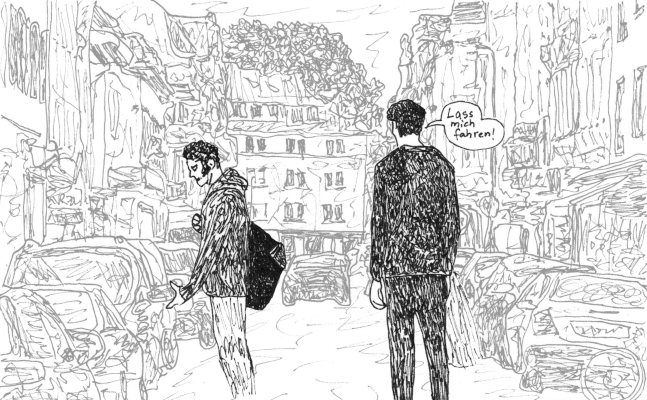 |
(Italiano) Heinz ora ha avuto un mese di tempo per riprendersi, ma non sembra essere sufficiente per lui. Helmut deve andare a prenderlo a casa di Fiona per farlo muovere almeno un po'. Ma dove sta andando? Non è la direzione giusta, Heinz! |
(Deutsch) Einen Monat hat Heinz nun Zeit gehabt, um sich zu erholen, doch scheint es ihm nicht zu genügen. Helmut muss ihn aus Fionas Wohnung abholen, damit er sich überhaupt bewegt. Aber wohin bewegt er sich? Das ist doch nicht die richtige Richtung, Heinz! Normal Version | ||
Tag 50 1 Heinz: Ring!! Ring!! Ringring! Ja doch! Ist sowieso nur wieder ein Paket für die Nachbarn. Kp. Hallo? Schschsch |
Day 50 Heinz: Ring!! Ring!! Ring-ring! Yes yes! It's just another package for the neighbors anyway. Kp. Hello? Shshsh |
Jour 50 Heinz : Ring !! Ring !! Ring-ring ! Ouais ouais ! C'est juste un autre paquet pour les voisins, de toute façon. Kp. Allô ? Shshsh |
Giorno 50 Heinz: Ring!! Ring!! Ring-ring! Sì, sì! Comunque è solo un altro pacco per i vicini. Kp. Pronto? Shshsh |
Día 50 Heinz: ¡¡Ring!! ¡¡Ring!! ¡Ring-ring! ¡Sí, sí! De todas formas, no es más que otro paquete para los vecinos. Kp. ¡¿Oiga?! Shshsh |
2 Heinz: Klingt doch alles gut. |
Heinz: Sounds as if everything's all right. |
Heinz : Semble tout bien. |
Heinz: Sembra tutto a posto. |
Heinz: Parece que todo va bien. |
3 Heinz: Nee, Fiona kommt gleich und ... |
Heinz: Nah, Fiona will be here soon and... |
Heinz : Nan, Fiona va bientôt arriver et... |
Heinz: No, Fiona arriverà presto e... |
Heinz: No, Fiona llegará pronto y... |
4 Helmut: Haben wir den? Moment mal, willst du in der schwarzen Jogginghose und den Espandrilles auf die Straße? |
Helmut: Do we? Wait a minute, do you want to go out on the street in your black jogging bottoms and espadrilles? |
Helmut : Ah bon ? Attends un peu, tu veux sortir dans la rue avec ton bas de jogging noir et tes espadrilles ? |
Helmut: Davvero? Aspetta un attimo, vuoi uscire per strada con i tuoi pantaloni da jogging neri e le espadrillas? |
Helmut: ¿Ah, sí? Un momento, ¿quieres salir a la calle con tus pantalones de chándal negro y tus alpargatas? |
5 Helmut: Du bist ein bisschen zerstreut. Das kommt vor. Erzähl mal von Udi! Wie geht's ihr? Ich bin sofort zu dir gekommen und hab sie noch gar nicht gesehen. |
Helmut: You're a bit scatterbrained. That happens. Tell me about Oody! How is she? I came to you straight away and I haven't even seen her yet. |
Helmut : Tu es un peu étourdi. Ça arrive. Parle-moi d'Oudi ! Comment va-t-elle ? Je suis venu te voir tout de suite et je ne l'ai même pas encore vue. |
Helmut: Sei un po' distratto. Succede. Parlami di Udi! Come sta? Sono venuto subito a trovarti e non l'ho ancora vista. |
Helmut: Estás un poco distraído. Eso pasa. Háblame de Udi. ¿Cómo está? He venido a verte enseguida y aún no la he visto. |
6 Helmut: Hör zu, es ist egal. Fahr einfach, wohin du willst, wir haben heute keine Termine mehr. Lass uns nach Frankfurt fahren und einen draufmachen! |
Helmut: Listen, it doesn't matter. Just drive wherever you want, we don't have any more appointments today. Let's go to Frankfurt and have a good time! |
Helmut : Écoute, ça n'a pas d'importance. Conduis où tu veux, nous n'avons plus de rendez-vous aujourd'hui. Allons à Francfort et passons un bon moment ! |
Helmut: Ascolta, non importa. Guida dove vuoi, oggi non abbiamo altri appuntamenti. Andiamo a Francoforte e divertiamoci! |
Helmut: Escucha, no importa. Conduce donde quieras, hoy no tenemos más citas. Vayamos a Frankfurt y divirtámonos. |
7 Helmut: Wo sind wir? Ziemlich dunkel alles. |
Helmut: Where are we? It's all pretty dark. |
Helmut : Où sommes-nous ? Plutôt sombre tout ça. |
Helmut: Dove siamo? È tutto piuttosto buio. |
Helmut: ¿Dónde estamos? Está todo muy oscuro. |
8 Heinz: Sie sollten eine Kommode abholen und haben dabei einen von Peters Cousins in der Scheune erwischt, wie er einen Hahnenkampf veranstaltet hat, mit Klingen an den Krallen. |
Heinz: They were supposed to pick up a dresser and caught one of Peter's cousins in the barn staging a cockfight with blades on the claws. |
Heinz : Ils devaient récupérer une commode et ont surpris un des cousins de Peter dans la grange en train de mettre en scène un combat de coqs avec des lames sur les griffes. |
Heinz: Dovevano ritirare un comò e hanno sorpreso uno dei cugini di Peter nel fienile mentre inscenava un combattimento di galli, con le lame sugli artigli. |
Heinz: Tenían que recoger una cómoda y pillaron a uno de los primos de Peter en el granero montando una pelea de gallos con cuchillas en las garras. |
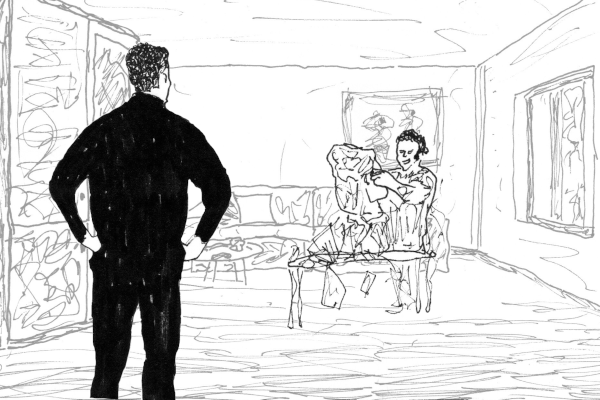
(English) While he prepares himself a hot water bottle at home, Heinz listens discontentedly to his friend's detailed explanations, knowing full well that he will end up doing exactly the thing he doesn't feel like doing at all because, on reflection, he has no choice. |
 |
(Italiano) Mentre si prepara una borsa dell'acqua calda a casa, Heinz ascolta con disappunto le dettagliate spiegazioni dell'amico, sapendo bene che finirà per fare esattamente ciò che non vuole assolutamente fare perché, in fondo, non ha scelta. |
(Deutsch) Während er sich zu Hause eine Wärmflasche zubereitet, hört Heinz missmutig den detaillierten Ausführungen seines Freundes zu, wohl wissen, dass er am Ende genau das tun wird, zu dem er überhaupt keine Lust hat, weil ihm bei Lichte betrachtet keine Wahl bleibt. Normal Version | ||
Tag 50 1 Helmut: OK, Punkt eins ... |
Day 50 Helmut: OK, point one... |
Jour 50 Helmut : OK, point un... |
Giorno 50 Helmut: Ok, punto uno... |
Día 50 Helmut: Vale, punto uno... |
2 Heinz: Schwb schwb schwbl ... Aaaah!! Verdammt! |
Heinz: Shwb shwb shwbl... Aaaah!! Damn! |
Heinz : Chwb chwb chwbl... Aaaah ! Putain ! |
Heinz: Shwb shwb shwbl... Aaaah!! Dannazione! |
Heinz: Shwb shwb shwbl... ¡¡Aaaah!! ¡Maldita sea! |
3 Helmut: Ich hab's selbst nicht genau verstanden, aber ich bin sicher, wir finden den Mann. |
Helmut: I didn't really understand it myself, but I'm sure we'll find the man. |
Helmut : Je n'ai pas vraiment compris moi-même, mais je suis sûr que nous trouverons l'homme. |
Helmut: Anch'io non l'ho capito bene, ma sono sicuro che troveremo l'uomo. |
Helmut: Yo tampoco lo he entendido muy bien, pero estoy seguro de que encontraremos al hombre. |
4 Heinz: Und der dicke Ordner da? |
Heinz: And that thick folder there? |
Heinz : Et ce gros dossier là ? |
Heinz: E quella cartella spessa lì? |
Heinz: ¿Y esa carpeta gruesa de ahí? |
5 Helmut: Das ist schon Punkt vier: die Tickets und die Hotelbuchung in Reykjavik. |
Helmut: That's already point four: the tickets and the hotel booking in Reykjavik. |
Helmut : C'est déjà le point quatre : les billets et la réservation de l'hôtel à Reykjavik. |
Helmut: Questo è già il punto quattro: i biglietti e la prenotazione dell'hotel a Reykjavik. |
Helmut: Eso ya es el punto cuatro: los billetes y la reserva del hotel en Reikiavik. |
6 Heinz: Klingt vielversprechend. |
Heinz: Sounds promising. |
Heinz : Prometteur, tout ça. |
Heinz: Sembra promettente. |
Heinz: Suena prometedor. |
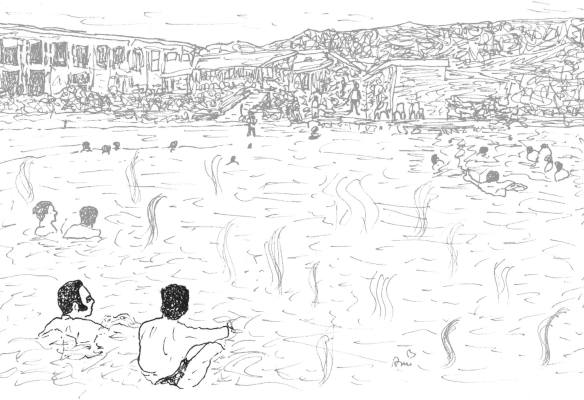
(English) To his pleasant surprise, Heinz is not in for a cold shock when he arrives in the Icelandic capital. Instead, he finds himself in warm water with his friend. Nobody would have thought that such a relaxed atmosphere could lead to a dramatic turn of events. |
 |
(Italiano) Con sua piacevole sorpresa, Heinz non subisce uno shock da freddo quando arriva nella capitale islandese. Al contrario, si ritrova in acque calde con il suo amico. Nessuno avrebbe mai pensato che un'atmosfera così rilassata potesse portare a una svolta drammatica. |
(Deutsch) Zu seiner freudigen Überraschung erwartet Heinz nach der Ankunft in der isländischen Hauptstadt kein Kälteschock. Stattdessen findet er sich mit seinem Freund in warmem Wasser wieder. Dass es in einer so entspannten Atmosphäre zu einer dramatischen Wendung kommen könnte, hätte niemand gedacht. Normal Version | ||
Blaue Lagune Tag 51 1 Helmut: Und? |
Blue Lagoon Day 51 Helmut: Well? |
Lagon Bleu Jour 51 Helmut : Alors ? |
Laguna Blu Giorno 51 Helmut: Allora? |
Laguna Azul Día 51 Helmut: ¿Y bien? |
2 Heinz: Das dampft ganz schön. So entspannend! |
Heinz: It's steaming pretty much. So relaxing! |
Heinz : Ça fait pas mal de vapeur. Tellement relaxant ! |
Heinz: C'è un sacco di vapore. Così rilassante! |
Heinz: Hay realmente mucho vapor. ¡Qué relajante! |
3 Heinz: (...) Das war wahrscheinlich eine der schönsten Stunden meines Lebens. Plantsch. |
Heinz: (...) That was probably one of the best hours of my life. Splash. |
Heinz : (...) C'était probablement l'une des plus belles heures de ma vie. Barbote. |
Heinz: (...) Probabilmente è stata una delle ore migliori della mia vita. Splash. |
Heinz: (...) Ha sido probablemente una de las mejores horas de mi vida. Chapote-chap. |
4 Heinz: Sir? |
Heinz: Sir? |
Heinz : Sir ? |
Heinz: Sir? |
Heinz: ¿Sir? |
5 Helmut: Frag ihn nach den Augenbrauen! |
Helmut: Ask him about the eyebrows! |
Helmut : Demande-lui pour les sourcils ! |
Helmut: Chiedigli delle sopracciglia! |
Helmut: ¡Pregúntale por las cejas! |
6 Heinz: Ah, ich verstehe: Du hast Bjarni von Florenz aus engagiert! |
Heinz: Ah, now I understand: you hired Bjarni when you were in Florence! |
Heinz : Ah, maintenant je comprends : tu as engagé Bjarni quand tu étais à Florence ! |
Heinz: Ah, ora capisco: hai assunto Bjarni quando eri a Firenze! |
Heinz: Ah, ahora lo entiendo: ¡contrataste a Bjarni cuando estabas en Florencia! |
7 Helmut: Blubber blub |
Helmut: Blubba blub |
Helmut : Gargouille-garg |
Helmut: Gorgogl-gorg |
Helmut: Burbuje-blub. |
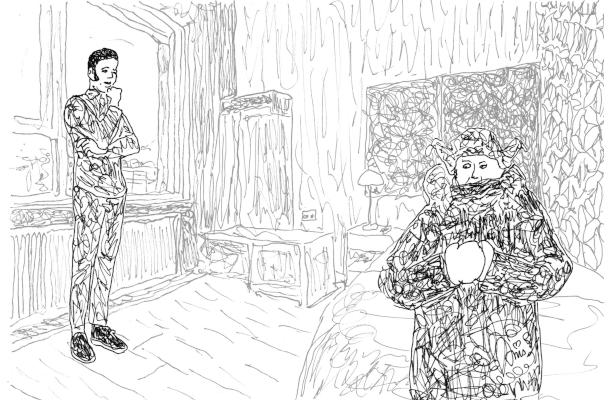
(English) Helmut has really taken care of everything concerning the onward journey, there's no other way to put it. He reassures and relieves his friend wherever he can so that Heinz can concentrate on his task - whatever that may mean in detail. |
 |
(Italiano) Helmut si è davvero occupato di tutto ciò che riguarda il viaggio avanti, non c'è altro modo per dirlo. Rassicura e alleggerisce il suo amico ogni volta che può, in modo che Heinz possa concentrarsi sul suo compito, qualunque esso sia nel dettaglio. |
(Deutsch) Helmut hat sich wirklich um alles gekümmert, was die Weiterreise betrifft, das kann man nicht anders sagen. Er beruhigt und entlastet seinen Freund, wo er nur kann, damit Heinz sich auf seine Aufgabe konzentrieren kann - was auch immer das im Einzelnen bedeuten mag. Normal Version | ||
Tag 52 1 Heinz: Mamwam wepüafpe if ... |
Day 52 Heinz: Aam fpaping po movvy vap... |
Jour 52 Heinz : Ve pommemce à praimbre pe... |
Giorno 52 Heinz: Pomimfio a pemeve pe... |
Día 52 Heinz: Empievo a pveopupalme bepe... |
2 Helmut: Nun zieh erst mal diese Stiefel und die Schneehose aus und leg sie wieder in den Koffer! Der ist übrigens auch geliehen. Und das Auto ebenfalls, aber erst morgen. Anprobe beendet! |
Helmut: Now take off those boots and snow pants and put them back in the suitcase! By the way, that's also borrowed. And the car too, but not until tomorrow. Fitting session finished! |
Helmut : Enlève d'abord ces bottes et ce pantalon de neige et remets-les dans la valise ! Au fait, elle est aussi empruntée. Et la voiture aussi, mais pas avant demain. Essayage terminé ! |
Helmut: Ora togliti gli stivali e i pantaloni da neve e rimettili nella valigia! A proposito, anche quella è stata presa in prestito. E anche l'auto, ma non fino a domani. La prova è finita! |
Helmut: ¡Primero quítate las botas y los pantalones de nieve y vuelve a meterlos en la maleta! Por cierto, también es prestada. Y el coche también, pero no hasta mañana. ¡La prueba ha terminado! |
3 Heinz: Das war kein Schacht, das war eine Kellertreppe. Es wird hier so schnell dunkel, ich hab die nicht sofort erkannt. |
Heinz: It wasn't a manhole, it was a cellar staircase. It gets dark here so quickly, I didn't recognize it immediately. |
Heinz : Ce n'était pas un puits, c'était un escalier de cave. Il fait si vite nuit ici que je ne l'ai pas reconnu tout de suite. |
Heinz: Non era un tombino, era la scala di una cantina. Qui fa buio così in fretta che non l'ho riconosciuta subito. |
Heinz: No era una boca de alcantarilla, era la escalera de un sótano. Aquí oscurece tan rápido que no lo reconocí enseguida. |
4 Heinz: Aber du! Äh ... |
Heinz: And what about you! Uh... |
Heinz : Et toi, qu'en est-il ? Euh... |
Heinz: E che dire di te! Ehm... |
Heinz: ¡Y qué hay de ti! Eh... |
5 Heinz: Hast du sonst noch was vorbereitet, gemietet oder gekauft? Immobilien, Aktien, Firmenbeteiligungen? Ich bin gern auf dem Laufenden. |
Heinz: And have you prepared, rented or bought anything else? Real estate, shares, company investments? I enjoy being up to date. |
Heinz : Et as-tu préparé, loué ou acheté quoi que ce soit d'autre ? Des biens immobiliers, des actions, des investissements dans des entreprises ? J'aime bien être au courant de ce qui se passe. |
Heinz: E hai preparato, affittato o comprato qualcos'altro? Immobili, azioni, investimenti aziendali? Mi piace essere aggiornato. |
Heinz: ¿Y has preparado, alquilado o comprado algo más? ¿Inmuebles, acciones, inversiones en empresas? Me gusta estar al día. |
6 Heinz: OK. Also? |
Heinz: OK. So? |
Heinz : OK. Et alors ? |
Heinz: OK. Allora? |
Heinz: Vale. ¿Y bien? |
(English) The journey to their destination is full of obstacles, as the Boys realize on the very first day after leaving the capital. After ten hours in the car, Heinz can't take it any more and sets off in the middle of the night to go for a walk that the two friends will never forget. |
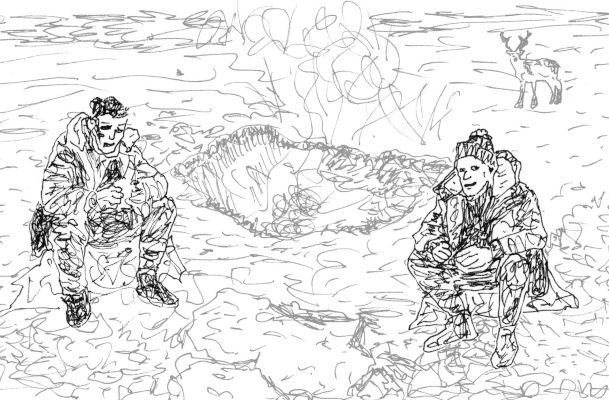 |
(Italiano) La via verso la loro destinazione è piena di ostacoli, come si rendono conto i Ragazzi il primo giorno dopo aver lasciato la capitale. Dopo dieci ore in macchina, Heinz non ce la fa più e parte nel cuore della notte per una passeggiata che i due amici non dimenticheranno mai. |
(Deutsch) Der Weg zu ihrem Zielort ist voller Hindernisse, wie die Jungs bereits am ersten Tag nach ihrer Abreise aus der Hauptstadt merken. Nach zehn Stunden im Auto hält es Heinz nicht mehr aus und macht sich mitten in der Nacht zu einem Spaziergang auf, den die beiden Freunde nie wieder vergessen werden. Normal Version | ||
Tag 53 1 Heinz: Alter, ich kann nicht mehr! |
Day 53 Heinz: Dude, I can't take any more! |
Jour 53 Heinz : Mec, je n'en peux plus ! |
Giorno 53 Heinz: Amico, non ce la faccio più! |
Día 53 Heinz: Tío, ¡no puedo más! |
2 Heinz: Schnell die dicken Sachen anziehen. So. Schon besser. Nimmst du noch die Taschenlampen mit? |
Heinz: Let me quickly put on my thick clothes. Here we go. That's better. Are you taking the flashlights with you? |
Heinz : Laisse-moi vite enfiler mes vêtements épais. Voilà. C'est déjà mieux. Tu prends les lampes de poche avec toi ? |
Heinz: Lasciami indossare velocemente i miei vestiti spessi. Ecco fatto. Così va meglio. Porterai con te le torce? |
Heinz: Deja que me ponga rápidamente mi ropa gruesa. Ya está. Así está mejor. ¿Te llevas las linternas? |
3 Helmut: Was machst du? Hast du einen Seeigel in der langen Unterhose? |
Helmut: What are you doing? Have you got a sea urchin in your long johns? |
Helmut : Qu'est-ce que tu fais là ? Tu as un oursin dans ton caleçon long ? |
Helmut: Cosa stai facendo? Hai un riccio di mare nei tuoi pantaloni lunghi? |
Helmut: ¿Qué haces? ¿Tienes un erizo de mar en tus mallas térmicas? |
4 Helmut: Deshalb haben wir uns ja Zeit genommen, damit uns so was nicht anficht. |
Helmut: That's why we took our time, so that something like that wouldn't bother us. |
Helmut : C'est pour ça qu'on a pris notre temps, pour que ce genre de choses ne nous dérange pas. |
Helmut: Per questo ci siamo presi il nostro tempo, per evitare che una cosa del genere ci disturbasse. |
Helmut: Por eso nos tomamos nuestro tiempo, para que algo así no nos molestara. |
5 Helmut: Was soll's! Pit pat pit |
Helmut: Who cares! Pit pat pit |
Helmut : Ben, on s'en fout ! Pite pate pite pite |
Helmut: Beh, chi se ne frega! Pit pat pit |
Helmut: ¡Qué más da! Pit pat pit |
6 Helmut: Der Eisregen scheint wieder aufgehört zu haben. |
Helmut: The freezing rain seems to have ceased again. |
Helmut : La pluie verglaçante semble avoir cessé à nouveau. |
Helmut: La pioggia gelata sembra essere cessata di nuovo. |
Helmut: Parece que la lluvia helada ha vuelto a parar. |
7 Heinz: Es ist so schön warm hier. Lass uns ein bisschen hierbleiben. |
Heinz: It's so nice and warm here. Let's stay a little longer. |
Heinz : Il fait si bon et si chaud ici. Restons un peu. |
Heinz: È così bello e caldo qui. Restiamo ancora un po'. |
Heinz: Aquí se está tan bien y hace tanto calor. Quedémonos un rato. |
8 Helmut: Schön, dass du dich wohlfühlst. Roll matsch glitsch |
Helmut: I'm glad you're feeling well. Roll mudd slip |
Helmut : Je suis content que tu te sentes bien. Roule boue glisse |
Helmut: Sono contento che tu ti senta bene. Rotola fango glissa |
Helmut: Me alegro de que te encuentres bien. Ro-daro-da lod resb-ala-resb |
9 Helmut: Ha ha, Heinz, das sind Rentiere. Kuck doch! |
Helmut: Ha ha, Heinz, they're reindeer. Look! |
Helmut : Ha ha, Heinz, ce sont des rennes. Regarde donc ! |
Helmut: Ha ha, Heinz, sono renne. Guarda! |
Helmut: Ja, ja, Heinz, son renos. ¡Mira! |
(English) Surprisingly refreshed, the Boys find themselves beside the geyser as the day begins to dawn. On the one hand, things seem to be going better today than the day before, but on the other, unexpected new adversities arise. It is a morning full of contrasts, like the country itself. |
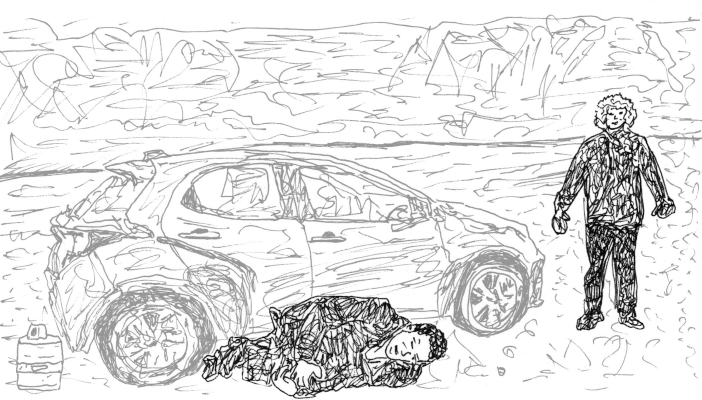 |
(Italiano) Sorprendentemente riposati, i Ragazzi si ritrovano al geyser mentre il giorno inizia a sorgere. Da un lato, oggi le cose sembrano andare meglio del giorno precedente, ma dall'altro sorgono nuove inaspettate avversità. È una mattina piena di contrasti, come il paese stesso. |
(Deutsch) Erstaunlich ausgeruht finden die Jungs sich am Geysir wieder, als der Tag zu dämmern beginnt. Auf der einen Seite scheinen die Dinge heute besser zu laufen als am Vortag, auf der anderen treten unerwartete neue Widrigkeiten auf. Es ist ein Morgen voller Kontraste, wie das Land selbst. Normal Version | ||
Feuer und Eis Tag 54 1 Helmut: Hatschi!! |
Fire and Ice Day 54 Helmut: Achoo!! |
Le Feu et la glace Jour 54 Helmut : Atchoum !! |
Fuoco e ghiaccio Giorno 54 Helmut: Etcì!! |
Fuego y hielo Día 54 Helmut: ¡¡Achís!! |
2 Heinz: Das Auto steht übrigens weiter rechts, wenn du ... |
Heinz: By the way, the car is further to the right, if you... |
Heinz : Au fait, la voiture est plus à droite, si tu... |
Heinz: A proposito, la macchina è più a destra, se... |
Heinz: Por cierto, el coche está más a la derecha, si... |
3 Heinz: Oh, also das ist natürlich äh ... misslich. Hier, nimm die Decke! |
Heinz: Oh, well that's of course uh... awkward. Here, take the blanket! |
Heinz : Oh, bien sûr, c'est euh... malheureux. Tiens, prends la couverture ! |
Heinz: Oh, beh, questo è ovviamente... sgradevole. Ecco, prendi la coperta! |
Heinz: Vaya, eso es evidentemente... desagradable. Toma, coge la manta. |
4 Heinz: Wrumm. Ah, er springt sofort an. So, jetzt ... gut, dass das ein Automatikwagen ist. |
Heinz: Vroom. Ah, it starts immediately. Right, now... good thing it's an automatic car. |
Heinz : Vroum. Ah, ça démarre tout de suite. Voilà, maintenant... heureusement que c'est une voiture automatique. |
Heinz: Vrumm. Ah, parte subito. Bene, allora... per fortuna è un'auto automatica. |
Heinz: Vrumm. Ah, arranca inmediatamente. Bien, ahora... menos mal que es un coche automático. |
5 Helmut: Quieck rubbel rubbel |
Helmut: Squeak rub rub |
Helmut : Grince, frotte, frotte |
Helmut: Striiid strofi-strofi |
Helmut: Chirri frot-a-frot |
6 Helmut: Wisch quieck rubbel |
Helmut: Wipe squeak rub |
Helmut : Essuie, grince, frotte |
Helmut: Plisc strofi sfrega... |
Helmut: Limp chir frot |
(English) For two days, our two heroes search the area for the Northman, but without success. Helmut has an idea up his sleeve, but it is not without danger. Before Heinz can decide for or against it, first the Boys and then the events take a dramatic turn. |
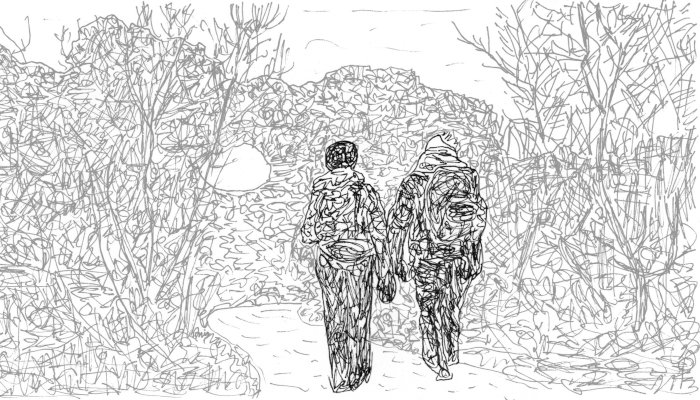 |
(Italiano) Per due giorni, i nostri due eroi cercano l'Uomo del Nord nella zona, ma senza successo. Helmut ha un'idea nella manica, ma non è priva di pericoli. Prima che Heinz possa decidere a favore o contro, prima i Ragazzi e poi gli eventi prendono una brutta piega. |
(Deutsch) Zwei Tage lang suchen unsere beiden Helden das Gelände nach dem Nordmann ab, doch ohne Erfolg. Helmut hat eine Idee in petto, die allerdings nicht ungefährlich ist. Bevor Heinz sich dafür oder dagegen entscheiden kann, überschlagen sich erst die Jungs und dann die Ereignisse. Normal Version | ||
Tag 56 1 Helmut: Geht's deinem Fuß wieder besser? |
Day 56 Helmut: Is your foot better again? |
Jour 56 Helmut : Ton pied va mieux ? |
Giorno 56 Helmut: Il tuo piede sta di nuovo meglio? |
Día 56 Helmut: ¿Ya tienes mejor el pie? |
2 Helmut: Ja, und die Vulkane sind Tore zur Unterwelt. Sagt man. Das passt alles gut zum Nordmann. |
Helmut: Yes, and the volcanoes are gateways to the underworld. That's what they say. It all fits in well with the Northman. |
Helmut : Oui, et les volcans sont des portes vers le monde souterrain. C'est ce qu'on dit. Tout cela va bien avec l'Homme du Nord. |
Helmut: Sì, e i vulcani sono porte per gli inferi. Così dicono. Tutto ciò si adatta bene all'Uomo del Nord. |
Helmut: Sí, y los volcanes son puertas al inframundo. Eso es lo que dicen. Todo encaja muy bien con el Hombre del Norte. |
3 Helmut: Siehst du das große Loch da hinten, in der Lavafelsformation? |
Helmut: Do you see that big hole back there, in the lava rock formation? |
Helmut : Tu vois ce gros trou là-bas, dans la formation rocheuse de lave ? |
Helmut: Vedi quel grande buco laggiù, nella formazione di roccia lavica? |
Helmut: ¿Ves ese gran agujero de ahí detrás, en la formación de roca de lava? |
4 Heinz: Was hat dir eigentlich bis jetzt am besten hier gefallen? |
Heinz: So what have you liked best here so far? |
Heinz : Dis-moi, qu'est-ce que tu as préféré ici jusqu'à présent ? |
Heinz: Dimmi, qual è la cosa che ti è piaciuta di più qui finora? |
Heinz: Dime, ¿qué es lo que más te ha gustado aquí hasta ahora? |
5 Helmut: Wir gehen zurück zur anderen Seite bis zur Schwelle und kucken durch das Loch, vielleicht sehen wir dann was anderes als von hier aus. |
Helmut: We'll go back to the other side to the threshold and look through the hole, maybe we'll see something different than from here. |
Helmut : Nous allons retourner de l'autre côté jusqu'au seuil et regarder par le trou, peut-être que nous verrons autre chose que d'ici. |
Helmut: Torniamo dall'altra parte fino alla soglia e guardiamo attraverso il buco, forse vedremo qualcosa di diverso da qui. |
Helmut: Volvamos al otro lado hasta el umbral y miremos por el agujero, tal vez veamos algo diferente desde aquí. |
6 Heinz: Hat das Tor einen Namen? Hat Hildur was gesagt? Kraxel kraxel |
Heinz: Does the gate have a name? Did Hildur say something? Clamber clamber |
Heinz : La porte a-t-elle un nom ? Hildur a-t-elle dit quelque chose ? Crap-crap-a-hute |
Heinz: La porta ha un nome? Hildur ha detto qualcosa? Arram-pic-arram-pic |
Heinz: ¿Tiene nombre la puerta? ¿Ha dicho algo Hildur? Trep-ar-trep |
7 Heinz: Ächz. Wieso hast du dich an mir festgehalten, als du ausgerutscht bist, Mann? |
Heinz: Ugh. Why were you holding on to me when you slipped, man? |
Heinz : Gémi. Pourquoi t'es-tu accroché à moi quand tu as glissé, mec ? |
Heinz: Uffa. Perché ti tenevi a me quando sei scivolato, amico? |
Heinz: Uf. ¿Por qué te estabas agarrando a mí cuando resbalaste, tío? |
(English) Another magical journey awaits the two of them on the other side of the Gateway to Hell. It soon becomes clear that this time it is Heinz who is in charge, as he has an unexpected ability that Helmut can only marvel at. Heinz's plan, however, doesn't appeal to him at all. |
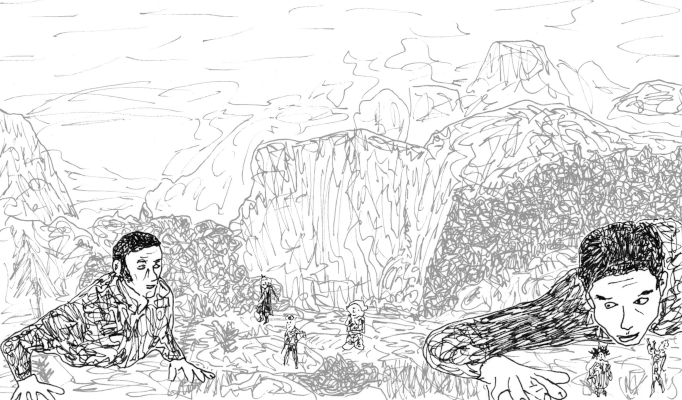 |
(Italiano) Un altro viaggio magico attende i due dall'altra parte delle porte dell'inferno. Diventa subito chiaro che questa volta è Heinz a comandare, in quanto possiede un'abilità inaspettata di cui Helmut non può che meravigliarsi. Tuttavia, non è affatto convinto del piano di Heinz. |
(Deutsch) Eine weitere magische Reise wartet auf die beiden auf der anderen Seite des Höllentors. Schnell zeigt sich, dass es dieses Mal Heinz ist, der die Leitung übernimmt, denn er hat eine unerwartete Fähigkeit, über die Helmut nur staunen kann. Von Heinz' Plan allerdings hält er gar nichts. Normal Version | ||
Bei den Elfen Tag 56 1 Heinz: Oh wow, äh, hallo, ich heiß Heinz. Fiep |
With the Elves Day 56 Heinz: Oh wow, uh, hello, my name is Heinz. Beep |
Chez les elfes Jour 56 Heinz : Oh wow, euh, salut, je m'appelle Heinz. Bip |
Con gli elfi Giorno 56 Heinz: Oh wow, erm, ciao, mi chiamo Heinz. Bip |
Con los elfos Día 56 Heinz: Vaya, hola, me llamo Heinz. Bip |
2 Heinz: Du hast recht. Das ist wahrscheinlich diese seltsame Zeitverzerrung, die wir früher schon auf magischen Reisen erlebt haben. Ha!! |
Heinz: You're right. It's probably this weird time distortion that we've experienced before on magical journeys. Ha!! |
Heinz : Tu as raison. 'est probablement cette distorsion temporelle bizarre que nous avons déjà expérimentée lors de voyages magiques. Ha !! |
Heinz: Hai ragione. Probabilmente è quella strana distorsione temporale che abbiamo già sperimentato durante i viaggi magici. Ah!! |
Heinz: Tienes razón. Probablemente sea esa extraña distorsión temporal que hemos experimentado antes en viajes mágicos. ¡¡Ja!! |
3 Helmut: Wo läuft er hin? |
Helmut: Where is he running? |
Helmut : Où court-il ? |
Helmut: Dove sta correndo? |
Helmut: ¿Adónde va corriendo? |
4 Heinz: Sei mal kurz ruhig, bitte, er hat mir viel zu erzählen. So eine Gelegenheit hatte er noch nie, sagt er. |
Heinz: Be quiet for a moment, please, he has a lot to tell me. He's never had an opportunity like this before, he says. |
Heinz : Tais-toi un instant, s'il te plaît, il a beaucoup de choses à me dire. Il n'a jamais eu une telle occasion auparavant, dit-il. |
Heinz: Fai silenzio per un momento, per favore, ha molte cose da dirmi. Dice che non ha mai avuto un'opportunità del genere prima d'ora. |
Heinz: Calla un momento, por favor, tiene mucho que contarme. Nunca había tenido una oportunidad como ésta, dice. |
5 Helmut: Oh. Ah! An der Felsformation da ist er stehengeblieben. Jetzt ist er durch ein kleines Loch darin verschwunden. Oh, nun ist er da oben. |
Helmut: Oh. Ah! He stopped at the rock formation there. Now he's disappeared through a small hole in it. Oh, now he's up there. |
Helmut : Oh. Ah ! Il s'est arrêté à la formation rocheuse là-bas. Maintenant, il a disparu par un petit trou. Oh, maintenant il est là-haut. |
Helmut: Oh. Ah! Si è fermato in quella formazione rocciosa. Ora è scomparso attraverso un piccolo foro. Oh, ora è lassù. |
Helmut: Oh. ¡Ah! Se detuvo en la formación rocosa de allí. Ahora ha desaparecido por un pequeño agujero en ella. Oh, ahora está ahí arriba. |
6 Heinz: Sei mal still! Fiep. Ja ja, fiep fiep |
Heinz: Be quiet for a second! Beep. Yes yes, beep beep |
Heinz : Tais-toi un instant ! Bip. Oui oui, bip bip |
Heinz: Stai zitto per un secondo! Bip. Sì, sì, bip bip |
Heinz: ¡Cállate un momento! Bip. Sí, sí, bip bip |
7 Helmut: Und wo sind die Trolle? Hier in der Nähe? |
Helmut: And where are the trolls? Around here? |
Helmut : Et où sont les trolls ? Près d'ici ? |
Helmut: E dove sono i troll? Qui intorno? |
Helmut: ¿Y dónde están los trolls? ¿Por aquí? |
8 Heinz: Nicht doch, jetzt bringst du ein paar der Elfen zum Weinen! |
Heinz: But no, now you're making some of the elves cry! |
Heinz : Mais non, maintenant tu fais pleurer quelques elfes ! |
Heinz: Ma no, ora stai facendo piangere alcuni elfi! |
Heinz: Pero no, ¡ahora estás haciendo llorar a unos elfos! |
(English) Helmut has been persuaded to take on a dangerous task involving Odin's kidnapped eight-legged horse. After some initial doubts, they actually achieve considerable success, but the price is high. |
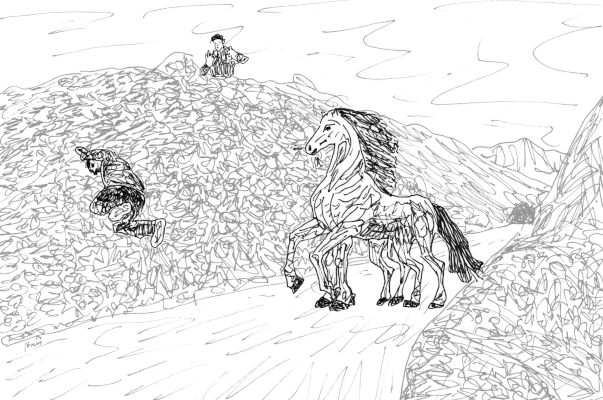 |
(Italiano) Helmut è stato convinto ad accettare un compito pericoloso che riguarda il cavallo a otto zampe di Odin, che è stato rapito. Dopo alcuni dubbi iniziali, i due ottengono un notevole successo, ma il prezzo da pagare è alto. |
(Deutsch) Helmut hat sich dazu überreden lassen, eine gefährliche Aufgabe zu übernehmen, die Odins entführtes achtbeiniges Pferd betrifft. Nach anfänglichem Zweifel gelingt ihnen tatsächlich ein beachtlicher Erfolg, allerdings ist der Preis dafür hoch. Normal Version | ||
Tag 56 1 Heinz: Von da oben können wir uns ein Bild machen, ohne gesehen zu werden, sagt Ludwig. Von hier aus müssen wir alleine weitergehen. Fiep fiep |
Day 56 Heinz: From up there we can get a picture without being seen, says Ludwig. From here we have to go on alone. Beep beep |
Jour 56 Heinz : De là-haut, nous pouvons nous faire une idée sans être vus, dit Ludwig. D'ici, nous devons continuer seuls. Bip bip |
Giorno 56 Heinz: Da lassù possiamo farci un'idea senza essere visti, dice Ludwig. Da qui, dobbiamo continuare da soli. Bip bip |
Día 56 Heinz: Desde ahí arriba, podemos hacernos una idea sin que nos vean, dice Ludwig. A partir de aquí, tenemos que continuar por nuestra cuenta. Bip bip |
2 Helmut: Was haben die dir da vorhin eigentlich gegeben? Am Felsen. |
Helmut: And what was it they handed you earlier? At the rock. |
Helmut : Et qu'est-ce qu'ils t'ont donné tout à l'heure ? Au rocher. |
Helmut: E cosa ti hanno dato prima? Alla roccia. |
Helmut: ¿Y qué te han dado antes? En la roca. |
3 Heinz: Die Trolle haben ihn absichtlich aggressiv gemacht, haben die Elfen gesagt, damit er sich etwaigen Befreiungsversuchen widersetzt. Sogar solchen von Odin. |
Heinz: The trolls deliberately made him aggressive, the elves said, so that he would resist any attempts to free him. Even those of Odin. |
Heinz : Les trolls l'ont délibérément rendu agressif, ont dit les elfes, pour qu'il résiste à toutes les tentatives de le libérer. Même celles d'Odin. |
Heinz: Gli elfi hanno detto che i troll lo hanno reso deliberatamente aggressivo, in modo che resistesse a qualsiasi tentativo di liberarlo. Anche a quelli di Odino. |
Heinz: Los trolls lo hicieron agresivo a propósito, dijeron los elfos, para que se resistiera a cualquier intento de liberarlo. Incluso los de Odín. |
4 Helmut: Siehst du irgendwelche Trolle? |
Helmut: Do you see any trolls? |
Helmut : Tu vois des trolls ? |
Helmut: Vedi qualche troll? |
Helmut: ¿Ves algún trol? |
5 Heinz: Ach du Schreck! Helmut ist mitten in die ... Arena gefallen. Ich kann nichts tun. |
Heinz: Oh dear! Helmut has fallen in the middle of the... arena. There's nothing I can do. |
Heinz : Oh là là ! Helmut est tombé au milieu de... l'arène. Je ne peux rien faire. |
Heinz: Oh, cielo! Helmut è caduto nel bel mezzo della... arena. Non posso fare nulla. |
Heinz: ¡Oh cielos! Helmut se ha caído en medio de la... arena. No puedo hacer nada. |
6 Helmut: Sleipnir, Pferd des Odin! |
Helmut: Sleipnir, horse of Odin! |
Helmut : Sleipnir, cheval d'Odin ! |
Helmut: Sleipnir, cavallo di Odino! |
Helmut: ¡Sleipnir, caballo de Odín! |
7 Helmut: Das Tor ist offen, Sleipi, siehst du? Ja, du siehst es. Vorsicht, nicht so schnell! |
Helmut: The gate is open, Sleipy, can you see? Yes, you can see it. Careful, not so fast! |
Helmut : La porte est ouverte, Sleipi, tu vois ? Oui, tu le vois. Attention, pas si vite ! |
Helmut: Il cancello è aperto, Sleipi, lo vedi? Sì, lo vedi. Attento, non così veloce! |
Helmut: La puerta está abierta, Sleipi, ¿lo ves? Sí, puedes verlo. ¡Cuidado, no tan rápido! |
(English) In a quiet moment, Heinz asks Helmut a few questions about his famous method, which his friend answers to the best of his knowledge, saying some profound things in the process. Then, when they suddenly and unexpectedly find themselves close to their goal, they are thoroughly disappointed. |
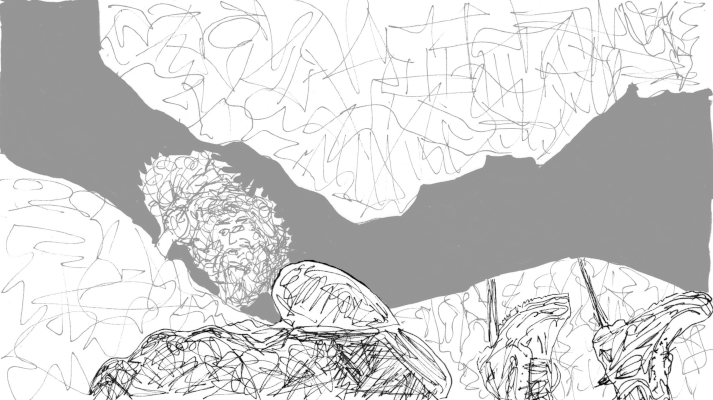 |
(Italiano) In un momento di tranquillità, Heinz pone a Helmut alcune domande sul suo famoso metodo, alle quali l'amico risponde al meglio delle sue conoscenze, dicendo alcune cose profonde. Poi, quando improvvisamente e inaspettatamente si ritrovano vicini alla meta, rimangono delusi. |
(Deutsch) In einer ruhigen Minute stellt Heinz Helmut einige Fragen zu seiner berühmten Methode, die der Freund nach bestem Wissen beantwortet, wobei er einige tiefsinnige Dinge sagt. Als sie sich plötzlich und unverhofft ihrem Ziel nahe sehen, werden sie gründlich enttäuscht. Normal Version | ||
Kopfüber Tag 63 1 Heinz: Jetzt, wo wir ein bisschen Zeit haben, könntest du mir vielleicht ein paar Fragen zur Helmut-Methode beantworten, die sich mir in letzter Zeit gestellt haben. |
Upside Down Day 63 Heinz: Now that we have a bit of time, perhaps you could answer a few questions about the Helmut Method that I've been asking myself recently. |
La Tête en bas Jour 63 Heinz : Maintenant que nous avons un peu de temps, peut-être pourrais-tu répondre à quelques questions sur la méthode Helmut que je me suis posées récemment. |
A Testa in giù Giorno 63 Heinz: Ora che abbiamo un po' di tempo, forse potresti rispondere ad alcune domande sul metodo Helmut che mi sono posto di recente. |
Boca abajo Día 63 Heinz: Ahora que tenemos un poco de tiempo, quizá podrías responder a algunas preguntas sobre el método Helmut que me he estado haciendo últimamente. |
2 Helmut: Tja, wer weiß. |
Helmut: Yeah, who knows. |
Helmut : Oui, qui sait. |
Helmut: Sì, chissà. |
Helmut: Sí, quién sabe. |
3 Heinz: Und wie kann man sich der Sache sonst nähern, wenn man mehr darüber wissen will? |
Heinz: And how else can you approach the matter if you want to know more about it? |
Heinz : Et comment aborder la question autrement si on veut en savoir plus ? |
Heinz: E in che altro modo puoi affrontare la questione se vuoi saperne di più? |
Heinz: ¿Y de qué otra forma puedes abordar el asunto si quieres saber más sobre él? |
4 Helmut: Jetzt hab ich auch mal eine Frage. |
Helmut: Now I have a question too. |
Helmut : Maintenant, j'ai aussi une question, moi. |
Helmut: Ora ho anch'io una domanda. |
Helmut: Ahora yo también tengo una pregunta. |
5 Helmut: Mal was anderes: Kommst du an dein Handy ran? Meins ist im Rucksack. |
Helmut: Something else: Can you get to your cell phone? Mine's in my backpack. |
Helmut : Autre chose : peux-tu accéder à ton téléphone portable ? Le mien est dans mon sac à dos. |
Helmut: Un'altra cosa: puoi raggiungere il tuo cellulare? Il mio è nello zaino. |
Helmut: Otra cosa: ¿puedes coger tu móvil? El mío está en mi mochila. |
6 Heinz: Als ich das Handy zurück in die Innentasche gesteckt hab, ist mir mein Schlüsselbund aus der Seitentasche gefallen. Dabei ist die mit einem Druckknopf gesichert. |
Heinz: When I put the cell phone back in the inside pocket, my bunch of keys fell out of the side pocket. Although it's secured with a press stud. |
Heinz : Quand j'ai remis le téléphone dans la poche intérieure, mon trousseau de clés est tombé de la poche latérale. Bien qu'elle soit fermée par un bouton pression. |
Heinz: Quando ho rimesso il cellulare nella tasca interna, il mio mazzo di chiavi è caduto dalla tasca laterale. Anche se è fissata con un bottone a pressione. |
Heinz: Cuando volví a meter el móvil en el bolsillo interior, se me cayó el manojo de llaves del bolsillo lateral. Aunque está asegurado con un botón a presión. |
7 Helmut: Warte mal, da ist ein Lichtschein. |
Helmut: Wait a minute, there's a glimmer of light. |
Helmut : Attends, il y a une lueur. |
Helmut: Aspetta, c'è una luce. |
Helmut: Espera un momento, hay un rayo de luz. |
(English) The two are shocked to realize that they have been in the other world for a whole earth week. But as soon as they have escaped all the dangers, Heinz insists on complaining to the Northman about his improper behavior. Helmut is extremely surprised by what he then witnesses. |
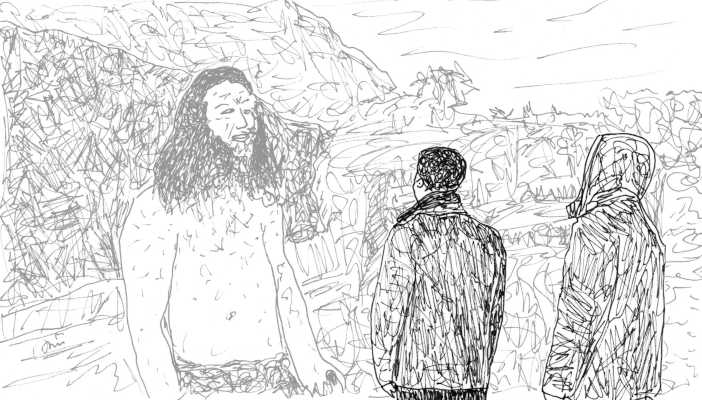 |
(Italiano) I due sono scioccati nel rendersi conto di essere stati nell'altro mondo per un'intera settimana terrestre. Ma non appena sono scampati a tutti i pericoli, Heinz insiste nel lamentarsi con l'uomo del Nord per il suo comportamento scorretto. Helmut è estremamente sorpreso da ciò a cui assiste in seguito. |
(Deutsch) Mit Schrecken stellen die beiden fest, dass sie eine volle Erdenwoche in der anderen Welt gewesen sind. Doch kaum sind sie allen Gefahren entkommen, besteht Heinz darauf, sich beim Nordmann über dessen ungebührliches Verhalten zu beschweren. Helmut ist überaus überrascht von dem, was er dann miterlebt. Normal Version | ||
Tag 64 1 Helmut: Also, dass du sofort wieder nach Dimmuborgir losrennst! Wir haben kaum geschlafen. Lass uns das alles doch erst mal verarbeiten, Mann! |
Day 64 Helmut: How can you run off to Dimmuborgir again straight away? We've hardly slept. Let's process all the stuff first, man! |
Jour 64 Helmut : Alors, comment peux-tu repartir tout de suite à Dimmuborgir ? Nous avons à peine dormi. Laisse-nous digérer tout ça, mec ! |
Giorno 64 Helmut: Allora, come fai a tornare subito a Dimmuborgir? Abbiamo dormito a malapena. Lasciaci digerire, amico! |
Día 64 Helmut: Entonces, ¿cómo puedes volver a Dimmuborgir enseguida? Apenas hemos dormido. ¡Déjanos digerirlo, hombre! |
2 Heinz: Lass den Quatsch! Das ist keine Zeit für Witze. |
Heinz: Cut it out! This is no time for jokes. |
Heinz : Arrête tes bêtises ! Ce n'est pas le moment de plaisanter. |
Heinz: Basta con le sciocchezze! Non è il momento di scherzare. |
Heinz: ¡Déjate de chorradas! No es momento para bromas. |
3 Helmut: Nein, ich meine, du hast recht mit dem Nordmann. Er ist bereit für dich. |
Helmut: No, I mean, you're right about the Northman. He's ready for you. |
Helmut : Non, je veux dire que tu as raison à propos de l'Homme du Nord. Il est prêt pour toi. |
Helmut: No, voglio dire, hai ragione sull'Uomo del Nord. È pronto per te. |
Helmut: No, quiero decir que tienes razón sobre el Hombre del Norte. Está preparado para ti. |
4 Heinz: Lass mich nur machen! |
Heinz: Just leave it to me! |
Heinz : Laisse moi m'en occuper ! |
Heinz: Lascia che sia io a preoccuparmene! |
Heinz: ¡Déjamelo a mí! |
5 Heinz: Nordmann! Ist das vielleicht der Dank für Sleipnir?! Ich dachte, du hättest einen Hauch von Ehrgefühl! |
Heinz: Northman! Is that perhaps your thanks for Sleipnir? I thought you had a sense of honor! |
Heinz : Homme du Nord ! C'est peut-être ça ton remerciement pour Sleipnir ? Je pensais que tu avais un peu de sens de l'honneur ! |
Heinz: Uomo del Nord! È questo forse il tuo ringraziamento per Sleipnir? Pensavo che avessi un senso dell'onore! |
Heinz: ¡Hombre del Norte! ¿Es acaso tu agradecimiento por Sleipnir? ¡Creía que tenías sentido del honor! |
6 Helmut: Warte mal, der hat da ... |
Helmut: Wait a minute, he's got... |
Helmut : Attends une minute, il a... |
Helmut: Aspetta un attimo, ha... |
Helmut: Un momento, tiene... |
7 Heinz: Aha, ja, ich hör dir zu, aber was können wir denn dafür, dass du seit Wochen keinen Zugang zur anderen Welt finden kannst? |
Heinz: I see, yes, I am listening to you, but it's not our fault that you haven't been able to access the other world for weeks. |
Heinz : Je vois, oui, je t'écoute, mais ce n'est pas de notre faute si tu n'as pas pu accéder à l'autre monde depuis des semaines. |
Heinz: Capisco, sì, ti sto ascoltando, ma non è colpa nostra se non sei riuscito ad accedere all'altro mondo per settimane. |
Heinz: Ya veo, sí, te estoy escuchando, pero no es culpa nuestra que lleves semanas sin poder acceder al otro mundo. |
8 Heinz: So geh nun ... ach so, Moment. Sag mal, wieso frierst du eigentlich nicht, Mann? |
Heinz: So leave now... Ah, wait a minute. Say, why aren't you freezing, man? |
Heinz : Alors pars maintenant... Ah, attends un peu. Dis, pourquoi tu n'es pas gelé, mec ? |
Heinz: Quindi vai ora... Ah, aspetta un attimo. Dimmi, perché non stai congelando, amico? |
Heinz: Así que vete ya... Ah, espera un momento. Dime, ¿por qué no te estás congelando, tío? |
(English) The hostel mother Hildur has been very worried about the Boys and is rewarded with a report about the elves. The Boys never thought that this topic would arouse so much interest, as Hildur is not the only one who is taken with Heinz' experiences in fairyland. |
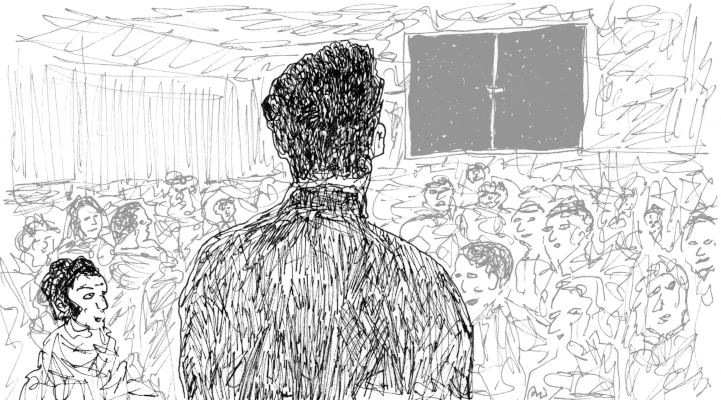 |
(Italiano) La mamma dell'ostello, Hildur, si è preoccupata molto per i Ragazzi e viene premiata con una relazione sugli elfi. I Ragazzi non avrebbero mai pensato che questo argomento avrebbe suscitato così tanto interesse, ma Hildur non è l'unica ad essere affascinata dalle esperienze di Heinz nel paese delle fate. |
(Deutsch) Die Herbergsmutter Hildur hat sich große Sorgen um die Jungs gemacht und wird mit einem Bericht über die Elfen entschädigt. Die Jungs hätten nicht gedacht, dass dieses Thema ein so großes Interesse hervorrufen würde, denn nicht nur Hildur ist angetan von Heinz' Erlebnissen im Märchenland. Normal Version | ||
Tag 64 1 Heinz: Was gibt es Schöneres, als nach einem erfolgreichen Abenteuer in der Eiseskälte wieder gemütlich an der Heizung zu sitzen! Ah, Helmut, da bist du ja. Setz dich doch! |
Day 64 Heinz: What could be nicer than sitting comfortably by the heater again after a successful adventure in the freezing cold! Ah, Helmut, there you are. Have a seat! |
Jour 64 Heinz : Qu'y a-t-il de plus agréable que de se retrouver confortablement assis près du chauffage après une aventure réussie dans le froid glacial ? Ah, Helmut, te voilà. Assieds-toi donc ! |
Giorno 64 Heinz: Cosa c'è di più bello che sedersi di nuovo comodamente vicino al riscaldamento dopo un'avventura di successo al freddo! Ah, Helmut, eccoti qui. Accomodati! |
Día 64 Heinz: ¡Qué mejor que volver a sentarse cómodamente junto a la calefacción después de una exitosa aventura en el frío glacial! Ah, Helmut, ahí estás. Siéntate. |
2 Heinz: Danke Hildur, großartig! Komm, wir setzen uns an den Tisch und ich erzähl dir mehr über die Elfen. Das möchtest du doch, oder? |
Heinz: Thanks Hildur, great! Let's sit down at the table and I'll tell you more about the elves. That's what you want, isn't it? |
Heinz : Merci Hildur, super ! Asseyons-nous à table et je t'en dirai plus sur les elfes. C'est ce que tu veux, n'est-ce pas ? |
Heinz: Grazie Hildur, fantastico! Sediamoci a tavola e ti racconterò di più sugli elfi. È questo che vuoi, vero? |
Heinz: Gracias Hildur, ¡genial! Sentémonos a la mesa y te contaré más cosas sobre los elfos. Eso es lo que quieres, ¿no? |
3 Helmut: Kein Grund zur Sorge! Sie haben nur gefolgert, dass wir den Schlüsselbund auf dem Grund der Schlucht verloren haben müssen, denn wir waren ja festgebunden. Das wirft Fragen auf. |
Helmut: No need to worry! They've just deduced that we must have lost the bunch of keys at the bottom of the gorge, because we were tied up. That raises questions. |
Helmut : Pas besoin de s'inquiéter ! Ils ont seulement déduit que nous devions avoir perdu le trousseau de clés au fond du ravin, puisque nous étions attachés. Cela soulève des questions. |
Helmut: Non c'è da preoccuparsi! Hanno solo dedotto che dobbiamo aver perso il mazzo di chiavi in fondo alla gola, perché eravamo legati. Questo solleva delle domande. |
Helmut: ¡No hay por qué preocuparse! Solo han deducido que debimos de perder el manojo de llaves en el fondo del barranco, porque estábamos atados. Eso plantea dudas. |
4 Heinz: Ich kann noch ein Stück rücken. Jedenfalls, die Elfen ... |
Heinz: I can move over a bit. Anyway, the elves... |
Heinz : Je peux me déplacer un peu. Bref, les elfes... |
Heinz: Posso spostarmi un po'. Comunque, gli elfi... |
Heinz: Puedo moverme un poco. En fin, los elfos... |
5 Heinz: Sie sehnen sich nach einer Aussprache mit den Menschen, wisst ihr. Ganz früher haben Elfen und Menschen zusammen einmal im Jahr ein Althing abgehalten. Damals war das noch eher ein Fest als ein Parlament, mit Dichtung und Tanz. |
Heinz: They long to talk things over with the humans, you know. In the old days, elves and humans used to hold an althing together once a year. Back then, it was more of a festival than a parliament, with poetry and dancing. |
Heinz : Ils aspirent à une franche discussion avec les humains, vous savez. Autrefois, les elfes et les humains organisaient un althing ensemble une fois par an. À l'époque, c'était plus une fête qu'un parlement, avec de la poésie et des danses. |
Heinz: Vogliono chiarirsi con gli umani, sapete. Un tempo, elfi e umani tenevano un althing insieme una volta all'anno. Allora era più un festival che un parlamento, con poesie e danze. |
Heinz: Anhelan una discusión profunda con los humanos, ¿sabéis? Antiguamente, los elfos y los humanos solían celebrar un althing juntos una vez al año. Entonces era más un festival que un parlamento, con poesía y baile. |
6 Helmut: OK. Ah, eine Frage aus dem Publikum. Die Heimatforscherin, bitteschön! |
Helmut: OK. Ah, a question from the audience. The local historian, please! |
Helmut : OK. Ah, une question du public. L'historienne locale, s'il te plaît ! |
Helmut: Ok. Ah, una domanda dal pubblico. La storica locale, per favore! |
Helmut: Bien. Ah, una pregunta del público. La historiadora local, por favor. |
7 Heinz: Warum ich mit ihnen sprechen kann? Tja, also das ist eine sehr lange Geschichte. Das schaffen wir heute nicht. |
Heinz: Why I can speak with them? Well, that's a very long story. We won't be able to cover this today. |
Heinz : Pourquoi je peux leur parler ? Eh bien, c'est une très longue histoire. Nous n'y arriverons pas aujourd'hui. |
Heinz: Perché posso parlare con loro? Beh, è una storia molto lunga. Non riusciremo a parlarne oggi. |
Heinz: ¿Por qué puedo hablar con ellos? Bueno, es una historia muy larga. No podremos cubrirla hoy. |
8 Helmut: Na komm, bring es zu Ende, das schaffst du! Oh, Verzeihung Hildur, das war dein Fuß, stimmt's? |
Helmut: Come on, bring it to an end, you can do it! Oh, sorry Hildur, that was your foot, was it? |
Helmut : Allez, mets-y un terme, tu peux le faire ! Oh, pardon Hildur, c'était ton pied, n'est-ce pas ? |
Helmut: Dai, finisci, puoi farcela! Oh, scusa Hildur, era il tuo piede, vero? |
Helmut: ¡Vamos, ponle fin, tú puedes! Oh, perdona Hildur, era tu pie, ¿no? |
9 Helmut: Wow, schon ist das Zimmer leer! Und du? Willst du deine neuen Freunde nicht begrüßen? |
Helmut: Wow, the room is already empty! And you? Don't you want to say hello to your new friends? |
Helmut : Ouah, la pièce est déjà vide ! Et toi ? Tu ne veux pas dire bonjour à tes nouveaux amis ? |
Helmut: Wow, la stanza è già vuota! E tu? Non vuoi salutare i tuoi nuovi amici? |
Helmut: ¡Vaya, la habitación ya está vacía! ¿Y tú? ¿No quieres saludar a tus nuevos amigos? |
(English) From Dimmuborgir, the Boys drive back to Reykjavik the next morning, listening to early Björk CDs. When they are confronted with a natural spectacle in the evening, Helmut explains to his friend why he thinks green is the color of purification. |
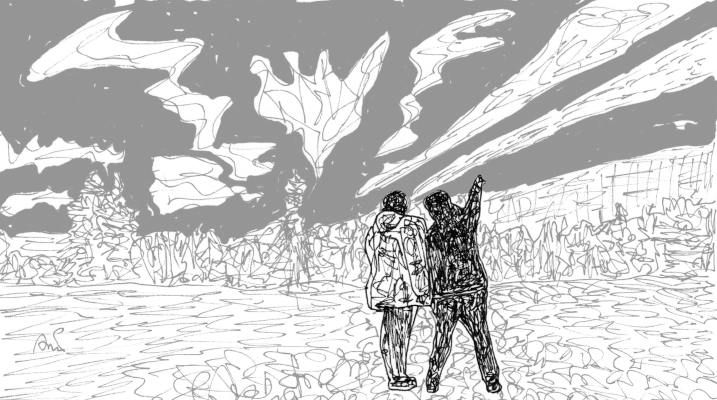 |
(Italiano) Da Dimmuborgir, i Ragazzi tornano a Reykjavik la mattina dopo, ascoltando i primi CD di Björk. Quando la sera si trovano di fronte a uno spettacolo naturale, Helmut spiega all'amico perché pensa che il verde sia il colore della purificazione. |
(Deutsch) Von Dimmuborgir fahren die Jungs am nächsten Morgen zurück nach Reykjavik, wobei sie frühe Björk-CDs hören. Als sie am Abend mit einem Naturschauspiel konfrontiert werden, erklärt Helmut seinem Freund, warum er Grün für die Farbe der Reinigung hält. Normal Version | ||
Tag 65 1 Heinz: Ist es OK für dich, wenn ich die Björk-CDs noch mal abspiele? Debut, Post und Homogenic? |
Day 65 Heinz: Is it OK for you if I play the Björk CDs again? Debut, Post and Homogenic? |
Jour 65 Heinz : Tu es d'accord pour qu'on écoute à nouveau les CD de Björk ? Debut, Post et Homogenic ? |
Giorno 65 Heinz: Ti va bene se metto di nuovo i CD di Björk? Debut, Post e Homogenic? |
Día 65 Heinz: ¿Te parece bien que vuelva a poner los CD de Björk? ¿Debut, Post y Homogenic? |
2 Helmut: Vielleicht ein Tier. Hey, wieso hast du mir nichts von den Plänen des Nordmanns gesagt, als wir den Berg hochgekraxelt sind? Oder als wir stundenlang in der Schlucht gehangen haben. |
Helmut: Maybe an animal. Hey, why didn't you tell me about the Northman's plans when we were scrambling up the mountain? Or when we were hanging in the gorge for hours. |
Helmut : Peut-être un animal. Hé, pourquoi ne m'as-tu pas parlé des plans de l'Homme du Nord quand nous grimpions la montagne ? Ou quand nous étions suspendus dans la gorge pendant des heures. |
Helmut: Forse un animale. Ehi, perché non mi hai detto dei piani dell'Uomo del Nord quando stavamo scalando la montagna? O quando siamo rimasti sospesi nella gola per ore. |
Helmut: Quizá un animal. Oye, ¿por qué no me hablaste de los planes del Hombre del Norte cuando trepábamos por la montaña? O cuando estuvimos colgados en el barranco durante horas. |
3 Helmut: Und schreibst du für Hildur jetzt deine Memoiren oder was? |
Helmut: And are you writing your memoirs for Hildur now or what? |
Helmut : Et tu écris tes mémoires pour Hildur maintenant ou quoi ? |
Helmut: E ora vuoi scrivere le tue memorie per Hildur o cosa? |
Helmut: ¿Y ahora quieres escribir tus memorias para Hildur o qué? |
4 Heinz: Aurora Borealis? Oh! Das ist genau das gleiche Grün wie das aus deinem Ring, als wir in Marseille in der Oase waren und Suppe gekocht haben. |
Heinz: Aurora Borealis? Oh! It's exactly the same green as the green of your ring when we were in Marseille in the oasis cooking soup. |
Heinz : L'aurore boréale ? Oh ! C'est exactement le même vert que celui de ta bague quand nous étions à Marseille à l'oasis et que nous faisions la soupe. |
Heinz: Aurora boreale? Oh! È esattamente lo stesso verde del tuo anello quando eravamo a Marsiglia nell'oasi a preparare la zuppa. |
Heinz: ¿Aurora boreal? ¡Oh! Es exactamente el mismo verde que el de tu anillo cuando estábamos en Marsella en el oasis cocinando sopa. |
5 Heinz: Sag mal, hast du eigentlich Madame Laila gefragt, was es mit dem grünen Leuchten auf sich hat? |
Heinz: And did you ask Madame Laila what the green glow is all about, by the way? |
Heinz : Et au fait, as-tu demandé à Madame Laila ce qu'il en était de la lueur verte ? |
Heinz: A proposito, hai chiesto a Madame Laila di cosa si tratta il bagliore verde? |
Heinz: Por cierto, ¿preguntaste a Madame Laila a qué se debe el resplandor verde? |
6 Heinz: Erinner mich nicht an dieses Höllengerät! Was der für ein Theater macht, wenn man ihn abschalten will! Das geht über Minuten. Und Klappe raus und Klappe wieder rein, fürchterlich! |
Heinz: Don't remind me of that infernal device! What a fuss it makes whenever you want to switch it off! It goes on for minutes. And flap out and flap back in, it's terrible! |
Heinz : Ne me rappelle pas cette machine infernale ! Qu'est-ce qu'elle fait comme bruit quand on veut l'éteindre ! Ça dure des minutes. Et le clapet sort et rentre sans cesse, c'est terrible ! |
Heinz: Non ricordarmi quell'apparecchio infernale! Che confusione fa ogni volta che vuoi spegnerla! Va avanti per minuti. E lo sportello si spegne e si riaccende, è terribile! |
Heinz: ¡No me recuerdes esa máquina infernal! ¡Qué jaleo monta cada vez que quieres apagarla! Dura minutos. Y la bandeja se apaga y se vuelve a encender, ¡es terrible! |
7 Helmut: Sie reinigen den Himmel mit ihrer Reinigungsfunktion. |
Helmut: They clean the sky with their cleansing function. |
Helmut : Elles nettoient le ciel grâce à leur fonction purificatrice. |
Helmut: Puliscono il cielo con la loro funzione di pulizia. |
Helmut: Limpian el cielo con su función limpiadora. |
(English) While eating fish soup in the capital, Helmut asks his friend to tell him why he doesn't want to fly back yet. Heinz tries to explain what is keeping him in Iceland and learns a truth that he can't understand at first. But then it clicks. |
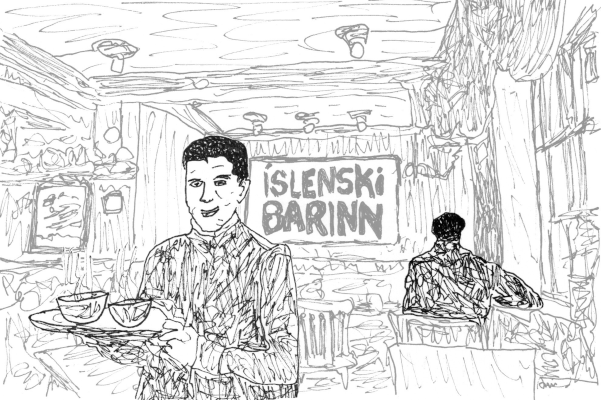 |
(Italiano) Mentre mangiano una zuppa di pesce nella capitale, Helmut chiede al suo amico di dirgli perché non vuole ancora tornare in aereo. Heinz cerca di spiegare cosa lo trattiene in Islanda e scopre una verità che all'inizio non riesce a comprendere. Ma poi si rende conto. |
(Deutsch) Beim Essen einer Fischsuppe in der Hauptstadt fordert Helmut seinen Freund auf, ihm zu sagen, warum er noch nicht zurückfliegen will. Heinz versucht zu erklären, was ihn noch in Island hält, und erfährt dabei eine Wahrheit, die er zunächst nicht begreifen kann. Dann aber macht es Klick. Normal Version | ||
Tag 66 1 Helmut: OK, thank you! Bye bye. |
Day 66 Helmut: OK, thank you! Bye bye. |
Jour 66 Helmut : OK, thank you ! Bye bye. |
Giorno 66 Helmut: OK, thank you! Bye bye. |
Día 66 Helmut: OK, thank you! Bye bye. |
2 Helmut: Nun sag doch, was uns hier noch hält! |
Helmut: Will you tell me what's keeping us here now or what? |
Helmut : Tu vas me dire ce qui nous retient ici ou quoi ? |
Helmut: Mi dici cosa ci trattiene qui ora o cosa? |
Helmut: ¿Me dirás qué nos retiene aquí ahora o qué? |
3 Helmut: Soll ich meine Helmut-Methode für dich einsetzen? |
Helmut: Should I use my Helmut method for you? |
Helmut : Tu veux que j'utilise ma méthode Helmut pour toi ? |
Helmut: Vuoi che usi il mio metodo Helmut per te? |
Helmut: ¿Quieres que utilice mi método Helmut para ti? |
4 Heinz: Mann, in der Blauen Lagune! Gleich nachdem wir in Island angekommen waren. |
Heinz: Man, in the Blue Lagoon! Right after we arrived in Iceland. |
Heinz : Mec, dans le Lagon Bleu ! Juste après notre arrivée en Islande. |
Heinz: Amico, nella Laguna Blu! Subito dopo il nostro arrivo in Islanda. |
Heinz: ¡Tío, en la Laguna Azul! Justo después de llegar a Islandia. |
5 Helmut: Vielleicht war es eine magische Reise. Oder du bist übergeschnappt. |
Helmut: Maybe it was a magical trip. Or perhaps you've gone mad. |
Helmut : C'était peut-être un voyage magique. Ou alors es-tu devenu fou. |
Helmut: Forse è stato un viaggio magico. O forse sei impazzito. |
Helmut: Quizá fue un viaje mágico. O quizá te has vuelto loco. |
6 Helmut: Das war also praktisch seine Botschaft, bevor er weg war. |
Helmut: So this was basically his message before he left. |
Helmut : C'était donc pratiquement son message avant qu'il ne parte. |
Helmut: Quindi questo era praticamente il suo messaggio prima di partire. |
Helmut: Así que éste era básicamente su mensaje antes de irse. |
(English) Fiona visits her friend two days before Christmas Eve and is amazed at the extensive Christmas decorations she finds in her apartment. Then she realizes that Fanni has a whole lot of other surprises up her sleeve. |
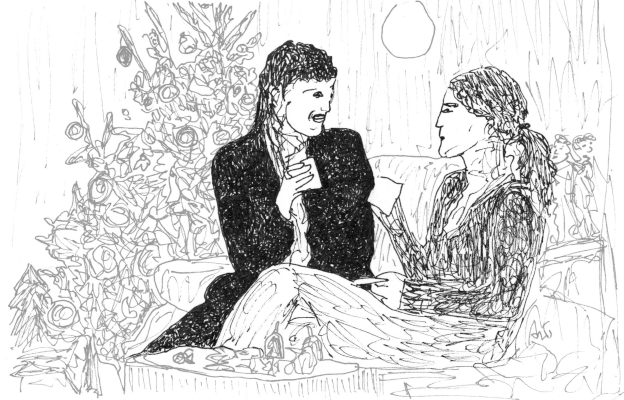 |
(Italiano) Fiona va a trovare la sua amica due giorni prima della vigilia di Natale e rimane stupita dalle numerose decorazioni natalizie che trova nel suo appartamento. Poi si rende conto che Fanni ha molti altri sorprese nella manica. |
(Deutsch) Fiona besucht ihre Freundin zwei Tage vor Heiligabend und staunt über die umfangreiche Weihnachtsdekoration, die sie in der Wohnung vorfindet. Dann merkt sie, dass Fanni noch ganz andere Überraschungen in petto hat. Normal Version | ||
Tag 68 1 Fiona: Fanni, um Himmels Willen, du hast ja das volle Weihnachtsprogramm laufen! Dieser Baum! Und die ganze Deko. Gebacken hast du auch. |
Day 68 Fiona: Fanni, for heaven's sake, you're running the full Christmas program! That tree! And all the decorations. You've baked too. |
Jour 68 Fiona : Fanni, pour l'amour du ciel, tu as fait tourner le programme complet de Noël ! Ce sapin ! Et toutes les décorations. Tu as aussi fait des pâtisseries. |
Giorno 68 Fiona: Fanni, per l'amor del cielo, stai facendo il programma di Natale completo! Quell'albero! E tutte le decorazioni. Hai anche cucinato. |
Día 68 Fiona: Fanni, por el amor de Dios, ¡haces el programa de Navidad completo! ¡Ese árbol! Y todos los adornos. También has horneado. |
2 Fiona: Ist das da Hedu auf dem Bild an der Wand? |
Fiona: Is that Hedu in the picture on the wall? |
Fiona : C'est Hédou sur la photo au mur ? |
Fiona: Quella nella foto sul muro è Hedu? |
Fiona: ¿Es Hedu el de la imagen de la pared? |
3 Fiona: Oh. Na, dann viel Erfolg! Mmh, die Kekse sind gut. |
Fiona: Oh. Well, good luck then! Mmm, the cookies are good. |
Fiona : Oh. Eh bien, bonne chance alors ! Mmm, les biscuits sont bons. |
Fiona: Oh. Beh, allora buona fortuna! Mmh, i biscotti sono buoni. |
Fiona: Ah. ¡Pues buena suerte! Mmm, qué buenas están las galletas. |
4 Fiona: Wirklich enorm, das Ganze. |
Fiona: Really enormous, the whole thing. |
Fiona : Vraiment énorme, tout ça. |
Fiona: Davvero enorme, tutto quanto. |
Fiona: Realmente enorme, todo esto. |
5 Fanni: Das ist aber selten. Normalerweise können sich Menschen und Elfen nicht untereinander verständigen. Jedenfalls nicht verbal. |
Fanni: But that's rare. Normally, humans and elves can't communicate with each other. At least not verbally. |
Fanni : Mais c'est rare. Normalement, les humains et les elfes ne peuvent pas communiquer entre eux. Du moins, pas verbalement. |
Fanni: Ma è una cosa rara. Normalmente, umani ed elfi non possono comunicare tra loro. Almeno non verbalmente. |
Fanni: Pero eso es raro. Normalmente, los humanos y los elfos no pueden comunicarse entre sí. Al menos, no verbalmente. |
6 Fanni: Sleipnir mit den acht Beinen? Also jetzt hast du meine volle Aufmerksamkeit! |
Fanni: Sleipnir with the eight legs? Now you have my full attention! |
Fanni : Sleipnir avec ses huit pattes ? Alors maintenant, tu as toute mon attention ! |
Fanni: Sleipnir con le sue otto gambe? Ora hai tutta la mia attenzione! |
Fanni: ¿Sleipnir con las ocho patas? ¡Ahora tienes toda mi atención! |
7 Fanni: Ja, er ist ein Original. In Norwegen kennt ihn fast jeder. Ich bin in seinem E-Mail-Verteiler. |
Fanni: Yes, he's an original. Almost everyone in Norway knows him. I'm on his e-mail list. |
Fanni : Oui, c'est un original. En Norvège, presque tout le monde le connaît. Je suis sur sa liste de diffusion. |
Fanni: Sì, è un personaggio originale. Quasi tutti in Norvegia lo conoscono. Sono nella sua lista e-mail. |
Fanni: Sí, es un personaje original. Casi todo el mundo en Noruega lo conoce. Estoy en su lista de correo electrónico. |
(English) Before he follows the clue that takes him back to Aouda, Heinz writes his elf report on the computer. Helmut interrupts him to say that he now knows more about his mysterious method and gives another example of his art. |
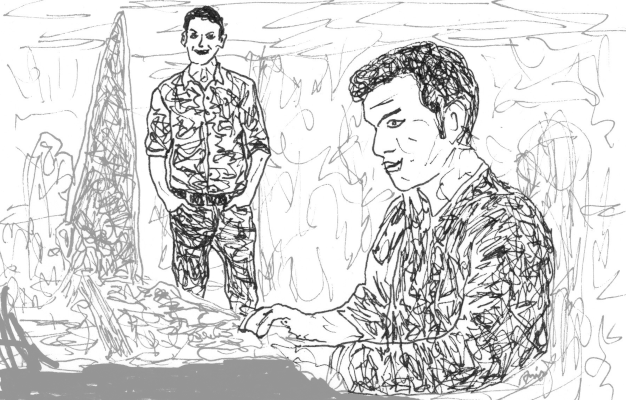 |
(Italiano) Prima di seguire l'indizio che lo riporta ad Aouda, Heinz scrive il suo rapporto sugli elfi sul computer. Helmut lo interrompe per dirgli che ora conosce meglio il suo misterioso metodo e gli fornisce un altro esempio della sua arte. |
(Deutsch) Bevor er dem Hinweis folgt, der ihn zurück zu Aouda bringt, schreibt Heinz am Computer seinen Elfenbericht. Helmut unterbricht ihn mit dem Hinweis, dass er inzwischen mehr über seine geheimnisvolle Methode weiß und gibt ein weiteres Beispiel seiner Kunst. Normal Version | ||
Tag 69 1 Helmut: Bist du bald fertig? Ey, dein Bericht ist schon länger als der Herr der Ringe. |
Day 69 Helmut: Will you be finished soon? Hey, your report is already longer than the Lord of the Rings. |
Jour 69 Helmut : As-tu bientôt terminé ? Ey, ton rapport est déjà plus long que le Seigneur des Anneaux. |
Giorno 69 Helmut: Hai finito presto? Ey, la tua relazione è già più lunga del Signore degli Anelli. |
Día 69 Helmut: ¿Vas a terminar pronto? Ey, tu informe ya es más largo que El Señor de los Anillos. |
2 Helmut: OK, dann also morgen. Ich wollte dir noch was erzählen ... |
Helmut: OK, tomorrow then. I wanted to tell you something else... |
Helmut : D'accord, demain alors. Je voulais te dire autre chose... |
Helmut: Ok, domani allora. Volevo dirti un'altra cosa... |
Helmut: Vale, pues mañana. Quería decirte otra cosa... |
3 Helmut: Mein Unterbewusstsein hat im Laufe der letzten Monate eine Art Verantwortungsgefühl entwickelt. So fühlt es sich jedenfalls an. |
Helmut: My subconscious has developed a kind of sense of responsibility over the last few months. At least that's how it feels. |
Helmut : Mon subconscient a développé une sorte de sens des responsabilités au cours des derniers mois. C'est du moins ce que je ressens. |
Helmut: Il mio subconscio ha sviluppato una sorta di senso di responsabilità negli ultimi mesi. Almeno così mi sembra. |
Helmut: Mi subconsciente ha desarrollado una especie de sentido de la responsabilidad en los últimos meses. Al menos eso es lo que parece. |
4 Heinz: Seufz. Nicht so wichtig. Übrigens, ich hab mal nachgerechnet. |
Heinz: Sigh. Never mind. By the way, I've done the math. |
Heinz : Soupir. Pas grave. Au fait, j'ai fait le calcul. |
Heinz: Sigh. Non importa. A proposito, ho fatto i conti. |
Heinz: Suspiro. No importa. Por cierto, he hecho las cuentas. |
5 Heinz: Hedu ist schwanger geworden, kurz nachdem sie in Florenz von dir erfahren hat, dass Giesbert nicht ihr leiblicher Vater und sie ein Kuckuckskind ist. |
Heinz: Hedu got pregnant shortly after she found out from you in Florence that Giesbert is not her biological father and that she is a cuckoo's child. |
Heinz : Hédou est tombée enceinte peu de temps après avoir appris par toi à Florence que Giesbert n'est pas son père biologique et qu'elle est un enfant coucou. |
Heinz: Hedu è rimasta incinta poco dopo aver scoperto grazie a te a Firenze che Giesbert non è il suo padre biologico e che è una figlia del cuculo. |
Heinz: Hedu se quedó embarazada poco después de enterarse por ti en Florencia de que Giesbert no es su padre biológico y de que es una hija del cuco. |
6 Helmut: Absolut. Pass auf, du hängst mit deinem Ellbogen auf der Tastatur! |
Helmut: Absolutely. Watch out, you've got your elbow on the keyboard! |
Helmut : Tout à fait. Attention, tu as le coude sur le clavier ! |
Helmut: Assolutamente sì. Attento, hai il gomito sulla tastiera! |
Helmut: Por supuesto. Cuidado, ¡tienes el codo sobre el teclado! |
7 Helmut: Ich mach schon. |
Helmut: I'll deal with it. |
Helmut : Je m'en occupe. |
Helmut: Me ne occupo io. |
Helmut: Yo me encargo. |
8 Helmut: Ist wohl hinten durch den Spalt gerutscht. |
Helmut: It must have slipped through the gap at the back. |
Helmut : Elle a dû se glisser dans la fente à l'arrière. |
Helmut: Deve essere scivolato attraverso la fessura sul retro. |
Helmut: Se habrá colado por el hueco del fondo. |
(English) The next day, the Boys visit Aouda and Rupert in their little house in Hose Park. After Helmut has explained what Heinz is suffering from, the monkey has an idea. Helmut gives the two of them a day to exchange ideas in peace and everyone is excited to see the result. |
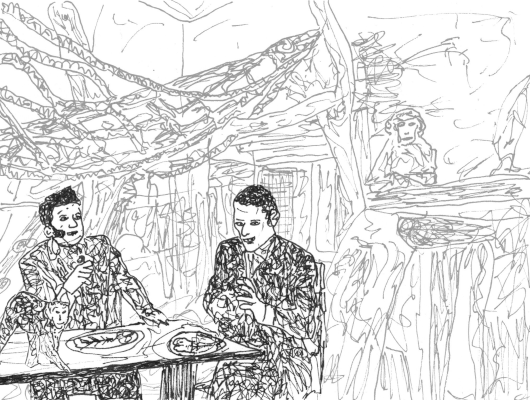 |
(Italiano) Il giorno dopo, i Ragazzi vanno a trovare Aouda e Rupert nella loro casetta nel Parco Tubo. Helmut spiega di cosa soffre Heinz e la scimmia ha un'idea. Helmut concede ai due un giorno per riflettere in pace e tutti sono entusiasti di vedere il risultato. |
(Deutsch) Die Jungs besuchen am nächsten Tag Aouda und Rupert in ihrem Häuschen im Schlauchpark. Nachdem Helmut erklärt hat, woran Heinz leidet, hat der Affe eine Idee. Helmut gibt den beiden einen Tag Zeit, um sich in Ruhe auszutauschen, und alle sind gespannt auf das Ergebnis. Normal Version | ||
Tag 70 1 Heinz: Jetzt bin ich doch ein bisschen aufgeregt. Wie es wohl weitergeht ... |
Day 70 Heinz: Now I am a bit excited, after all. I wonder what will happen next... |
Jour 70 Heinz : Maintenant, je suis un peu excité. Je me demande ce qui va se passer... |
Giorno 70 Heinz: Ora sono un po' eccitato. Mi chiedo cosa succederà... |
Día 70 Heinz: Ahora estoy un poco excitado. Me pregunto qué va a pasar... |
2 Helmut: Äh ... ganz recht. Sag mal, Udi, was riecht denn hier so gut? Hast du gekocht? Ja, lass uns reingehen. |
Helmut: Uh... that's right. Tell me, Oody, what smells so good here? Have you been cooking? Yes, let's go in. |
Helmut : Euh... oui oui. Dis-moi, Oudi, qu'est-ce qui sent si bon ici ? Tu as cuisiné ? Oui, entrons. |
Helmut: Ehm... sì sì. Dimmi, Udi, cos'è questo buon odore qui? Hai cucinato? Sì, entriamo. |
Helmut: Ehm... sí sí. Dime, Udi, ¿qué es ese olor tan bueno que hay aquí? ¿Has cocinado? Sí, vamos dentro. |
3 Helmut: Erstaunlich. Mjam. |
Helmut: Amazing. Myam. |
Helmut : Incroyable. Miam. |
Helmut: Incredibile. Gnam. |
Helmut: Increíble. Mñam. |
4 Helmut: Ja, klar. Pass auf, ich hab mir das so gedacht: Ich verzieh mich in Hedus Haus und lass euch bis morgen Nachmittag um vier allein. Dann habt ihr 28 Stunden für euch. Du kannst hier oder im Tempel übernachten. |
Helmut: Yes, of course. Listen, here's what I thought: I'll go to Hedu's house and leave you alone until four tomorrow afternoon. Then you'll have 28 hours to yourselves. You can spend the night here or in the temple. |
Helmut : Oui, bien sûr. Écoute, voilà ce que j'ai pensé : Je vais aller chez Hédou et vous laisser seuls jusqu'à quatre heures demain après-midi. Comme ça, vous aurez 28 heures à vous. Tu peux passer la nuit ici ou au temple. |
Helmut: Sì, certo. Ascolta, ecco cosa ho pensato: Andrò a casa di Hedu e vi lascerò soli fino alle quattro di domani pomeriggio. Poi avrete 28 ore per voi. Puoi passare la notte qui o al tempio. |
Helmut: Sí, por supuesto. Escucha, esto es lo que he pensado: Iré a casa de Hedu y os dejaré solos hasta mañana a las cuatro de la tarde. Entonces tendréis 28 horas para vosotros. Puedes pasar la noche aquí o en el templo. |
5 Heinz: Aouda sieht mich an, als wüsste sie schon, worum es geht. |
Heinz: Aouda looks at me as if she already knows what it's all about. |
Heinz : Aouda me regarde comme si elle savait déjà de quoi il s'agit. |
Heinz: Aouda mi guarda come se sapesse già di cosa si tratta. |
Heinz: Aouda me mira como si ya supiera de qué se trata. |
6 Helmut: Ich hab keine Ahnung, was ... Oh! |
Helmut: I have no idea what... Oh! |
Helmut : Je n'ai aucune idée de ce que... Oh ! |
Helmut: Non ho idea di cosa... Oh! |
Helmut: No tengo ni idea de qué... ¡Oh! |
7 Helmut: Tja, das müsst ihr unter euch ausmachen. Ich geh dann mal zu ... Was ist, Udi? Rupert? Ach nö! |
Helmut: Well, you'll have to decide that between yourselves. I'll go to... What is it, Oody? Rupert? Oh no! |
Helmut : Eh bien, c'est à vous d'en décider. Je vais aller à... Qu'est-ce qu'il y a, Oudi ? Rupert ? Oh non ! |
Helmut: Beh, questo lo dovrete decidere tra di voi. Io vado a... Cosa c'è, Udi? Rupert? Oh, no! |
Helmut: Bueno, eso tendréis que decidirlo entre vosotros. Yo iré a... ¿Qué pasa, Udi? ¿Rupert? ¡Oh, no! |
(English) When Heinz and Helmut meet again the next day, a lot has changed for both of them, thanks to the monkeys they each spent their time with. It soon turns out that Heinz has had more luck. A lot more luck, to be precise. |
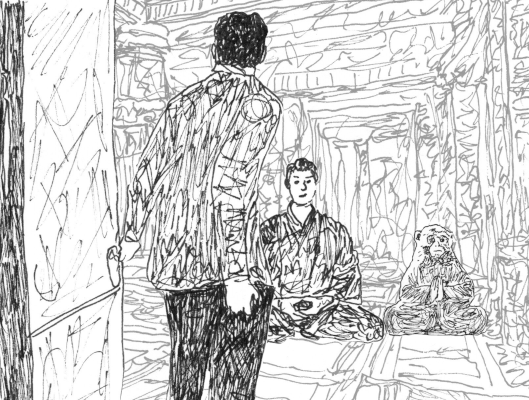 |
(Italiano) Quando Heinz e Helmut si incontrano di nuovo il giorno dopo, molte cose sono cambiate per entrambi, grazie alle due scimmie con cui hanno trascorso il tempo. Ben presto si scopre che Heinz ha avuto più fortuna. Molta più fortuna, per essere precisi. |
(Deutsch) Als sich Heinz und Helmut am nächsten Tag wiedersehen, hat sich für beide viel verändert, was den jeweiligen Affen geschuldet ist, mit denen sie ihre Zeit verbracht haben. Es stellt sich schnell heraus, dass Heinz mehr Glück gehabt hat. Sehr viel mehr Glück, um genau zu sein. Normal Version | ||
Zwei Affen Tag 71 1 Helmut: Knarrr-r. Heinz? |
Two Monkeys Day 71 Helmut: Creakkk-k. Heinz? |
Deux singes Jour 71 Helmut : Griiin-ce. Heinz ? |
Due scimmie Giorno 71 Helmut: Scriiicc-h. Heinz? |
Dos monos Día 71 Helmut: Crujiiir-r. ¿Heinz? |
2 Heinz: Was? Ach so. Mensch, Helmut, ich fühl mich wie ausgewechselt. |
Heinz: What? Oh right. Helmut, I feel like a new man. |
Heinz : Quoi ? Ah oui, c'est vrai. Helmut, je me sens comme un nouvel homme. |
Heinz: Cosa? Oh, giusto. Helmut, mi sento un uomo nuovo. |
Heinz: ¿Qué? Ah, ya veo. Helmut, me siento como un hombre nuevo. |
3 Helmut: Aus Hedus Sänfte hat er innerhalb weniger Stunden eine Müllkippe gemacht. Als erstes hat er den Honigtopf darin geleert. |
Helmut: He turned Hedu's palanquin into a garbage dump within a few hours. The first thing he did was to empty the honey pot in it. |
Helmut : Il a transformé le palanquin d'Hédou en un dépotoir en quelques heures. D'abord, il a vidé le pot de miel à l'intérieur. |
Helmut: Ha trasformato la portantina di Hedu in una discarica nel giro di poche ore. Per prima cosa ha svuotato il vasetto di miele all'interno. |
Helmut: Convirtió el palanquín de Hedu en un vertedero en pocas horas. Lo primero que hizo fue vaciar en él el tarro de miel. |
4 Helmut: Also hat sie jetzt in diese blöde Muschel getutet oder was? |
Helmut: So she tooted into that stupid conch or what? |
Helmut : Alors, elle a soufflé dans cette stupide conque ou quoi ? |
Helmut: Quindi ha suonato quella stupida conchiglia o cosa? |
Helmut: ¿Así que tocó esa estúpida concha o qué? |
5 Heinz: Dann sind wir zum Tempel rübergegangen. Alles war so ruhig und so klar. |
Heinz: Then we went over to the temple. Everything was so calm and so clear. |
Heinz : Puis nous sommes allés au temple. Tout était si calme et si clair. |
Heinz: Poi siamo andati al tempio. Tutto era così calmo e chiaro. |
Heinz: Luego fuimos al templo. Todo estaba tan tranquilo y tan claro. |
6 Heinz: Ja, hat sie. Aber nicht durchgängig. Sie hat zehn Sekunden in die Muschel geblasen und dann zehn Minuten gewartet. |
Heinz: She did, yes. But not all the time. She blew into the conch for ten seconds and then waited ten minutes. |
Heinz : Oui, elle l'a fait. Mais pas tout le temps. Elle soufflait dans la conque pendant dix secondes et attendait ensuite dix minutes. |
Heinz: Sì, lo faceva. Ma non sempre. Soffiava nella conchiglia per dieci secondi e poi aspettava dieci minuti. |
Heinz: Lo hizo, sí. Pero no todo el tiempo. Soplaba en la concha durante diez segundos y luego esperaba diez minutos. |
7 Heinz: Sie hat all meinen Sinnen das Sein und das Nichts gezeigt. Und die Transformation. Wenn ich nicht gewusst hätte, dass sie mir etwas mitteilen will, hätt ich es gar nicht gemerkt. |
Heinz: She showed existence and nothingness to all my senses. And the transformation. If I hadn't known that she was trying to tell me something, I wouldn't even have noticed. |
Heinz : Elle a montré l'être et le néant à tous mes sens. Et la transformation. Si je n'avais pas su qu'elle essayait de me dire quelque chose, je ne l'aurais même pas remarqué. |
Heinz: Ha mostrato a tutti i miei sensi l'essere e il nulla. E la trasformazione. Se non avessi saputo che stava cercando di dirmi qualcosa, non me ne sarei nemmeno accorto. |
Heinz: Mostró a todos mis sentidos el ser y la nada. Y la transformación. Si no hubiera sabido que intentaba decirme algo, ni siquiera me habría dado cuenta. |
8 Helmut: Nach dir! |
Helmut: After you! |
Helmut : Après toi ! |
Helmut: Dopo di te! |
Helmut: ¡Después de ti! |
(English) Unexpectedly, the final episode of this season sees a showdown between Aouda and Rupert. While the Boys watch the confrontation between the two in amazement, Heinz sums up the world situation, which the events next to the fishing hut remind him of. |
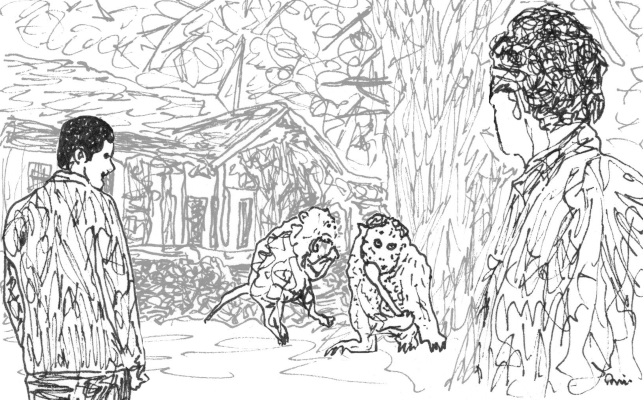 |
(Italiano) Inaspettatamente, l'episodio finale di questa stagione vede la prova di forza tra Aouda e Rupert. Mentre i Ragazzi assistono stupiti al confronto tra i due, Heinz riassume la situazione mondiale, che gli ricordano gli eventi vicino al capanno da pesca. |
(Deutsch) Unerwartet kommt es in der letzten Folge dieser Staffel zu einem Showdown zwischen Aouda und Rupert. Während die Jungs erstaunt die Auseinandersetzung zwischen den beiden beobachten, resümiert Heinz die Weltlage, an die ihn das Geschehen neben der Angelhütte erinnert. Normal Version | ||
Tag 71 1 Heinz: Wow, du bist kreidebleich geworden. |
Day 71 Heinz: Wow, you've gone white as a sheet. |
Jour 71 Heinz : Wow, tu es devenu blanc comme un linge. |
Giorno 71 Heinz: Wow, sei diventato bianco come un lenzuolo. |
Día 71 Heinz: Vaya, te has quedado blanco como la leche. |
2 Helmut: Rupert, anhalten!! |
Helmut: Rupert, stop!! |
Helmut : Rupert, arrête-toi !! |
Helmut: Rupert, fer-ma-ti!! |
Helmut: ¡¡Rupert, pa-ra!! |
3 Helmut: Oh, was ...? Plock |
Helmut: Oh, what...? Plock |
Helmut : Oh, qu'est-ce que... ? Ploc |
Helmut: Oh, cosa...? Ploc |
Helmut: Oh, ¿qué...? Ploc |
4 Heinz: Man sieht und hört nichts mehr. Was da oben wohl gerade passiert ... |
Heinz: I can no longer see or hear anything. I wonder what's happening up there... |
Heinz : On ne voit plus rien, on n'entend plus rien. Je me demande ce qui se passe là-haut... |
Heinz: Non si vede e non si sente più nulla. Mi chiedo cosa stia succedendo lassù... |
Heinz: Ya no se ve ni se oye nada. Me pregunto qué estará pasando ahí arriba... |
5 Heinz: Wusstest du, dass Syrien jetzt mit Hilfe der Amerikaner, Israelis und Türken von al-Qaida regiert wird? |
Heinz: Did you know that Syria is now ruled by al-Qaida with the help of the Americans, Israelis and Turks? |
Heinz : Sais-tu que la Syrie est désormais dirigée par Al-Qaïda avec l'aide des Américains, des Israéliens et des Turcs ? |
Heinz: Sapevi che la Siria è ora governata da Al-Qaeda con l'aiuto di americani, israeliani e turchi? |
Heinz: ¿Sabías que Siria está ahora gobernada por Al Qaeda con la ayuda de estadounidenses, israelíes y turcos? |
6 Heinz: Gute Frage. Es ist jedenfalls keine gute Sache und sie knüpft an ganz dunkle Zeiten an. Die Menschen in Gaza werden auch nach 14 Monaten weiterhin brutal ausgehungert und ausgebombt, wie kann man das vergessen? |
Heinz: Good question. Certainly not good things and they hark back to very dark times. Even after 14 months, the people in Gaza are still being brutally starved and bombed out, how can anyone forget that? |
Heinz : Bonne question. Certainement pas de bonnes choses et cela renoue avec des temps très sombres. Même après 14 mois, les habitants de Gaza sont toujours brutalement affamés et bombardés, comment peut-on l'oublier ? |
Heinz: Bella domanda. Di certo non si tratta di cose positive, e rimandano a tempi molto bui. Anche dopo 14 mesi, la popolazione di Gaza viene ancora brutalmente affamata e bombardata, come si fa a dimenticarlo? |
Heinz: Buena pregunta. Desde luego, no son cosas buenas y remiten a tiempos muy oscuros. Incluso después de 14 meses, la gente de Gaza sigue siendo brutalmente asesinada por hambre y bombardeada, ¿cómo puede alguien olvidar eso? |
| Weiter geht's mit Staffel 9: Die Jungs in Japan / The story continues with The Boys in Japan |
| up | |
| Datenschutzerklärung und Impressum (data privacy statement and imprint) |

