



|
home ao english musik literatur journalismus bilder sprachen mehr shop sitemap | |
Auf der Schatzinsel 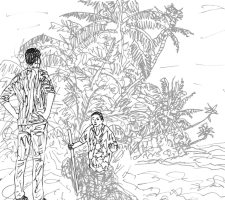 |
On Treasure Island |
Sur l'Île au Trésor |
Sull'Isola del Tesoro |
En la Isla del Tesoro |
(Deutsch) Dies ist die linguistische Version der fünften Staffel der Jungs. Die Texte sind dieselben wie auf der Hauptseite. |
(English) This is the linguistic version of the fifth season of the Boys. The texts are the same as on the main page. |
(Français) Voici la version linguistique de la cinquième saison des Gars. Les textes sont les mêmes que sur la page principale. |
(Italiano) Questa è la versione linguistica della quinta stagione dei Ragazzi. I testi sono gli stessi della pagina principale. |
(Español) Esta es la versión lingüística de la quinta temporada de los Chicos. Los textos son los mismos que en la página principal. |
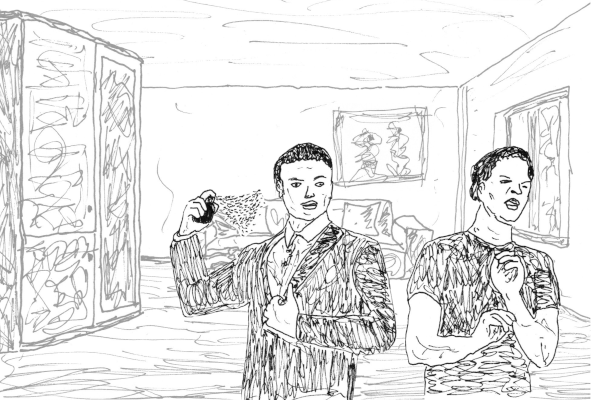
(English) Peace has returned to the Boys again: Heinz reaches new heights with Fiona and has found a meaningful occupation, while Helmut enjoys life with Hedu's father. But what is this project Helmut is talking about? |
 |
(Italiano) Tra i Ragazzi è tornata la pace: Heinz ha raggiunto dei nuovi livelli con Fiona e ha trovato un'occupazione significativa, mentre Helmut si sta godendo la vita con il padre di Hedu. Ma qual è il progetto di cui parla Helmut? |
(Deutsch) Es ist wieder Ruhe eingekehrt bei den Jungs: Heinz erreicht mit Fiona neue Höhen und hat eine sinnvolle Beschäftigung gefunden, während Helmut mit Hedus Vater das Leben genießt. Aber was ist das für ein Projekt, von dem Helmut erzählt? Normal Version | ||
Tag 1 1 Heinz: Sag mal, wolltest du nicht das Badezimmer machen? |
Day 1 Heinz: Say, didn't you want to clean the bathroom? |
Jour 1 Heinz : Dis, tu ne voulais pas nettoyer la salle de bain ? |
Giorno 1 Heinz: Senti, non volevi pulire il bagno? |
Día 1 Heinz: Dime, ¿no querías limpiar el baño? |
2 Heinz: Musste das sein? Ey, ich steh genau neben dir, kannst du dein Parfüm nicht in die andere Richtung spritzen? |
Heinz: Did you have to do that? Hey, I'm standing right next to you, can't you spray your perfume in the other direction? |
Heinz : Il fallait bien que tu fasses ça ? Hé, je suis juste à côté de toi, tu ne peux pas vaporiser ton parfum dans l'autre sens ? |
Heinz: Dovevi davvero farlo? Ehi, sono proprio accanto a te, non puoi spruzzare il tuo profumo nell'altra direzione? |
Heinz: ¿Tenías que hacer eso? Eh, estoy justo a tu lado, ¿no puedes rociar tu perfume en la otra dirección? |
3 Helmut: Stimmt. Es gab Trüffelpasta, so was lässt er sich nicht entgehen. |
Helmut: Ah, right. There was truffle pasta, he wouldn't miss that. |
Helmut : Ah, c'est vrai. Il y avait des pâtes aux truffes, il n'aurait pas manqué ça. |
Helmut: Ah, giusto. C'era la pasta al tartufo, non se la sarebbe persa. |
Helmut: Así es. Había pasta con trufas, no se lo perdería. |
4 Heinz: Was heißt hier ...? Jetzt rennt der wieder mitten im Gespräch weg! Er stellt eine Frage und dann ... |
Heinz: What do you mean...? Now he's running off in the middle of the conversation again! He asks a question and then... |
Heinz : Comment ça... ? Voilà qu'il s'enfuit à nouveau au milieu de la conversation ! Il pose une question et puis... |
Heinz: Cosa vuoi dire...? Ora se ne va di nuovo nel bel mezzo della conversazione! Fa una domanda e poi... |
Heinz: ¿Qué quieres decir? ¡Ahora vuelve a escaparse en medio de la conversación! Hace una pregunta y luego... |
5 Heinz: Also, dass du das nicht kennst! Willst du dich denn nicht nützlich machen für dein Geld? |
Heinz: How can you not know that? Don't you want to make yourself useful for the money you get? |
Heinz : Comment peux-tu ne pas le savoir ? Tu ne veux pas te rendre utile pour ton argent ? |
Heinz: Come fai a non saperlo? Non vuoi renderti utile per i tuoi soldi? |
Heinz: ¿Cómo puedes no saberlo? ¿No quieres ser útil a cambio de tu dinero? |
6 Helmut: Wer hat Aouda hergebracht? Wer hat ... |
Helmut: Who brought Aouda here? Who... |
Helmut : Qui a amené Aouda ici ? Qui... |
Helmut: Chi ha portato qui Aouda? Chi... |
Helmut: ¿Quién trajo a Aouda aquí? ¿Quién... |
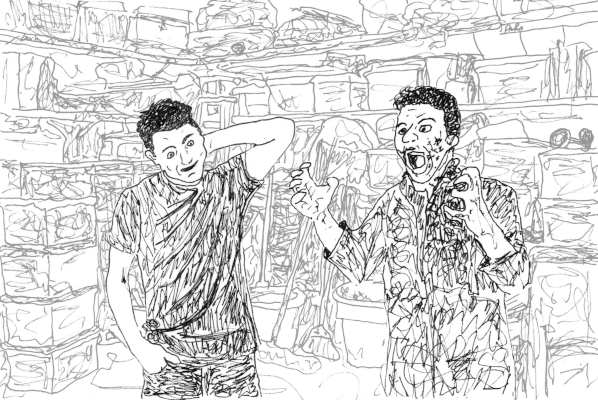
(English) When Helmut takes Heinz down to the cellar to share what's troubling him, it must be really important. Anyway, the day doesn't start well for either of them and one wonders who is hit worse. |
 |
(Italiano) Se Helmut porta Heinz in cantina per dirgli cosa gli passa per la testa, deve essere davvero importante. In ogni caso, la giornata non inizia bene per nessuno dei due e ci si chiede chi stia peggio. |
(Deutsch) Wenn Helmut Heinz bis in den Keller mitnimmt, um ihm zu sagen, was er auf dem Herzen hat, muss es wirklich wichtig sein. Der Tag fängt jedenfalls für beide nicht gut an und man fragt sich, wen es schlimmer trifft. Normal Version | ||
Tag 2 1 Heinz: Morgen! Wann bist du denn gekommen? Gähn |
Day 2 Heinz: Morning! When did you get back? Yawn. |
Jour 2 Heinz : Bonjour ! Quand es-tu rentré ? Baille |
Giorno 2 Heinz: Buongiorno! Quando sei tornato? Yawn |
Día 2 Heinz: ¡Buenos días! ¿Cuándo has llegado? Bostezo |
2 Heinz: Im Keller! Also, du hast Nerven! Welchen Grund könnte es geben, aus dem wir irgendwas in unserem winzigen Kellerraum besprechen müssten! |
Heinz: In the cellar! Well, you've got a lot of nerve! What possible reason could there be for us to discuss anything in our minuscule cellar room! |
Heinz : A la cave ! Alors, tu as du front ! Quelle raison pourrait nous pousser à discuter de quoi que ce soit dans notre minuscule cave ! |
Heinz: In cantina! Beh, hai una bella faccia tosta! Quale ragione potremmo avere per discutere di qualcosa nella nostra minuscola stanza in cantina? |
Heinz: ¡En el sótano! Vaya, ¡qué cara tienes! ¿Qué razón puede haber para que discutamos algo en nuestro minúsculo cuarto en el sótano? |
3 Heinz: Ach du große Scheiße! Und was willst du jetzt machen? |
Heinz: Holy shit! And what do you want to do now? |
Heinz : Oh, putain de merde ! Et qu'est-ce que tu vas faire maintenant ? |
Heinz: Porca miseria! E cosa vuoi fare adesso? |
Heinz: ¡Joder! ¿Y qué quieres hacer ahora? |
4 Heinz: Wieso muss ich ... Morgen! |
Heinz: Why do I have to... Morning! |
Heinz : Pourquoi dois-je... Bonjour ! |
Heinz: Perché devo... Buongiorno! |
Heinz: ¿Por qué tengo que... ¡Buenos días! |
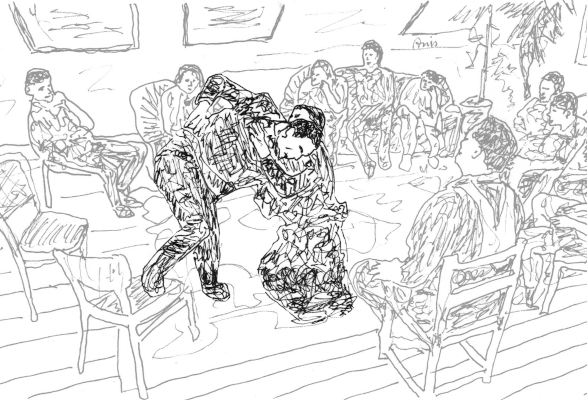
(English) Helmut has not grasped the implications of his behavior, so Heinz takes him to a place where he can make some progress. Whether this helps, however, remains questionable at first. |
 |
(Italiano) Helmut non ha capito le conseguenze del suo comportamento, quindi Heinz lo porta in un luogo dove può fare dei progressi. All'inizio, però, non è certo che questo possa essere d'aiuto. |
(Deutsch) Helmut hat die Tragweite seines Verhaltens nicht begriffen, daher bringt Heinz ihn an einen Ort, wo er einen Schritt weiterkommt. Ob das allerdings hilft, bleibt zunächst fraglich. Normal Version | ||
Tag 2 1 Heinz: Ich glaube, hier müssen wir aussteigen. Nee, die nächste. |
Day 2 Heinz: I think we have to get off here. Nah, the next one. |
Jour 2 Heinz : Je crois que c'est là que nous devons descendre. Nan, la prochaine. |
Giorno 2 Heinz: Penso che dobbiamo scendere qui. No, la prossima. |
Día 2 Heinz: Creo que tenemos que bajar aquí. No, el siguiente. |
2 Heinz: Hier, hier, wo läufst du hin, Mann? Wir gehen da unten an den Schienen entlang. |
Heinz: Here, here, where are you going, man? We're gonna walk along the tracks down there. |
Heinz : Par ici, par ici, où vas-tu, mec ? On va marcher le long des voies là en bas. |
Heinz: Qui, qui, dove stai andando, amico? Cammineremo lungo i binari laggiù. |
Heinz: Por aquí, por aquí, ¿adónde vas, tío? Vamos a caminar por las vías de ahí abajo. |
3 Helmut: Ich dachte, wir wollten keine einsamen Entscheidungen mehr treffen und über den Kopf ... Was ist denn hier los? |
Helmut: I thought we didn't want to make any more lonely decisions and go over the head... Hey, what's happening here? |
Helmut : Je pensais que nous ne voulions plus prendre de décisions en solitaire et au-dessus de la tête... Mais que se passe-t-il ici ? |
Helmut: Pensavo che non volessimo più prendere decisioni da soli e sopra la testa di... Ma cosa sta succedendo qui? |
Helmut: Creía que no queríamos tomar más decisiones por nuestra cuenta y por encima de... Eh, ¿qué está pasando aquí? |
4 Heinz: (...) Und? Fällt dir auch etwas zu dem Thema ein? |
Heinz: (...) So? Can you think of anything to say on the subject? |
Heinz : (...) Et alors ? Est-ce que tu as quelque chose à dire sur le sujet ? |
Heinz: (...) Allora? Ti viene in mente qualcosa da dire sull'argomento? |
Heinz: (...) ¿Y? ¿Se te ocurre algo que decir sobre el tema? |
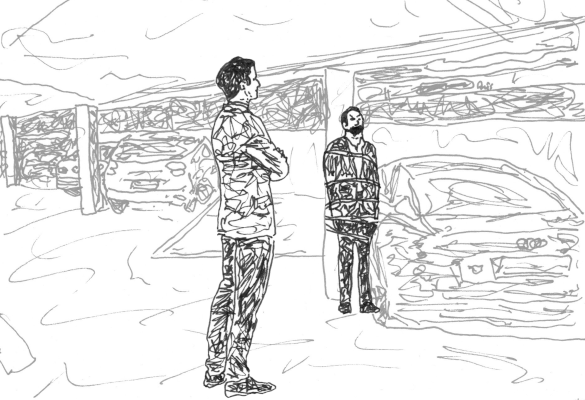
(English) Heinz finds a way to persuade Helmut to make a binding agreement that takes him away from his problem. A little unconventional perhaps, but there are situations in which a decision is necessary. So when they arrive home, Helmut is in for a surprise. |
 |
(Italiano) Heinz trova un modo per convincere Helmut a fare un accordo vincolante che lo allontana dal suo problema. Forse è un po' anticonvenzionale, ma ci sono situazioni in cui è necessario prendere una decisione. Così, all'arrivo a casa, Helmut si trova di fronte a una sorpresa. |
(Deutsch) Heinz findet ein Mittel, um Helmut zu einer bindenden Vereinbarung zu bewegen, die ihn von seinem Problem wegbringt. Ein wenig unkonventionell vielleicht, aber es gibt Situationen, in denen eine Entscheidung nötig ist. Zu Hause angekommen erwartet Helmut daher eine Überraschung. Normal Version | ||
Tag 2 1 Helmut: Pass auf: Ich knack erst mal ne Runde und morgen überlegen wir in Ruhe, was wir machen. Ist das ein Angebot? |
Day 2 Helmut: Listen: I'll get a good night's sleep and tomorrow we'll think about how to proceed. Is that an offer? |
Jour 2 Helmut : Écoute : Je vais roupiller un peu et demain nous réfléchirons tranquillement à ce que nous allons faire. C'est une offre ? |
Giorno 2 Helmut: Ascolta: Mi farò una bella dormita e domani penseremo a come procedere. È un'offerta? |
Día 2 Helmut: Escucha: voy a dormir un poco y mañana pensaremos qué vamos a hacer. ¿Es una oferta? |
2 Heinz: Du hast jetzt mal Pause. Hör auf zu ruckeln, ich hab dich fest an den Pfeiler gebunden. Du kommst da nicht weg. |
Heinz: You're taking a break now. Stop twitching, I've tied you firmly to the pillar. You can't get out. |
Heinz : Tu as une pause maintenant. Arrête de gigoter, je t'ai solidement attaché au pilier. Tu ne peux pas t'en sortir. |
Heinz: Ora hai una pausa. Smetti di agitarti, ti ho legato saldamente al pilastro. Non puoi uscire. |
Heinz: Ahora tienes un respiro. Deja de sacudirte, te he atado firmemente al pilar. No puedes salir. |
3 Heinz: Das war der Huber aus dem elften Stock. Netter Kerl. Wusstest du, dass er alte Uhren sammelt? |
Heinz: That was Huber from the eleventh floor. Nice guy. Did you know he collects old clocks? |
Heinz : C'était Huber du onzième étage. Un type sympa. Tu savais qu'il collectionnait les vieilles horloges ? |
Heinz: Era l'Huber dell'undicesimo piano. Tipo simpatico. Sapevi che colleziona orologi antichi? |
Heinz: Era el Huber de la undécima planta. Tipo simpático. ¿Sabías que colecciona relojes antiguos? |
4 Heinz: Geht schon. Also, Markierungen, Bäume, ein paar Zahlen ... da fehlt ja ein Stück. |
Heinz: It's OK. So, markings, trees, a few numbers... why, there's a piece missing. |
Heinz : C'est bon. Alors, des marques, des arbres, quelques chiffres... mais il manque un morceau. |
Heinz: Va bene. Allora, segni, alberi, qualche numero... ma manca un pezzo. |
Heinz: No pasa nada. Entonces, marcas, árboles, algunos números... pero falta una pieza. |
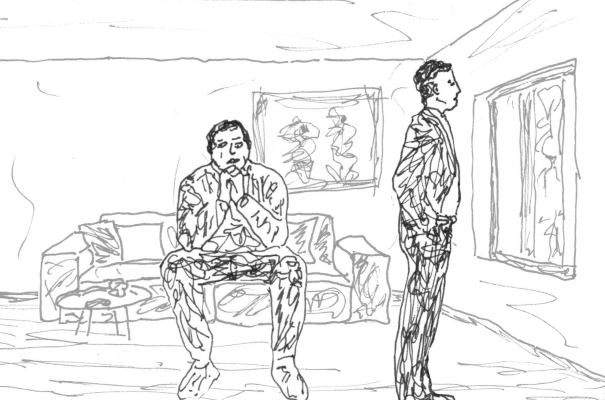
(English) The Boys' mood is sombre. Helmut stares meditatively into the rain and Heinz is at a loss. A phone call brings them both out of their stupor. Heinz learns something about the owner of the second half of the treasure map and about a detail he had overlooked. |
 |
(Italiano) L'umore dei Ragazzi è cupo. Helmut fissa meditabondo la pioggia e Heinz non sa cosa fare. Una telefonata fa uscire entrambi dal loro torpore. Heinz scopre qualcosa sul proprietario della seconda metà della mappa del tesoro e su un dettaglio che aveva trascurato. |
(Deutsch) Die Stimmung bei den Jungs ist getrübt. Helmut starrt meditativ in den Regen und Heinz ist ratlos. Ein Anruf holt die beiden aus ihrer Starre. Heinz erfährt etwas über den Besitzer der zweiten Hälfte der Schatzkarte und über ein Detail, das er übersehen hatte. Normal Version | ||
Tag 3 1 Heinz: Glaubst du nicht, es reicht jetzt? |
Day 3 Heinz: Don't you think that's enough now? |
Jour 3 Heinz : Tu ne penses pas que ça suffit maintenant ? |
Giorno 3 Heinz: Non pensi che sia sufficiente ora? |
Día 3 Heinz: ¿No crees que basta ya? |
2 Heinz: Hast du eigentlich das Fenster in deinem Zimmer zugemacht? |
Heinz: By the way, did you close the window in your room? |
Heinz : Au fait, as-tu fermé la fenêtre de ta chambre ? |
Heinz: A proposito, hai chiuso la finestra della tua stanza? |
Heinz: Por cierto, ¿has cerrado la ventana de tu habitación? |
3 Helmut: Hauptsache, wir kommen mit ihm klar. Giesbert ist oft mit ihm unterwegs, aber ich kenn ihn eigentlich nur vom Zocken. Hoffentlich können wir dem überhaupt vertrauen! |
Helmut: What matters is that we get along with him. Giesbert is often hanging out with him, but I basically only know him from gambling. Let's hope we can trust him at all! |
Helmut : Ce qui compte, c'est que nous nous entendions bien avec lui. Giesbert traîne souvent avec lui, mais je ne le connais essentiellement que par le jeu. Espérons que nous pourrons lui faire confiance ! |
Helmut: L'importante è che andiamo d'accordo con lui. Giesbert è spesso in giro con lui, ma io lo conosco solo per il gioco. Speriamo di poterci fidare di lui! |
Helmut: Lo principal es que nos llevemos bien con él. Giesbert sale a menudo con él, pero yo básicamente solo le conozco del juego. ¡Esperemos que podamos confiar en él! |
4 Helmut: Er hat ziemlich deutlich gemacht, dass er meine Besitztümer pünktlich am ersten Januar um zehn Uhr holen kommt, wenn ich bis dahin nicht gezahlt habe. Inklusive Ring. |
Helmut: He made it pretty clear that he'll come and pick up my possessions on January 1st at ten o'clock sharp if I haven't paid by then. Including the ring. |
Helmut : Il a été assez clair : il viendra récupérer mes biens le 1er janvier à dix heures précises si je n'ai pas payé d'ici là. Y compris la bague. |
Helmut: È stato molto chiaro: verrà a ritirare i miei beni il 1° gennaio alle dieci in punto se non avrò pagato entro quella data. Compreso l'anello. |
Helmut: Fue muy claro: vendrá a recoger mis bienes el 1 de enero a las diez en punto si no he pagado para entonces. Incluido el anillo. |
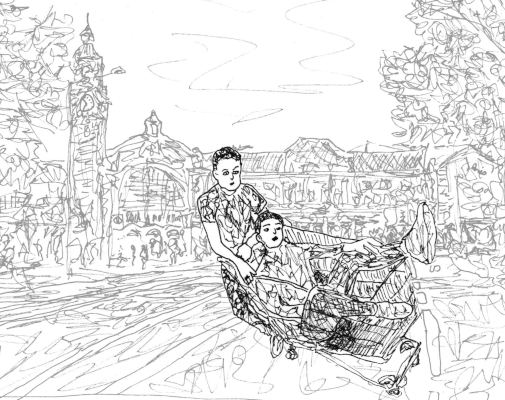
(English) At a meeting in Wiesbaden, Heinz can get a first impression of their new business partner and finds himself in doubt. But this has to wait, because first he has to make his way back to the station, which is not without obstacles. |
 |
(Italiano) Durante un incontro a Wiesbaden, Heinz riesce a farsi una prima idea del nuovo partner commerciale e ha dei dubbi. Ma deve rimandarli, perché prima deve riuscire a tornare alla stazione ferroviaria, che si rivela un percorso non privo di ostacoli. |
(Deutsch) Bei einem Treffen in Wiesbaden kann sich Heinz ein erstes Bild von ihrem neuen Geschäftspartner machen und er hat Zweifel. Die aber muss er verschieben, denn zunächst gilt es, den Rückweg zum Bahnhof zu bewältigen, was durchaus mit Hindernissen verbunden ist. Normal Version | ||
Tag 4 1 Helmut: Geht's? |
Day 4 Helmut: You okay? |
Jour 4 Helmut : Ça va ? |
Giorno 4 Helmut: Stai bene? |
Día 4 Helmut: ¿Estás bien? |
2 Heinz: (...) Was hast du da denn angeschleppt? Du glaubst ja wohl nicht ernsthaft, dass ich mich da reinsetze! |
Heinz: (...) What have you brought there? You don't seriously think I'm going to sit in that thing! |
Heinz : (...) Qu'est-ce que tu as apporté là ? Tu ne penses tout de même pas que je vais m'asseoir dans ce truc ! |
Heinz: (...) Cosa hai portato lì? Non penserai davvero che mi sieda su quella cosa! |
Heinz: (...) ¿Qué has arrastrado hasta allí? ¡No pensarás en serio que me voy a sentar ahí! |
3 Heinz: Halt mal kurz an, die Ruckelei macht mich wahnsinnig! |
Heinz: Stop for a moment, the jolting is driving me crazy! |
Heinz : Arrête-toi un instant, les secousses me rendent fou ! |
Heinz: Fermati un attimo, il sobbalzo mi sta facendo impazzire! |
Heinz: ¡Para un momento, las sacudidas me están volviendo loco! |
4 Heinz: Was machen wir hier eigentlich? Au, pass doch auf! |
Heinz: Just what are we doing here? Ow, watch it! |
Heinz : Oh, qu'est-ce qu'on fait là, au fait ? Aïe, mais fais gaffe ! |
Heinz: Oh, che ci facciamo qui! Ahi, attenzione! |
Heinz: ¡Oh, qué estamos haciendo aquí! ¡Ay, cuidado! |
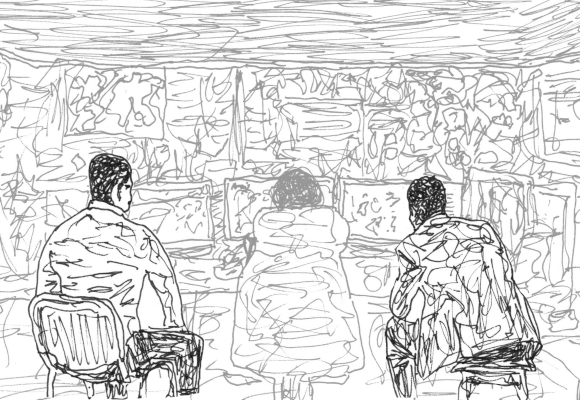
(English) Tech wizard Max's software brings to light what had been hidden for centuries. When Heinz sees the result, he is anything but convinced. But since he has already said A, he has to say B too, thinks Helmut. |
 |
(Italiano) Il software del mago della tecnologia Max rivela ciò che è stato nascosto per secoli. Quando Heinz vede il risultato, è tutt'altro che convinto. Ma dato che ha già detto A, deve dire B, pensa Helmut. |
(Deutsch) Die Software des Technikzauberers Max bringt zutage, was jahrhundertelang verborgen gewesen war. Als Heinz das Ergebnis sieht, ist er alles andere als überzeugt. Da er aber schon A gesagt hat, muss er auch B sagen, denkt Helmut. Normal Version | ||
Tag 5 1 Heinz: Hallo Max! Nun lernen wir uns endlich mal kennen. Oh, Katze. |
Day 5 Heinz: Hello Max! Now we finally get to meet. Oh, cat. |
Jour 5 Heinz : Salut Max ! On fait enfin connaissance. Oh, un chat. |
Giorno 5 Heinz: Ciao Max! Ora finalmente ci conosciamo. Oh, gatto. |
Día 5 Heinz: ¡Hola Max! Por fin nos conocemos. Oh, gato. |
2 Heinz: (...) So, Max hat erst mal den Haupthahn abgestellt. Nun bin ich aber gespannt, was diese Software kann. |
Heinz: (...) That's it, Max has turned off the main tap for now. Now I'm really curious to see what this software can do. |
Heinz : (...) Alors, Max a d'abord fermé le robinet principal. Maintenant, je suis vraiment curieux de voir ce que ce logiciel peut faire. |
Heinz: (...) Allora, Max ha chiuso il rubinetto principale per il momento. Ma ora sono davvero curioso di vedere cosa può fare questo software. |
Heinz: (...) Así pues, Max ha cerrado el grifo principal por ahora. Pero ahora tengo mucha curiosidad por ver lo que puede hacer este software. |
3 Helmut: Wir haben es geschafft, Mann! Bald ist der Schatz unser, dann bin ich aus den Schulden raus, kann meine Finger behalten und vom Rest bekommt Max seinen Anteil! |
Helmut: We've made it, man! Soon the treasure will be ours, then I'll be out of debt, I can keep my fingers and Max will get his share out of the remaining money! |
Helmut : On a réussi, mec ! Bientôt, le trésor sera à nous, alors je n'aurai plus de dettes, je pourrai garder mes doigts et Max aura sa part sur l'argent restant ! |
Helmut: Ce l'abbiamo fatta, amico! Presto il tesoro sarà nostro, così non avrò più debiti, potrò tenermi le mie dita e Max avrà la sua parte di denaro rimanente! |
Helmut: ¡Lo hemos conseguido, tío! ¡Pronto el tesoro será nuestro, entonces estaré libre de deudas, podré quedarme con mis dedos y Max recibirá su parte del dinero restante! |
4 Heinz: Also erstens: Wenn das stimmt, kommen wir nicht an ihn ran. Zweitens: Es gibt keinen Schatz. |
Heinz: First of all, if that's true, we won't be able to get to it. Secondly, there is no treasure. |
Heinz : Premièrement, si c'est vrai, on ne pourra pas l'atteindre. Deuxièmement, il n'y a pas de trésor. |
Heinz: Innanzitutto, se è reale, non possiamo raggiungerlo. In secondo luogo, non c'è nessun tesoro. |
Heinz: En primer lugar, si es real, no podemos llegar a él. En segundo lugar, no hay ningún tesoro. |
(English) Fiona is happy: she has a good man, money, a wonderful loaf of bread and she's going on vacation soon. No wonder she's celebrating with her best friend at a picnic by the water. It's a beautiful day, really, except for one small thing... |
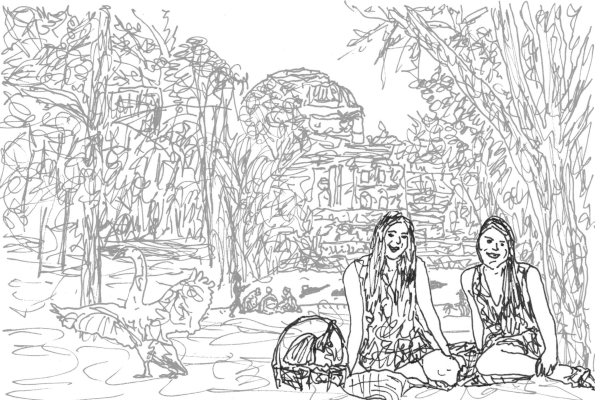 |
(Italiano) Fiona è felice: ha un buon uomo, soldi, una splendida pagnotta e presto andrà in vacanza. Non c'è da stupirsi che stia festeggiando con la sua migliore amica in un picnic in riva al mare. È davvero una bella giornata, tranne che per una piccola cosa... |
(Deutsch) Fiona ist glücklich: Sie hat einen guten Mann, Geld, ein wunderbares Brot und schon bald fährt sie in den Urlaub. Kein Wunder, dass sie das mit ihrer besten Freundin bei einem Picknick am Wasser feiert. Es ist ein schöner Tag, wirklich, bis auf eine Kleinigkeit ... Normal Version | ||
Tag 7 1 Fanni: Da neben dem Baum ist eine schöne Stelle. Was meinst du? |
Day 7 Fanni: There's a nice spot next to the tree. What do you think? |
Jour 7 Fanni : Il y a un bel endroit à côté de l'arbre. Qu'est-ce que tu en penses ? |
Giorno 7 Fanni: C'è un bel posto vicino all'albero. Che ne pensi? |
Día 7 Fanni: Hay un buen sitio junto al árbol. ¿Qué te parece? |
2 Fanni: Ich hab noch nie so ein gutes Brot gegessen. Ein Tag voller Highlights! |
Fanni: I've never eaten such good bread. A day full of highlights! |
Fanni : Je n'ai jamais mangé d'aussi bon pain. Une journée pleine de moments forts ! |
Fanni: Non ho mai mangiato del pane così buono. Una giornata piena di momenti forti! |
Fanni: Nunca había comido un pan tan bueno. ¡Un día lleno de momentos destacados! |
3 Fiona: Glaubst du denn, dass du das mit Hedu wieder hinkriegen kannst? |
Fiona: And do you think you can fix things with Hedu? |
Fiona : Et tu penses pouvoir arranger les choses avec Hédou ? |
Fiona: E pensi di poter sistemare le cose con Hedu? |
Fiona: ¿Y crees que podrás arreglar las cosas con Hedu? |
4 Fanni: Dieses Geräusch klingt nicht gut. Hörst du das auch? Ssssss |
Fanni: This noise doesn't sound good. Do you hear that too? Zzzzzz |
Fanni : Ce bruit n'a pas l'air bon. Tu l'entends aussi ? Zzzzzz |
Fanni: Questo rumore non suona bene. Lo senti anche tu? Zzzzzz |
Fanni: Este zumbido no suena bien. ¿Tú también lo oyes? Zzzzzz |
(English) Heinz, Fiona and Helmut rent a holiday home on the scenic coast of Portugal, in Nazaré, north of Lisbon, because Gustavo's family is supposed to live there. But before they find them, Heinz and Fiona already come into contact with them in a most unusual way. |
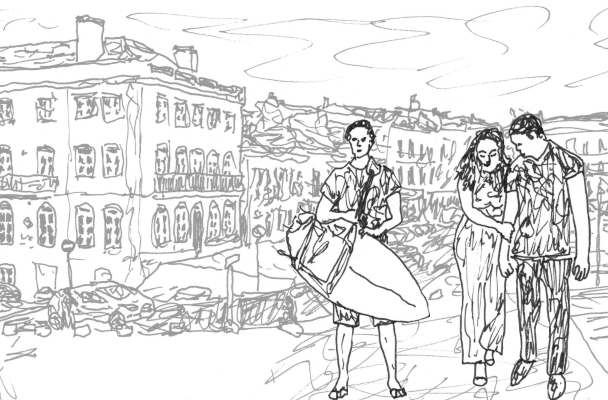 |
(Italiano) Heinz, Fiona e Helmut affittano una casa per le vacanze sulla splendida costa del Portogallo, a Nazaré, a nord di Lisbona, perché è qui che dovrebbe vivere la famiglia di Gustavo. Ma prima ancora di trovarli, Heinz e Fiona entrano in contatto con loro in un modo del tutto insolito. |
(Deutsch) An der malerischen Küste Portugals, in Nazaré nördlich von Lissabon, mieten sich Heinz, Fiona und Helmut ein Ferienhaus, denn an diesem Ort soll Gustavos Familie leben. Doch noch bevor sie sie finden, treten Heinz und Fiona bereits mit ihr in Kontakt, und das auf eine höchst ungewöhnliche Weise. Normal Version | ||
Tag 12 1 Heinz: Willst du jetzt die ganze Zeit mit diesem Teil durch die Gegend laufen? |
Day 12 Heinz: Do you want to walk around with that thing the whole time now? |
Jour 12 Heinz : Tu veux te promener avec ce truc tout le temps maintenant ? |
Giorno 12 Heinz: Hai intenzione di andare in giro con questa cosa per tutto il tempo allora? |
Día 12 Heinz: ¿Ahora quieres andar todo el rato con esa cosa? |
2 Helmut: Das waren noch Zeiten! Aber dann hat sich alles verändert. Não foi muito bom para nós. |
Helmut: Those were the days! But then everything changed. Não foi muito bom para nós. |
Helmut : C'était le bon temps ! Mais ensuite, tout a changé. Não foi muito bom para nós. |
Helmut: Quelli sì che erano giorni! Ma poi tutto è cambiato. Não foi muito bom para nós. |
Helmut: ¡Qué tiempos aquellos! Pero luego todo cambió. Não foi muito bom para nós. |
3 Heinz: Heinz. Äh, Heinz aus Eimsbüttel. Das liegt in ... |
Heinz: Heinz. Uh, Heinz from Eimsbüttel. That's in... |
Heinz : Heinz. Euh, Heinz d'Eimsbüttel. C'est à... |
Heinz: Heinz. Ehm, Heinz di Eimsbüttel. Si trova ad... |
Heinz: Heinz. Ehm, Heinz de Eimsbüttel. Eso está en... |
4 Helmut: Er ist in Rio de Janeiro, hörst du nicht zu? Vor zwanzig Jahren hab ich ihn dorthin gebracht, weil ich mich dort zur Ruhe setzen wollte. |
Helmut: It's in Rio de Janeiro, aren't you listening? I took it there twenty years ago because I wanted to retire there. |
Helmut : Il est à Rio de Janeiro, tu n'écoutes pas ? Il y a vingt ans, je l'ai emmené là-bas parce que je voulais y prendre ma retraite. |
Helmut: È a Rio de Janeiro, non mi stai ascoltando? L'ho portato lì vent'anni fa perché volevo andare in pensione lì. |
Helmut: Está en Río de Janeiro, ¿no me estás escuchando? Lo llevé allí hace veinte años porque quería jubilarme allí. |
(English) With the help of his extraordinary abilities, Helmut tracks down the sought Gustavo faster than Heinz could have imagined. It gradually dawns on Helmut that he has entered completely new territory on his high-flying streak. |
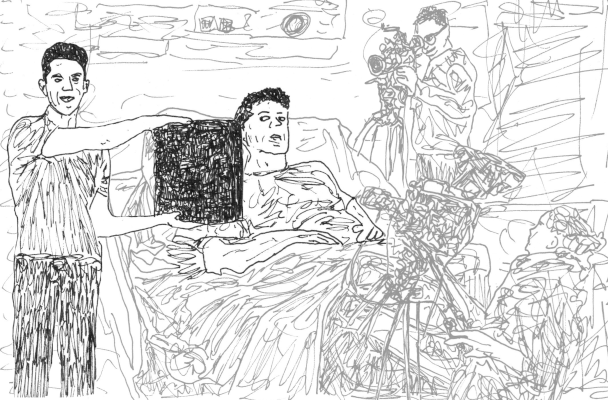 |
(Italiano) Con l'aiuto delle sue straordinarie capacità, Helmut rintraccia Gustavo più velocemente di quanto Heinz potesse immaginare. Durante il suo slancio trionfante, Helmut raggiunge un territorio completamente nuovo, come si rende gradualmente conto. |
(Deutsch) Mithilfe seiner außergewöhnlichen Fähigkeiten stöbert Helmut den gesuchten Gustavo schneller auf, als Heinz es sich hätte vorstellen können. Auf seinem Höhenflug erreicht Helmut völlig neues Terrain, wie ihm nach und nach klar wird. Normal Version | ||
Tag 12 1 Heinz: Du hast es also wieder mal geschafft! Mann, Mann, Mann! |
Day 12 Heinz: So you've done it again! Man, man, man! |
Jour 12 Heinz : Tu as donc réussi une fois de plus ! Mec, mec, mec ! |
Giorno 12 Heinz: Allora l'hai fatto di nuovo! Amico, amico, amico! |
Día 12 Heinz: ¡Así que lo has vuelto a hacer! ¡Tío, tío, tío! |
2 Helmut: Oh Gott, das Brett! Hat man es gefunden? Ich bin diesen Wasserfall runter und plötzlich war es weg. Ich muss es bezahlen, wenn wir es nicht wiederfinden. |
Helmut: Oh God, the board! Did they find it? I went down this waterfall and suddenly it was gone. I'll have to pay for it if we don't get it back. |
Helmut : Oh mon dieu, la planche ! Ils l'ont trouvée ? Je suis descendu de cette cascade et tout à coup, elle a disparu. Je vais devoir la payer si on ne la récupère pas. |
Helmut: Oh Dio, la tavola! L'hanno trovata? Sono sceso da quella cascata e all'improvviso non c'era più. Dovrò pagarla se non la recuperiamo. |
Helmut: ¡Oh Dios, la tabla! ¿La encontraron? Bajé por esa cascada y de repente ya no estaba. Tendré que pagarla si no la recuperamos. |
3 Helmut: Wer ist das denn jetzt? Hören Sie auf, mich zu filmen, Mann! Also so was! |
Helmut: Who is that now? Stop filming me, man! I mean, really! |
Helmut : Qui est-ce encore ? Arrêtez de me filmer, mec ! Vraiment ! |
Helmut: Chi è adesso? La smetta di filmarmi, amico! Davvero! |
Helmut: ¿Quién es ese ahora? ¡Deje de grabarme, hombre! ¡En serio! |
4 Heinz: Hier, jetzt ist das Video bereit. Warte mal, ich komm mit dem Laptop hier rum zu dir. Oh, sorry, äh, perdão! |
Heinz: There, the video is ready. Wait, I'll come over to you with the laptop. Oh, sorry, uh, perdão! |
Heinz : Voilà, la vidéo est prête. Attends, je vais venir vers toi avec le portable. Oh, désolé, euh, perdão ! |
Heinz: Ecco, il video è pronto. Aspetta, vengo da te con il portatile. Oh, scusi... ehm, perdão! |
Heinz: Ya está, el vídeo está listo. Espera, voy hacia ti con el portátil. Oh, lo siento, er, ¡perdão! |
(English) The Boys visit Gustavo at his house in Nazaré. Heinz takes the opportunity of the walk to ask Helmut about his peculiar ring. Helmut reacts grumpily, but then he talks freely about the things Heinz wants to know. |
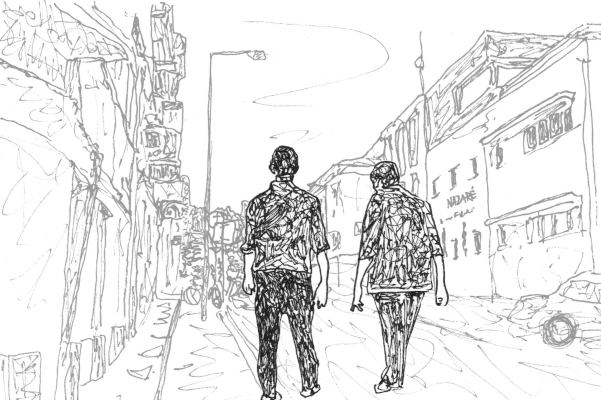 |
(Italiano) I Ragazzi fanno visita a Gustavo nella sua casa di Nazaré. Heinz approfitta della passeggiata per chiedere a Helmut del suo straordinario anello. Helmut reagisce in modo scontroso, ma poi parla apertamente delle cose che Heinz vuole sapere. |
(Deutsch) Die Jungs besuchen Gustavo in seinem Haus in Nazaré. Heinz nutzt die Gelegenheit des Fußmarschs, um Helmut nach seinem sonderbaren Ring zu fragen. Helmut reagiert missmutig, aber dann erzählt er freimütig über die Dinge, die Heinz wissen will. Normal Version | ||
Tag 13 1 Helmut: Wie hast du Gustavo überhaupt erkannt, gestern am Strand? |
Day 13 Helmut: So how did you even recognize Gustavo yesterday on the beach? |
Jour 13 Helmut : Au fait, comment as-tu reconnu Gustavo, hier sur la plage ? |
Giorno 13 Helmut: A proposito, come hai riconosciuto Gustavo sulla spiaggia ieri? |
Día 13 Helmut: Por cierto, ¿cómo reconociste a Gustavo, ayer en la playa? |
2 Helmut: Ach so. Du Heinz, seit dieser Wellenerfahrung gestern bin ich nicht mehr derselbe, glaub ich. |
Helmut: Oh, I see. You know, Heinz, I think I'm not the same since that wave experience yesterday. |
Helmut : Ah, je vois. Tu sais, Heinz, je crois que je ne suis plus le même depuis l'expérience de la vague d'hier. |
Helmut: Oh, capisco. Sai, Heinz, credo di non essere più lo stesso dopo l'esperienza dell'onda di ieri. |
Helmut: Ah, ya veo. Sabes, Heinz, creo que no soy el mismo después de la experiencia de la ola de ayer. |
3 Heinz: Also, wie war das? Du bist in den Laden gegangen und hast nach einem Ring gefragt oder wie? |
Heinz: So, what's the story? You went into the shop and asked for a ring, right? |
Heinz : Alors, comment ça s'est passé ? Tu es entré dans le magasin et tu as demandé une bague, c'est ça ? |
Heinz: Allora, com'è andata? Sei andato al negozio e hai chiesto un anello, giusto? |
Heinz: Entonces, ¿cómo fue? Fuiste a la tienda y le pediste un anillo, ¿no? |
4 Heinz: Hm. |
Heinz: Hm. |
Heinz : Hm. |
Heinz: Hm. |
Heinz: Hm. |
(English) When Gustavo reads the Captain Castanheira's diaries to the Boys, Heinz eagerly takes notes, while Helmut trusts in his own approach and insists that it makes sense. He finally demonstrates it to the other two, leaving them baffled. |
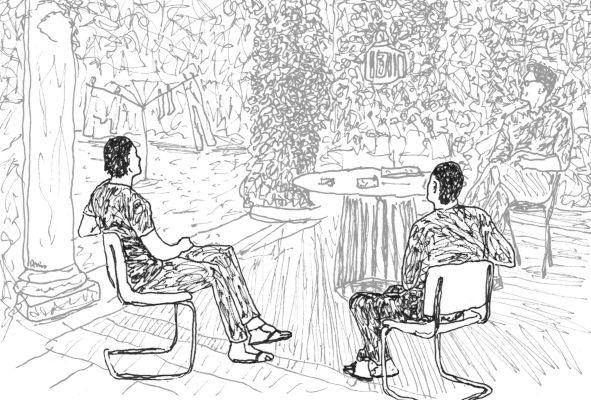 |
(Italiano) Quando Gustavo legge ai Ragazzi i diari del capitano Castanheira, Heinz prende appunti con entusiasmo, mentre Helmut si fida del proprio approccio e insiste sulla sua validità. Alla fine lo dimostra agli altri due, lasciandoli a bocca aperta. |
(Deutsch) Als Gustavo den Jungs die Tagebücher des Käpten Castanheira vorliest, macht sich Heinz eifrig Notizen, während Helmut auf seine eigene Herangehensweise vertraut und darauf besteht, dass sie Hand und Fuß hat. Er demonstriert sie den beiden anderen schließlich, was sie verblüfft zurücklässt. Normal Version | ||
Tag 13 1 Helmut: So, ich denke, nun haben wir alles, was wir brauchen. Lass uns abhauen! |
Day 13 Helmut: Well, I think we have everything we need now. Let's get out of here! |
Jour 13 Helmut : Bon, je crois qu'on a tout ce qu'il faut maintenant. Tirons-nous d'ici ! |
Giorno 13 Helmut: Allora, credo che ora abbiamo tutto quello che ci serve. Andiamo via di qui! |
Día 13 Helmut: Bueno, creo que ya tenemos todo lo que necesitamos. Vámonos de aquí. |
2 Heinz: Also: „Nach monatelanger Fahrt erreichten wir die Fidschi-Inseln. Von der Besatzung war nur noch die Hälfte übrig und das Schiff war stark beschädigt.” |
Heinz: So: "After a journey lasting months, we reached the Fiji Islands. Only half of the crew was left and the ship was badly damaged." |
Heinz : Donc : « Après un voyage de plusieurs mois, nous avons atteint les îles Fidji. Il ne restait plus que la moitié de l'équipage et le bateau était fortement endommagé. » |
Heinz: Quindi: "Dopo un viaggio durato mesi, raggiungemmo le isole Fiji. Era rimasta solo metà dell'equipaggio e la nave era gravemente danneggiata." |
Heinz: Entonces: "Tras un viaje de meses, llegamos a las islas Fiyi. Solo quedaba la mitad de la tripulación y el barco estaba gravemente dañado." |
3 Helmut: Jemand sollte die Wäsche reinholen, es gibt gleich einen Schauer. |
Helmut: Someone had better bring in the laundry, there's a shower coming. |
Helmut : Quelqu'un devrait rentrer le linge à l'intérieur, il va y avoir une averse. |
Helmut: Qualcuno dovrebbe portare il bucato, sta arrivando un acquazzone. |
Helmut: Será mejor que alguien meta la colada, que viene un chaparrón. |
4 Helmut: (...) Merkt ihr es jetzt? |
Helmut: (...) Do you feel it now? |
Helmut : (...) Tu le sens maintenant ? |
Helmut: (...) Lo senti adesso? |
Helmut: (...) ¿Lo sientes ahora? |
(English) The week in Portugal is drawing to a close. Heinz and Helmut are sitting on the beach, summing up the situation, when an old acquaintance appears. He gives Heinz another tip and otherwise attracts attention with his equally quick-witted and bizarre behavior. Fiona is horrified. |
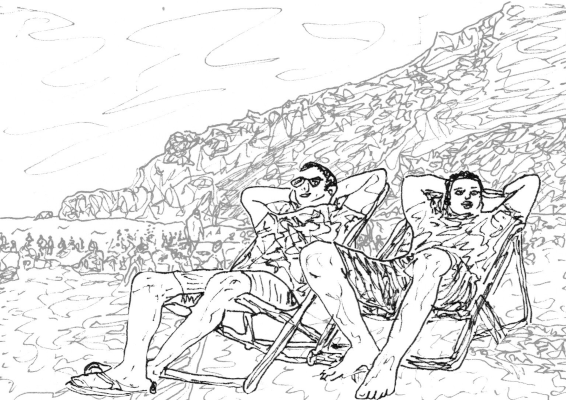 |
(Italiano) La settimana in Portogallo sta per finire. Heinz e Helmut sono seduti sulla spiaggia e stanno riassumendo lo stato delle cose quando appare una vecchia conoscenza. Dà un'altra mancia a Heinz e si fa notare per il suo comportamento, tanto perspicace quanto bizzarro. Fiona è inorridita. |
(Deutsch) Die Woche in Portugal nähert sich dem Ende. Heinz und Helmut sitzen am Strand und resümieren den Stand der Dinge, als ein alter Bekannter erscheint. Der gibt Heinz einen weiteren Tipp und fällt ansonsten durch sein ebenso geistesgegenwärtiges wie bizarres Verhalten auf. Fiona ist entsetzt. Normal Version | ||
Tag 18 1 Heinz: Du, Helmut? |
Day 18 Heinz: Say, Helmut? |
Jour 18 Heinz : Dis, Helmut ? |
Giorno 18 Heinz: Dimmi, Helmut? |
Día 18 Heinz: Dime, ¿Helmut? |
2 Helmut: Übrigens, du hattest mich doch nach Madame Laila gefragt. Ich hab schon ein paar Mal von ihr geträumt, fällt mir ein. |
Helmut: By the way, you asked me about Madame Laila. I've dreamt about her a few times, I remember. |
Helmut : Au fait, tu m'as posé des questions sur Madame Laila. J'ai rêvé d'elle plusieurs fois, je m'en souviens. |
Helmut: A proposito, mi hai chiesto di Madame Laila. Mi ricordo di averla sognata qualche volta. |
Helmut: Por cierto, me has preguntado por Madame Laila. He soñado con ella algunas veces, lo recuerdo. |
3 Heinz: Also ... Moment mal, sagtest du gerade Süßwassermatrose? |
Heinz: So... Wait a minute, did you just say freshwater sailor? |
Heinz : Alors... Attends un peu, tu viens de dire matelot d'eau douce !? |
Heinz: Quindi... Aspetta un attimo, hai appena detto marinaio d'acqua dolce? |
Heinz: Entonces... Un momento, ¿acabas de decir marinero de agua dulce? |
4 Helmut: Es kommt von dort, aus dem Wasser. Plis plas plis plas Platsch! |
Helmut: It's coming from over there, from the water. Plis plas plis plas splash! |
Helmut : Ça vient de là, de l'eau. Plis plas plis plas plouf ! |
Helmut: Viene da laggiù, dall'acqua. Plis plas plis plas splash! |
Helmut: Viene de allí, del agua. ¡Plis plas plas plash! |
(English) Back in Germany, the Boys are in for a nasty surprise and have to change their plans. Heinz takes the matter in stride, while Helmut can only be calmed down by an ice cream, to which he finds his way with pinpoint accuracy. |
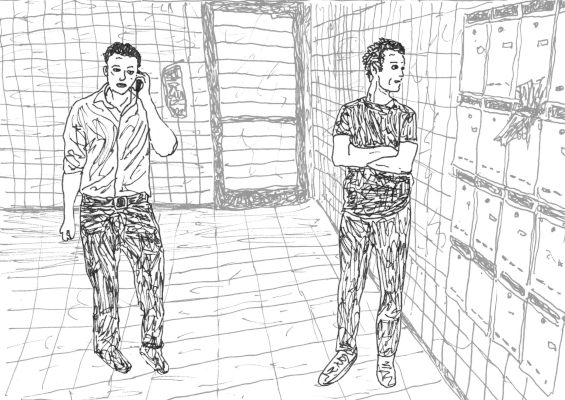 |
(Italiano) Tornati in Germania, i Ragazzi hanno una brutta sorpresa e devono cambiare i loro piani. Heinz prende la situazione con filosofia, mentre Helmut può essere calmato solo da un gelato, a cui arriva con precisione millimetrica. |
(Deutsch) Zurück in Deutschland erleben die Jungs eine böse Überraschung und müssen ihre Pläne ändern. Heinz nimmt die Sache einigermaßen gelassen hin, während sich Helmut nur durch ein Eis beruhigen lässt, zu dem er zielgenau findet. Normal Version | ||
zu Hause Tag 20 1 Helmut: Seltsam. Ich versuch's mal bei Max. |
Home Day 20 Helmut: That's strange. I'll try to get Max on the phone. |
à la maison Jour 20 Helmut : C'est étrange. Je vais essayer d'avoir Max au téléphone. |
a casa Giorno 20 Helmut: È strano. Provo a chiamare Max. |
en casa Día 20 Helmut: Qué extraño. Intentaré hablar con Max por teléfono. |
2 Heinz: Erst mal raus hier! |
Heinz: Let's get out of here first! |
Heinz : D'abord, fichons le camp d'ici ! |
Heinz: Prima usciamo da qui! |
Heinz: ¡Primero larguémonos de aquí! |
3 Helmut: Wenn wir uns beeilen, können wir übermorgen schon in Costa Rica sein, inklusive Flug. |
Helmut: If we hurry, we can be in Costa Rica the day after tomorrow, including the flight. |
Helmut : Si on se dépêche, on peut être au Costa Rica après-demain, vol compris. |
Helmut: Se ci sbrighiamo, possiamo essere in Costa Rica dopodomani, volo incluso. |
Helmut: Si nos damos prisa, podemos estar en Costa Rica pasado mañana, incluido el vuelo. |
4 Helmut: (...) Ich hab doch gesagt, dass es hier eine Eisdiele gibt. Schleck |
Helmut: (...) I told you there was an ice cream parlor here. Lick |
Helmut : (...) Je t'ai dit qu'il y avait un glacier ici. Lèche |
Helmut: (...) Ti ho detto che qui c'è una gelateria. Lec |
Helmut: (...) Te dije que aquí había una heladería. Lam |
(English) Heinz is so busy with the preparations that Helmut has to remind him that the Lodge is celebrating a special party that day. He even remembered to bring the 3D glasses. However, he did not expect to lose out in the fight between the pharaoh and the Vulcan. |
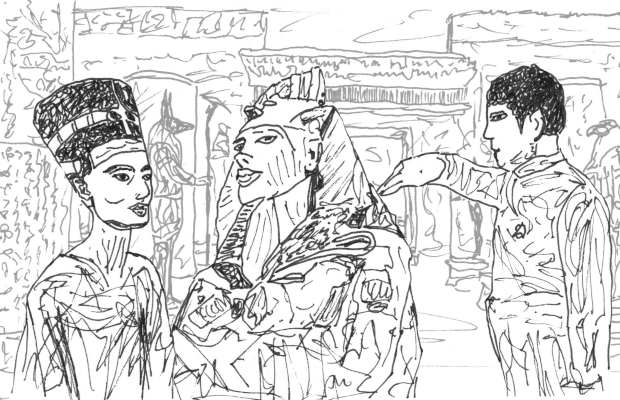 |
(Italiano) Heinz è così impegnato nei preparativi che Helmut deve ricordargli che quel giorno la Loggia terrà una festa speciale. Ha persino pensato agli occhiali 3D. Tuttavia, non si aspettava di perdere nella battaglia tra Faraone e Vulcaniano. |
(Deutsch) Heinz ist so sehr mit den Vorbereitungen beschäftigt, dass Helmut ihn daran erinnern muss, dass die Loge an diesem Tag eine besondere Party feiert. Er hat sogar an die 3D-Brillen gedacht. Dass er allerdings im Kampf Pharao gegen Vulkanier den Kürzeren zieht, hätte er nicht erwartet. Normal Version | ||
Tag 23 1 Heinz: Hm, also Journalist oder Biologe, und für Helmut ... |
Day 23 Heinz: Hm, so, a journalist or a biologist, and for Helmut... |
Jour 23 Heinz : Hm, donc journaliste ou biologiste, et pour Helmut... |
Giorno 23 Heinz: Hm, quindi giornalista o biologo, e per Helmut... |
Día 23 Heinz: Hm, entonces periodista o biólogo, y para Helmut... |
2 Heinz: Wie konnte ich das bloß vergessen!? Die Inselvideos haben mich wahrscheinlich zu weit weggetragen. Ah, jetzt komm ich rein. |
Heinz: How could I have forgotten that? The island videos probably took me too far away. Ah, now I'm connected. |
Heinz : Comment ai-je pu l'oublier ? Les vidéos de l'île m'ont sans doute emmené trop loin. Ah, maintenant je suis connecté. |
Heinz: Come ho fatto a dimenticarlo? Probabilmente i video dell'isola mi hanno portato troppo lontano. Ah, ora sono connesso. |
Heinz: ¿Cómo he podido olvidarlo? Probablemente los vídeos de la isla me llevaron demasiado lejos. Ah, ahora estoy conectado. |
3 Helmut: Also „Bloblaif” haben die das Ganze jetzt genannt. Die virtuelle Realität der Loge. |
Helmut: So they've called it "Bloblaif" now. The virtual reality of the Lodge. |
Helmut : Alors, ils ont appelé ça « Bloblaif » maintenant. La réalité virtuelle de la Loge. |
Helmut: Adesso l'hanno chiamato l'intera cosa "Bloblaif". La realtà virtuale della Loggia. |
Helmut: Así que ahora llaman a todo esto "Bloblaif". La realidad virtual de la Logia. |
4 Heinz: Wenn man die Leute anklickt, kann man ihre Klarnamen sehen. |
Heinz: If you click on people, you can see their real names. |
Heinz : Si tu cliques sur les gens, tu peux voir leurs noms clairs. |
Heinz: Se clicchi sulle persone, puoi vedere i loro veri nomi. |
Heinz: Si haces clic en las personas, puedes ver sus nombres reales. |
(English) Fiona and Fanni have a lot to talk about on this stressful day at the office. Both have recently been through things difficult to explain, but it is clearly Fiona who has the most incredible stories to tell. |
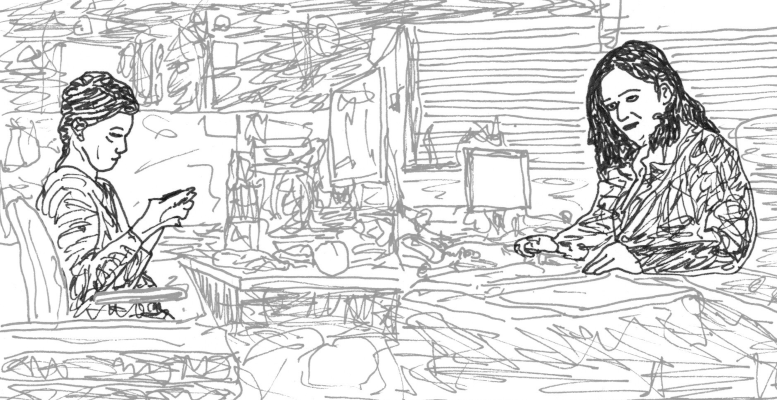 |
(Italiano) Fiona e Fanni hanno molto da raccontarsi in questa stressante giornata in ufficio. Entrambe hanno vissuto di recente esperienze difficili da spiegare, ma è chiaramente Fiona ad avere le storie più incredibili da raccontare. |
(Deutsch) Fiona und Fanni haben einander viel zu erzählen an diesem stressigen Tag im Büro. Beide haben in letzter Zeit Dinge erlebt, die sich schwer erklären lassen, aber es ist eindeutig Fiona, die die unglaublicheren Geschichten zu bieten hat. Normal Version | ||
Tag 24 1 Fanni: Wo ist denn jetzt dieser blöde Ordner? Der war doch gerade noch da. Ich brauch Urlaub, ich sag's dir. |
Day 24 Fanni: Now where is that stupid folder? It was right here a moment ago. I need a vacation, I'm telling you. |
Jour 24 Fanni : Où est donc passé ce stupide classeur-là ? Il était juste là il y a un instant. J'ai besoin de vacances, je te le dis. |
Giorno 24 Fanni: Dov'è quella stupida cartella? Era proprio qui un attimo fa. Ho bisogno di una vacanza, te lo dico io. |
Día 24 Fanni: ¿Dónde está esa carpeta estúpida? Estaba aquí hace un momento. Necesito unas vacaciones, te lo digo en serio. |
2 Fanni: Peter hat mich verlassen. |
Fanni: Peter left me. |
Fanni : Peter m'a quittée. |
Fanni: Peter mi ha lasciato. |
Fanni: Peter me ha dejado. |
3 Fiona: Ich kenn ihn ja nur von Fotos, aber das klingt nach einem Vertrauensbruch. |
Fiona: I only know him from photos, but that sounds like a breach of trust. |
Fiona : Je ne le connais que par des photos, mais ça ressemble à un abus de confiance. |
Fiona: Lo conosco solo per le foto, ma mi sembra una violazione della fiducia. |
Fiona: Solo le conozco por las fotos, pero eso suena a una ruptura de confianza. |
4 Fanni: Du verwirrst mich. Wieso habt ihr einen Typen gesucht? War das ein Surfer? |
Fanni: You're confusing me. Why were you looking for a guy? Was he a surfer? |
Fanni : Tu m'embrouilles. Pourquoi cherchiez-vous un gars? C'était un surfeur ? |
Fanni: Mi stai mandando in confusione. Perché stavate cercando un ragazzo? Era un surfista? |
Fanni: Me estás confundiendo. ¿Por qué buscabais a un tipo? ¿Era surfista? |
(English) When the two arrive in Costa Rica, Heinz has to make a confession to Helmut, and he brings up the difficulties they are facing. Helmut remains surprisingly calm and first takes a curious look around. |
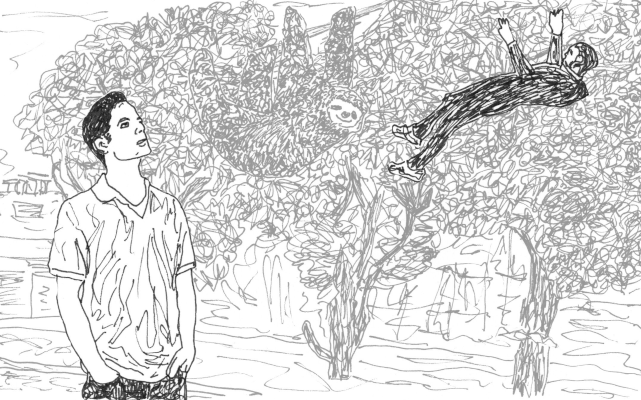 |
(Italiano) Quando i due arrivano in Costa Rica, Heinz deve fare una confessione a Helmut e accenna alle difficoltà che stanno affrontando. Helmut rimane sorprendentemente calmo e si guarda intorno con curiosità. |
(Deutsch) Als die beiden in Costa Rica ankommen, muss Heinz Helmut ein Geständnis machen, und er spricht die Schwierigkeiten an, mit denen sie konfrontiert sind. Helmut bleibt erstaunlich gelassen und schaut sich erst einmal neugierig um. Normal Version | ||
Tag 26 1 Heinz: Wieso grinst du eigentlich die ganze Zeit so? Kitzeln dich die Regenwürmer unter deinen Füßen? |
Day 26 Heinz: How come you're grinning like that all the time? Are the earthworms tickling your feet? |
Jour 26 Heinz : Pourquoi souris-tu tout le temps comme ça ? Est-ce que les vers de terre te chatouillent sous tes pieds ? |
Giorno 26 Heinz: Come mai sorridi sempre così? I lombrichi ti fanno il solletico ai piedi? |
Día 26 Heinz: ¿Por qué sonríes así todo el rato? ¿Te hacen cosquillas las lombrices bajo los pies? |
2 Helmut: Was ist das denn da? In dem Busch. Ein Chamäleon? Ein Leguan, glaub ich. |
Helmut: What's that over there? In the bush. A chameleon? An iguana, I think. |
Helmut : Qu'est-ce que c'est que ça ? Dans la brousse. Un caméléon ? Un iguane, je crois. |
Helmut: Cosa c'è laggiù? Nella boscaglia. Un camaleonte? Un'iguana, credo. |
Helmut: ¿Qué es eso de ahí? En la maleza. ¿Un camaleón? Una iguana, creo. |
3 Helmut: Klingt doch gut. |
Helmut: Sounds good. |
Helmut : Ça a l'air bien. |
Helmut: Sembra una buona idea. |
Helmut: Suena bien. |
4 Helmut: h |
Helmut: h |
Helmut : h |
Helmut: h |
Helmut: h |
(English) In a good mood, Helmut walks to the soda bar, where Heinz is sitting outside at a table, brooding. But actually, he has nothing to worry about, because it's one of those days when everything just goes Helmut's way. |
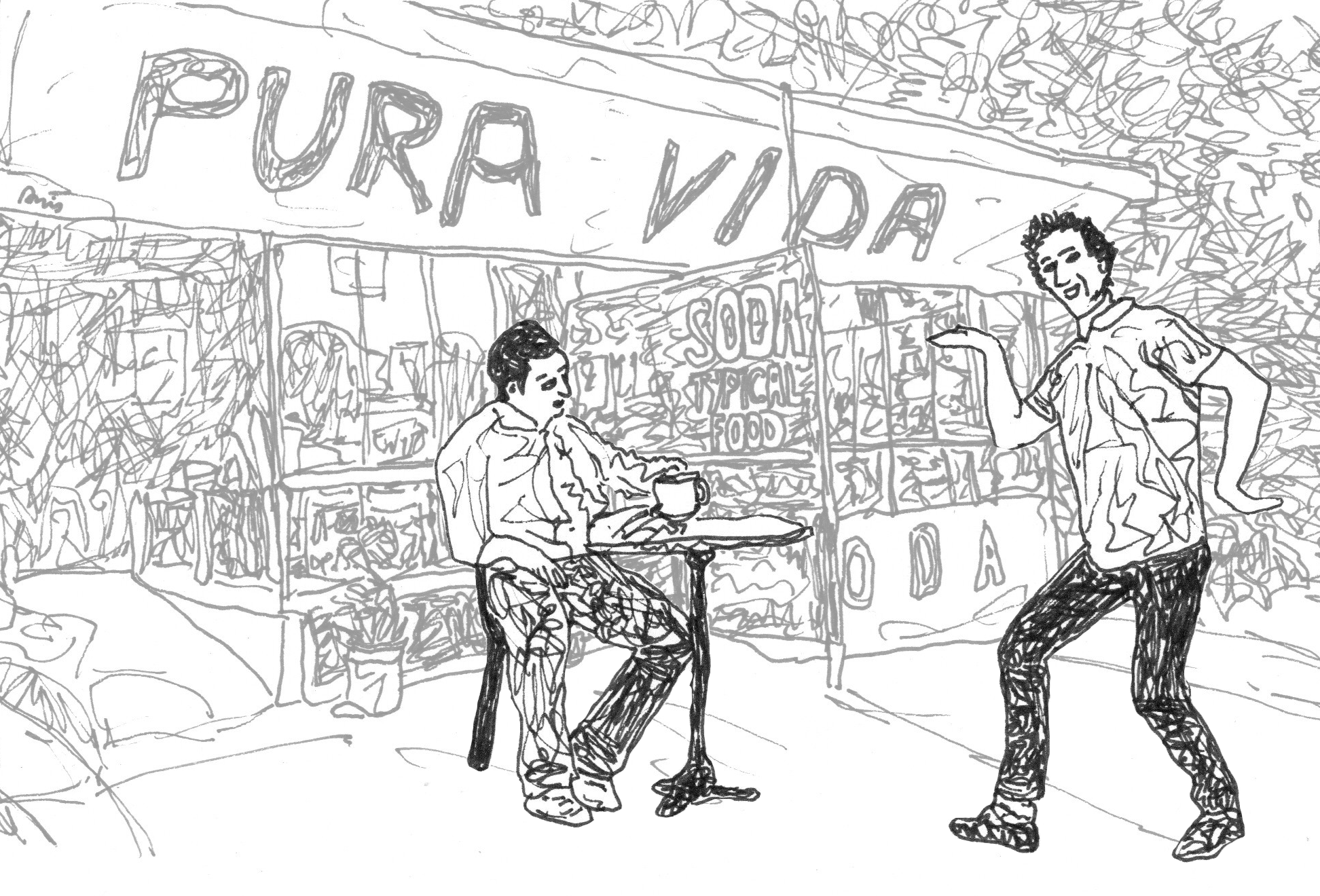 |
(Italiano) Di buon umore, Helmut si reca al bar della soda, dove Heinz è seduto fuori ad un tavolo a rimuginare. Ma in realtà non ha nulla di cui preoccuparsi, perché è uno di quei giorni in cui Helmut riesce semplicemente a raggiungere ogni obiettivo che si propone. |
(Deutsch) Gut gelaunt spaziert Helmut zur Soda-Bar, wo Heinz draußen an einem Tisch sitzt und grübelt. Dabei muss er sich gar keine Sorgen machen, denn es ist einer dieser Tage, an denen Helmut einfach alles gelingt. Normal Version | ||
Tag 28 1 Helmut: Pura Vida! Tschaka-tschaka, aga-aga, uga. |
Day 28 Helmut: Pura Vida! Chaka-chaka, aga-aga, ooga. |
Jour 28 Helmut : Pura Vida ! Tchaca-tchaca, aga-aga, ouga. |
Giorno 28 Helmut: Pura Vida! Ciaka-ciaka, aga-aga, uga. |
Día 28 Helmut: ¡Pura Vida! Chaka-chaka, aga-aga, uga. |
2 Helmut: (...) So, dein Mokka! Also, die Pfeile und Winkel. |
Helmut: (...) So, your mocha! Now, the arrows and angles. |
Helmut : (...) Voilà, ton moka ! Alors, les flèches et les angles. |
Helmut: (...) Allora, il tuo moka! Ora, le frecce e gli angoli. |
Helmut: (...) ¡Entonces, tu moca! Entonces, las flechas y los ángulos. |
3 Heinz: Du bist gut! Wir stecken hier auf unbestimmte Zeit in Puntarenas fest und jetzt kommen auch noch diese drei ernst dreinblickenden Männer auf uns zu. Da, einer hat in unsere Richtung gezeigt. |
Heinz: Good one! We're stuck here in Puntarenas for an indefinite period of time and now there are even those three serious-looking men coming towards us. Look, one of them is pointing in our direction. |
Heinz : Tu me fais plaisir ! On est coincé ici à Puntarenas pour une durée indéterminée et maintenant, il y a même ces trois hommes à l'air sérieux qui viennent vers nous. Regarde, l'un d'entre eux a pointé du doigt notre direction. |
Heinz: Buona questa! Siamo bloccati qui a Puntarenas per un periodo di tempo indefinito e ora ci sono anche quei tre uomini dall'aria seria che vengono verso di noi. Guarda, uno di loro ha indicato la nostra direzione. |
Heinz: ¡Eso es fácil de decir para ti! Estamos atrapados aquí en Puntarenas por tiempo indefinido y ahora incluso vienen hacia nosotros esos tres hombres de aspecto serio. Mira, uno de ellos señaló en nuestra dirección. |
4 Heinz: Wo gehst du jetzt hin? Bleib hier, Mann! |
Heinz: Where are you going now? Stay here, man! |
Heinz : Où vas-tu maintenant ? Reste ici, mec ! |
Heinz: Dove stai andando adesso? Resta qui, amico! |
Heinz: ¿Adónde vas ahora? ¡Quédate aquí, hombre! |
(English) A day and a half later, the Boys arrive on the island. How will the national park employees react to them? Before they can even form an opinion, things start to spiral out of control, because Helmut has picked a blade of grass. Yes, a blade of grass. |
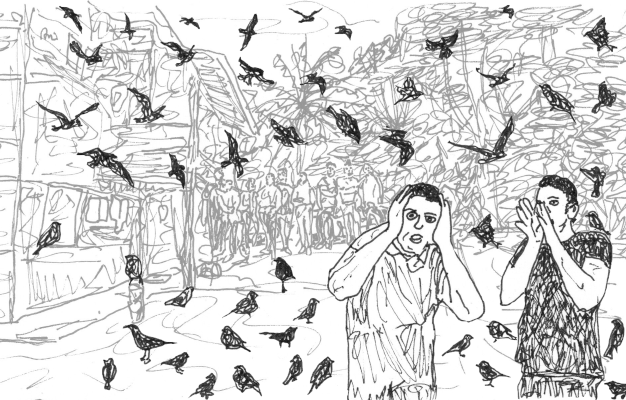 |
(Italiano) Un giorno e mezzo dopo, i Ragazzi arrivano sull'isola. Come reagiranno i dipendenti del parco nazionale? Prima ancora che possano farsi un'opinione, le cose iniziano a sfuggire di mano perché Helmut ha raccolto un filo d'erba. Sì, un filo d'erba. |
(Deutsch) Eineinhalb Tage später sind die Jungs auf der Insel angekommen. Wie werden die Mitarbeiter des Nationalparks auf sie reagieren? Bevor sie sich eine Meinung bilden können, überschlagen sich die Ereignisse, denn Helmut hat einen Grashalm gepflückt. Ja, einen Grashalm. Normal Version | ||
Tag 30 1 Helmut: Komm, wir gehen da jetzt hin! |
Day 30 Helmut: Come on, let's go over there now! |
Jour 30 Helmut : Viens, on y va maintenant ! |
Giorno 30 Helmut: Dai, andiamo lì ora! |
Día 30 Helmut: ¡Venga, vamos allí ahora! |
2 Heinz: Das ist mein Kollege Helmut und ich bin Heinz. Aus Deutschland. Es war ein Traum, ja. |
Heinz: This is my colleague Helmut and I'm Heinz. From Germany. It was a dream, yes. |
Heinz : Voici mon collègue Helmut et moi je suis Heinz. De l'Allemagne. C'était un rêve, oui. |
Heinz: Questo è il mio collega Helmut e io sono Heinz. Dalla Germania. Era un sogno, sì. |
Heinz: Éste es mi colega Helmut y yo soy Heinz. De Alemania. Fue un sueño, sí. |
3 Heinz: Irgendwie hast du mit deinem Geblase einige Vögel angelockt. |
Heinz: Somehow you've attracted some birds with your blowing. |
Heinz : Avec ton souffle, tu as attiré quelques oiseaux comme ça. |
Heinz: Hai attirato alcuni uccelli con il tuo soffio così. |
Heinz: De alguna manera has atraído a algunos pájaros con tus soplidos. |
4 Heinz: Hast du gehört, was die Frau gesagt hat? |
Heinz: Did you hear what the woman said? |
Heinz : Tu as entendu ce que la femme a dit ? |
Heinz: Hai sentito cosa ha detto la donna? |
Heinz: ¿Has oído lo que ha dicho la mujer? |
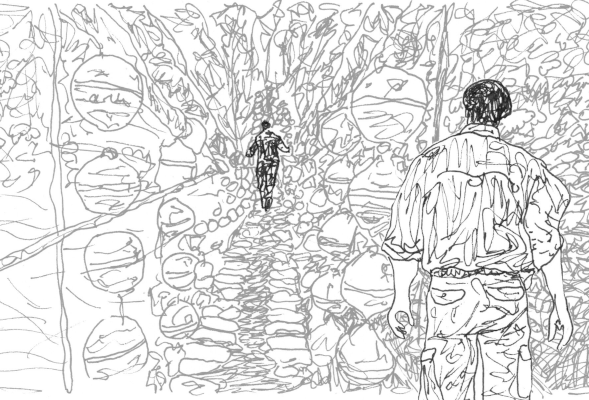
(English) Using his special method, Helmut has ensured that the Boys have more freedom on the island than they could ever have dreamed of. However, on a first guided tour, Helmut makes a terrible discovery in the wake of an interaction with a local reptile. |
 |
(Italiano) Con il suo metodo speciale, Helmut si assicura rapidamente che i Ragazzi abbiano più libertà sull'isola di quanta ne avrebbero mai potuta sognare. Durante la loro prima visita guidata, però, Helmut fa una terribile scoperta dopo aver interagito con un rettile locale. |
(Deutsch) Mit seiner speziellen Methode hat Helmut in kürzester Zeit dafür gesorgt, dass die Jungs mehr Freiheiten auf der Insel haben, als sie sich je hätten erträumen können. Auf einem ersten geführten Rundgang macht Helmut jedoch nach der Interaktion mit einem heimischen Reptil eine schreckliche Entdeckung. Normal Version | ||
Tag 31 1 Heinz: Ich war so ein Idiot! |
Bridge Day 31 Heinz: I was such an idiot! |
des têtes de mort Jour 31 Heinz : J'ai été un tel idiot ! |
dei teschi Giorno 31 Heinz: Sono stato un idiota! |
de cráneos Día 31 Heinz: ¡He sido un idiota! |
2 Heinz: Mach mal die Hand auf! Nicht, ach, jetzt hast du sie springen lassen. |
Heinz: Open your hand! No, oh, now you've let it jump. |
Heinz : Ouvre ta main ! Non, oh, maintenant tu l'as fait sauter. |
Heinz: Apri la mano! No, oh, ora l'hai fatta saltare. |
Heinz: ¡Abre la mano! No, oh, ahora la has dejado saltar. |
3 Helmut: (Aaaaaah!!) |
Helmut: (Aaaaaah!!) |
Helmut : (Aaaaaah !!) |
Helmut: (Aaaaaah!!) |
Helmut: (¡¡Aaaaaah!!) |
4 Heinz: Du kriegst das schon hin. Ich geb dir einen Tipp: Leck die Schädel ab, dann können sie dir nichts mehr tun. |
Heinz: You'll handle it. I'll give you a tip: you must lick the skulls, then they can't harm you anymore. |
Heinz : Tu te débrouilleras. Je te donne un conseil : lèche les crânes, comme ça ils ne pourront plus te faire de mal. |
Heinz: Te la caverai. Ti do un consiglio: devi leccare i teschi, così non potranno più farti del male. |
Heinz: Te las arreglarás. Te daré un consejo: debes lamer los cráneos, así ya no podrán hacerte daño. |
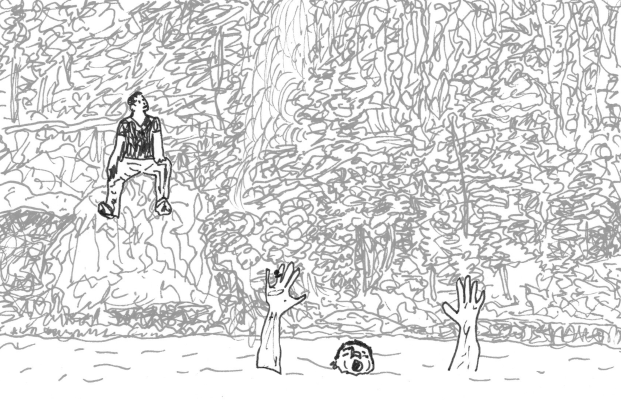
(English) Helmut's lucky streak continues and Heinz reproaches himself for not having reacted appropriately in the past. So now he is determined to show his friend that he has learned from his mistakes and changed his behavior. |
 |
(Italiano) La fortuna di Helmut continua e Heinz si rimprovera di non aver reagito in modo appropriato in passato. Ora dimostra con forza all'amico di aver imparato dai suoi errori e di aver cambiato comportamento. |
(Deutsch) Helmuts Glückssträhne reißt nicht ab und Heinz macht sich Vorwürfe, weil er in der Vergangenheit nicht angemessen reagiert hat. Nachdrücklich demonstriert er seinem Freund nun, dass er aus seinen Fehlern gelernt und sein Verhalten verändert hat. Normal Version | ||
Tag 33 1 Heinz: Ah, da bist du ja schon wieder. Und? |
Day 33 Heinz: Ah, there you are again. Well? |
Jour 33 Heinz : Ah, te revoilà. Et alors ? |
Giorno 33 Heinz: Ah, sei tornato. Allora? |
Día 33 Heinz: Ah, has vuelto. ¿Y bien? |
2 Helmut: (...) Ganz schön weitläufig das Ganze. Lass uns doch mal da an der Küste weiterwandern! |
Helmut: (...) It's pretty spacious, the whole thing. Let's go and hike along the coast over there! |
Helmut : (...) C'est assez spacieux, tout ça. Allons faire une randonnée le long de la côte là-bas ! |
Helmut: (...) È abbastanza spaziosa, tutto questo. Facciamo una passeggiata lungo la costa laggiù! |
Helmut: (...) Es bastante espacioso todo esto. ¡Vamos a dar un paseo por la costa de allí! |
3 Helmut: Ich häng hier fest! Siehst du, ob da unter mir was ist, worauf ich stehen kann? |
Helmut: I'm stuck here! Can you see if there's anything underneath me that I can stand on? |
Helmut : Je suis coincé ici ! Peux-tu voir s'il y a quelque chose en dessous de moi sur lequel je peux m'appuyer ? |
Helmut: Sono incastrato qui! Puoi vedere se c'è qualcosa sotto di me su cui posso appoggiarmi? |
Helmut: ¡Estoy atrapado aquí! ¿Puedes ver si hay algo debajo de mí en lo que pueda apoyarme? |
4 Helmut: (...) Heinz, das war ... hechel hechel |
Helmut: (...) Heinz, that was... gasp gasp |
Helmut : (...) Heinz, c'était... halète-halète |
Helmut: (...) Heinz, è stato... ansi-ma-ansi-ma |
Helmut: (...) Heinz, eso fue... jade-a-jad |
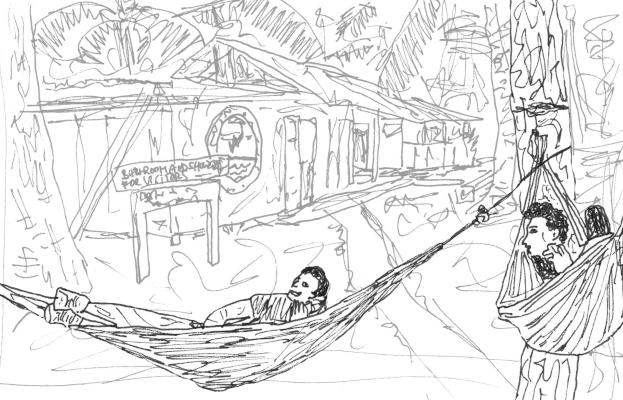
(English) The technicians will be leaving the island shortly and the Boys have to decide whether they want to go with them. A call pulls the two away from their thoughts and makes them forget everything they were talking about before. |
 |
(Italiano) I tecnici presto lasceranno di nuovo l'isola e i Ragazzi devono decidere se vogliono andare con loro. Una chiamata li distoglie dai loro pensieri e fa loro dimenticare tutto ciò di cui hanno appena parlato. |
(Deutsch) In Kürze werden die Techniker die Insel wieder verlassen und die Jungs müssen sich entscheiden, ob sie mitfahren wollen. Eine Anruf holt die beiden aus ihren Gedanken und lässt sie alles vergessen, worüber sie gerade noch gesprochen haben. Normal Version | ||
Ferngespräch Tag 35 1 Heinz: Zum Wohl! |
Day 35 Heinz: Cheers! |
Jour 35 Heinz : A la tienne ! |
Giorno 35 Heinz: Salute! |
Día 35 Heinz: ¡Salud! |
2 Helmut: Weißt du noch, wie die Techniker gesagt hatten, dass man darauf eingehen muss, wenn man so starke Träume hat? |
Helmut: Do you remember what the technicians said about having to respond to dreams when they are really strong? |
Helmut : Tu te souviens quand les techniciens ont dit qu'il fallait y répondre quand on avait des rêves aussi forts ? |
Helmut: Ti ricordi quando i tecnici ci dissero che dovevamo rispondere ai sogni quando sono molto forti? |
Helmut: ¿Recuerdas lo que dijeron los técnicos sobre tener que responder a los sueños cuando son realmente fuertes? |
3 Heinz: Kennst du die Geschichte von den beiden Jungen, die aus der Ferne Rauch im Wald aufsteigen sehen? |
Heinz: Do you know the story of the two boys who saw smoke rising from the forest in the distance? |
Heinz : Tu connais l'histoire des deux gars qui ont vu au loin de la fumée s'élever de la forêt ? |
Heinz: Conosci la storia dei due ragazzi che vedono da lontano del fumo alzarsi nella foresta? |
Heinz: ¿Conoces la historia de los dos chicos que vieron salir humo del bosque a lo lejos? |
4 Heinz: Was sagt sie? |
Heinz: What is she saying? |
Heinz : Qu'est-ce qu'elle dit ? |
Heinz: Cosa sta dicendo? |
Heinz: ¿Qué está diciendo? |
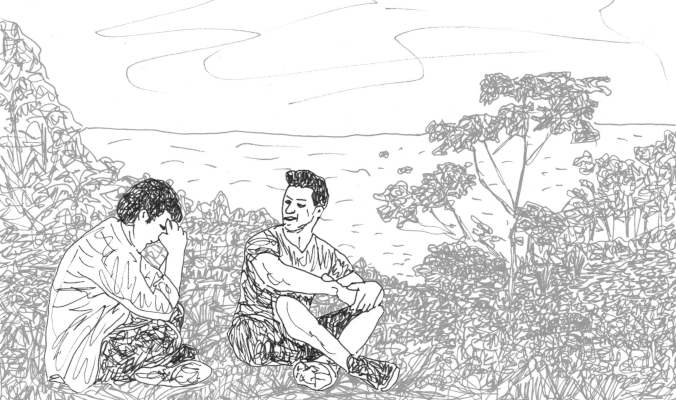
(English) Helmut continues the long-distance call in a quiet place and learns, among other things, something very current about the fraudulent partner. The Boys lose no time and immediately pick up the trail. |
 |
(Italiano) In un luogo tranquillo, Helmut continua la telefonata a distanza e scopre qualcosa di molto attuale sul partner che tradisce, tra le altre cose. I Ragazzi non perdono tempo e captano subito l'odore. |
(Deutsch) An einem ruhigen Ort führt Helmut das Ferngespräch fort und erfährt unter anderem etwas sehr Aktuelles über den betrügerischen Kompagnon. Die Jungs verlieren keine Zeit und nehmen sofort die Fährte auf. Normal Version | ||
Tag 35 1 Heinz: Kannst du sie schon sehen? |
Day 35 Heinz: Can you see her yet? |
Jour 35 Heinz : Tu la vois déjà ? |
Giorno 35 Heinz: Riesci già a vederla? |
Día 35 Heinz: ¿Ya puedes verla? |
2 Heinz: (...) Was hat sie gesagt? |
Heinz: (...) What did she say? |
Heinz : (...) Qu'a-t-elle dit ? |
Heinz: (...) Cosa ti ha detto? |
Heinz: (...) ¿Qué te ha dicho? |
3 Heinz: (...) Psst, ich glaub, ich hab was gehört. |
Heinz: (...) Shh, I think I heard something. |
Heinz : (...) Chut, je crois que j'ai entendu quelque chose. |
Heinz: (...) Shh, credo di aver sentito qualcosa. |
Heinz: (...) Shh, creo que he oído algo. |
4 Helmut: Das ist wirklich sehr praktisch. Wir schütten einfach das Loch wieder zu und alle unsere Probleme sind gelöst. Fünf Minuten. |
Helmut: That's really very practical. We just fill the hole back up and all our problems are solved. Five minutes. |
Helmut : C'est vraiment très pratique. On n'a qu'à reboucher le trou et tous nos problèmes sont résolus. Cinq minutes. |
Helmut: È davvero molto pratico. Basta riempire il buco e tutti i nostri problemi sono risolti. Cinque minuti. |
Helmut: Es realmente muy práctico. Solo tenemos que volver a llenar el agujero y todos nuestros problemas estarán resueltos. Cinco minutos. |
(English) The Boys manage to fake their departure, so that they can move around the island undisturbed. Will they eventually find their treasure? The preparations, at least, are complete, and they also have a dry headquarters. |
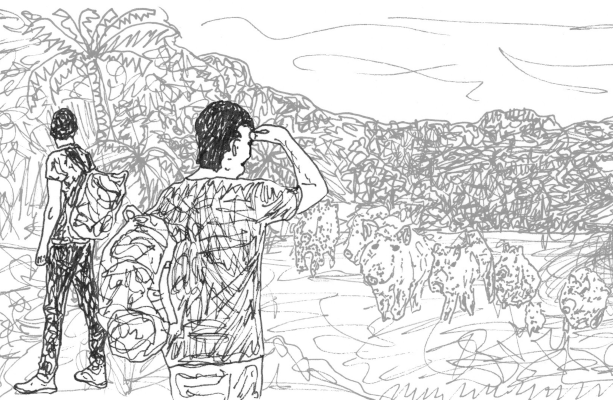 |
(Italiano) Con un trucco, i Ragazzi riescono a fingere la loro partenza e possono così spostarsi indisturbati sull'isola. Troveranno il loro tesoro alla fine? In ogni caso, tutti i preparativi sono stati fatti e hanno anche un quartier generale asciutto. |
(Deutsch) Mit einem Trick gelingt es den Jungs, ihre Abfahrt vorzutäuschen, sodass sie sich ungestört auf der Insel bewegen können. Werden sie am Ende ihren Schatz finden? Alle Vorbereitungen sind jedenfalls getroffen und ein trockenes Hauptquartier haben sie auch. Normal Version | ||
Tag 37 1 Heinz: Doch Leute, ich bestehe darauf! |
Day 37 Heinz: No, guys, I insist! |
Jour 37 Heinz : Si, les gars, j'insiste ! |
Giorno 37 Heinz: Sì, ragazzi, insisto! |
Día 37 Heinz: ¡Sí, chicos, insisto! |
2 Heinz: Du willst dich wirklich wieder auf den einlassen? |
Heinz: You really want to get involved with him again? |
Heinz : Tu veux vraiment t'engager à nouveau avec lui ? |
Heinz: Vuoi davvero avere di nuovo a che fare con lui? |
Heinz: ¿De verdad quieres volver a liarte con él? |
3 Heinz: So, da bin ich wieder. Helmut? |
Heinz: So, I'm back. Helmut? |
Heinz : Me revoilà. Helmut ? |
Heinz: Allora, eccomi di nuovo qui. Helmut? |
Heinz: Así que aquí estoy otra vez. ¿Helmut? |
4 Helmut: Da, über den Bach! Platsch, spritz |
Helmut: There, over the stream! Splish, splash |
Helmut : Là, au-dessus du ruisseau ! Plouf, plif |
Helmut: Ecco, oltre il ruscello! Splash splusc |
Helmut: ¡Allí, sobre el arroyo! Plaf plaf |
(English) Dangers lurk in the jungle that should not be underestimated. On the other hand, you can't think of everything and you can't plan for everything either. In this episode, the Boys learn this lesson in a rather drastic way. |
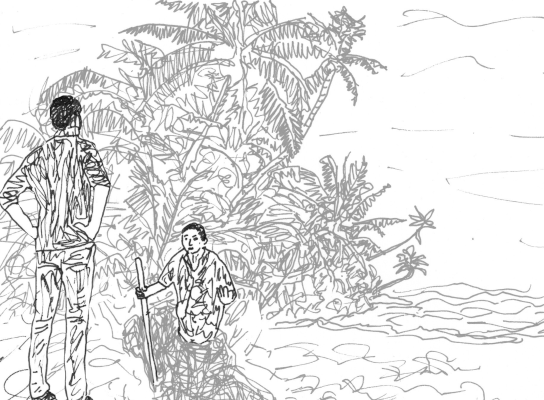 |
(Italiano) Ci sono pericoli in agguato nella giungla che non vanno sottovalutati. D'altra parte, non si può pensare a tutto e nemmeno pianificare tutto. I Ragazzi imparano questo principio in modo molto drastico in questo episodio. |
(Deutsch) Im Dschungel lauern Gefahren, die man nicht unterschätzen sollte. Andererseits kann man nicht an alles denken und auch nicht alles planen. Das erfahren die Jungs in dieser Episode auf recht drastische Weise. Normal Version | ||
Tag 38 1 Heinz: Hab ich einen Hunger! |
Day 38 Heinz: I'm so hungry! |
Jour 38 Heinz : J'ai tellement faim ! |
Giorno 38 Heinz: Ho tanta fame! |
Día 38 Heinz: ¡Tengo mucha hambre! |
2 Heinz: Die hab ich gegessen, wieso? |
Heinz: I ate it, why? |
Heinz : Je l'ai mangé, pourquoi ? |
Heinz: L'ho mangiato, perché? |
Heinz: Me lo he comido, ¿por qué? |
3 Heinz: Wie spät ist es eigentlich? |
Heinz: What time is it, actually? |
Heinz : Quelle heure est-il, en fait ? |
Heinz: Che ora è, in realtà? |
Heinz: ¿Qué hora es en realidad? |
4 Heinz: Ein paar?? Was soll das heißen, fünf? Zwei, neun? |
Heinz: A few?? What do you mean, five? Two, nine? |
Heinz : Quelques ?? Ça veut dire quoi, cinq ? Deux, neuf ? |
Heinz: Alcuni?? Cosa significa, cinque? Due, nove? |
Heinz: ¿Unas cuantas? ¿Qué significa, cinco? ¿Dos, nueve? |
(English) When Heinz comes to in the cave, a lot has changed. Helmut has not only taken care of the daily chores, but has also armed himself. Fortunately, the Boys get unexpected support, not only for the impending battle, but also for the treasure hunt. |
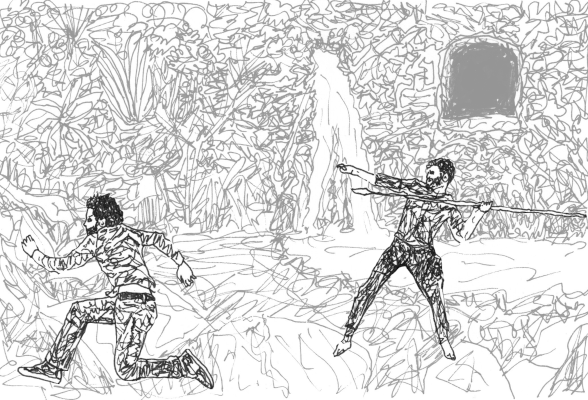 |
(Italiano) Quando Heinz riprende conoscenza nella grotta, molte cose sono cambiate. Helmut non solo si è occupato delle faccende quotidiane, ma si è anche armato. Fortunatamente, i Ragazzi ricevono un sostegno inaspettato, per l'imminente battaglia e anche per la caccia al tesoro. |
(Deutsch) Als Heinz in der Höhle wieder zu sich kommt, hat sich einiges verändert. Helmut hat sich nicht nur um die täglichen Hausarbeiten gekümmert, sondern sich auch bewaffnet. Zum Glück bekommen die Jungs unerwartete Unterstützung, was den bevorstehenden Kampf betrifft, aber auch die Schatzsuche. Normal Version | ||
Tag 45 1 Heinz: Oooh. |
Day 45 Heinz: Oooh. |
Jour 45 Heinz : Oooh. |
Giorno 45 Heinz: Oooh. |
Día 45 Heinz: Oooh. |
2 Heinz: Wie ich sehe, hast du auch einige Waffen gebaut. Speere, Pfeile, Schlingen, fleißig, fleißig. Warst du etwa jagen? |
Heinz: I see you've also built some weapons. Spears, arrows, snares, busy, busy. Have you been hunting? |
Heinz : Je vois que tu as aussi fabriqué quelques armes. Des lances, des flèches, des pièges, tu n’as pas chômé. Tu as été à la chasse ? |
Heinz: Vedo che hai costruito anche delle armi. Lance, frecce, lacci... muy aplicado. Sei andato a caccia? |
Heinz: Veo que también has fabricado algunas armas. Lanzas, flechas, trampas... laborioso, laborioso. ¿Has ido de caza? |
3 Helmut: Wenn man das richtige Holz nimmt, sieht man keinen Rauch. |
Helmut: If you use the right kind of wood, there's no smoke visible. |
Helmut : Si tu prends le bon type de bois, il n'y a pas de fumée visible. |
Helmut: Se usi il legno giusto, non c'è fumo visibile. |
Helmut: Si utilizas la madera adecuada, no se ve humo. |
4 Helmut: Del Schaquez? Nie gehört. Und er ist hier auf der Insel? |
Helmut: Del Schaquez? Never heard of him. And he's here on the island? |
Helmut : Del Schaquez ? Jamais entendu parler. Et il est ici sur l'île ? |
Helmut: Del Schaquez? Mai sentito nominare. Ed è qui sull'isola? |
Helmut: ¿Del Schaquez? Nunca he oído hablar de él. ¿Y está aquí en la isla? |
(English) The danger is averted and Heinz receives an important clue to the treasure's location. But then Helmut interrupts and Heinz briefly loses his courage. |
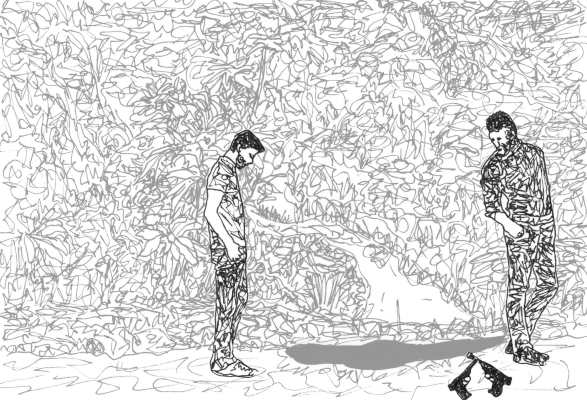 |
(Italiano) Il pericolo viene scongiurato e Heinz ottiene un importante indizio sull'ubicazione del tesoro. Ma poi interviene Helmut e Heinz perde brevemente il coraggio. |
(Deutsch) Die Gefahr ist gebannt und Heinz bekommt einen wichtigen Hinweis auf die Position des Schatzes. Aber dann funkt Helmut dazwischen und Heinz verlässt kurzzeitig der Mut. Normal Version | ||
Tag 45 1 Heinz: Eine Grube! Gute Arbeit, alter Junge! Von mir! Gute Arbeit von mir! |
Day 45 Heinz: A pit! Good work, old boy! By me! Good work by me! |
Jour 45 Heinz : Une fosse ! Bon travail, mon vieux ! De ma part ! Bon travail de ma part ! |
Giorno 45 Heinz: Una fossa! Ottimo lavoro, vecchio mio! Mio! Il mio ottimo lavoro! |
Día 45 Heinz: ¡Un pozo! ¡Buen trabajo, viejo amigo! ¡Por mí! ¡Buen trabajo por mí! |
2 Helmut: (...) Gute Arbeit, alter Junge! Das sind genug Schlingen, um zwei schöne Kokons zu spinnen, ha ha. Aber wie kriegen wir sie in die Umkleidekabine? |
Helmut: (...) Good work, old boy! There are enough snares to spin two nice cocoons, ha ha. But how do we get them into the changing room? |
Helmut : (...) Bon travail, mon vieux ! Il y a assez de collets pour faire deux beaux cocons, ha ha. Mais comment les faire entrer dans le vestiaire ? |
Helmut: (...) Ottimo lavoro, vecchio mio! Ci sono abbastanza cappi per fare due bei bozzoli, ah ah. Ma come facciamo a portarli nello spogliatoio? |
Helmut: (...) ¡Buen trabajo, viejo amigo! Hay suficientes lazos para hilar dos bonitos capullos, ja, ja. Pero, ¿cómo los metemos en el vestuario? |
3 Heinz: Hey Käpten! Mein Käpten! |
Heinz: Hey, Captain! My Captain! |
Heinz : Hé, capitaine ! Mon capitaine ! |
Heinz: Ehi, capitano! Il mio capitano! |
Heinz: ¡Eh, capitán! ¡Mi capitán! |
4 Heinz: Der Käpten und ich haben uns um die beiden gekümmert. Der Krieg ist vorbei. |
Heinz: The captain and I took care of them. The war is over. |
Heinz : Le capitaine et moi nous sommes occupés d'eux. La guerre est terminée. |
Heinz: Il capitano e io ci siamo occupati di loro. La guerra è finita. |
Heinz: El capitán y yo nos ocupamos de ellos. La guerra ha terminado. |
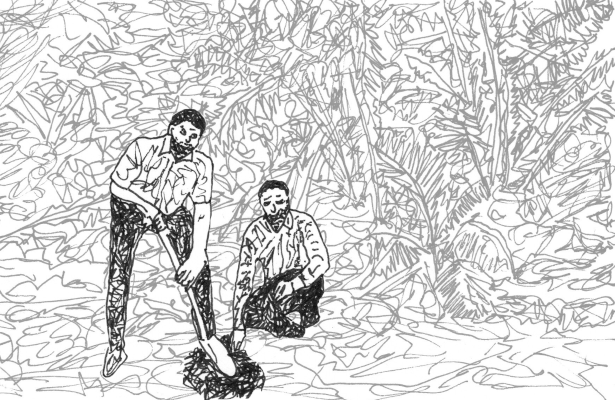
(English) The Boys diligently continue to dig, in search of their treasure. To pass the time, Helmut tells his friend about some events that happened during his absence. Heinz counters with a movie quiz. |
 |
(Italiano) I Ragazzi continuano a scavare diligentemente alla ricerca del loro tesoro. Per passare il tempo, Helmut racconta all'amico alcune cose successe durante la sua assenza. Heinz risponde con un quiz cinematografico. |
(Deutsch) Fleißig graben die Jungs weiter, auf der Suche nach ihrem Schatz. Um sich die Zeit zu vertreiben, erzählt Helmut seinem Freund von einigen Ereignissen in der Zeit seiner Abwesenheit. Heinz kontert mit einem Filmquiz. Normal Version | ||
Tag 45 1 Heinz: Hier in der Nähe des Ameisenbaums, hat Castanheira gesagt. Und diesen Felsen hat er wiedererkannt. |
Day 45 Heinz: It's near the cecropia tree, Castanheira said. And he recognized this rock. |
Jour 45 Heinz : C'est près de l'arbre cecropia, dit Castanheira. Et il a reconnu ce rocher. |
Giorno 45 Heinz: È vicino all'albero di cecropia, ha detto Castanheira. E ha riconosciuto questa roccia. |
Día 45 Heinz: Está cerca del árbol de cecropia, dijo Castanheira. Y reconoció esta roca. |
2 Heinz: War bestimmt 'ne harte Zeit. Allein in einer Tunnelhöhle auf einer einsamen Insel. Mit einem Kranken und fast ohne Nahrung. |
Heinz: It must have been a tough time. Alone in a tunnel cave on a deserted island. With a sick friend and almost no food. |
Heinz : Ça a dû être dur. Seul dans une grotte-tunnel sur une île déserte. Avec un malade et presque sans nourriture. |
Heinz: Dev'essere stato un periodo difficile. Da solo in una grotta-tunnel su un'isola deserta. Con un uomo malato e quasi senza cibo. |
Heinz: Debió de ser una época dura. Solo en una cueva-túnel en una isla desierta. Con un hombre enfermo y casi sin comida. |
3 Heinz: Vielleicht war ich das. Fiona sagt, ich schnarche manchmal. |
Heinz: Maybe it was me. Fiona says I sometimes snore. |
Heinz : C'était peut-être moi. Fiona dit que je ronfle parfois. |
Heinz: Forse ero io. Fiona dice che a volte russo. |
Heinz: Puede que fuera yo. Fiona dice que a veces ronco. |
4 Helmut: Das hat nur zwei Sekunden gedauert. Danach war alles wieder normal. Ba-pamm ba-pamm |
Helmut: It only lasted for two seconds. After that, everything was back to normal. Ba-pamm ba-pamm |
Helmut : Cela n'a duré que deux secondes. Après ça, tout est revenu à la normale. Ba-pamm ba-pamm |
Helmut: È durato solo due secondi. Dopo di che, tutto è tornato alla normalità. Ba-pamm ba-pamm |
Helmut: Solo duró dos segundos. Después, todo volvió a la normalidad. Ba-pamm ba-pamm |
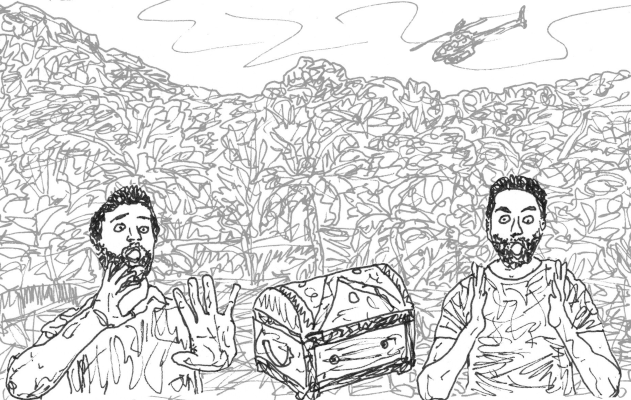
(English) Heinz finds a high-performance torch, which the two of them can use to continue their search in the dark. The bright light has its advantages and disadvantages. And the treasure? Well, the treasure too. |
 |
(Italiano) Heinz trova una torcia ad alte prestazioni, con la quale i due possono continuare la ricerca al buio. La luce intensa ha vantaggi e svantaggi. E il tesoro? Beh, anche quello. |
(Deutsch) Heinz findet eine Hochleistungstaschenlampe, mit der die beiden auch in der Dunkelheit weitersuchen können. Das grelle Licht hat Vor- und Nachteile. Und der Schatz? Nun, der auch. Normal Version | ||
Tag 45 1 Heinz: Was für ein Tag! RaaRaaRaa ba-pamm |
Day 45 Heinz: What a day! RaaRaaRaa ba-pamm |
Jour 45 Heinz : Quelle journée ! RaaRaaRaa ba-pamm |
Giorno 45 Heinz: Che giornata! RaaRaaRaa ba-pamm |
Día 45 Heinz: ¡Vaya día! RaaRaaRaa ba-pamm |
2 Helmut: Der wird nicht weit kommen! |
Helmut: He won't get far! |
Helmut : Il n'ira pas loin ! |
Helmut: Non andrà lontano! |
Helmut: ¡No llegará lejos! |
3 Helmut: Gib mal die Zauberkerze! Ponk ponk. |
Helmut: Give me the magic candle! Ponk ponk. |
Helmut : Passe-moi la bougie magique ! Ponc ponc. |
Helmut: Passami la candela magica! Ponc ponc. |
Helmut: ¡Dame la vela mágica! Ponc ponc. |
4 Helmut: (...) Schab schab, tock tock |
Helmut: (...) Shave shave, tock tock |
Helmut : (...) Râpe-racle, tac tac |
Helmut: (...) Scava scava, toc toc |
Helmut: (...) Cava cava, toc toc |
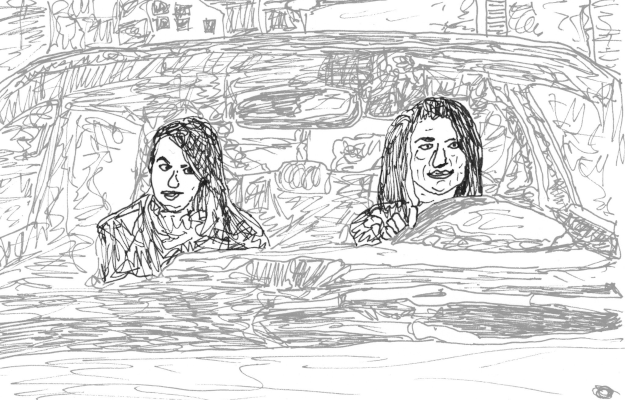
(English) While Fiona is driving her home after work, Fanni tells her about the latest developments with her boyfriend. When Fiona then starts talking about Heinz, who has come home again, they notice an interesting similarity. |
 |
(Italiano) Mentre Fiona la riaccompagna a casa dopo il lavoro, Fanni le racconta degli ultimi sviluppi con il suo ragazzo. Poi, quando Fiona le parla di Heinz, che è tornato a casa, le due si rendono conto di avere qualcosa di interessante in comune. |
(Deutsch) Während Fiona sie nach der Arbeit nach Hause fährt, erzählt Fanni ihr von den neuesten Entwicklungen mit ihrem Freund. Als Fiona danach von Heinz berichtet, der wieder nach Hause gekommen ist, stellen sie eine interessante Gemeinsamkeit fest. Normal Version | ||
Tag 50 1 Fanni: Ich hätte mir auch ein Taxi nehmen können, kein Problem. |
Day 50 Fanni: I could have taken a taxi, no problem. |
Jour 50 Fanni : J'aurais pu prendre un taxi, pas de problème. |
Giorno 50 Fanni: Avrei potuto prendere un taxi, senza problemi. |
Día 50 Fanni: Podría haber cogido un taxi, sin problemas. |
2 Fiona: Warte mal, wie fahr ich jetzt am besten? |
Fiona: Wait a minute, what's the best way to drive now? |
Fiona : Attends, quelle est la meilleure façon de conduire maintenant ? |
Fiona: Aspetta, qual è il modo migliore per guidare adesso? |
Fiona: Espera, ¿cuál es la mejor forma de conducir ahora? |
3 Fanni: Er brauchte Abstand, um über alles nachzudenken, hat er gesagt. Sein Onkel liegt außerdem noch im Sterben, weißt du? Bei dem ist er aufgewachsen. |
Fanni: He needed some distance to think about everything, he said. His uncle is also dying, you know? He grew up at his uncle's. |
Fanni : Il avait besoin d'un peu de distance pour réfléchir à tout, a-t-il dit. Son oncle est aussi en train de mourir, tu sais ? C'est avec lui qu'il a grandi. |
Fanni: Ha detto che aveva bisogno di un po' di distanza per pensare a tutto. Anche suo zio sta morendo, sai? È cresciuto con lui. |
Fanni: Dijo que necesitaba algo de distancia para pensar en todo. Su tío también se está muriendo, ¿sabes? Creció con él. |
4 Fanni: Hier gleich links in die Westendstraße. |
Fanni: Turn left here into Westendstraße. |
Fanni : Tourne à gauche dans la Westendstraße. |
Fanni: Gira a sinistra in Westendstraße. |
Fanni: Gira aquí a la izquierda en la Westendstraße. |
| Weiter geht's mit Staffel 6: Die Jungs räumen ab / The story continues with The Boys Take it All |
| up | |
| Datenschutzerklärung und Impressum (data privacy statement and imprint) |

